Abstract:
Sheet extrusion machines have a significant impact on modern polymer processing, enabling the production of flat sheets of plastic with a controlled thickness, width, and quality.
The extrusion of sheets is crucial to converting thermoplastic resins into finished products that are used in multiple fields of packaging, construction, automotive, medical, and consumer goods.
This article describes the commonality between various extrusion machines used for sheets, the manner in which they operate, and the reasons why they have become essential in high-volume, precision-driven manufacturing environments.
Introduction: Why Sheet Extrusion Machines Matter in Modern Manufacturing
Today, the demand for flat, permanent plastic products has increased significantly in multiple industries. From packaging food supplies and forming sheets for thermoforming to interior components for cars and construction, flat plastic sheets are the foundational material for subsequent processing.
Sheet extrusion machines are built to fulfill this need by producing continuous sheets that are consistently thick, have a controlled mechanical composition, and have a high surface quality. Unlike injection molding or blow molding, sheet extrusion is concerned with producing continuous quantities of material and having high efficiency. This makes it a popular solution for manufacturers who want to have a large amount of material and control costs.
Understanding what sheet extrusion machines are employed for necessitates a combination of both a review of the end products and an understanding of the production logic associated with a modern linie de extruzie a foliilor.
What Is a Sheet Extrusion Machine?
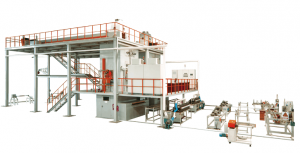
A sheet extrusion machine is an industrial system that forms thermoplastic raw materials into sheets through a die and subsequent equipment for calibration. These machines are continuous-operation machines that allow manufacturers to produce large quantities of sheet material with little to no waste.
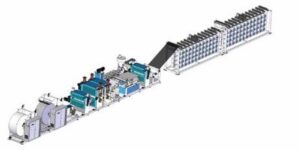
In the industry, extrusion machines that are sheet-based are typically not standalone devices. They’re typically combined into a complete extrusion line for sheet material, which includes material handling, extrusion, cooling, sizing, cutting, and stacking.
Core Components of a Sheet Extrusion Line
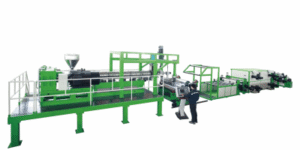
A contemporary extrusion line for sheets is a system that directly affects the quality and efficiency of production.
The extruder is responsible for melting the polymer, combining it, and increasing its pressure. Single-screw extruders are typically used for standard sheet configurations, whereas twin-screw extruders are preferred for configurations that require a lot of mixing, such as filled or recycled materials.
- Die’s Party
The die that determines the final size and starting thickness of the sheet is called the sheet die. Coat-hangers and T-dies are commonly employed to ensure that the melt is distributed uniformly across the die’s width; this is of great importance to the consistency of thickness.
- Calendar or Chill Roll System
After exiting the die, the sheet of molten plastic travels through a series of temperature-regulated rolls. These rolls facilitate the calibration of thickness, increase the quality of the surface, and initiate a controlled cooling process.
- Cooling, Haul-Off, and Cutting Technology
Downstream equipment maintains the sheet’s stability, controls the tension, and cuts it into desired lengths or winds it into rolls. Automation at this point has a significant impact on productivity and the accuracy of dimensions.
What Are Sheet Extrusion Machines Used For? Key Applications
- Industria ambalajului
One of the most significant uses of sheet extrusion machines is in the packaging industry. Plastic sheets derived from extrusion are commonly employed for the thermoforming of food trays, blisters, cups, and lids.
Materials like PET, PS, and PP are typically processed on extrusion lines that are sheet-like to achieve food safety and barrier effectiveness. The capacity to control the thickness of the sheet is crucial to reducing the amount of material used while still maintaining structural integrity.
- Construction and Building Supplies
In the building sector, sheet extrusion machines create sheets that are rigid or semi-rigid, which are used for panel walls, roofing membranes, insulation layers, and decorative surfaces.
ABS, HDPE, and PVC sheets that are extruded on high-output sheet extrusion lines have a long lifespan, weather resistance, and are easy to install, all of which make them suitable for both residential and commercial construction.
- Automotive and Transportation
Automotive manufacturers utilize extruded plastic sheets for interior components, doors, luggage, and shields. These sheets are typically thermoformed or laminated following the extrusion process.
The consistency of the extruded sheets is guaranteed by the consistency of the machines, which is essential to achieving high quality in the automotive industry.
- Medical and Pharmaceutical Benefits
In medical environments, extrusion machines that produce sheets are used to package sterile products, medical devices, and disposable trays. Cleanliness of the processing procedure and material tracking are crucial in these scenarios.
Materials like PETG and medical-grade PVC are typically extruded because of their transparency, chemical stability, and compliance with regulatory requirements.
- Consumer Products and Businesses
From stationary components and display boards to appliances and industrial liners, sheet extrusion machines facilitate a variety of consumer and industrial products. Their versatility allows manufacturers to serve multiple markets with a single extrusion sheet while minimizing the number of configuration changes.
Materials Commonly Processed on Sheet Extrusion Lines
Sheet extrusion machines are compatible with a broad range of thermoplastic materials. Material selection depends on end-use requirements such as transparency, impact resistance, thermal stability, and regulatory compliance.
| Material | Aplicații tipice | Key Properties |
| PET / PETG | Food packaging, medical trays | High clarity, recyclability |
| PP | Thermoforming sheets, containers | Chemical resistance, flexibility |
| PS / HIPS | Disposable packaging | Cost efficiency, ease of forming |
| PVC | Construction panels, signage | Durability, flame resistance |
| ABS | Automotive and appliance parts | Impact resistance |
| HDPE | Industrial liners, protective sheets | Toughness, moisture resistance |
Why Manufacturers Choose Sheet Extrusion Over Other Processes?
- Constant Production Efficiency
Continuous operation of the sheet extrusion machines is possible, which allows for high production rates and lower downtime. Compared to conventional processes, this leads to a lower cost per unit production.
- The utilization of materials and the reduction of waste
The extrusion procedure reduces waste, and leftovers can often be reused directly into the sheet extrusion path. This concords with goals for sustainability and strategies for cost reduction.
- Thickness and Control of the Surface
Modern sheet extrusion lines have precise control over the thickness of the sheet and the final surface quality. This consistency is crucial to downstream processes like thermoforming, printing, and lamination.
Automation and Technological Advancements in Sheet Extrusion Lines
Modern extrusion sheets are progressing toward greater automation, precision, and digital integration in order to achieve quality consistency, energy efficiency, and cost control.
- Intelligent Systems for Controlling the Process
Combining the PLC with an HMI system allows for real-time temperature, pressure, speed of the screws, and melt volume to be monitored.
Closed-loop control facilitates the improvement of uniformity and quality of the sheet.
Automatic recipe storage decreases the time needed to set up and decreases the dependency on the operator.
- Thickness measurement and control advanced
Online thickness meters (infrared, beta rays, or X-ray)
Automatic adjustment of the die’s position and synchronization of the pull-roller.
Minimizes the amount of wasted material and increases yield.
- Effective extruders and design for screws
Barrier and mixing screws facilitate a uniform melt.
Lower-powered designs diminish material deterioration.
The multiple extrusion layers enable the incorporation of functional components (barrier, ultraviolet light, and recycled core) into the polycarbonate.
- Robots and automated downstream processing
Automated harvesting, stacking, and palletizing.
Lower costs of labor and increased safety
Increasing the line speed while maintaining a high-quality output.
- The adoption of digital technology and Industry 4.0 integration
Monitoring and predictions
Data recording for quality oversight
Integration with a MES and an ERP system that facilitates production optimization.
Challenges and Technical Considerations
Despite advances in technology, operating a sheet extrusion line is still challenging technologically. These issues must be addressed with care.
- The complexity of the material process
Different polymers (PET, PP, PS, PVC, PC) need to be precisely temperature and shear-regulated.
Recycled materials increase the variety of melt flows and the risk of contamination.
- Control over thickness and flatness
Maintaining a consistent thickness across large sheets is technically difficult.
The lip design, cooling time, and departure speed must be precisely compatible.
- Temperature Management
Uneven temperature can lead to warpage and internal tension.
The amount of energy consumed must be equal to the production speed.
- Device Alignment and Maintenance
Alignment is incorrect and results in defects on the sheet and increased wear.
Constantly checking the accuracy of dies, rollers, and measuring devices is crucial
- Skilled Operation and Proficient Practice
Automation diminishes the need for labor, but still requires technicians with expertise.
The optimization of processes is still dependent on the specifics of the application.
Sheet Extrusion Line vs Other Plastic Processing Methods
Choosing the right plastic processing method depends on product geometry, production volume, and performance requirements.
-
Sheet Extrusion Line vs Injection Molding
| Aspect | Extrudarea foliilor | Injection Molding |
| Product form | Flat sheets | Complex 3D parts |
| Production mode | Continuous | Cyclic |
| Tooling cost | Lower | High |
| Material waste | Low | Moderate |
| Aplicații tipice | Packaging sheets, thermoforming | Precision components |
-
Sheet Extrusion Line vs Blow Molding
| Aspect | Extrudarea foliilor | Blow Molding |
| Product type | Sheets | Hollow containers |
| Thickness control | High precision | Limited |
| Material utilization | Efficient | Moderate |
| Aplicații | Thermoforming, construction | Bottles, tanks |
-
Sheet Extrusion Line vs Calendering
| Aspect | Extrudarea foliilor | Calendering |
| Material suitability | Wide range | Mainly PVC |
| Energy efficiency | Higher | Lower |
| Line flexibility | High | Limited |
| Gama de grosimi | Wide | Narrow |
FAQ: Sheet Extrusion Machines and Sheet Extrusion Lines
Q1: What is the purpose of a sheet extrusion line?
A sheet extrusion line is employed to create flat sheets of plastic that are intended for packaging, construction, automotive, medical, and consumer goods.
Q2: What kinds of materials can be printed on a sheet-based extrusion line?
Common materials include PET, PP, PS, PVC, ABS, and HDPE, based on the intended end uses.
Q3: What is the difference between sheet extrusion and film extrusion?
Sheet extrusion produces products that are thicker and more rigid, while film extrusion is concerned with producing thin, flexible films.
Q4: Are sheet extrusion machines effective for reusable materials?
Yes, many modern extrusion lines for sheets are built to deal with recycled or re-grind materials that have a consistent quality of output.
Q5: What components of extrusion affect the quality of the sheet?
Key factors include the temperature of the melt, the design of the die, the calibration of the roll, the composition of the material, and the speed of the line.
Industry Perspective: Investment and Market Trends
The demand for sheet extrusion machines around the world continues to increase as a result of the increasing amount of packaging that’s being consumed, infrastructure development, and sustainability initiatives. Fabricantes that spend money on high-performance extrusion lines have the flexibility, scale, and advantage of competition in various markets.
From a B2B perspective, the capacity to personalize a sheet extrusion line for a specific material and application is increasingly sought out by buyers who want to have long-term production stability.
Sheet Extrusion Machine User Reviews
Review 1: Constant production, good consistency, and precise product specifications.
Review 2: A successful extruder will produce dimensional consistency and a low failure rate; these are both important aspects of production effectiveness.
Review 3: Inexpensive equipment is simple to begin, but involves frequent follow-up updates and troubleshooting.
Review 4: Operators must have mastered skills regarding temperature control, screws, and balancing the downstream temperature and motion speed.
Review 5: Technical support that is of high quality and quick response is frequently cited as a necessity, rather than simply the machines themselves.
Conclusion: What Are Sheet Extrusion Machines Ultimately Used For?
Sheet extrusion machines are employed to transform thermoplastic materials into flat, consistent, and superior sheets that are the basis for numerous subsequent products. A proper design of the sheet extrusion line can help manufacturers to achieve high production, precise control, and efficiency in the material across a variety of industries, including packaging, construction, and medical applications.
Instead of manufacturing one single product, extrusion machines that function as platforms for multiple manufacturing processes have a versatile nature. One that is still evolving alongside material science, automation, and sustainability is the platform.



 English
  Russian
  Spanish
  Arabic
  German
  French
  Persian
  Turkish
  Bulgarian
  Czech
Czech  Dutch
Dutch  Greek
Greek  Indonesian
  Japanese
  Korean
  Polish
  Portuguese
  Romanian
  Slovenian
  Ukrainian