In the world of manufacturing and construction, the production of durable, versatile, and cost-effective materials is crucial. One such material that has gained significant popularity in recent years is PVC (Polyvinyl Chloride), particularly for creating high-quality panels used in a variety of applications, from interior design to construction. A PVC panel extrusion line is a specialized production system used to transform raw PVC resin into finished panels, which are then used in many industries. This article will explore the functions, benefits, and future of PVC panel extrusion lines, helping you understand their importance in modern manufacturing.
Czym jest linia do wytłaczania paneli PCV?
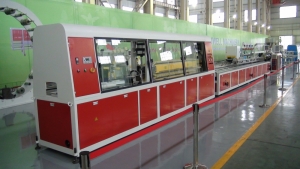
A PVC panel extrusion line is a manufacturing system that processes raw PVC material, typically in the form of granules or powder, and transforms it into high-quality PVC panels. These panels are widely used in construction, interior design, and other applications due to their durability, low maintenance requirements, and versatility. The extrusion process involves several steps that include heating, melting, and forming the PVC material into a continuous sheet or panel. The system is designed to produce panels of varying thicknesses, widths, and lengths, depending on the requirements of the end product.
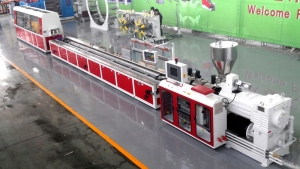
The core of a PVC panel extrusion line is the extruder, which is responsible for melting the raw PVC material and pushing it through a die to form the desired panel shape. Other important components of the extrusion line include cooling systems, cutters, and the calibration unit, all of which ensure that the panels are produced to precise specifications. The line operates continuously, producing large volumes of panels at high speeds, making it an efficient solution for large-scale production.
How Does a PVC Panel Extrusion Line Work?
The process of manufacturing PVC panels with an extrusion line involves several stages:
- Material Feeding:
The process begins with feeding raw PVC material, typically in the form of granules, powder, or a mixture of both, into the hopper of the extruder. The material is then conveyed into the barrel of the extruder, where it is heated to a specific temperature to begin the melting process. - Melting and Mixing:
Inside the extruder, the PVC material is subjected to both heat and pressure, which causes it to melt and become a viscous liquid. During this phase, any additives (such as stabilizers, plasticizers, and colorants) are also mixed into the PVC to enhance its properties, such as flexibility, strength, and appearance. - Wytłaczanie:
Once the PVC has been melted and mixed, it is pushed through a die that shapes the material into the desired panel form. The die can be customized to produce panels of various shapes, including flat, textured, or embossed surfaces, depending on the product specifications. - Cooling and Calibration:
After the PVC material exits the die, it is cooled using a series of cooling tanks or air cooling systems. This cooling process helps solidify the material and ensures that it maintains its shape. In the calibration unit, the panels are fine-tuned to the correct dimensions and thickness. - Cutting and Packaging:
Once the panels are formed and cooled, they are cut to the required lengths using a cutting system. The finished panels are then stacked and prepared for packaging, making them ready for shipment to customers or for further processing in other manufacturing operations.
Key Components of a PVC Panel Extrusion Line
- Wytłaczarka:
The extruder is the central component of the PVC panel extrusion line. It melts the raw PVC material and forces it through the die, shaping it into panels. Modern extruders are equipped with advanced temperature and pressure control systems to ensure consistent product quality. - Umierać:
The die is a crucial part of the extrusion process, as it determines the shape and size of the final panel. Dies can be customized to produce panels with various textures, thicknesses, and surface finishes, depending on the product requirements. - Cooling System:
Cooling is essential to solidify the melted PVC material and prevent deformation. Most PVC panel extrusion lines use a combination of water baths and air cooling to achieve the desired cooling rate for the material. - Calibration Unit:
The calibration unit ensures that the extruded panels meet the desired specifications in terms of thickness and width. It helps maintain the panel’s dimensions and smooth surface during the cooling process. - Cutting System:
Once the PVC panels have been extruded and cooled, the cutting system cuts them to the required lengths. The cutting system may use blades or saws, depending on the thickness of the panels and the speed of production. - Control System:
The control system monitors and manages the entire extrusion process, ensuring that parameters such as temperature, pressure, and speed are optimized for consistent panel production. Modern systems often include touchscreens and automation for ease of operation.
Advantages of PVC Panel Extrusion Lines
- Durability:
PVC panels produced via extrusion are highly durable, resistant to moisture, and resistant to corrosion, making them ideal for use in a wide range of applications, from interior wall panels to exterior cladding. - Customizability:
PVC panel extrusion lines offer a high degree of customization, allowing manufacturers to produce panels in a variety of sizes, colors, and textures. Whether you need smooth, glossy panels or textured finishes, an extrusion line can accommodate these requirements. - Opłacalność:
PVC is a relatively inexpensive material, and the extrusion process itself is highly efficient. The continuous nature of the extrusion line allows for high production volumes, reducing the cost per unit and making it an affordable option for large-scale manufacturing. - Low Maintenance:
PVC panels are low-maintenance products that require little care over their lifespan. Their resistance to water, chemicals, and pests makes them particularly valuable in environments where durability is crucial. - Eco-Friendly:
Many PVC panel extrusion lines can incorporate recycled materials into the production process. The ability to use recycled PVC reduces the environmental impact of production and contributes to a circular economy. - High Production Speed:
They are designed for high-speed production, which allows manufacturers to meet large-scale demand with consistent quality. The automation involved in the extrusion process also reduces labor costs and increases efficiency.
Applications of PVC Panels
PVC panels produced via extrusion are used in a variety of industries due to their durability, versatility, and low maintenance requirements. Some of the most common applications include:
- Budownictwo:
PVC panels are widely used in the construction industry for applications such as wall cladding, ceiling panels, and partitioning. They offer excellent resistance to moisture and are easy to install and maintain. - Interior Design:
PVC panels are also used in interior design for decorative purposes. Their wide range of colors and textures makes them an attractive option for wall panels, ceiling tiles, and other interior surfaces. - Signage:
PVC panels are often used in the creation of signs, as they can be easily printed on and are durable enough to withstand outdoor conditions. - Agriculture:
In agriculture, PVC panels are used for creating greenhouse walls, hydroponic systems, and other farming structures due to their ability to resist corrosion and provide insulation. - Transport and Automotive:
PVC panels are increasingly used in the automotive industry, particularly for lightweight and durable interior components such as door panels, dashboards, and trims.
The Future of PVC Panel Extrusion Lines
Ponieważ popyt na panele PCV nadal rośnie, technologia stosowana w liniach do wytłaczania paneli PCV ewoluuje. Nowe innowacje w dziedzinie nauki o materiałach umożliwiają produkcję jeszcze bardziej przyjaznych dla środowiska paneli PCV, które zawierają surowce wtórne i redukują odpady. Ponadto postępy w technologii wytłaczania prowadzą do szybszej produkcji, lepszej wydajności energetycznej oraz ulepszonych możliwości personalizacji.
W przyszłości prawdopodobnie będą one coraz bardziej wszechstronne, co umożliwi producentom tworzenie jeszcze bardziej specjalistycznych produktów odpowiadających różnorodnym potrzebom branż od budownictwa po transport. Wraz z rosnącym naciskiem na zrównoważenie i efektywność kosztową przyszłość linii do wytłaczania paneli PCV wydaje się świetlista, oferując zarówno korzyści ekonomiczne, jak i środowiskowe.
Wnioski
Linia do wytłaczania paneli PCV jest istotnym elementem wyposażenia w procesie produkcji wytrzymałych, wszechstronnych i opłacalnych paneli PCV. Technologia ta znacząco rozwinęła się przez lata, umożliwiając wysokojakościową produkcję w dużych skalach. Od budownictwa przez aranżację wnętrz aż po inne dziedziny, panele PCV mają szerokie zastosowanie, które stale wzrasta. W miarę jak branża skupia się na innowacjach i zrównoważeniu, panele te odegrają istotną rolę w kształtowaniu przyszłości materiałów produkcyjnych i budowlanych.


 English
  Russian
  Spanish
  Arabic
  German
  French
  Persian
  Turkish
  Bulgarian
  Czech
Czech  Dutch
Dutch  Greek
Greek  Indonesian
  Japanese
  Korean
  Polish
  Portuguese
  Romanian
  Slovenian
  Ukrainian