
Abstract:
The maszyna do formowania masy celulozowej is crucial to the paper pulp industry. This manufacturing process is environmentally friendly and converts recycled paper fibers into useful products (e.g., egg trays, fruit trays, and protective packaging) through hydration, formation, pressing, and drying.
According to foundational literature on the industry, such as the Handbook of Pulp Molding Technology (Elsevier, 2015), successful pulp molding is dependent on the preparation of a controlled slurry of fibers, the vacuuming of the fibers, and the thermal drying of the fibers to achieve consistent product strength, dimensional stability, and moisture resistance.
This article discusses the entire process of making paper pulp. It explains the function and configuration of pulp machines that are used in the production of paper pulp and provides practical information for those involved in the industry who want to increase production, quality, and sustainability.
What is the Process of Paper Pulp Molding?
Paper pulp molding has become a popular method for creating environmentally friendly packaging that substitutes for plastic and polyethylene foam in applications that range from food to industrial cushioning. The center of this transformation is the pulp molding machine, which takes recycled paper pulp slurry and converts it into products that are durable, form-stable, and have a combination of vacuum forming, pressing, and drying. Unlike the simple process of paper creation, pulp molding takes into account the fluid dynamics, fiber science, and thermal processing as part of a continuous production cycle.
This article discusses the entire process of pulp molding in detail. Each stage of the process is described in depth, the key components of the machines are explained, the operational aspects of the process are described, and the quality control factors are enumerated. Additionally, we include a comprehensive FAQ section and a comparative table that describes the major stages of the process and their purpose.
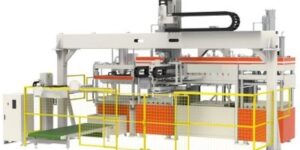
Raw Material Preparation: The Foundation of Quality
Successful pulp molding is initiated by the selection of raw materials and their preparation. Common feedstocks include:
Reused corrugated fiberboard
Waste paper (newspaper, office paper)
A mixture of grammage levels (which may need to be deinked and cleaned)
Classifying and Cleaning
The first step is to sort the raw paper waste by quality and then to clean it to eliminate contaminants like plastic, staples, and adhesive. Effective cleaning is responsible for preventing damage to the machine’s components and ensuring that the fiber behavior is uniform during the formation process.
Pulping
Then, the paper is rinsed in warm water and mechanically stirred to produce a fiber mixture, which typically has a consistency of 1% to 5% solids. The objective is to isolate individual fibers while preserving their length in order to contribute to the strength of the final product.
Refining and Screening
After the initial pulping process, the slurry is further refined to enhance the flexibility of the fibers and to eliminate larger particles that are oversized. Refining increases the surface area of the fiber’s cross-section, which promotes the bond between the fibers during the drying process- this is critical to the strength of the molded product.
Pulp Molding Machine: Core Components and Principles
A pulp molding machine is composed of multiple subsystems that convert slurry into preformed:
Pulp Cooker / Beater
Slurry Pump and Tank
Forming Station (with Vacuum)
Pressing and Dewatering Unit
Drying oven or hot air chamber
Product Discharge and Packaging Conveyor
Creating the Form and Vacuum Table
The most common attribute of pulp machines that form pulp is the forming station, which is characterized by a porous mold that passes through a table under a vacuum. Slurry is sprayed onto the mold or poured into the mold; the water pump draws in water from the outside, which is deposited onto the mold’s surface in the form of fibers.
This procedure involves the use of a pump and a filter to assist the formation of the desired shape.
Even distribution of uniform fibers
Exact reproduction of the mold design
Effective water drainage at the start
Mold design affects the thickness of the wall, the structure of the rib, and the overall stiffness of the mold.
Over-exposure and Underestimation
Once the parts are combined, they undergo a press, to additional water is expelled, and the fiber network is compacted. Different machines have the option of pressing through mechanical rollers or platen machines. Pressure promotes the alignment of fibers and decreases the amount of drying time.
Drying and Curing
After the mold is dried, the parts that are wet are moved into a chamber with hot or cold air. Drying causes the fibers to become firmer; this is attributed to the hydrogen bonding between them. Temperature, airflow, and the amount of time spent in the house are all closely regulated to avoid the formation of cracks or shredded material.
Step-by-Step Paper Pulp Molding Process
Step 1: Pulp Preparation with a filter
Dilute slurry is flowed through the station without any contaminants or having a uniform distribution of fibers, and it is then pumped to the forming location. Viscosity and consistency are evaluated to ensure that the fiber behavior is consistent during placement.
Step 2: Solidifying on Mold Frames
The mold is supported by a conveyor or rotary motion, which traverses the slurry system. The pump draws water out of the fiber slurry via the mold’s perforations, leaving a consistent fiber sheet that resembles the mold.
Step 3: Initial Dehydration and pressing
The initial process of vacuuming water is called dewatering. Secondary pressing (mechanically) decreases the moisture content further and aggregates the fibers to the desired consistency. Both stages have an effect on the density of products and the stability of dimensions.
Step 4: Dehydrating and Curing
The parts that are pressed into the mold enter a zone that is intended for drying (an oven that employs convection or an infrared source). Controlled temperature:
Remove water that is tied up
Increases the strength of the inter-fiber bond
Increases compliance
Schedules for drying are specific to the product type, thickness, and fiber composition.
Step 5: Product Release and Conclusion
Once the products are dried, they are transferred from the machine to a separate area for trimming, stacking, and packaging. Automated conveyors and robotic assistants are increasingly popular in large-volume operations.
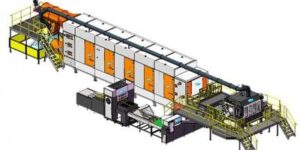
Process Variables and Quality Considerations
To achieve consistent, high-quality molded products, manufacturers must manage several critical parameters:
| Process Variable | Effect on Product | Control Method |
| Fiber Slurry Consistency | Influences the wall thickness and strength | Flow meters, online density sensors |
| Vacuum Level & Timing | Affects water removal and fiber deposition | Vacuum pumps with adjustable settings |
| Pressing Force & Duration | Determines compaction and density | Adjustable press cylinders/rollers |
| Drying Temperature & Profile | Ensures complete water removal without cracking | Programmable oven zones |
| Mold Design Geometry | Impacts functionality and production rate | CAD/CAM design and mold prototyping |
Product Types Made by Pulp Molding Machines
Pulp molding machines that are designed for molding can produce a variety of products:
Egg cartons and trays
Vegetable and fruit racks
Protectional packaging components
Carry coals and a tray for drinks.
Medical device racks
Each use may necessitate a custom design of the mold and the process of calibration to achieve goals of performance, weight, and ergonomics.
Environmental and Sustainability Benefits
One of the most notable features of pulp molding is its environmental impact. Compared to plastic and EPS packaging, pulp-based products are:
Recyclable 100% of the time
Biodegradable
Often composed of recycled post-consumer fiber
Studies of industry have demonstrated that utilizing pulp as a molding material can significantly reduce the carbon footprint and waste to landfill, which is attractive to sustainability-oriented brands and authorities.
Operational Best Practices
To ensure effective, safe, and quality production, facilities should follow the industry’s most effective practices:
Routine Calibration of the Vacuum Pump: Assess the pump’s capacity to reduce pressure, maintain a consistent pressure level, and dry areas.
Water Management: Recycle and process water to reduce trash and environmental damage.
Mold Maintenance: Watch for signs of wear and blockage of the perforation; this is crucial to the consistent deposit of fibers.
Training: Skilled operators increase the volume of work and reduce mistakes.
Data Logging: Records the procedure’s parameters to facilitate traceability of quality and continual improvement.
Pulp Molding vs. Alternative Technologies
Although pulp molding machines have strong advantages, it’s useful to compare them with alternative packaging technologies:
| Technology | Strengths | Limitations |
| Maszyna do formowania masy celulozowej | Sustainable product, customizable shapes | Higher initial equipment cost, slower cycle time vs injection molding |
| Injection Molding (Plastic) | Fast cycle times, high precision | Non-biodegradable, environmental concerns |
| Foam/Styrofoam Packaging | Lightweight, shock-absorbing | Poor recyclability, regulatory pressure |
Frequently Asked Questions (FAQ)
Q1. What is a machine that presses pulp, and how does it operate?
A pulp molding machine converts paper pulp into products with a defined shape through a series of vacuum forming, pressing, and drying steps. Slurry is deposited on pre-perforated molds, while a water pump draws out the water, the parts are then pressed and dried to produce solid fiber structures.
Q2. How is paper pulp prepared for molding?
Paper pulp is produced by collecting and cleaning waste paper, converting it into a slurry, enhancing the fiber quality, and removing impurities. Consistency and the fiber’s properties are important in order to have a uniform product strength.
Q3. What kinds of products can be produced with the pulp molding method?
Common products include egg dishes, fruit dishes, protective packaging that is inserted, cupbearers, and medical trays. Custom design of the mold enables various configurations and thicknesses of walls.
Q4. What are the primary advantages of pulp-based products?
Pulp products that are molded are environmentally friendly, biodegradable, and reusable. They employ recycled fibers and contribute to the reduction of plastic dependency, advocating for environmental and circular economy objectives.
Q5. What variables of the process are most significant in the pulp molding process?
Main variables include the consistency of the slurry, the vacuum level, the force used to press the slurry, the temperature of drying, and the design of the mold. Constant oversight of these is guaranteed by tight control.
Q6. How do you regulate the thickness of the product in pulp molding?
The thickness of the product is affected by the time spent depositing the slurry, the vacuum level, and the geometry of the mold. The longer duration of the vacuum and the slower rate of deposit typically lead to an increase in fiber accumulation and thickness; precise calibration in manufacturing is crucial.
Q7. What kind of maintenance does a pulp machine require?
Maintenance involves the use of a vacuum pump to service the mold, the cleaning of the mold, the drying of the components, and the inspection of the components being pressed. Constantly scheduled preventive maintenance reduces downtime and defects.
Q8. Is it appropriate to use pulp as a material for high-volume production?
Yes — with automated conveyors, multiple forming stations, and drying tunnels, pulp machines can support high volume production (up to thousands of units per hour), but the volume is dependent on the product’s complexity.
User Reviews:
Review1:It can utilize waste paper and other raw materials to produce practical products (such as egg trays, pallets, etc.), achieving recycling and environmentally friendly production, reducing waste, and creating economic value.
Review2:The machine can produce different products (egg trays, fruit plates, tableware trays, seedling trays, etc.) by changing molds, improving product line flexibility.
Review3:Regular maintenance is recommended, such as cleaning pulp residue and replacing filter cartridges.
Review4:Different models have significant price differences; cheaper equipment may be unreliable or have a short lifespan.
Review5:Whether it can effectively utilize waste paper resources to manufacture products.
Review6:There are significant quality differences between different models; cheap does not necessarily mean good.
Wnioski
The procedure of making paper pulp from wood is centered on the machine that makes pulp. This is a mature, sustainable, and versatile method of manufacturing that is intended to be used in the production of environmentally friendly packaging solutions. By combining material preparation, vacuum packaging, pressing, and controlled drying, manufacturers can produce high-powered, customizable fiber products that have a decreased environmental impact.
The mastery of the process, the design of the mold, and the maintenance of the machine guarantee high-quality production, efficiency, and long-term success. Whether intended for food packaging, industrial cushioning, or as a form of retail solution, pulp molding is still popular as a result of its association with sustainability and regulatory concerns.



 English
  Russian
  Spanish
  Arabic
  German
  French
  Persian
  Turkish
  Bulgarian
  Czech
Czech  Dutch
Dutch  Greek
Greek  Indonesian
  Japanese
  Korean
  Polish
  Portuguese
  Romanian
  Slovenian
  Ukrainian