
Extruder Question
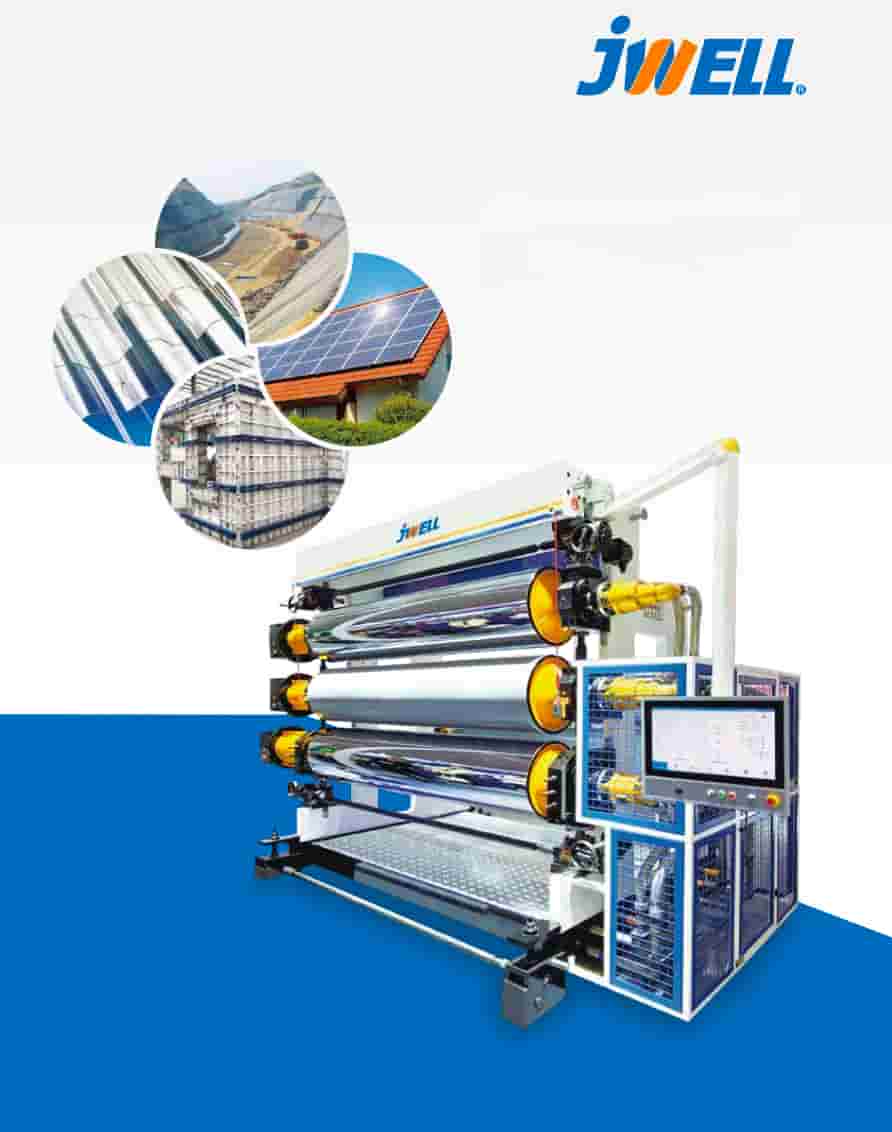
The linie de extruzie a foliilor is a precise and specialized system that is engineered with perfected performance in plastic sheet production, which is targeted at high process accuracy in terms of thickness homogeneity, appearance, and productivity. The latter is commonly used to produce plastic sheets for packaging materials, automobile parts, building materials, and thermoforming applications. Currently, sheet presses can process numerous materials, like PP, PS, PET, ABS, and PC.
Jwell is committed to developing energy-saving, smart control, and high-quality sheet extrusion equipment with continuous and stable output; the company is a leading provider of this equipment in the industry.
Where to buy sheet extrusion line spare parts and accessories?
You can buy sheet extrusion line spare parts from Jwell, Common parts include screws, barrels, dies, rollers, heaters, and screen changers.
Compare single screw vs twin screw extruders for sheet production
Single-screw extruders are cost-effective and suitable for standard materials like PP and PE. Twin screw extruders offer better mixing, venting, and processing performance for PET, PVC, and recycled materials.
What is a typical production capacity for a PET sheet extrusion line?
A PET sheet extrusion line typically produces 300–1500 kg/h depending on machine size, screw design, and sheet specifications.
How does a sheet extrusion line work in plastic manufacturing?
A sheet extrusion line melts plastic resin, pushes it through a flat T-die, cools the sheet with rollers, and then cuts or winds the finished product.
What is the process of sheet extrusion?
The process includes feeding raw materials, melting and plasticizing, extrusion through a flat die, cooling, thickness calibration, trimming, and winding.
What is the major difference between film extrusion and sheet extrusion?
Film extrusion produces thin flexible films, while sheet extrusion makes thicker and more rigid plastic sheets.
What is sheet extrusion?
Sheet extrusion is a plastic manufacturing process used to produce continuous flat plastic sheets with uniform thickness.
What plastics do you sheet-extrude?
Common materials include PP, PE, PET, PS, PVC, ABS, PC, PMMA, and biodegradable plastics like PLA.
What is ps foam sheet extrusion line?
A PS foam sheet extrusion line is a machine system used to produce lightweight polystyrene foam sheets for food trays, packaging, and disposable containers.
How spc floor sheet extrusion die work?
The SPC floor sheet extrusion die distributes molten material evenly across the width to form a uniform flooring sheet with consistent thickness and surface quality.
Film extrusion lines are custom-made machines for the production of films that require precision in thickness, transparency, and running speed. It is widely used in the packaging industry, agricultural industry, medical industry, and various processing of all types of materials, such as PE, PP, EVA, and biodegradable materials.
However, being one of the most famous extrusion equipment manufacturers worldwide, Jwell offers an advanced film extrusion line with intelligent automation, energy saving, durability, and stable production.
What is a film extrusion?
Film extrusion is a manufacturing process that melts plastic resin and forms it into thin plastic film through a die for packaging, agricultural, or industrial applications.
What are the 7 stages of film production?
The main stages are raw material feeding, melting, extrusion, film forming, cooling, thickness control, and winding.
What is the difference between cast film extrusion and blown film extrusion?
Cast film extrusion uses chill rollers to cool flat film quickly, while blown film extrusion forms a bubble using air for better strength and flexibility.
What are the advantages of blown film extrusion?
Blown film extrusion offers excellent film strength, balanced mechanical properties, good flexibility, and wide application versatility.
Why is extrusion better than casting?
Extrusion provides continuous production, higher efficiency, lower material waste, and better suitability for large-scale plastic film manufacturing.
Which is better, cast or blown stretch wrap?
Cast stretch wrap has better clarity and quieter unwinding, while blown stretch wrap offers higher strength and puncture resistance.
How to solve blown film problems?
Blown film problems can be reduced by adjusting temperature, air pressure, screw speed, cooling system, and die alignment regularly.
Where can I find suppliers of industrial film extrusion machinery?
You can find industrial film extrusion equipment at extruder manufacturer Jwell, which provides high-quality film extrusion machinery and professional services.
What are the key features to look for in a film extrusion line?
Important features include production capacity, energy efficiency, automation level, film quality control, material compatibility, and maintenance support.
How to choose a film extrusion line for small-scale production?
Choose a compact extrusion line with stable output, easy operation, low energy consumption, and flexibility for different film materials and sizes.
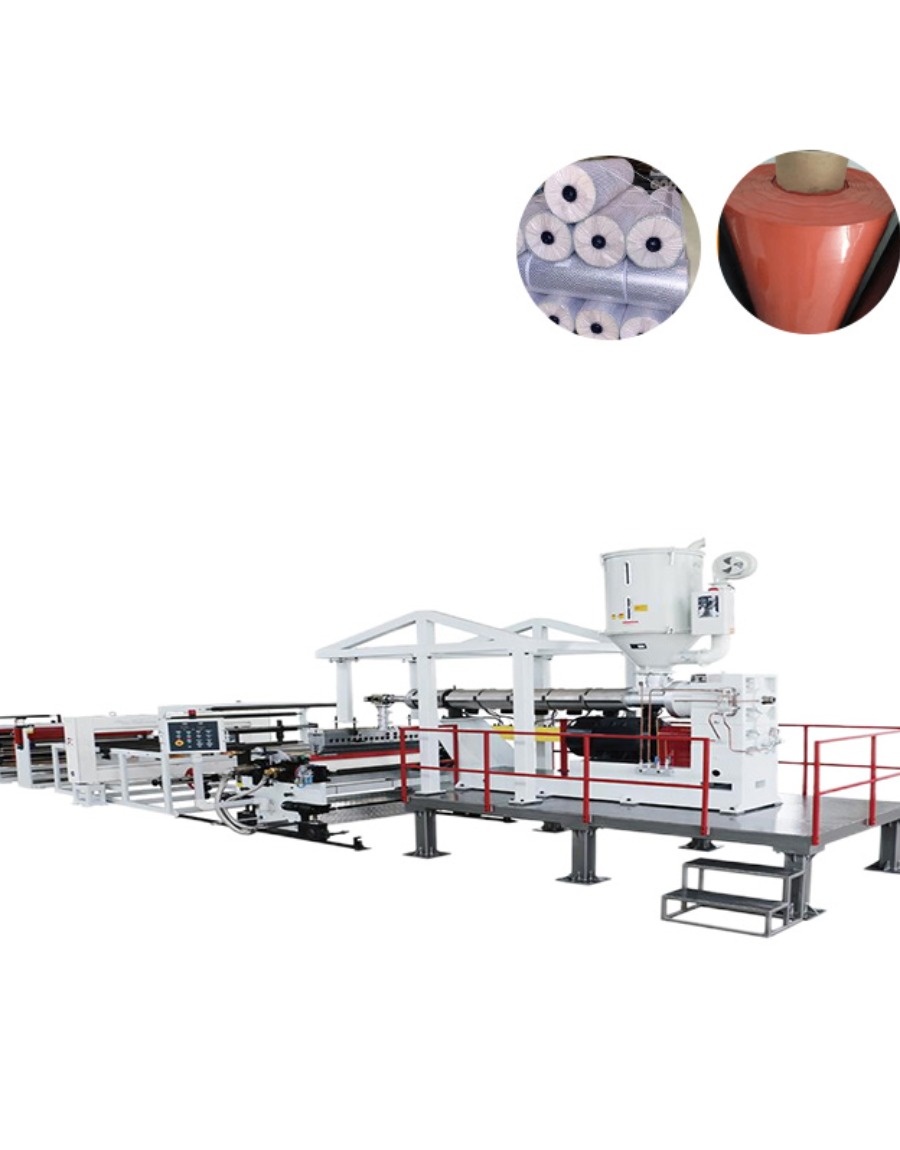
The linie de extrudare a plăcilor is dedicated equipment for producing plastic sheets that are of high strength, dimensional stability, plane, and impact resistance. These sheets find application in construction, advertising, furniture making, and other industrial uses. The board extrusion line works with many materials, such as PVC, PP, PE, and PC.
Other than that, Jwell, a good extruder manufacturer, provides high-quality boards to the extrusion machine, and the following extrusion process is highly automated and operates stably.
Where to buy a complete board extrusion line with installation service?
You can purchase complete board extrusion lines from professional manufacturers like Jwell, which provide equipment installation, commissioning, and technical support services.
Who is the top-rated board extrusion line supplier for industrial use?
Jwell is widely recognized as a leading industrial board extrusion line supplier with experience in PVC, PP, PE, PET, and foam board extrusion systems.
How to choose the right board extrusion line for my production needs
Choose a board extrusion line based on material type, board thickness, production capacity, automation level, and final application requirements.
What are the essential components of a board extrusion line?
A board extrusion line typically includes a feeder, extruder, screen changer, T-die, calibration table, cooling system, haul-off unit, cutter, and stacking system.
What is board extrusion used for?
Board extrusion is used to manufacture plastic boards for construction, advertising, furniture, automotive, packaging, and industrial applications.
What is the difference between board extrusion and sheet extrusion?
Board extrusion produces thicker and more rigid plastic panels, while sheet extrusion mainly creates thinner flexible or semi-rigid sheets.
How does a board extrusion line work?
The line melts plastic raw materials through an extruder, shapes them with a flat die, cools and calibrates the board, then cuts the finished product to size.
How thick can extrusion boards be?
Extrusion boards can range from a few millimeters up to 60 mm or more depending on material type and machine design.
What is the best material for plastic boards?
Common materials include PVC, PP, PE, ABS, and PC, with PVC being popular for durability and cost-effectiveness.
What are the advantages of foam board extrusion?
Foam board extrusion offers lightweight structure, thermal insulation, sound reduction, moisture resistance, and lower material consumption.
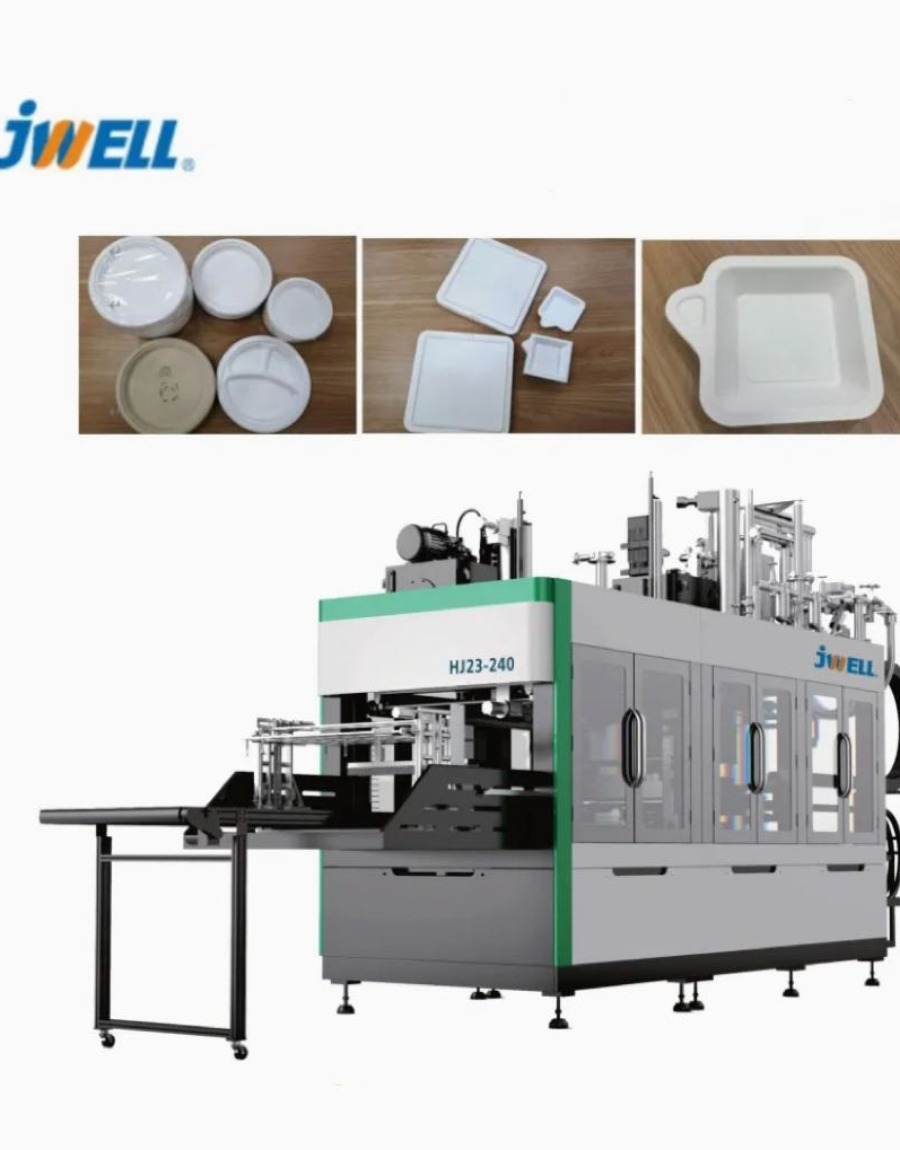
A mașină de modelare a pulpelor is the most advanced type of biodegradable machine for making trays, containers, and protective packages using recycled paper pulp. They are characterized by high efficiency, low energy consumption, stable molding quality, and are widely used in food packaging, electronics, industrial cushioning, etc.
Jwell is a professional manufacturer of equipment, offering an intelligent molding pulp machine realizing automation, large capacity, and environmental health while adapting to the needs of modern packaging.
What is moulded pulp used for?
Moulded pulp is mainly used for protective packaging, egg trays, food containers, cup carriers, and eco-friendly disposable products.
What is a molding machine called?
A molding machine is commonly called an injection molding machine, pulp molding machine, or thermoforming machine depending on the process.
What are the 4 types of moulding?
The four common types are injection molding, blow molding, compression molding, and rotational molding.
Is molded pulp expensive?
Molded pulp is generally not expensive. It has low material cost because it is often made from recycled paper, and it is cost-effective for mass production.
What are the types of molding machines?
Common molding machines include injection molding machines, blow molding machines, compression molding machines, and pulp molding machines.
How does a moulding machine work?
A moulding machine shapes material by heating, forming, and cooling it inside a mold cavity to create the final product.
What is the difference between CNC and molding?
CNC machining removes material from a solid block, while molding forms products by shaping melted or softened material inside a mold.
How thick can you injection mold plastic?
Injection-molded plastic parts are usually 1–6 mm thick, but some industrial parts can exceed 10 mm depending on design and material.
Can you recycle molded pulp?
Yes, molded pulp is recyclable, biodegradable, and often made from recycled paper materials.
Care este procesul de modelare a pulpelor de hârtie?
Paper pulp molding includes pulping, forming, vacuum shaping, drying, hot pressing, trimming, and final packaging.
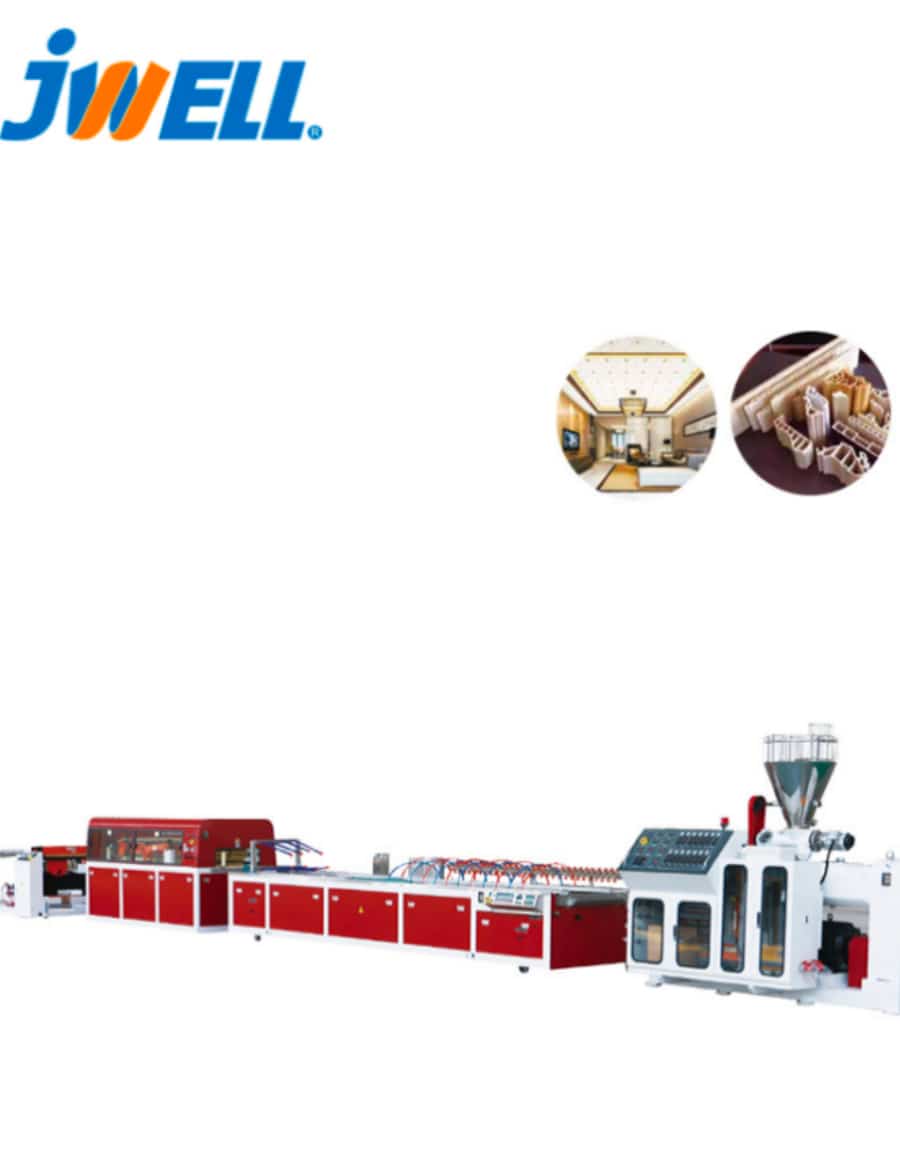
Profile extrusion line is a dedicated device for manufacturing massive, precise plastic profiles, which are applied in diverse sectors like construction, furniture, automobile, cable, and ornamentation. Today, profile extrusion lines are used to process a variety of materials such as polyvinyl chloride (PVC), polyethylene (PE), polypropylene (PP), acrylonitrile-butadiene-styrene (ABS), and wood-plastic composites (WPC), with good conformity, exact size, smooth product surface, and high efficiency.
Jwell has experienced engineering teams, which can provide customized mold design, high-efficiency and controllable production process for extrusion equipment, ensure stable operation, help manufacturing enterprises to improve production efficiency, reduce the waste of raw materials in the process of manufacturing, and improve market competitiveness.
What is the profile extrusion process?
Profile extrusion is a manufacturing process that melts plastic or metal material and pushes it through a shaped die to produce continuous profiles.
What does extrusion mean?
Extrusion means forcing material through a die to create products with a fixed cross-sectional shape.
What are the different extrusion profiles?
Common extrusion profiles include tubes, channels, angles, window frames, pipes, trims, and custom-shaped profiles.
Which aluminium profile is best?
The best aluminium profile depends on the application, but 6061 and 6063 aluminum profiles are widely used for strength, durability, and corrosion resistance.
Is extrusion better than injection molding?
Extrusion is better for continuous products like pipes and profiles, while injection molding is better for complex 3D plastic parts.
How to choose rubber extrusion profile?
Choose a rubber extrusion profile based on material type, hardness, temperature resistance, sealing performance, and application requirements.
what is plastic profile extrusion?
Plastic profile extrusion is the process of producing continuous plastic shapes such as frames, trims, pipes, and seals through an extrusion die.
What is a pvc profile extrusion line?
A PVC profile extrusion line is a machine system used to manufacture PVC window profiles, door frames, cable ducts, and decorative trims.
What is a plastic profile extrusion line?
A plastic profile extrusion line is industrial equipment used to continuously produce plastic profiles with different shapes and sizes.
What is the difference between profile extrusion and sheet extrusion?
Profile extrusion produces shaped products with complex cross-sections, while sheet extrusion creates flat plastic sheets with uniform thickness.
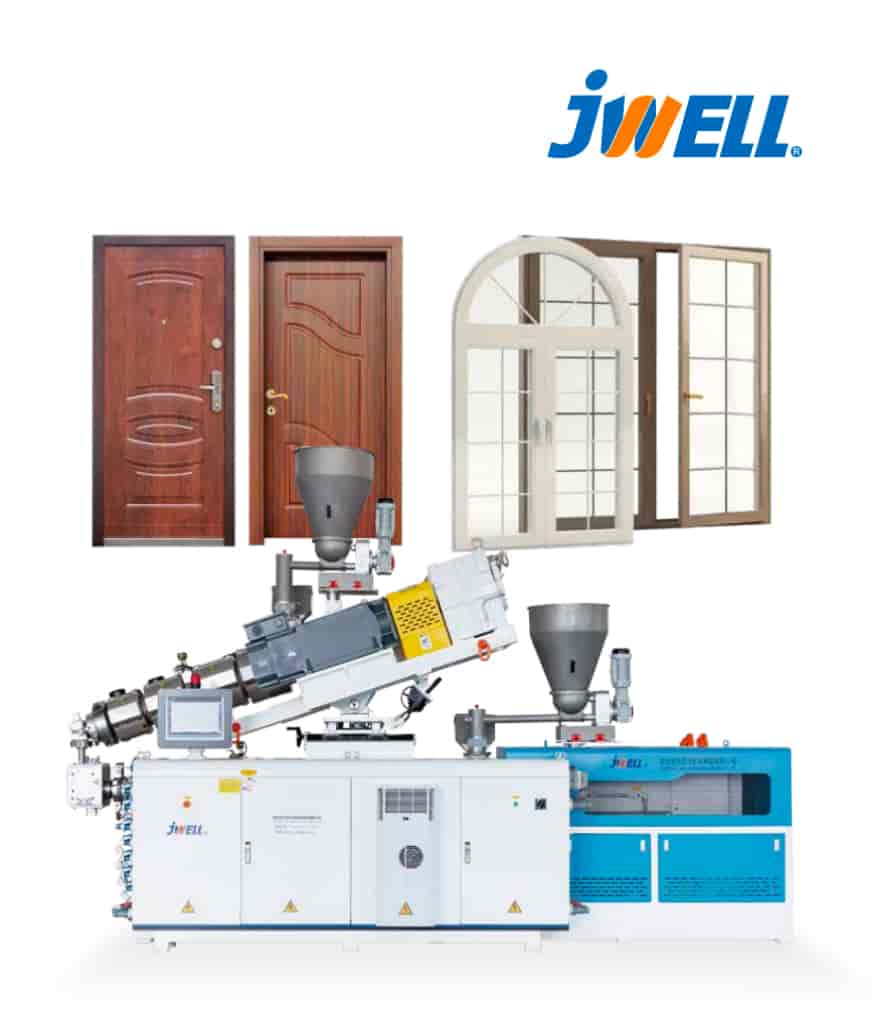
Plate extrusion lines are high-performance systems used for the manufacturing of robust and rigid plates with excellent impact strength and dimensional stability. These production lines are popularly implemented for the raw materials of PP, PE, ABS, PVC, and engineering plastics, and used for manufacturing in chemical and environmental engineering, construction engineering, military industry.
Jwell offers leading plate extrusion technologies with high-speed extruders, high-precision control systems, and continuous production systems to realize excellent quality, less energy consumption, and better competitive advantages for customers.
What is the difference between plate and extrusion?
Plate is the final product, while extrusion is the manufacturing process used to produce continuous plastic or polymer shapes.
What are the 5 methods of producing plastics?
The main methods are injection molding, extrusion, blow molding, compression molding, and rotational molding.
What is the difference between extruded bar and plate?
The four common types are injection molding, blow molding, compression molding, and rotational molding.
What is a breaker plate in extrusion?
A breaker plate is a perforated metal disc that filters impurities and stabilizes melt flow in the extrusion process.
How thick can extrusion plates be?
Extrusion plates can typically range from 1 mm up to 50 mm or more, depending on material and production line design.
What is plate extrusion?
Plate extrusion is a process where molten plastic is formed into thick flat boards or plates through a flat die system.
What is the difference between sheet and plate extrusion?
Sheet extrusion produces thinner materials, while plate extrusion produces thicker, more rigid plastic boards.
What plastics are used in plate extrusion?
Common materials include PP, PE, ABS, PC, PVC, PMMA, and engineering plastics depending on application needs.
How thick can extrusion plates be?
Extrusion plates can generally reach 50 mm or more depending on equipment capability and material type.
What industries use extrusion plates?
Extrusion plates are widely used in construction, automotive, chemical, packaging, advertising, and industrial manufacturing industries.
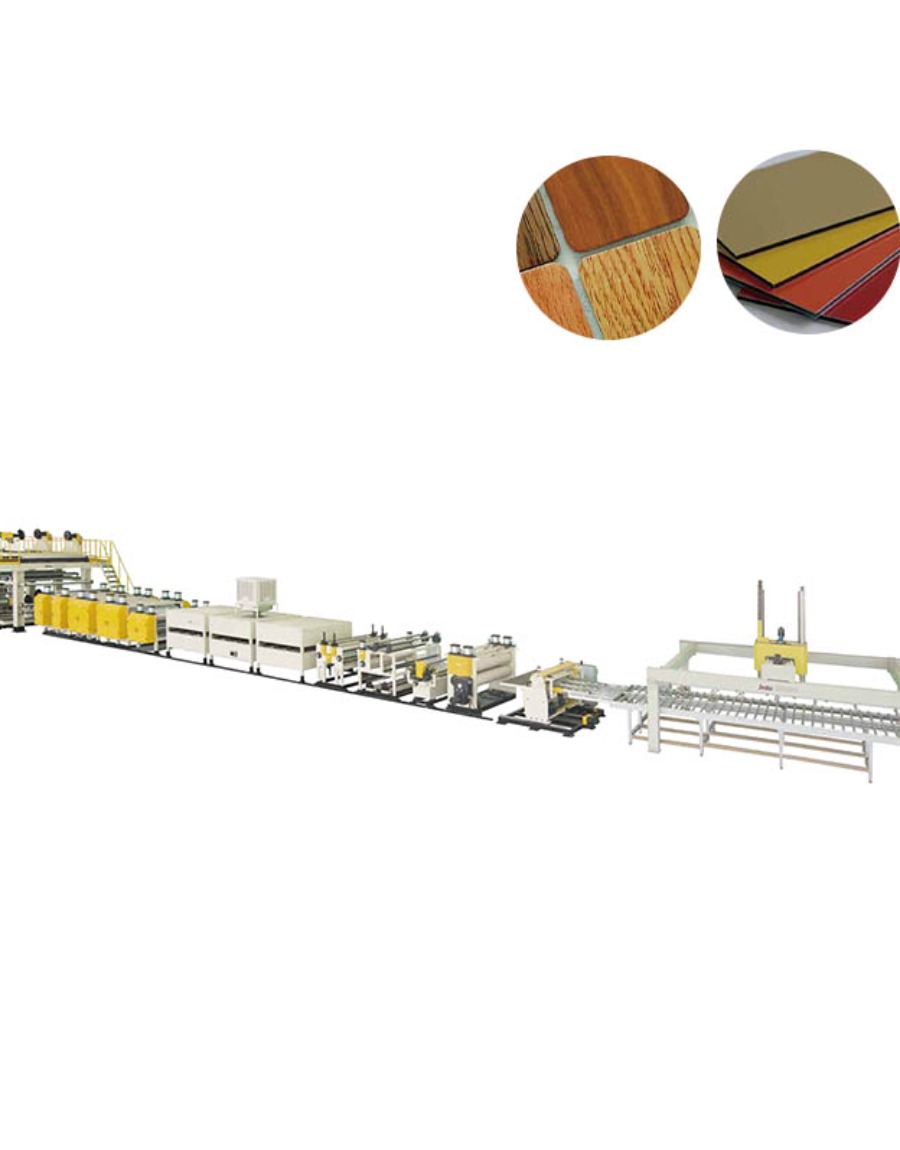
A blown film extrusion line is a high-grade manufacturing system for creating plastic films that offer good strength, consistent thickness, and can be sealed well. This extrusion line is mainly applied in packaging, agriculture, medical, industrial, and lifestyle fields and allows for using PE, PP, biodegradable materials, and so on.
Jwell supplies high-efficiency blown film extrusion systems that feature high output stability, power saving, intelligent automation, and constant film thickness, which could help clients to increase productivity, reduce waste, and rejuvenate their competitiveness in the global film industry.
What is the meaning of blown film?
Blown film refers to plastic film produced by extruding molten polymer into a tube and inflating it with air to form a thin film bubble
What is the difference between cast and blown film?
Cast film is cooled by chill rollers for high clarity, while blown film is air-cooled and offers better strength and toughness.
What is the blown film system?
A blown film system is an extrusion line that includes an extruder, die head, air ring, cooling tower, haul-off, and winding units.
What are the problems with blown film?
Common problems include uneven thickness, bubble instability, wrinkles, poor clarity, and inconsistent sealing performance.
What is the difference between blown film and stretch film?
Blown film is a production method, while stretch film is a finished product used for wrapping and load protection.
What are the 7 stages of film production?
They include material feeding, melting, extrusion, film forming, cooling, thickness control, and winding.
How are blown films made?
Blown films are made by melting plastic resin, extruding it through a circular die, inflating it with air, and cooling it into film.
How to solve blown film problems?
Adjust temperature, air pressure, screw speed, cooling system, and die alignment to improve film stability and quality.
What are the advantages of blown film extrusion?
It provides high strength, good flexibility, wide material compatibility, and cost-effective continuous production.
What is the difference between cast and blown film?
Cast film offers better transparency and thickness control, while blown film provides higher strength and better mechanical properties.
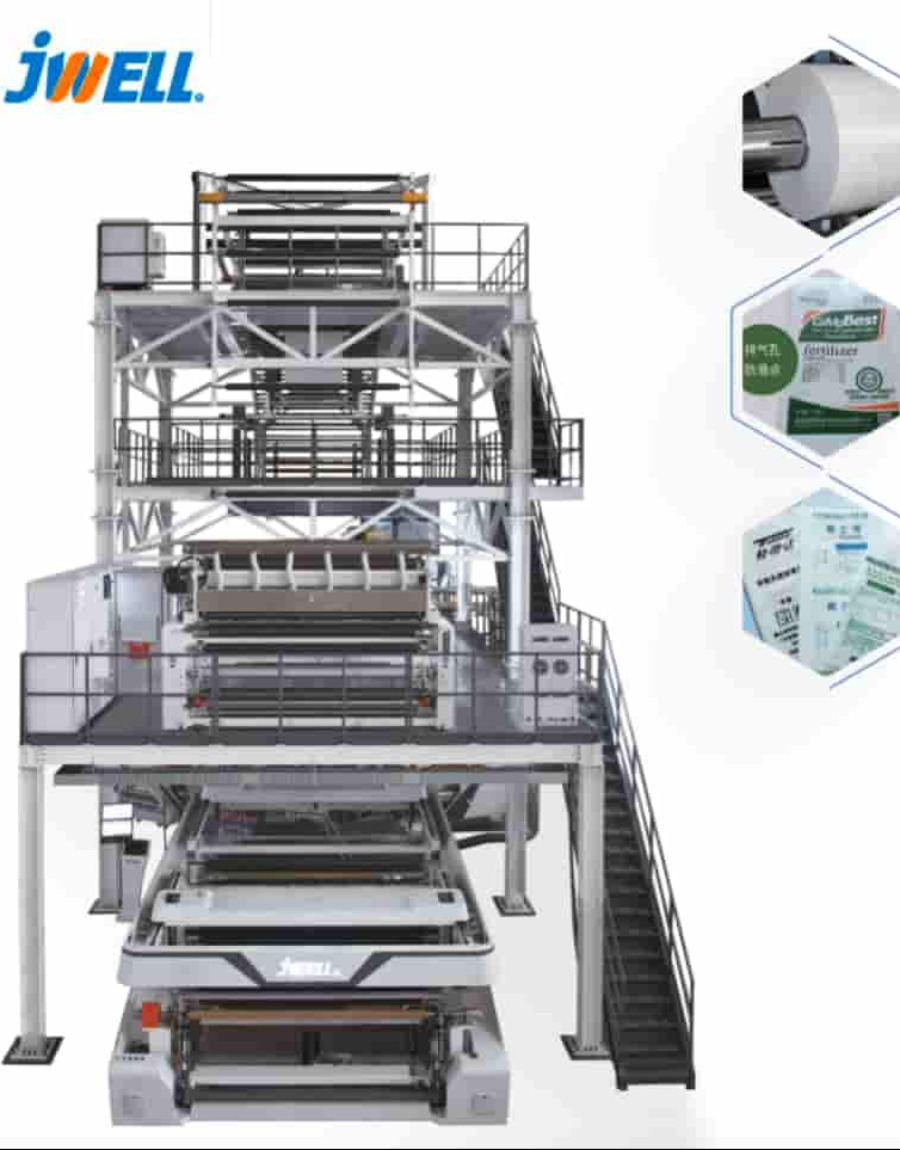
The mașină de turnare prin suflare is a high-efficiency molding system that produces hollow plastic products such as bottles, drums, tanks, car parts, and container boxes with high strength and precision. With support for a wide range of materials including HDPE, PP, PET, and engineering plastics, modern blow molding machines offer reliable operation, rapid molding speed, and low power consumption.
Jwell offers advanced blow molding machines featuring smart automation, precision control, and a high production capacity that enable manufacturers to elevate product quality, maximize efficiency, and boost competitiveness on the international stage.
Why choose jwell blow molding machine?
Jwell blow molding machines are known for stable performance, high automation, energy efficiency, and strong technical support for industrial production needs.
What is the use of blow molding?
Blow molding is used to produce hollow plastic products such as bottles, tanks, containers, and automotive parts.
What is blow molding vs injection molding?
Blow molding is used to produce hollow plastic parts by inflating a melted tube inside a mold, while injection molding produces solid parts by injecting molten plastic into a closed mold cavity.
What are the 4 stages of blow moulding?
The main stages are melting plastic, forming a parison, inflating with air in a mold, and cooling the final product.
Is blow molding expensive?
It has a medium initial equipment cost, but a low unit production cost, making it cost-effective for mass production.
What are the three main types of blow molding?
The three types are extrusion blow molding, injection blow molding, and injection stretch blow molding.
What is the difference between blow molding and thermoforming?
Blow molding forms hollow parts by air inflation, while thermoforming shapes heated sheets over a mold surface.
What materials are used for blow molding?
Common materials include PE, PP, PVC, PET, and ABS, depending on product requirements.
Why are blow molds so popular?
They are popular due to low cost, high production efficiency, lightweight products, and wide industrial applications.
Is blow molding cheap?
Yes, blow molding is generally cost-efficient for large-scale production due to low material waste and high output efficiency.
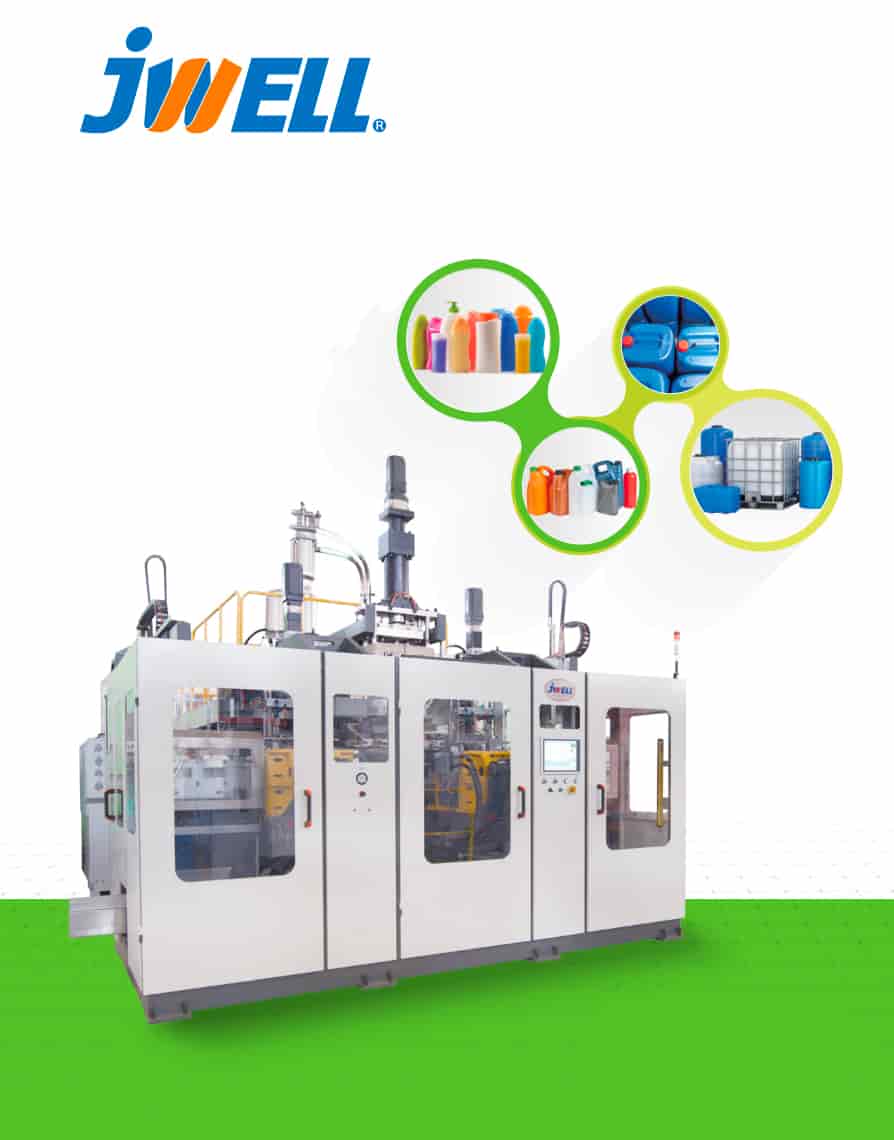
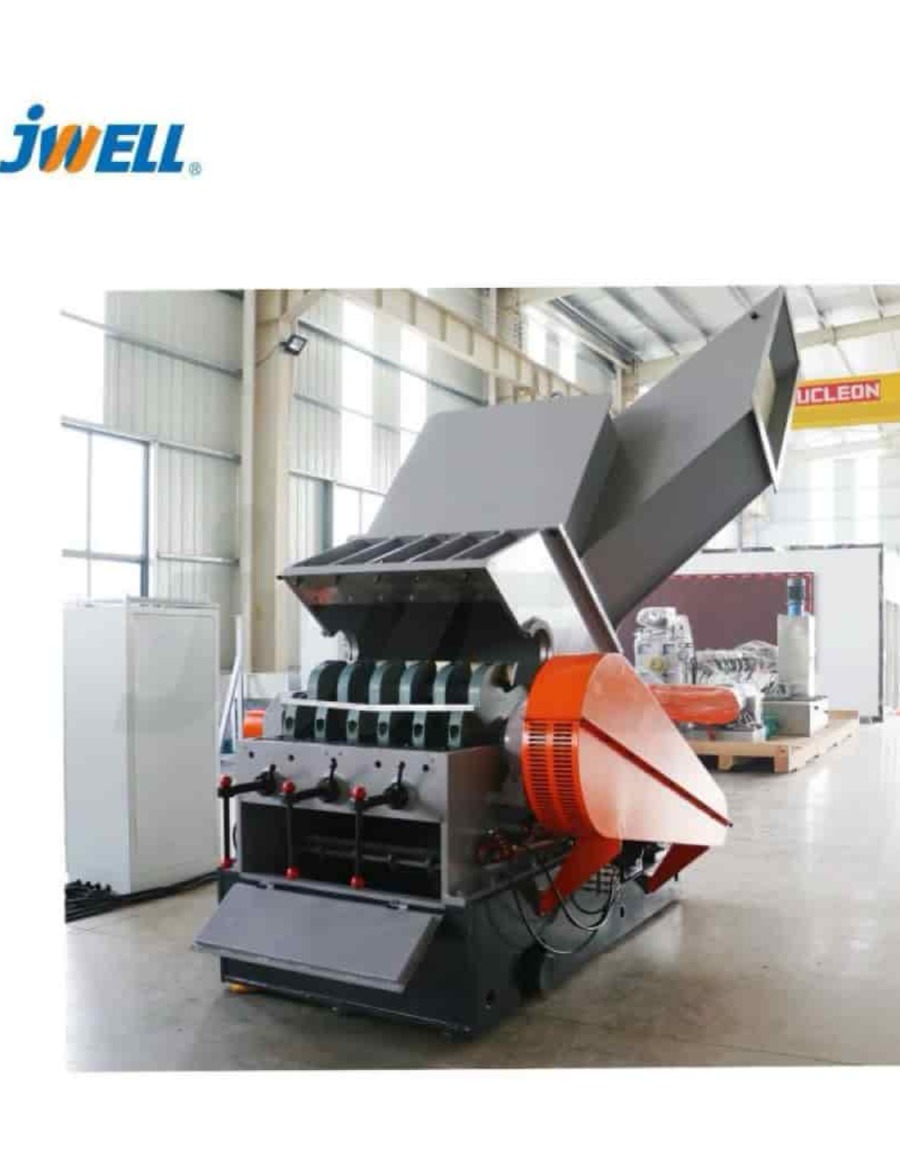
The recycling machine, also called a plastic recycling machine or plastic recycler, is an industrial machine that is intended to convert plastic waste into raw plastic material. This machine usually involves shredding, crushing, washing, pelletizing, and drying machines, etc., which turn the waste into pellets or plastic granules in order to produce further useful plastics. The plastic recycling industry, as well as sustainable production, demands the presence of such machines. Advanced recycling technology can improve the utilization rate of reclaimed material, enhance the economic benefits, reduce the cost, and promote circular economy construction.
On recycling equipment, Jwell’s recycling machinery features leading automation, stable and excellent performance, energy-saving and consumption reduction, and high-quality material handling. These innovative recycling technologies help achieve sustainable manufacturing and enhance operational efficiency and market competitiveness.
What is a recycling machine called?
A recycling machine is generally called a plastic recycling machine or recycling system, depending on its function and material type.
What is a plastic recycling machine?
A plastic recycling machine is equipment used to process waste plastics into reusable materials through crushing, washing, melting, and pelletizing.
What types of plastics can be recycled?
Common recyclable plastics include PET, HDPE, LDPE, PP, and PS, depending on cleanliness and processing technology.
What is a pelletizing recycling line?
A pelletizing recycling line is a system that converts waste plastic into uniform pellets through melting, filtering, and cutting processes.
What industries use plastic recycling machines?
They are widely used in packaging, automotive, construction, agriculture, and waste management industries.
What is a recycling machine?
A recycling machine is industrial equipment designed to process waste materials into reusable raw materials or products.
How to find a bottle recycling machine?
Blow molding forms hollow parts by air inflation, while thermoforming shapes heated sheets over a mold surface.
How does the recycling machine work?
It works by collecting waste plastic, crushing, washing, melting, filtering impurities, and forming pellets or reusable material.
How much does a plastic recycling machine cost?
The cost varies widely, typically from tens of thousands to several hundred thousand USD depending on capacity and configuration.
How to use the recycling machine?
Operators feed waste plastic into the system, set processing parameters, and the machine automatically completes crushing, washing, melting, and pelletizing.


 English
  Russian
  Spanish
  Arabic
  German
  French
  Persian
  Turkish
  Bulgarian
  Czech
Czech  Dutch
Dutch  Greek
Greek  Indonesian
  Japanese
  Korean
  Polish
  Portuguese
  Romanian
  Slovenian
  Ukrainian