
Quick answer: Although blow molding in blown film extrusion both use compressed air and molten thermoplastics, they are fundamentally different manufacturing processes. A blow molding machine produces hollow, three-dimensional products such as bottles, tanks, and containers, while a blown film machine manufactures continuous plastic films for use in packaging, agriculture, and industry. The distinction between the two processes is emphasised in Rosato’s Blow Molding Handbook, Plastics Materials by J.A. Brydson, and the Handbook of Plastics Technologies, which highlight differences in product geometry, equipment configuration, processing methods, and end-use applications.
Uvod
Plastic processing technologies have evolved rapidly over the past several decades, enabling manufacturers to produce a wide range of products, from lightweight packaging films to complex industrial containers, with remarkable efficiency and consistency. Of the many manufacturing methods available today, blow molding and blown film extrusion are two of the most widely used processes, as both rely on molten polymers and compressed air to shape plastic materials. Their similar names can lead newcomers to assume that they describe the same technology, yet their objectives, equipment, and finished products are fundamentally different.
It is therefore increasingly important for manufacturers, packaging companies, equipment buyers, and investors to understand these differences when selecting production technologies. Selecting the incorrect process can significantly impact production efficiency, product quality, utilisation of raw materials, and long-term operating costs. Whether the goal is to manufacture plastic bottles, industrial drums, agricultural films, shopping bags, or multilayer barrier packaging, selecting the appropriate equipment begins with understanding how each technology works.
This article explains the working principles, machinery, applications, advantages, and selection criteria of both blow molding machines and blown film production lines. By comparing these technologies in detail, manufacturers can make informed investment decisions based on product requirements, production capacity, and future market opportunities.
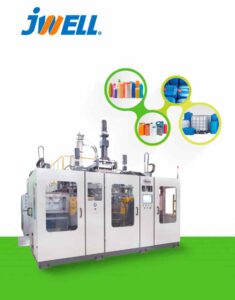
What Is Blow Molding?
Blow molding is a manufacturing process used to produce hollow plastic products. It involves inflating heated thermoplastic material inside a mould cavity. This method is highly efficient for creating lightweight containers that have a consistent wall thickness and complex geometries.
During production, plastic resin is melted and formed into a hollow tube, known as a ‘parison’. This is then positioned between two mould halves, which close around it to define the external shape of the final product. Compressed air is then introduced into the parison, forcing the softened plastic to expand outwards until it conforms precisely to the mould walls. After cooling, the mould opens, and the finished product is removed for trimming and finishing.
As the mould determines the external dimensions of the product, blow molding can manufacture containers with excellent dimensional consistency while maintaining relatively low material consumption.
The most common products produced by blow molding include:
- Water bottles
- Beverage containers
- Cosmetic bottles
- Detergent containers
- Fuel tanks
- Chemical drums
- Automotive air ducts
- Industrial storage tanks
- Medical containers
- Plastic toys
Depending on product complexity and production requirements, manufacturers generally employ one of three primary blow molding technologies:
Extrusion blow molding (EBM), injection blow molding (IBM), and stretch blow molding (SBM). Each process offers unique advantages for specific product categories, production volumes, and resin types.
What Is Blown Film Extrusion?
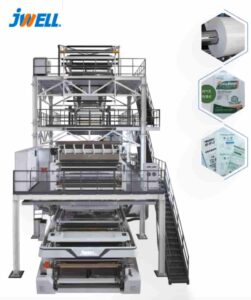
Unlike blow molding, blown film extrusion is designed to produce continuous plastic film rather than hollow moulded products.
A blown film machine melts thermoplastic pellets inside an extruder before forcing the molten polymer through a circular die. As the material leaves the die, compressed air inflates the molten tube into a thin plastic bubble. At the same time, nip rollers pull the bubble vertically upwards while an external air ring cools it.
As the bubble rises, the molten polymer solidifies into a thin tubular film. The bubble is then collapsed, flattened, and wound into large rolls for further processing.
This continuous manufacturing process enables high-volume production with excellent thickness control and consistent film quality.
Blown film extrusion is widely used for manufacturing:
- Shopping bags
- Garbage bags
- Agricultural mulch films
- Greenhouse films
- Food packaging films
- Stretch films
- Shrink films
- Industrial liners
- Protective packaging
- Multilayer barrier films
Modern blown film systems often include multiple extruders that combine different polymer layers into co-extruded films with improved mechanical strength, oxygen resistance, moisture barrier properties, and sealing performance.
Fundamental Differences Between Blow Molding and Blown Film Extrusion
Although both technologies involve processing molten thermoplastics using air pressure, their manufacturing objectives differ significantly.
Blow molding creates individual, hollow, three-dimensional products inside precision moulds. Each production cycle results in a finished item, making this process suitable for producing rigid containers and industrial components.
By contrast, blown film extrusion operates as a continuous extrusion process. Rather than producing separate parts, it manufactures long tubular films that are wound into rolls before being converted into finished packaging products through processes such as printing, cutting, sealing, or laminating.
Another important distinction lies in tooling. Blow molding requires moulds that are customised for each product shape and size, whereas blown film extrusion relies primarily on interchangeable circular dies and process adjustments to control film width and thickness. This provides greater flexibility for film manufacturers serving multiple packaging markets.
In addition, cooling methods differ substantially. Blow-moulded products cool against the mould surface to ensure dimensional accuracy, whereas blown film relies on controlled air cooling as the plastic bubble rises through the tower.
These differences in the production process influence the design of the equipment, the speed of production, the operating costs, and the range of products that can be manufactured economically using each technology.
Blow Molding Machine vs. Blown Film Machine
| Feature | Stroj za pihanje | Blown Film Machine |
| Primary Product | Hollow plastic products | Continuous plastic film |
| Manufacturing Method | Mold-based forming | Continuous extrusion |
| Finished Product Shape | Three-dimensional | Thin tubular film |
| Main Equipment | Extruder, mold, blow station | Extruder, circular die, air ring, tower |
| Production Mode | Cyclic | Continuous |
| Typical Materials | HDPE, PET, PP, PVC | LDPE, LLDPE, HDPE, EVA, PP |
| Main Industries | Packaging, automotive, medical | Flexible packaging, agriculture, logistics |
| Tooling Requirement | Product-specific molds | Circular die system |
Why Are the Two Processes Often Confused?
The confusion largely stems from the terminology used. Both processes include the word ‘blow’ because compressed air is essential for shaping molten plastic. However, the purpose of the air is entirely different in each process.
In blow molding, compressed air is used to expand a molten parison inside a rigid mould in order to create a hollow object with a fixed shape. In blown film extrusion, on the other hand, air inflates a continuously extruded tube into a thin bubble, which determines the width and thickness of the plastic film before it is cooled and wound into rolls.
Understanding this distinction helps manufacturers to avoid making costly mistakes when selecting equipment and ensures that production systems are matched to the intended product type.
Advantages and Limitations of Blow Molding
Blow molding machines have become the preferred solution for manufacturing hollow plastic products due to their ability to combine high productivity with excellent dimensional consistency. Once the mould has been developed and the process parameters optimised, manufacturers can produce large quantities of identical products with relatively little material waste and consistent quality.
One of its greatest advantages is design flexibility. Modern blow molding systems can manufacture products ranging from small pharmaceutical bottles to large industrial tanks with complex shapes, integrated handles, threaded necks, and reinforced structures. The process also enables manufacturers to optimise wall thickness distribution, thereby reducing material consumption while maintaining product strength.
From a production perspective, blow molding offers:
- High production efficiency;
- Excellent repeatability;
- Lightweight finished products;
- Low material waste;
- Good impact resistance;
- Suitability for fully automated manufacturing.
However, blow molding also has limitations. Every product requires a dedicated mould, resulting in higher tooling costs and longer development cycles. For manufacturers producing multiple product sizes or frequently changing designs, mould investment can account for a significant proportion of total production costs. Additionally, the process is generally limited to hollow plastic products and cannot manufacture continuous sheet or film materials.

Advantages and Limitations of Blown Film Extrusion
A blown film machine is designed for the continuous, high-volume production of flexible plastic films. As the process does not require individual moulds, manufacturers can quickly adjust the width, thickness, and material composition of the film to meet changing customer requirements.
One of the major advantages of blown film extrusion is its flexibility of production. By modifying die settings, the blow-up ratio, haul-off speed, and extrusion parameters, operators can produce films suitable for a wide range of packaging applications without having to replace expensive tooling.
Modern blown film lines also support multilayer co-extrusion, enabling different polymers to be combined into a single film structure. This technology significantly improves oxygen barrier properties, puncture resistance, sealing performance, and mechanical strength, making it ideal for food and pharmaceutical packaging and industrial protective films.
Key advantages include:
- Continuous production with high output;
- Excellent thickness consistency;
- Flexible product specifications;
- Support for multilayer barrier films;
- Efficient material utilisation;
- Lower tooling costs compared with moulded products.
The primary limitation is that blown film extrusion produces only flexible film products. Additional converting operations, including printing, laminating, slitting, bag making, and sealing, are required before the material can be used as a finished commercial product.

Typical Industrial Applications
Although both technologies involve processing thermoplastic materials, they are used in entirely different manufacturing sectors.
Blow molding is primarily used for rigid packaging and hollow industrial components. It is widely used for packaging beverages, cosmetics, household chemicals, automotive systems, pharmaceuticals, and chemicals. Products such as shampoo bottles, detergent containers, fuel tanks, medical bottles, and industrial drums are typically manufactured using this process because it provides excellent dimensional accuracy and structural integrity.
Blown film extrusion, on the other hand, dominates the flexible packaging industry. The thin plastic films produced by blown film machines are converted into products such as shopping bags, garbage bags, food packaging, stretch films, pallet wrap, greenhouse covers, silage films, construction protection films, and heavy-duty industrial liners. As the global demand for lightweight, recyclable, and high-performance packaging continues to grow, the importance of multilayer blown film technology for manufacturers seeking to enhance barrier properties and reduce material consumption is becoming increasingly apparent.
How to Choose the Right Manufacturing Process?
When choosing between a blow molding machine and a blown film machine, the characteristics of the final product should always be the primary consideration rather than the machinery itself.
If the product requires a rigid, three-dimensional, hollow structure capable of containing liquids, gases, or chemicals, then blow molding is the appropriate solution. This process provides excellent dimensional consistency, strong mechanical performance, and high-volume production efficiency for items such as bottles, tanks, and industrial containers.
Conversely, if the objective is to manufacture flexible packaging materials supplied in continuous rolls, blown film extrusion is the correct choice. Its ability to produce films with controlled thickness, adjustable width, and multilayer structures makes it indispensable for modern packaging production.
Manufacturers should also evaluate several additional factors before investing in equipment:
- Annual production volume
- Product dimensions
- Resin compatibility
- Automation requirements
- Tooling investment
- Energy consumption
- Future product expansion
- Maintenance requirements
A thorough evaluation of these criteria helps maximise production efficiency while minimising long-term operating costs.
Process Selection Guide
| Manufacturing Requirement | Stroj za pihanje | Blown Film Machine |
| Plastic Bottles | ★★★★★ | ☆☆☆☆☆ |
| Fuel Tanks | ★★★★★ | ☆☆☆☆☆ |
| Cosmetic Containers | ★★★★★ | ☆☆☆☆☆ |
| Food Packaging Film | ☆☆☆☆☆ | ★★★★★ |
| Agricultural Film | ☆☆☆☆☆ | ★★★★★ |
| Shopping Bags | ☆☆☆☆☆ | ★★★★★ |
| Industrial Liners | ☆☆☆☆☆ | ★★★★★ |
| Flexible Packaging Rolls | ☆☆☆☆☆ | ★★★★★ |
Frequently Asked Questions (FAQ)
- Is blow molding the same as blown film extrusion?
No. Blow molding creates hollow plastic products inside molds, while blown film extrusion produces continuous plastic films by inflating an extruded tube.
- Which process is better for plastic bottles?
A blow molding machine is specifically designed to manufacture bottles, containers, tanks, and other hollow products with excellent dimensional accuracy.
- What materials are commonly used in blown film machines?
Typical materials include LDPE, LLDPE, HDPE, EVA, PP, and multilayer polymer combinations designed for flexible packaging applications.
- Can one machine perform both blow molding and blown film extrusion?
No. Although both processes involve extrusion and compressed air, they require entirely different machine configurations, tooling, and production systems.
- Which process is more suitable for food packaging?
Both are important but serve different purposes. Blow molding is commonly used for rigid food containers and bottles, whereas blown film extrusion is the preferred process for flexible food packaging films, pouches, and bags.
- How do manufacturers choose between these two technologies?
The decision depends primarily on the final product. Hollow three-dimensional products require blow molding, while continuous flexible films require blown film extrusion.
Zaključek
Although blow molding and blown film extrusion use molten polymers and compressed air, they are designed for different manufacturing purposes. Blow molding is ideal for producing hollow plastic products such as bottles, containers, and tanks, whereas blown film extrusion is designed for the continuous production of flexible plastic films used in packaging, agriculture, and industrial applications. Understanding these distinctions enables manufacturers to select equipment that aligns with product design, production efficiency, and long-term business goals.
As packaging technologies evolve towards greater productivity, multilayer structures, and sustainability, selecting a reliable equipment supplier is just as important as choosing the right manufacturing process. Companies such as our Jwell, which has extensive experience in plastic extrusion and polymer processing equipment, can provide advanced manufacturing solutions to help processors improve the efficiency and quality of their production, as well as their operational flexibility, across a wide range of blow molding and blown film applications.
References consulted for the summary:
Rosato’s Blow Molding Handbook
Plastics Materials (J.A. Brydson)
Handbook of Plastics Technologies





 English
  Russian
  Spanish
  Arabic
  German
  French
  Persian
  Turkish
  Bulgarian
  Czech
Czech  Dutch
Dutch  Greek
Greek  Indonesian
  Japanese
  Korean
  Polish
  Portuguese
  Romanian
  Slovenian
  Ukrainian