In 2025, China will still be a leading nation in the plastic processing equipment industry, particularly in regard to blow moulding machines. For those who want to understand or source China-based blow molding technology, a comprehensive, current reference is necessary. JWEll‘s guide discusses the mechanism of blow molding machines in depth, the typical types of machines, the reasons why Chinese machines are distinguished, the proper way to choose a machine, and practical advice regarding installation and maintenance. Whether you’re manufacturing bottles, containers, barrels, or large empty plastic parts, this article will provide you with a practical path that is based on current industry practice.
What Is a Blow Moulding Machine & How It Works: Fundamental Concepts
Before exploring the process of sourcing or comparing machines, it’s essential to understand what a blow molding machine does and how it works.
-
Blow molding process overview
A blow molding machine employs thermoplastic resin (e.g., High-density polyethylene, polycarbonate, PET/polyethylene, etc. to create hollow plastic products that are marketable- containers, bottles, drums, jerrycans, tanks, consumer goods, and industrial goods. The core procedure involves: melting plastic pellets to form a “parison” or preform that is clamped into a mold. This is then expanded by blowing air into the plastic, which is then cooled and removed from the mold.
Specifically:
The plastic is heated to the point of softening or melting.
The molten plastic creates a tube that is confined by a mold.
High-pressure air is speared (via a blow-pin) into the parison, which will inflate it to match the mold’s cavity.
After the process of cooling and solidification, the mold is opened, and the hollow portion is expelled.
This method is similar to traditional glass manufacturing, but it’s applied to plastics instead of glass. As a result, in many languages, the core concept of “blow forming/blow molding” is also known as “closed-mold plastic blowing.”
Because blow molding promotes the creation of hollow plastic products efficiently and at a low cost, it has become a significant part of the manufacturing process in multiple industries, including packaging ( bottles, containers ), to heavier-duty drums or barrels, consumer goods, automotive components, and other products.
-
The Main Components of a Blow Moulding Device
A blow molding machine is a complex machine that requires precise coordination among its subsystems. Key components are typically composed of:
Extrusion unit (or injection/preform-handling unit): melts the resin and plasticizes it, creating the parison or handles the preform’s temperature.
Mould (die + cavity): determines the ultimate shape (bottle, container, drum, etc.) It’s typically personalized to fit each product.
Blow pin/blowing system: It supplies air that is pressured into the parison’s interior to inflation it into a hollow shape.
Clamping mechanism: it guarantees that the flaps of the mold are sealed around the preform/parison; it must ensure that the flaps are airtight.
Cooling system: after the plastic is blown, it must cool down quickly and uniformly to achieve its desired shape — typically via water or air cooling, depending on the resin and product requirements.
Control system and drive system: regulating the temperature, pressure, time, extrusion speed, the opening and closing of the mold, and ensuring consistent, reproducible production.
Understanding these components is crucial to ensuring each component is appropriate for your resin, product design, output volume, and quality standards.
Types of Blow Moulding Machines: What Options You Get
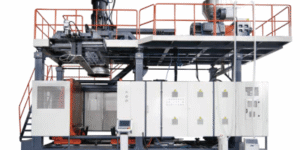
Blow molding is not singular. Multiple varieties of blow molding machines are available, each having its own specialty, product type, production volume, and quality concerns. Recognizing the differences facilitates the selection of the appropriate machine. Common variants include:
-
Extrusion Blow Moulding (EBM)
This is the most popular and versatile procedure. Plastic is melted, extruded into a parison (a hollow tube), which is then inserted into a mold and blown with air. The process is then stopped. The extrusion blow molding method is beneficial for a variety of hollow plastic products, including bottles, jerrycans, drums, large containers, domestic goods, industrial containers, etc.
Benefits: wide variety of product sizes and shapes, relatively low cost compared to injection molding, suitable for large quantities or large parts that are hollow.
Типові сфери застосування: chemical containers, water/ gas cylinders, jerrycans, consumer containers, large volume storage containers.
-
Injection Blow Moulding (IBM)
Injection molding is initiated by injecting the preform (or “parison preform”) into a mold, then reheating/preheating the material, placing it into a mold, and expanding it by air. This method allows for more precise control over the thickness of the wall, the quality of the finish, and it’s often employed for smaller containers and bottles (e.g.
Benefits: high accuracy, superior surface quality, uniform thickness of the wall, ideal for small to medium-sized containers.
Типові сфери застосування: small bottles, cosmetic containers, medical or pharmaceutical packaging that is aesthetically pleasing and has a uniform wall.
-
PET Stretching / PET Blowing
For PET bottles (common in beverage packaging), a variation of blow molding is employed that involves preforming the plastic and then heating it and stretching it (both in the axial and radial directions) in molds with controlled conditions that orient the molecular chains in the plastic, this enhances the plastic’s strength, clarity, gas barrier properties, and overall mechanical performance.
This style is integral to the packaging of beverages (water, soda, juices), cosmetics, food containers, and PET bottles are employed anywhere.
-
Unique and Customized Blow Moulding machines
Beyond the standard EBM, IBM has created machines that are custom-designed (e.g., multi-layered blow molding, large volume heavy duty drums, industrial containers, automotive lubricant storage, chemical barrels) for specific purposes. Many Chinese manufacturers have solutions that are custom-designed, which is one of their primary advantages.
As a result, when procuring, it isn’t “one size fits all” – you must specify the intended products, production volume, plastic type, wall thickness, cycle time, and any special requirements (e.g., chemical resistance, multiple layers of wall, heavy duty use, etc.) that are then matched with the appropriate type of blow molding machine.
Why Many Buyers Turn to China for Blow Moulding Machines — Strengths & Market Context
China has, over time, constructed a large manufacturing system for blow molding machines. Several attributes make Chinese blow molding machines superior in the global market.
-
Scale economies and mature supply chains
As documented by vendors of the industry, Chinese manufacturers enjoy a complete system: the domestic production of mechanical, hydraulic, and electronic components, molds, spare parts, and a variety of customization options, all of which enable efficiency in cost, short lead times, and flexibility.
Because of the great demand domestically (bottling, packaging, consumer goods, industrial containers), many manufacturers produce large quantities of standard blow moulding machines, which lowers the cost per unit. This scale has the potential to become a viable option for factories around the world if additional steps are taken.
-
Variety and Customization – From Small Samples to Large Bells
Chinese manufacturers of blow moulds typically have a broad product range: from automatic PET bottles that are blowed, small containers that are blowed, to large capacity machines that are drummed. These machines are semi-automatic, heavy-duty, and have multiple cavities.
This versatility is particularly appealing to buyers who want to produce different varieties of hollow plastic products using the same supplier — this facilitates procurement, maintenance, spare parts, and technical support.
-
Competitive pricing and faster delivery than other Western manufacturers
Because of the lower cost of labor and components, the manufacturing lines are optimized, and the volume is large, Chinese blow moulding machines are often 30% to 50% cheaper than Western brands. For similar specifications, the price difference is sometimes greater than 30%.
Additionally, many Chinese suppliers have a tradition of exporting goods; they support the practice of export packaging, quality assessment, documentation (CE, ISO, etc.), and international transportation logistics to reduce the burden on buyers.
-
Immediately following the release of the CSP, Apple Inc
Many Chinese manufacturers have progressed past the low-cost reputation; they have incorporated drives that are servo-based, automatic control systems, PLCs, energy-efficient hydraulics or all-electric systems, online leak detection, automatic flash removal, secondary cooling, etc.
This implies that buyers can access advanced machine features (precision, repeatability, energy savings) without the high cost of Western-made machines, a proposition that is strong for mid-sized or price-sensitive companies.
-
Risks and Adversities — What Consumers Must Be Cognizant of
While benefits are plentiful, the sourcing of China is also fraught with difficulty. As documented in the practitioner guides, differences in drives (hydraulic, servo, all electric), the variability of component quality (e.g., motors, screws, molds), and the after-sales/maintenance capabilities of the suppliers are vastly different.
As a result, checking multiple vendors, verifying the quality of the build, understanding the terms of the warranty, transporting supplies, installing them, and maintaining them is essential.
How to Choose the Right Blow Moulding Machine: Key Criteria & Buyer Checklist
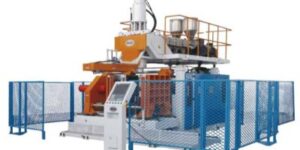
Because of the variety of blow molding machines and Chinese vendors, choosing the appropriate machine for your operation is complicated by the need to consider multiple aspects. Here are the critical factors and recommended actions.
-
Describe the intended product and production requirements explicitly
Product type and size: small PET bottles, large jerrycans, chemical containers, or custom configurations — the type of product defines the necessary machine (EBM, PET-blow, injection-blow, capacity of the mold, parison size), etc.
Materials needed: The material (resin) to be employed is HDPE, PP, PET, etc. Different machines (extruder design, heating, mold, and cooling) may be appropriate for different resins.
Factors to consider: The volume of output needed per cycle is considered, as is the number of cavities, the automation level (manual, semi-automatic, full automatic), and shifts.
Wall thickness, tolerance, quality of finish: for food-grade or consumer products, consistency of wall, weld lines, clarity (PET) matter — you may need to use a stretch-blow or high-precision machine.
Clear specifications: Only after clarifying the product’s specifications can you then match the technical parameters of blades, extruder, mold, blow pressure, cooling, and control systems.
-
Review the technical specifications and quality of the machine
Extruder and screw design: the material of the extruder/screw (wear-resistant steel), the L/D ratio, the compatibility of resin with the extruder, and the product type. Many Chinese manufacturers take the source of their screws from a reputable supplier, and they then verify the specifications of their screws to avoid early wear or poor plasticization.
Infallible quality: the correct design of the pin promotes uniform inflation, the thickness of the wall, and reduces the flash or problems. The design of the mold has a significant impact on the quality of the product.
Drive system types: hydraulic, servo, or all-electric — all-electric may have a more precise, efficient, and lower-maintenance drive system, though the cost may be higher.
Cooling system and optimization of cycles: Effective cooling is crucial to producing quickly while maintaining product quality – this is important for products with a thick wall or high volume runs.
Automation and supplementary devices: removal of flash, release of mold, online detection of leaks, and controls that are essential for efficient production of large quantities and minimizing waste.
-
Supplier evaluation and caution (primarily for China procurement)
Many blow moulding machines are derived from China, thus it’s important to conduct:
Confirm the history and reputation of the supplier: how long have they been making blow molding machines, what varieties of machines, and customer reviews.
Components’ origin and quality: inquire about motors ( international or domestic brands ), screws, barrels, molds, hydraulic or servo systems, and confirm the standards of quality. As some Chinese factories utilize domestic components, the quality may be altered.
After-sales support, extra parts supply, and warranty: all of these are crucial to long-term success, especially for American and European consumers who import machines.
Readiness for export: packaging, documentation (if necessary), compliance with regulations in the destination country, and logistics of shipment – many Chinese suppliers provide comprehensive export services.
Compare the different drive systems with care: hydraulic, servo, and all-electric — each has benefits ( cost, maintenance, energy consumption, precision); choose based on your production volume, the required degree of precision, and the long-term cost.
-
Operational Preparedness: installation, material preparation, and maintenance
Even a highly efficient blow molding machine requires proper configuration and regular maintenance to produce consistently. Before initiating, you should:
Thorough inspection: Inspect all parts (mold spaces, blowholes, extruders, heating units) and remove dust, debris, and residual plastic; this is crucial to avoiding defects.
Ensure material compatibility and drying: plastics like PET or hydroscopic resins may require pre-drying in order to avoid moisture-related defects.
Check and verify: Calibrate the temperature, pressure, and other cycle parameters according to the resin’s specifications — incorrect settings will result in parts that are malformed or have weak walls.
Mold Inspection: Check the molds for wear or damage, apply a release agent if necessary, make sure the cooling channels are functional, and it’s crucial to have a consistent quality product.
Ensure normal: Lubricate the moving parts and make sure the control system is functioning properly — especially in machines that are driven by electricity or have a servomechanism, the proper amount of lubrication and system calibration is important.
Long-term management: scheduled audits, extra parts, preventive care, and is essential for maintaining the uptime and consistent quality of the product, and protecting the ROI.
Typical Applications & Market Segments for Blow Moulding Machines in 2025
Because blow molding is multi-purpose, its uses are diverse in many industries. In 2025, demand is expected to increase in several areas. Here are some of the most common uses of blow molding and why this method is still preferred over other manufacturing methods.
-
Packaging and Consumer Goods – bottles, containers, jars
Perhaps the largest demographic segment. Blow machines that are specifically designed for PET and extrusion (particularly popular in the United Kingdom) produce bottles and containers for water, soda, chemicals for the home, personal care products, detergents, shampoos, and other products.
Advantages: lightweight products, fast production rate, uniform thickness of the wall, and efficient mass production.
-
Industrial & Chemical Containers – Barrels, Drums, Jerrycans, Large Containers
For chemicals, lubricants, industrial fluids, agricultural chemicals, and heavier-duty drums and cans are necessary, these are often constructed with thick walls, high strength, and chemical resistance, and are frequently referred to as “chemicals.” Blow molding machines (particularly heavy-duty extrusion blow molders) are exceptional at this.
Benefits include a consistent wall thickness, uniform strength, capacity for large volumes, and a relatively low cost per unit for long runs.
-
Specialized & Custom Forms – Industrial Components, Automotive Tanks, Home Use Goods
Other than standard bottles and containers, blow molding can create complex, hollow plastic parts: automotive fluid storage, molded housings, cases, large, floating parts for furniture or appliances, Kayaks, storage tanks, and other items. Many Chinese manufacturers have solutions for custom molding due to their ability to create molds and flexible configurations of extrusion.
Additionally, the capacity to personalize the shape of the mold and alter the machine’s parameters (e.g., the thickness of the parison, the pressure used to blow the plastic, or the cooling process) gives flexibility to different configurations.
-
Emerging / Niche Uses – Large Volume Containers, Recycled Plastic Moulding, Heavy Duty Industrial Purpose
As the global focus on sustainability and the circular economy increases, some manufacturing operations are transitioning to recycled plastics, multiple-layered manufacturing for barrier properties, or large-volume containers (e.g., water reservoirs, chemical reservoirs). Chinese machines have a flexibility that’s why they remain popular for these projects.
Best Practices for Procuring & Using Blow Moulding Machines from China (2025 Edition)
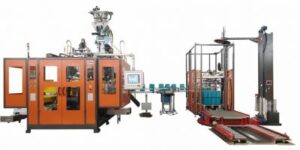
Based on firsthand experience with industry and the current state of the market in 2025, the following recommendations are made for consumers, engineers, and managers in charge of procuring Chinese blow molding machines.
Define the product’s specifications and the volume of resin needed before contacting suppliers — Describe the product’s size, type of resin, capacity for output, wall thickness, mold count, and the expected lifetime.
Request specific machine specifications, brand lists of components, and previous records of performance — don’t just compare the price; compare the extruder’s design, drive system (servo/hydraulic/electric), the mold quality, stability of cycle, and brand lists of components.
If possible, observe a factory’s operations or request a video of the machine running with a similar ratio of resin to product — this will help to assess the quality of the build, the standards of assembly, and the quality of workmanship. Many Chinese cities with large populations (e.g., Jiangsu/ Zhangjiagang) still hold leading positions in the worldwide industry of blow molding machines.
After-sales support and extra parts supply – the ideal supplier should provide extra parts kits, a user guide (electronic, hydraulics), and remote or on-site assistance (dependent on your location).
Prepare your facility for machine setup: make sure the material is dry, have climate control (if necessary), have a stable power source, have a trained operator, and have a preventative maintenance plan.
Test production runs before mass production — regulate the temperature, pressure, cooling, and the number of cycles needed to make a mold; make adjustments until the output meets the quality standards of your choice (thickness of the wall, finish of the surface, consistency of the dimensions).
Track the operational data (average yield, average downtime, average energy consumption, and the cost of maintenance over time). This will help to determine whether or not the machine was appropriate. If necessary, adjust the maintenance or upgrade.
If manufacturing food, beverages, consumer goods, or export products, make sure that the machine and mold used, plus the produced plastic, are safe, hygienic, and regulatory compliant; possibly conduct local sample testing.
By treating the procurement of blow machines as a project (not a simple purchase), you reduce the risk and increase the probability of producing stable, high-quality products.
Outlook 2025+: Trends & What to Watch in Blow Moulding Machine Market
The worldwide movement towards sustainability, efficiency, automation, and flexibility has an effect on blow molding machine producers, including those in China. Some popular news:
Shift towards electric or servo-driven machines: increased efficiency, lower maintenance, higher precision control — Chinese vendors are increasingly offering these options at a competitive price.
Customization and production flexibility: demand from customers for multiple cavities, multiple sizes, quick changes in mold design, or multiple layers of blow molding — leading suppliers will offer modular or hybrid solutions.
Diversified materials, including recycled plastics or PET/ PET blends: as sustainability becomes more important, more consumers demand machines that can handle recycled resins or copolymers — these machines need to have a screw/barrel, heat, and cool system that is compatible with varying material properties.
Increased automation and Industry 4.0 integration: remote monitoring, real-time quality control, AI-based process control, and Predictive Maintenance. These value increments can increase uptime, reduce defects, and lower the long-term cost. Chinese suppliers that are leading in this area are adding features like this to their products.
The worldwide growth of exports has shifted towards emerging markets: as demand in Southeast Asia, Africa, and Latin America increased for affordable plastic packaging and containers, Chinese blow moulding machines that are customizable and ready to export will have a larger share in the market.
For consumers and investors, these trends indicate that purchasing from China in 2025 is not solely based on cost, but also involves accessibility to modern features and a long-term perspective.
Summary & Conclusion
Blow molding machines are essential for manufacturing hollow plastic products, including small bottles to large drums, efficiently and cost-effectively. China, having a mature manufacturing system, a large supply network, and competitive pricing, will remain the leading provider of blow moulding machines in 2025. However, successful adoption of a machine is more than simply purchasing a machine: it necessitates the definition of a clear product, the precise specifications of the machine, the supplier’s diligence, the proper installation of the machine, and its ongoing maintenance.
Understanding the process of blow molding, the machine’s components, and the different types of machines (extrusion, injection, PET blow, and custom heavy-duty) that are appropriate for different applications.
When choosing a Chinese blow molding machine, consider the extruder/ screw design, the drive system, the quality of the mold, the automation level, and the after-sales support, not just the price.
For the most effective results, plan your manufacturing process, operators, and maintenance plans – run small tests before mass production, and observe the key operational parameters.
Recognize that blow molding is developing: more efficient drives, versatile production capabilities, material variety, automation, and global demand will influence the design of machines and the providers of supplies.
For those interested in purchasing or manufacturing machines that use blow mounts in 2025, this guide will serve as a practical approach. With careful consideration and a precise match between machine, material, and product, a Chinese blow molding machine can provide powerful performance, reliability, and a return on investment.


 English
  Russian
  Spanish
  Arabic
  German
  French
  Persian
  Turkish
  Bulgarian
  Czech
Czech  Dutch
Dutch  Greek
Greek  Indonesian
  Japanese
  Korean
  Polish
  Portuguese
  Romanian
  Slovenian
  Ukrainian