
Article Summary: A high-speed 3D filament extrusion line converts thermoplastic pellets into consistent 3D printing filament through a coordinated process involving material preparation, melting, extrusion, cooling, measuring the diameter, pulling the filament off the die, and winding it up automatically. A systematic start-up, parameter adjustment, and quality monitoring procedure is essential for maintaining filament diameter accuracy, production efficiency, and equipment reliability. This is supported by material extrusion research and industrial extrusion practices, including the troubleshooting framework discussed in ‘An Overview of Material Extrusion Troubleshooting’ published in Applied Sciences (MDPI).
Understanding the High-Speed 3D Filament Extrusion Line
A high-speed 3D filament extrusion line is an integrated manufacturing system designed to produce filament for fused filament fabrication (FFF) and fused deposition modelling (FDM) 3D printers. Rather than relying on a single extrusion machine, the production line synchronises multiple components, including material feeding, extrusion, cooling, measurement, traction, and winding, to ensure continuous manufacturing and consistent filament quality. Typical filament products include PLA, PETG, ABS, TPU, and other thermoplastics; however, each material requires a compatible processing configuration.
The operating performance of the entire line depends on the coordination of extrusion output, cooling capacity, haul-off speed, and winding tension. Simply increasing line speed does not necessarily improve production efficiency if the filament cannot maintain its target diameter, roundness, surface finish, and mechanical characteristics. The objective for manufacturers is to achieve a stable production window in which the line operates efficiently while consistently meeting finished filament specifications.
Main Components and Their Functions
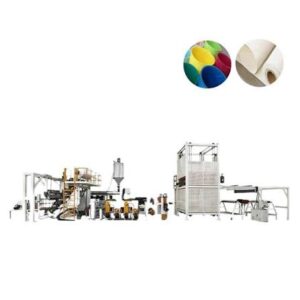
Before operating a high-speed filament extrusion system, operators should understand the function of each major unit and how it affects downstream production. A typical industrial 3D Filament Extrusion Line consists of the following equipment.
- Material feeding and drying system: Supplies thermoplastic pellets to the الطارد and removes moisture where necessary to prevent bubbles, degradation, and surface defects.
- Single-screw extruder: Melts, mixes, and conveys the polymer under controlled temperature and screw-speed conditions.
- Extrusion die: Shapes the molten polymer into a continuous filament strand with the required initial cross-section.
- Cooling and calibration system: Stabilizes the filament through controlled cooling, helping establish the final diameter and shape.
- Online laser diameter measuring system: Monitors filament diameter continuously and provides measurement feedback for process adjustment.
- Haul-off unit: Pulls the filament at a controlled speed, influencing diameter, production continuity, and strand tension.
- Accumulator or storage system: Temporarily stores filament length to buffer production interruptions or spool replacement, depending on line configuration.
- Automatic winding system: Collects filament onto spools with controlled tension and traverse movement to ensure orderly winding.
The equipment layout, control functions, and automation level vary according to line design, material, production capacity, and filament specification.
Step-by-Step Operating Guide
Step 1: Prepare Raw Materials and Verify Drying Conditions
The first step is to prepare the raw material according to its processing requirements. Before feeding the material into the machine, operators should confirm the resin grade, material batch, colour masterbatch or additive formulation, and the target filament specification. Consistency of the material is particularly important when producing filament for consumer 3D printers, since variations in moisture, additives or resin properties can affect melt flow, extrusion stability and the dimensions of the final filament.
Moisture-sensitive polymers should be dried using the recommended conditions supplied by the resin manufacturer. As PLA, PETG, ABS, TPU and PA do not have identical drying requirements, operators should not apply a universal drying temperature or time to all materials. Before starting extrusion, operators should check the dryer temperature, drying duration, material loading condition, and whether the drying system has reached its intended operating state. Inadequately dried materials may result in bubbles, rough surfaces, inconsistent extrusion, or degraded filament properties.
Step 2: Inspect the Extrusion Line Before Startup
A pre-start inspection helps prevent mechanical problems, production interruptions, and safety incidents. Check whether the extruder, die, water tanks, measuring instruments, haul-off, accumulator, and winding equipment are installed and aligned correctly. Inspect the screw and barrel heating zones, temperature sensors, electrical connections, cooling-water circulation, emergency-stop devices, protective covers, and control panel for abnormal conditions.
Operators should also confirm that the extrusion die is clean, the material feeding system is ready, the laser diameter gauge is correctly positioned, and the filament path is free from obstructions. Verify the availability of empty spools and that the winding unit is configured for the intended filament diameter and spool dimensions. Startup should only proceed when the line is mechanically ready, safety devices are functioning, and the equipment manufacturer’s operating instructions have been reviewed.
Step 3: Set the Extruder Temperature and Start Heating
Set the temperature of each barrel zone, the die, and any other temperature-controlled components according to the processing window of the polymer and the recommendations of the machine manufacturer. Different polymers exhibit different melting behaviour and thermal sensitivity, and additives, recycled materials and colourants can also affect processing characteristics. Therefore, a temperature profile should be developed for each resin formulation rather than being copied indiscriminately from another production job.
Once the temperature profile has been set, activate the heating system and allow the machine to reach its operating temperatures. Ensure that each zone has stabilised before initiating screw rotation or material extrusion, following the prescribed sequence of the machine manufacturer. If the temperature is too low, this may result in incomplete melting, unstable melt flow, or excessive pressure. Conversely, excessive temperature or prolonged residence time can lead to polymer degradation, discolouration, and changes in material properties. Temperature stability should be verified throughout the production run rather than being treated as a one-time start-up setting.
Step 4: Start Feeding and Extrude the Initial Filament
Once the machine has reached the appropriate processing condition, initiate material feeding and extrusion according to the startup procedure. Begin with conservative screw-speed and output settings, allowing the polymer to melt and flow through the die until a continuous strand forms. The initial filament may not meet the target diameter or appearance because the extrusion process has not yet reached a stable balance between melt output, cooling, and pulling speed.
Operators should observe the melt flow, strand continuity, die discharge, and initial filament surface. Discard or segregate startup material until the strand becomes stable and the necessary quality checks have been completed. If the extrusion is irregular, investigate material feeding, moisture, temperature stability, screw operation, die condition, and possible contamination before increasing production speed. A stable melt stream is the foundation for reliable downstream diameter control.
Step 5: Adjust the Cooling and Calibration System
After leaving the extrusion die, the filament enters the cooling section, where the polymer solidifies and becomes stable. Industrial filament production lines typically use temperature-controlled water tanks, sometimes incorporating staged cooling arrangements, to control heat removal and maintain the dimensional stability of the filament. The cooling temperature, immersion length, water circulation, filament path, and cooling intensity must be adjusted according to the material and production speed.
Insufficient cooling may cause the filament to deform or stretch during downstream traction, while poorly controlled or uneven cooling can lead to dimensional variation, distortion, or internal stress. Therefore, the cooling system should be optimised alongside the extrusion output and haul-off speed. Before proceeding to full-speed operation, operators should check the water temperature, circulation, tank cleanliness, and the filament’s physical condition.
Step 6: Calibrate the Online Diameter Measuring System
The online diameter gauge is one of the most important quality-control components in a high-speed 3D Filament Extrusion Line. It continuously measures the filament diameter during production, allowing operators to detect dimensional deviations before large quantities of nonconforming material are produced. Depending on the machine configuration, the system may use single-axis or dual-axis laser measurement, with dual-axis measurement providing additional information about diameter variation and ovality.
Before production, verify that the measuring instrument is correctly installed, aligned, calibrated, and configured for the target filament specification. Confirm the nominal diameter, allowable tolerance, measurement units, alarm limits, and feedback-control settings. A gauge’s display resolution is not the same as the line’s guaranteed manufacturing tolerance; actual accuracy must be confirmed through calibrated inspection instruments and production testing. Research on filament-based material extrusion emphasizes that filament dimensional inconsistency can contribute to feeding and printing problems, reinforcing the importance of reliable measurement and quality control.
Step 7: Adjust Haul-Off Speed and Establish Diameter Stability
The haul-off unit controls the speed at which the filament is pulled after it has cooled sufficiently. The speed of the haul-off unit directly influences the diameter of the filament because the relationship between melt output and pulling speed determines how much polymer is distributed along the length of the strand. When extrusion output remains relatively constant, increasing the speed of the haul-off unit generally produces a thinner filament, while reducing the speed tends to produce a thicker filament.
Operators should establish a stable diameter by gradually adjusting the haul-off speed while monitoring the laser gauge. Large, frequent adjustments should be avoided as these can create oscillations in diameter or destabilise the process. If the line is equipped with closed-loop diameter control, the control system may automatically adjust the traction speed or other configured variables based on the measured diameter deviation. However, operators should still monitor the feedback response, verify that the system is operating within its intended range, and investigate any persistent deviations, rather than relying entirely on automatic correction.
Step 8: Synchronize the Accumulator and Automatic Winding System
Once the filament has achieved stable diameter and sufficient cooling, it can be transferred through the accumulator or storage section, haul-off unit, and automatic winding system. The accumulator provides a buffer between upstream extrusion and downstream winding, depending on the line design. This arrangement helps maintain production continuity during spool changes or other downstream handling operations.
The automatic winding system should be configured for the correct spool dimensions, winding speed, traverse movement, and tension. Excessive tension can stretch the filament, flatten its cross-section, or affect dimensional stability, while insufficient tension may result in loose winding, tangled filament, or irregular spool edges. Operators should observe the winding pattern during the initial production period and confirm that the filament is distributed evenly across the spool without crossing, overlapping excessively, or becoming trapped.
Step 9: Increase Production Speed and Monitor Process Stability
Once the extrusion, cooling, diameter measurement, haul-off, and winding stages have been synchronised, operators can gradually increase the line speed towards the target production rate. This increase should be performed incrementally, with each adjustment followed by a period of observation and measurement. High-speed operation is only sustainable when the extrusion system can consistently supply a melt stream, the cooling section can adequately stabilise the filament, the measuring system can respond to variations, and the winding equipment can handle the increased throughput.
During this stage, monitor the following: extruder output; screw speed; temperature profile; melt pressure (if available); cooling conditions; laser diameter readings; haul-off speed; and spool winding quality. Record relevant process data so that operators can identify stable operating conditions, compare production batches, and investigate deviations. Production speed should be determined by actual quality performance and process capability rather than by the maximum speed displayed in the equipment specification.
Step 10: Inspect Finished Filament and Record Production Data
Finished filament should be inspected before packaging and shipment. Quality inspection typically includes diameter measurement, roundness or ovality checks, surface appearance, spool winding quality, and material identification. Depending on customer requirements and filament formulation, additional testing may include moisture content, mechanical properties, color consistency, printing performance, or other product-specific quality criteria.
Operators should retain production records containing material batch information, machine settings, output rate, line speed, measured diameter data, quality inspection results, and any process adjustments. These records are valuable for traceability, troubleshooting, and continuous improvement. Filament that does not meet the agreed specification should be segregated and evaluated rather than mixed into conforming production.
Step 11: Perform an Orderly Shutdown
Once a production run has been completed, operators should follow the shutdown sequence specified by the equipment manufacturer. This typically involves stopping or reducing the feed of material, managing the residual polymer in the extrusion system as instructed, stopping the downstream equipment in the correct sequence, and allowing the heating zones to cool appropriately. The screw, barrel, and die should not be cleaned or disassembled while they are still at unsafe temperatures or in hazardous conditions.
After shutdown, operators should inspect the extrusion die, cooling tanks, haul-off rollers, laser gauge, winding system, and material feeding components. Remove any accumulated material or contamination, record any production abnormalities, and prepare the line for the next production run. Consistent shutdown and maintenance routines help to reduce material waste, equipment wear, and unplanned downtime.
Key Operating Parameters and Their Effects
The performance of a high-speed filament extrusion line depends on several interconnected variables. The following table summarizes the primary parameters operators should monitor during production.
| Operating parameter | Main function | Potential issue if poorly controlled |
| Material moisture | Influences melt quality and surface appearance | Bubbles, voids, rough surfaces |
| Barrel and die temperature | Controls melting, viscosity, and melt stability | Degradation, incomplete melting, unstable flow |
| سرعة اللولب | Influences material conveying and extrusion output | Output fluctuations, inconsistent diameter |
| Cooling temperature and length | Stabilizes filament dimensions and shape | Deformation, residual stress, dimensional variation |
| سرعة السحب | Controls pulling rate and influences filament diameter | Oversized or undersized filament |
| Diameter feedback | Detects and helps correct dimensional deviation | Diameter variation and inconsistent feeding |
| Winding tension | Controls spool arrangement and handling | Tangling, stretching, flattened filament |
| سرعة الإنتاج | Determines manufacturing throughput | Instability when cooling or downstream capacity is insufficient |
The values for these parameters are material-, machine-, and product-dependent. They should be established through equipment manuals, material supplier recommendations, and production trials rather than treated as universal settings.
Common Problems During High-Speed Filament Production
Even an automated extrusion line may experience quality problems when materials, operating parameters, or equipment conditions are not properly controlled. Identifying the root cause is more effective than repeatedly adjusting one parameter without evaluating the complete process.
| Common problem | Possible causes | Recommended corrective action |
| Filament diameter fluctuates | Unstable melt output, inconsistent pulling speed, poor cooling, gauge misalignment | Check material feeding, extruder stability, cooling conditions, gauge alignment, and traction response. |
| Bubbles or porous surfaces | Moisture, material contamination, thermal degradation | Verify drying conditions, material quality, temperature settings, and residence time |
| Filament is too thick | Insufficient pulling speed relative to output, unstable melt flow | Check haul-off speed, extrusion output, and feedback settings |
| Filament is too thin | Excessive pulling speed relative to output, low melt delivery | Adjust traction gradually and verify screw output and process stability |
| Rough or irregular surfaces | Moisture, die contamination, inconsistent melting, material degradation | Inspect material preparation, die condition, and thermal profile |
| Filament deformation after cooling | Inadequate cooling, uneven cooling, excessive traction | Optimize cooling conditions, line alignment, and pulling tension |
| Tangled or uneven spools | Incorrect winding tension, traverse problems, spool misalignment | Check winding settings, traverse movement, spool positioning, and synchronization |
A troubleshooting approach should prioritize the process stage where the defect originates. For example, diameter fluctuations should not automatically be attributed to the laser gauge; the underlying cause may be inconsistent feeding, melt pressure variation, temperature instability, cooling conditions, or mechanical traction. Likewise, surface bubbles may require material drying and thermal-condition checks before any adjustments to line speed are considered.
Production Efficiency and Safety Considerations
Efficient operation of a high-speed 3D filament extrusion line requires more than just achieving a high output rate. Manufacturers should establish repeatable production procedures, standardise material preparation, monitor process data and minimise unnecessary interruptions during start-up, shut-down and spool change. When the equipment supports automatic diameter feedback, servo traction, automatic winding and centralised PLC control, operators can use these functions to reduce the need for manual adjustments and improve production consistency. However, automation should complement, rather than replace, operator oversight, material quality control, and routine equipment maintenance.
Safety is equally important. Operators should follow the manufacturer’s instructions regarding hot surfaces, rotating components, electrical equipment, moving haul-off rollers, and material handling. Protective guards should remain in place during normal operation, and emergency-stop systems should be tested according to the maintenance schedule. Adjustments near moving equipment should only be performed using approved procedures. Cleaning, maintenance, and troubleshooting involving hazardous energy must follow the appropriate isolation and lockout procedures.
Selecting a High-Speed 3D Filament Extrusion Line for Production
Manufacturers planning to invest in a high-speed 3D Filament Extrusion Line should evaluate the entire production system rather than focusing exclusively on extruder output or maximum line speed. The equipment must be compatible with the intended polymer, filament diameter, spool format, production volume, quality standards, and available factory infrastructure.
Important purchasing considerations include:
- Production capacity: Evaluate realistic output under the intended material and filament specifications, not just the maximum theoretical capacity.
- Diameter control: Assess the measuring system, feedback control, dimensional tolerance, and verification methods.
- Cooling capability: Ensure that the cooling section can support the intended production speed and filament geometry.
- Automation: Evaluate servo-driven haul-off, automatic winding, spool changing, accumulator capacity, and PLC control.
- Material compatibility: Confirm whether the line can process the intended materials and formulations, including special compounds or recycled feedstock.
- Maintenance and technical support: Review spare parts availability, training, maintenance requirements, and technical assistance.
- Factory requirements: Confirm installation space, power supply, cooling-water requirements, operating conditions, and commissioning arrangements.
When evaluating equipment configurations, حسنًا‘s 3D printing filament production solutions include integrated extrusion, cooling, laser diameter measurement, servo-driven traction, and automated winding systems. Their published high-speed configurations offer throughput ranges of approximately 30–40 kg/h, but actual throughput depends on material, filament specifications, machine configuration, and operating conditions. For manufacturers evaluating new production lines, these integrated features can serve as a useful reference when comparing capacity, automation levels, and dimensional control requirements.
The most effective purchasing decision is based on a production trial or documented performance evaluation that verifies the required filament diameter, output, dimensional consistency, winding quality, and process stability under the actual manufacturing conditions.
Frequently Asked Questions (FAQ)
- كيف تعمل خطوط بثق الخيوط ثلاثية الأبعاد؟
A 3D Filament Extrusion Line melts thermoplastic pellets, forms a continuous strand through an extrusion die, cools and stabilizes the filament, measures its diameter, and winds it onto spools. The extruder, cooling, diameter control, haul-off, and winding systems work together to produce consistent filament.
- What materials can a 3D filament extrusion line process?
Common materials include PLA, ABS, PETG, TPU, PA, and other compatible thermoplastics. Material compatibility depends on the extruder design, temperature range, screw configuration, cooling system, and processing requirements.
- How do you control filament diameter during extrusion?
Filament diameter is controlled by balancing extrusion output, cooling conditions, and haul-off speed. Online laser diameter measurement systems can monitor dimensional variation and, on appropriately configured lines, provide automatic feedback for process adjustment.
- What is the difference between a standard and a high-speed 3D filament extrusion line?
A high-speed line is designed to support greater production throughput through coordinated extrusion, cooling, measurement, traction, and winding systems. Its actual advantage depends on maintaining product quality and stable operation at the higher production rate, not simply on maximum pulling speed.
- Why does filament diameter fluctuate during production?
Diameter fluctuations may result from unstable material feeding, moisture, inconsistent melt output, temperature variation, cooling problems, haul-off instability, or incorrect measurement-system settings. Operators should investigate the entire extrusion process before making corrective adjustments.
- How do you maintain a high-speed 3D Filament Extrusion Line?
Routine maintenance includes inspecting the screw and die, checking temperature sensors and heating zones, maintaining cooling-water circulation, cleaning the measuring system, inspecting haul-off components, and maintaining the winding unit. Preventive maintenance schedules, production records, and regular quality checks help improve equipment reliability and reduce downtime.
خاتمة
Successfully operating a high-speed 3D filament extrusion line requires a systematic approach to material preparation, start-up, extrusion, cooling, diameter control, traction, winding, inspection, and shutdown. The final filament quality is influenced by each stage, so production speed must be optimised alongside dimensional consistency, material performance, and equipment stability.
Following a step-by-step operating procedure, monitoring critical process parameters, identifying defects at their source, and regularly maintaining the equipment can help manufacturers improve production efficiency, reduce material waste, and achieve more consistent quality of 3D printing filament. The key to high-speed production is establishing a stable and repeatable process capable of delivering reliable filament at the required output, not simply running the line faster.



 English
 Russian
 Spanish
 Arabic
 German
 French
 Persian
 Turkish
 Bulgarian
 Czech
 Dutch
 Greek
 Indonesian
 Japanese
 Korean
 Polish
 Portuguese
 Romanian
 Slovenian
 Ukrainian