
Quick Answer: A 펄프 성형기 is an industrial production system that transforms recycled paper pulp, agricultural fibre pulp, and other biodegradable materials into three-dimensional moulded products, such as food containers, trays, and protective packaging. According to the ‘Handbook of Pulp and Paper Technology’ and research by the Food and Agriculture Organization of the United Nations (FAO) on forest-based products and sustainable packaging development, moulded pulp technology has become an important solution for reducing dependence on petroleum-based packaging materials while supporting recycling and the circular economy.
The price of a pulp molding machine depends on production capacity, level of automation, drying technology, mould requirements and customisation options. For companies investing in the manufacture of sustainable packaging, it is critical to choose a supplier with strong engineering capabilities and complete production support in order to achieve stable output, lower operating costs and long-term production efficiency.
Introduction: Why Is the Pulp Molding Machine Industry Growing?
The global packaging industry is undergoing a significant transformation. With governments introducing stricter regulations on single-use plastics and consumers becoming more environmentally conscious, manufacturers are increasingly seeking renewable and recyclable packaging solutions.
Among the various sustainable packaging technologies available, the pulp molding machine has become one of the most important production systems for replacing traditional plastic packaging.
A pulp molding machine uses natural fibre materials such as:
- Recycled paper
- Waste cardboard
- Sugarcane bagasse pulp
- Bamboo pulp
- Agricultural residue fibres
to manufacture moulded products with specific shapes and functions.
Compared with conventional plastic packaging production, moulded pulp manufacturing offers several advantages:
- Renewable raw material sources
- Lower environmental impact
- Biodegradable product characteristics
- Strong cushioning performance
- Flexible product design possibilities
Modern pulp molding technology is no longer limited to simple egg trays. It has expanded into high-value applications such as premium food packaging, electronics protection, medical packaging and customised industrial packaging.
For businesses planning to enter the sustainable packaging market, it is essential to understand pulp molding machine specifications, price factors and application fields before selecting equipment.
What Is a Pulp Molding Machine?
A pulp molding machine is a specialised piece of equipment that converts liquid fibre pulp into finished moulded products through a process involving forming, pressing, drying and finishing.
The basic working principle is based on fibre suspension technology. First, raw materials are processed into pulp, which is then transferred to forming molds. Here, vacuum pressure or mechanical force shapes the pulp into the desired product.
The main production stages include:
- Pulp preparation
- Pulp forming
- Wet pressing
- Drying
- Product trimming and inspection
Each stage affects the final product quality, including:
- Surface smoothness
- Structural strength
- Dimensional accuracy
- Moisture resistance
- Production efficiency
A well-designed pulp molding production line integrates these processes to achieve continuous and stable manufacturing.
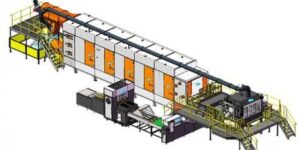
Main Production Process of Pulp Molding Machines
Pulp Preparation Process
The first stage involves preparing suitable fiber materials.
Common raw materials include:
- Waste paper
- Recycled cardboard
- Bamboo fiber
- Bagasse fiber
- Other agricultural fibers
During pulp preparation, materials are mixed with water and processed through pulping equipment to create a uniform fiber suspension.
The quality of pulp directly affects:
- Product strength
- Appearance quality
- Forming performance
Manufacturers need to control important factors such as:
- Fiber concentration
- Pulp viscosity
- Fiber length distribution
- Contaminant removal
High-quality pulp preparation helps reduce defects during later production stages.
Molding and Forming Process
The forming process determines the final shape of molded pulp products.
During operation:
- The mold enters the pulp tank.
- Vacuum pressure attracts fibers onto the mold surface.
- Excess water is removed.
- The wet product takes its initial shape.
Advanced pulp molding machines can achieve:
- More uniform fiber distribution
- Better edge definition
- Improved product consistency
Different molds allow manufacturers to produce various products, including:
- Food trays
- Packaging inserts
- Cups
- Containers
- Protective packaging components
Drying and Finishing Process
After forming, molded pulp products contain a high percentage of moisture and require drying.
Common drying technologies include:
- Natural drying
- Hot air drying
- Steam heating
- Thermal oil drying
Industrial production usually requires efficient drying systems because drying speed directly affects:
- Production capacity
- Energy consumption
- Manufacturing cost
After drying, products may undergo additional processes such as:
- Edge trimming
- 표면 처리
- Quality inspection
- 패키징
Pulp Molding Machine Specifications Guide
The technical specifications of pulp molding machines vary depending on production requirements. Buyers should evaluate equipment based on production volume, product type, and automation requirements.
Important specifications include:
- Production capacity
- Machine structure
- Automation level
- Forming technology
- Drying system
- Energy consumption
- Mold compatibility

Pulp Molding Machine Specification Table
| Specification Item | 설명 |
| 원재료 | Waste paper pulp, recycled cardboard pulp, bagasse pulp, bamboo pulp, agricultural fiber pulp |
| Product Range | Egg trays, food containers, industrial packaging, protective inserts |
| Forming Technology | Vacuum forming, pressure forming, hot pressing |
| 자동화 수준 | Semi-automatic or fully automatic production systems |
| Drying Method | Natural drying, hot air drying, steam drying, integrated drying systems |
| Mold Type | Customized aluminum alloy or precision forming molds |
| 생산 능력 | Depends on machine model, product size, and production configuration |
Factors Affecting Pulp Molding Machine Price
Many buyers search for a pulp molding machine price list, but equipment costs cannot be determined only by machine size. The final investment depends on the complete production configuration.
The main price factors include:
Production Capacity Requirements
Capacity is one of the biggest factors influencing equipment cost.
A small manufacturer producing basic packaging products may require a compact machine, while large packaging companies need automated production lines capable of continuous operation.
Higher-capacity systems usually include:
- More forming stations
- Larger drying systems
- Automated material handling
- Advanced control systems
Although high-capacity machines require greater initial investment, they often provide better production efficiency and lower labor costs over time.
Automation Configuration
Automation level has a direct impact on equipment pricing.
Semi-Automatic Pulp Molding Machines
장점:
- Lower investment cost
- Simple operation
- Suitable for small and medium production
Disadvantages:
- More manual operation required
- Lower production efficiency
These machines are commonly used by companies entering molded pulp production.
Fully Automatic Pulp Molding Machines
장점:
- Continuous production capability
- Reduced labor requirements
- Higher product consistency
- Better production management
They are suitable for:
- Large packaging manufacturers
- Export-oriented factories
- High-volume production projects
Drying System Selection
The drying system is another important factor affecting machine cost.
| Drying Method | 장점 | Suitable Production Scale |
| Natural Drying | Low investment, simple operation | Small-scale production |
| Hot Air Drying | Faster drying and stable performance | Medium-scale factories |
| Steam Drying | High efficiency and industrial suitability | Large production lines |
| Automatic Integrated Drying | Maximum automation and efficiency | Large packaging manufacturers |
Energy consumption should also be considered because drying is often one of the highest operating costs in pulp molding production.

Pulp Molding Machine Price Range Guide
The actual price of a pulp molding machine depends on technical specifications, production capacity, and customization requirements. The following ranges are general references only:
| Equipment Type | Estimated Investment Level | Typical Application |
| Small Semi-Automatic Machine | Low investment | Small packaging workshops and startups |
| Medium Automatic Production System | Medium investment | Commercial packaging manufacturers |
| Fully Automatic Production Line | Higher investment | Large-scale industrial production |
참고: The actual quotation depends on machine configuration, product design, mold quantity, automation degree, energy system, and supplier technical services.
Main Application Fields of Pulp Molding Machines
The application scope of pulp molding technology continues expanding as industries seek sustainable alternatives to traditional packaging.
Food Packaging Industry
Food packaging is currently one of the largest application areas.
Typical products include:
- Egg cartons
- Fruit trays
- Food containers
- Beverage carriers
- 일회용 식기류
Advantages include:
- Renewable material usage
- Lightweight structure
- Good cushioning performance
- Environmental compatibility
Food companies increasingly adopt molded pulp packaging to improve sustainability performance and meet consumer expectations.
Electronics and Industrial Packaging Applications
Beyond food packaging, pulp molding machines are increasingly used in electronics and industrial packaging because molded fiber materials provide excellent protection while meeting sustainability goals.
Electronic products often require packaging solutions that can protect sensitive components during transportation and storage. Traditional expanded polystyrene (EPS) and plastic foam packaging have been widely used because of their cushioning performance, but companies are now seeking recyclable alternatives.
Molded pulp packaging provides several advantages:
- Shock absorption capability
- Lightweight structure
- Custom-designed shapes
- Recyclable material characteristics
- Reduced plastic usage
Common applications include:
- Mobile phone packaging inserts
- Computer component protection
- Household appliance packaging
- Industrial equipment cushioning parts
For manufacturers producing high-value products, customized pulp molding solutions can reduce transportation damage while improving environmental performance.
Medical and Healthcare Packaging Applications
The medical industry is another growing application field for pulp molding technology.
Medical packaging requires strict requirements regarding:
- Product protection
- Clean production environments
- Material safety
- Structural reliability
Pulp molding products are used for:
- Medical device trays
- Pharmaceutical packaging supports
- Healthcare product packaging
With improvements in fiber processing technology and surface treatment methods, molded pulp products can achieve better strength, moisture resistance, and dimensional accuracy.
Agricultural and Specialty Packaging Applications
Agricultural products are also driving demand for molded pulp packaging solutions.
Applications include:
- Fruit trays
- Vegetable packaging
- Seedling containers
- Agricultural product protection packaging
Compared with plastic packaging, molded pulp products can provide a more environmentally friendly option for agricultural supply chains.
Agricultural fiber resources such as:
- Sugarcane bagasse
- Bamboo fiber
- Straw fiber
Also create opportunities for regions with abundant agricultural waste resources to develop local sustainable packaging industries.
How to Choose the Right Pulp Molding Machine?
Selecting the right pulp molding machine requires evaluating production goals, product requirements, and long-term business plans. Buying equipment only based on initial price may lead to higher operating costs or insufficient production capability.
The following factors should be considered before investment.
Define Your Product Requirements
The first step is identifying what products you plan to manufacture.
Different products require different machine configurations.
For example:
| 제품 유형 | Recommended Machine Considerations |
| Egg trays | High-speed forming, cost-effective production |
| Food containers | High precision forming, food-grade material compatibility |
| Electronics packaging | Customized molds, stronger structure |
| Medical packaging | Higher cleanliness requirements and accuracy |
| Luxury packaging | Better surface quality and finishing technology |
A supplier with engineering experience can help determine the appropriate machine configuration based on product requirements.
Evaluate Production Capacity
Production capacity directly influences equipment selection.
Important questions include:
- How many products are required per hour?
- What is the expected future production growth?
- Is continuous production required?
A company producing thousands of packaging units daily may benefit from a fully automatic production line, while smaller businesses may prefer semi-automatic equipment with lower investment costs.
Consider Energy Efficiency
Energy consumption has become an important factor in modern manufacturing.
The main energy-consuming processes include:
- Drying
- Heating
- Vacuum systems
- Automation systems
An efficient pulp molding machine should balance:
- 생산 속도
- Energy usage
- Product quality
Lower energy consumption can significantly improve long-term profitability, especially for factories operating continuously.
Check Mold Design Capability
The mold determines:
- Product shape
- Surface quality
- Production efficiency
A professional supplier should provide:
- Custom mold development
- Mold testing
- Product optimization suggestions
For companies producing customized packaging, mold engineering capability is often as important as the machine itself.
Jwell Pulp Molding Equipment Solutions
When selecting a pulp molding machine supplier, buyers should consider companies that have strong engineering capabilities, extensive manufacturing experience, and reliable technical support.
At Jwell, we specialise in providing advanced extrusion and manufacturing solutions and are committed to expanding technology applications in sustainable production fields. For customers evaluating pulp molding-related production projects, working with experienced equipment manufacturers can help to optimise production processes, improve equipment reliability and achieve better long-term operating performance.
It is especially important to choose a supplier with engineering expertise because sustainable packaging production requires not only machinery, but also:
- Process optimisation
- Production line integration
- Technical training
- After-sales support
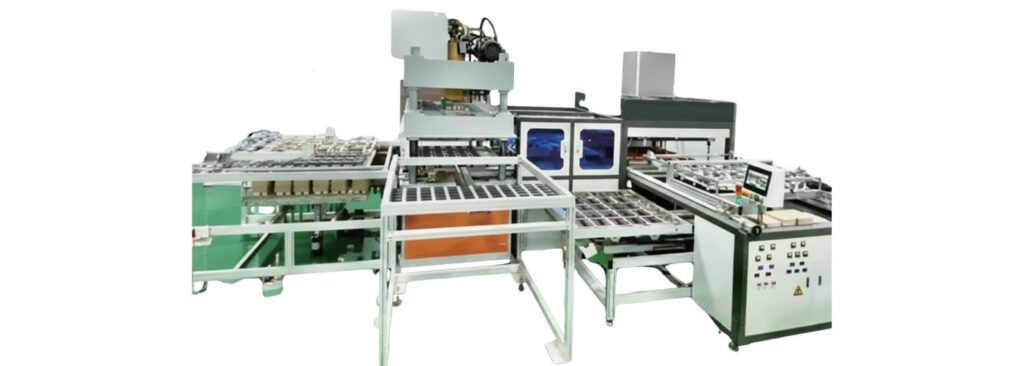
Maintenance Requirements of Pulp Molding Machines
Proper maintenance is essential for maintaining production efficiency and extending equipment service life.
A regular maintenance program should include:
Daily Inspection
Operators should check:
Machine operating conditions
- Hydraulic systems
- Vacuum performance
- Electrical connections
- Mold cleanliness
Regular Maintenance
Periodic maintenance includes:
- Lubricating moving components
- Checking mechanical parts
- Cleaning pulp residue
- Inspecting drying systems
- Calibrating sensors
Long-Term Equipment Management
For large production facilities, preventive maintenance helps reduce:
- Unexpected downtime
- Production interruptions
- Repair costs
A well-maintained pulp molding machine can provide stable production performance over many years.
Investment Return Analysis of Pulp Molding Machines
When evaluating the purchase of a pulp molding machine, companies should consider total operating value rather than only initial equipment cost.
Important investment factors include:
- Equipment price
- Production capacity
- Labor requirements
- Energy consumption
- Raw material availability
- Product selling price
A higher automation level may require greater initial investment but can provide benefits through:
- Reduced labor costs
- Higher output
- Improved consistency
- Lower production waste
For companies targeting long-term sustainable packaging markets, a properly configured production line can create significant competitive advantages.
FAQ: Pulp Molding Machine
- What is a pulp molding machine used for?
A pulp molding machine is used to manufacture molded fiber products from recycled paper pulp, agricultural fibers, and other biodegradable materials. Common products include egg trays, food containers, protective packaging, and industrial packaging inserts.
- How much does a pulp molding machine cost?
The price of a pulp molding machine depends on production capacity, automation level, drying technology, mold requirements, and customization. Small semi-automatic machines generally require lower investment, while fully automatic production lines require higher investment because of their advanced systems and larger output capacity.
- What materials can be used in a pulp molding machine?
Common raw materials include:
- Recycled paper
- Waste cardboard
- Sugarcane bagasse pulp
- Bamboo pulp
- Agricultural fiber pulp
Different materials can influence product strength, appearance, and production performance.
- How long does a pulp molding machine last?
With proper operation and maintenance, industrial pulp molding machines can provide many years of service. Service life depends on machine quality, maintenance practices, operating conditions, and replacement of wear components.
- Is pulp molding packaging environmentally friendly?
Pulp molding packaging is considered a sustainable packaging option because it uses renewable or recycled fiber materials and can reduce dependence on petroleum-based plastics. However, environmental performance also depends on manufacturing processes, energy consumption, and recycling systems.
- How do I choose the best pulp molding machine supplier?
A reliable supplier should provide:
- Technical experience
- Stable equipment quality
- Customized solutions
- Production support
- 판매 후 서비스
- Spare parts availability
Buyers should evaluate suppliers based on overall value rather than only equipment price.
Conclusion: Choosing the Right Pulp Molding Machine
As the demand for sustainable packaging continues to grow, pulp molding machines are becoming an increasingly important investment for packaging manufacturers. These machines offer a practical way of producing biodegradable products and reducing dependence on traditional plastic materials.
When evaluating specifications and prices, companies should consider the entire production process rather than just the initial cost of the equipment. Factors such as the level of automation, energy efficiency, mould capability, production capacity and supplier support all influence long-term success.
Selecting the right pulp molding machine can help businesses to improve production efficiency, expand their range of sustainable products, and compete in the rapidly growing environmentally friendly packaging market. For manufacturers planning future expansion, partnering with an experienced equipment supplier is key to building a stable and efficient moulded pulp production system.
References:
Handbook of Pulp and Paper Technology
Food and Agriculture Organization (FAO) — Forest Products and Sustainable Packaging Reports
Pulp and Paper International (PPI) Industry Research Reports



 English
  Russian
  Spanish
  Arabic
  German
  French
  Persian
  Turkish
  Bulgarian
  Czech
Czech  Dutch
Dutch  Greek
Greek  Indonesian
  Japanese
  Korean
  Polish
  Portuguese
  Romanian
  Slovenian
  Ukrainian