
Abstract
Pipe extrusion is one of the most important continuous manufacturing processes in the plastics processing industry. It is used to produce hollow, cylindrical pipes by melting raw polymer material and forcing it through a specially designed annular die.
According to references in the fields of industrial extrusion and polymer processing, pipe extrusion enables the highly efficient, continuous, and dimensionally consistent production of thermoplastic piping systems for use in construction, utilities, infrastructure, agriculture, telecommunications, and industrial fluid transport.
Today, pipe extrusion is the core manufacturing method behind modern plastic pipe systems made from materials such as HDPE, PVC, PP, PPR, and PE-RT.
This article explains what pipe extrusion is, how the process works, its applications, and the major advantages and key features of advanced pipe extrusion technology, as developed by leading manufacturers such as Jwell.
Introduction: Why Pipe Extrusion Matters in Modern Manufacturing?
Modern infrastructure relies heavily on plastic piping systems. These systems are used in municipal water supply networks, gas pipelines, underfloor heating tubes, and electrical conduits, and have become essential in nearly every industrialised sector.
These products are manufactured using a process called pipe extrusion, which is a continuous production technology capable of producing large volumes of uniform, high-performance pipe with excellent dimensional precision and material efficiency.
As pipe systems must meet strict standards regarding pressure resistance, wall thickness, durability and consistency, pipe extrusion remains one of the most technically demanding and strategically important processes in plastics manufacturing.
What Is Pipe Extrusion?
Pipe extrusion is a manufacturing process in which a thermoplastic material is melted and pressurised before being pushed through an annular die to create a hollow tube or pipe. Once shaped, the extruded pipe is cooled, calibrated, and cut to the required length.
In simple terms:
Pipe extrusion transforms raw plastic resin into continuous plastic pipe using heat, pressure, shaping, and cooling.
This process is widely used for producing:
- Water supply pipes
- Drainage pipes
- Gas pipes
- Electrical conduits
- Irrigation pipes
- Industrial chemical piping
- Medical tubing
- Telecommunications ducting
Pipe extrusion is considered the industry standard for plastic pipe manufacturing due to its speed, consistency, and ability to be scaled up.
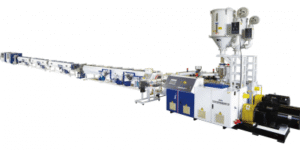
Bize Ulaşın now for more product discounts and quotes!
How Does the Pipe Extrusion Process Work?
Although pipe extrusion may appear straightforward, it actually involves multiple tightly controlled production stages.
Step 1: Raw material feeding
Plastic resin pellets or powder are loaded into the hopper. Common materials include:
HDPE, PVC, PP/PPR, PE-RT, ABS, and CPVC.
Additives may also be introduced, such as:
- UV stabilisers
- Colour masterbatch
- Impact modifiers
- Processing aids
- Flame retardants
Step 2: Melting and plasticisation
Inside the extruder barrel, a rotating screw conveys the material forward while barrel heaters raise the temperature.
This stage:
- Melts the polymer
- Mixes the additives uniformly
- Builds pressure
- Creates a homogeneous melt flow
Step 3: Pipe die forming
The molten polymer exits through a specialised annular die head to form the pipe’s outer diameter and inner hollow structure.
The die determines:
- Pipe diameter
- Wall thickness
- Roundness
- Surface quality
Step 4: Vacuum calibration and cooling
The hot pipe enters a vacuum calibration tank where:
- The outer diameter is stabilised
- Roundness is controlled
- Initial cooling begins
Then it moves through cooling tanks for full solidification.
Step 5: Haul-off and cutting
A puller/haul-off unit pulls the pipe at a controlled speed while cutters trim it to the required length or coil it.
What Is Pipe Extrusion Used For?
Pipe extrusion is a process used to manufacture plastic pipes and tubing for a wide variety of industries.
- Water supply systems
Pipe extrusion produces pressure pipes for:
- Municipal water distribution
- Potable water transport
- Rural water supply systems
- Residential plumbing
HDPE and PPR pipe extrusion are especially common in this sector.
- Gas distribution networks
Specialised pipe extrusion creates gas pipes for:
- Natural gas transport
- LPG systems
- Urban gas infrastructure
These require strict dimensional and pressure consistency.
- Drainage and sewage systems
Extruded pipes are used in:
- Underground drainage
- Wastewater systems
- Stormwater management
- Municipal sewer networks
- Agricultural irrigation
Pipe extrusion supports agricultural applications such as:
- Drip irrigation tubing
- Sprinkler systems
- Water transfer lines
- Greenhouse irrigation networks
- Electrical and telecommunications conduits
Extruded conduit pipes protect:
- Electrical wiring
- Fibre optic cables
- Data cables
- Underground telecom infrastructure
- Industrial chemical transport
Chemical-resistant extruded pipes are used for:
- Acid transport
- Industrial fluid transfer
- Process piping systems
- Corrosive media handling
- Underfloor heating and HVAC
Pipe extrusion also manufactures:
- PEX/PE-RT heating pipes
- HVAC tubing
- Thermal transfer lines
Common Materials Used in Pipe Extrusion
| Malzeme | Main Applications | Temel Avantajlar |
| HDPE | Water, gas, sewage | Flexibility, toughness, and chemical resistance |
| PVC / UPVC | Drainage, conduit, plumbing | Cost-effective, rigid, corrosion-resistant |
| PP / PPR | Hot/cold water piping | High temperature resistance |
| PE-RT | Floor heating | Heat stability, flexibility |
| CPVC | Industrial hot fluid systems | Higher temperature resistance |
| ABS | Specialty industrial tubing | Impact resistance |
Sources consistently note that material selection is one of the primary determinants of final pipe performance.
Major Advantages of Pipe Extrusion
- High production efficiency
Pipe extrusion is a continuous process, making it ideal for manufacturing in large volumes.
- Excellent dimensional consistency
Modern calibration systems ensure tight tolerance control.
- Cost-effective manufacturing
Minimal scrap and automation reduce the cost per unit.
- Broad material compatibility
Supports multiple thermoplastics and multilayer structures.
- Scalable for many pipe sizes
Can produce pipes ranging from micro-tubing to large-diameter infrastructure pipes.
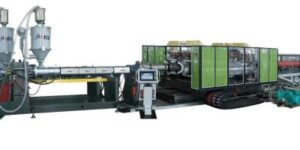
Pipe Extrusion vs Other Pipe Manufacturing Methods
| Manufacturing Method | En Uygun Olanlar | Avantajlar | Sınırlamalar |
| Pipe Extrusion | Plastic continuous pipe | Fast, efficient, scalable | Limited to extrudable materials |
| Injection Molding | Fittings/connectors | Complex shapes | Not for long pipe lengths |
| Blow Molding | Hollow containers | Complex hollow shapes | Not ideal for pipe precision |
| Metal Pipe Rolling | Steel/metal pipe | Heavy-duty strength | Higher cost, corrosion concerns |
Key Equipment in a Pipe Extrusion Line
A complete pipe extrusion line comprises multiple integrated systems that work together to ensure stable output, dimensional accuracy, and high production efficiency. Each component plays a critical role in determining the quality of the final pipe.
The extruder is the core of the production line and is responsible for melting, plasticising, and conveying the raw material.
Key components:
- Vida ve namlu
- Drive motor
- Heating/cooling system
- Feeding hopper
Extruder performance directly impacts melt uniformity and output stability.
- Extrusion die head
Shapes the molten polymer into the desired pipe profile.
Functions:
- Forming the pipe’s diameter and wall thickness
- Controlling melt flow distribution
- Ensuring concentricity and dimensional precision
- Vacuum calibration tank
Stabilises pipe dimensions immediately after extrusion.
Purpose:
- Calibrates the outer diameter
- Maintains roundness
- Prevents deformation during cooling
- Cooling tank
Further cools and solidifies the pipe.
Importance:
- Ensures dimensional stability
- Reduces residual stress
- Supports higher production speeds
- Çekme Ünitesi
Pulls the pipe through the production line at a controlled speed.
Role:
- Maintains consistent line speed
- Controls wall thickness and pipe tension
- Cutting unit
Cuts the pipe to the required length.
Options include:
- Planetary cutter
- Saw cutter
- Chipless cutter
- Stacker/winding unit
Collects finished pipes for packaging or downstream processing.
Key Factors Affecting Pipe Extrusion Quality
Producing high-quality extruded pipes requires precise control of several process and equipment variables.
- Raw material quality
- Resin consistency
- Moisture content
- Additive dispersion
- Regrind percentage
Poor raw material quality causes unstable extrusion and defects.
- Vida ve Namlu Tasarımı
Screw and barrel design must match the material type and output requirements. Poor design reduces plasticisation efficiency and melt homogeneity.
- Melt temperature control
- Overheating can degrade the material.
- Underheating can lead to poor melt flow and surface defects.
- Die head design and adjustment
- Uneven flow causes variation in wall thickness
- Poor die alignment affects concentricity
- Vacuum calibration stability
Inconsistent vacuum affects sizing accuracy. Improper calibration causes ovality or deformation.
- Cooling efficiency
- Uneven cooling creates residual stress and warping
- Insufficient cooling limits production speed
- Haul-off speed synchronisation
Speed fluctuations affect wall thickness and dimensional control
- Operator skill and process management
Setup accuracy and real-time adjustments impact the final product’s quality. Experienced operators reduce startup waste and defects.
Emerging Pipe Extrusion Trends in 2026
- Multi-layer barrier pipes
There is a growing demand for co-extruded pipes with EVOH/aluminium barrier layers.
- Smart extrusion monitoring
AI-driven monitoring systems improve process consistency.
- Energy-efficient extrusion lines
Manufacturers are increasingly prioritising lower energy consumption.
- Integration of sustainable/recycled materials
More extrusion systems now support recycled polymer blends.
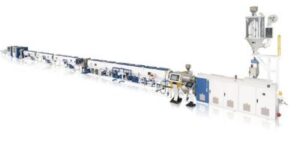
FAQ About Pipe Extrusion
Q1: What is pipe extrusion in manufacturing?
Pipe extrusion is a continuous process that forms molten plastic into hollow pipe shapes through an annular die.
Q2: What products are made by pipe extrusion?
Pipe extrusion produces water pipes, gas pipes, drainage pipes, conduit, irrigation tubing, industrial pipes, and telecom ducting.
Q3: What materials are used in pipe extrusion?
Common materials include HDPE, PVC, PP, PPR, PE-RT, CPVC, and ABS.
Q4: Why is pipe extrusion preferred over other methods?
Because it enables continuous, high-speed, cost-efficient production of uniform pipes.
Q5: What industries use pipe extrusion most?
Construction, utilities, infrastructure, agriculture, telecommunications, HVAC, and industrial processing.
Çözüm
Pipe extrusion is a fundamental manufacturing process used to produce plastic piping systems that support modern infrastructure around the world. By continuously melting and shaping thermoplastic materials into hollow pipe profiles, pipe extrusion offers unparalleled efficiency, precision, scalability, and versatility.
Its applications span nearly every major industry, from municipal water systems and agricultural irrigation to industrial fluid handling and telecommunications infrastructure.
As the global demand for advanced piping systems continues to grow, manufacturers such as Jwell Machine are driving innovation by developing increasingly automated, high-output, and energy-efficient pipe extrusion technologies.




 English
  Russian
  Spanish
  Arabic
  German
  French
  Persian
  Turkish
  Bulgarian
  Czech
Czech  Dutch
Dutch  Greek
Greek  Indonesian
  Japanese
  Korean
  Polish
  Portuguese
  Romanian
  Slovenian
  Ukrainian