
Quick Answer: Plastic compounding machines transform raw polymer resins into customised plastic compounds by combining processes such as controlled feeding, melting, mixing, dispersion, degassing, extrusion, and pelletising. According to the polymer processing principles discussed in ‘Optimization of Polymer Processing’: A Review (Part I—Extrusion), the process of compounding extrusion involves several interconnected operations: material feeding, plasticisation, mixing, pressure generation, and shaping. In industrial production, co-rotating twin-screw extruders are widely used because their modular screw configurations enable manufacturers to adapt the conveying, mixing, and processing conditions to suit various formulations.
The process is not simply about melting plastic. It is also about achieving consistent distribution of additives, fillers, pigments, and reinforcing materials, while maintaining required thermal stability, mechanical properties, and final product quality. Understanding each processing stage enables manufacturers to select the right equipment, optimise production efficiency, and develop compounds that meet specific application requirements.
What Is a Plastic Compounding Machine?
A plastic compounding machine is an industrial extrusion system that blends base polymers with additives, fillers, pigments, fibres and other functional ingredients to produce a material with specific properties. Unlike conventional plastic extrusion, which focuses primarily on shaping molten polymer into a continuous product, compounding extrusion places greater emphasis on formulation, mixing efficiency, material modification and melt homogeneity.
The resulting compound is usually converted into pellets that can be used in processes such as injection moulding, blow moulding, екструзія плівки, pipe production, fibre spinning and more. Depending on the formulation, plastic compounding can enhance impact resistance, tensile strength, flame retardance, thermal stability, colour consistency, electrical conductivity, or processing performance.
Common applications include:
- Engineering plastics: Glass fiber-reinforced PA, PBT, PC, and other high-performance polymer compounds.
- Masterbatch production: Concentrated colorants, pigments, and functional additives incorporated into a carrier resin.
- Polyolefin modification: PP and PE compounds with improved mechanical or processing characteristics.
- Recycled plastic compounding: Incorporating recycled polymers, compatibilizers, stabilizers, and performance-enhancing additives.
- Specialty materials: Flame-retardant compounds, conductive plastics, thermoplastic elastomers, and biodegradable polymer formulations.

How Does a Plastic Compounding Machine Work?
The plastic compounding process generally follows a continuous sequence from raw material preparation to finished pellet production. Although the precise configuration varies according to polymer type, additive characteristics, and target performance, the underlying process can be divided into eight major stages.
Step 1: Raw Material Preparation and Formulation
The process begins with selecting and preparing the ingredients according to the formulation of the compound. Base polymers may include polypropylene (PP), polyethylene (PE), polyamide (PA), polyester (PET or PBT), polystyrene (PS), and other thermoplastic materials. Additional ingredients may include mineral fillers, glass fibres, pigments, flame retardants, lubricants, impact modifiers, antioxidants and processing aids.
Before production, the moisture content, particle size, bulk density, flowability and compatibility of the materials must be checked. Hygroscopic polymers such as PA, PET and PC may require pre-drying to prevent hydrolytic degradation during processing. Accurate formulation preparation is essential, as even small variations in the concentration of additives can affect mechanical properties, colour, and long-term performance.
Step 2: Precise Feeding and Dosing
The prepared materials are introduced into the extruder via a controlled feeding system. The main feeder usually provides the base polymer, while auxiliary feeders deliver additives and other ingredients in specific proportions.
Gravimetric feeders, also known as loss-in-weight feeders, are widely used when precise and consistent dosing is required. These feeders measure material consumption by weight over time, helping to maintain formulation accuracy despite fluctuations in bulk density or feeding behaviour.
The feeding configuration depends on the characteristics of the material. Free-flowing pellets can often be handled by conventional screw feeders, whereas fine powders, lightweight fibres and poorly flowing materials may require specialised feeding mechanisms. A stable feeding rate is essential for consistent downstream processing.
Step 3: Conveying, Melting, and Plasticization
After entering the barrel, the raw materials are pushed forward by rotating screws. Heat is supplied through independently controlled barrel heating zones, and the mechanical energy generated by the rotation of the screws and the friction of the materials contributes to the melting and plasticisation processes.
The polymer gradually transitions from a solid state to a continuous melt. During this stage, the collective influence of screw geometry, rotational speed, barrel temperature, feed rate, and material properties determines melting efficiency and processing stability.
A properly designed plastic compounding machine must achieve sufficient melting capacity without exposing the polymer to excessive temperatures or prolonged residence times. Inadequate plasticisation can result in unmelted particles, whereas excessive thermal or mechanical energy can cause polymer degradation.
Step 4: Mixing, Kneading, and Dispersion
Mixing is the defining operation of plastic compounding. Once the polymer becomes sufficiently molten, the screws generate flow patterns that distribute additives throughout the polymer matrix and break down agglomerates of fillers or pigments.
Two complementary mechanisms are involved:
- Distributive mixing: Spreads different ingredients throughout the melt to achieve a uniform concentration and composition.
- Dispersive mixing: Applies sufficient stress to break apart agglomerates, helping fine particles, pigments, and fillers become more uniformly incorporated into the polymer.
In twin-screw compounding, conveying elements, kneading blocks, and specialized mixing elements can be arranged in different sequences to achieve the desired balance of mixing intensity, throughput, and residence time. This flexibility is particularly important for high-filled compounds, glass fiber-reinforced materials, and heat-sensitive formulations.
The goal is not necessarily to maximize shear. Excessive shear can shorten glass fibers, increase melt temperature, damage sensitive additives, and consume unnecessary energy. Effective compounding instead requires the appropriate mixing intensity for the formulation and target properties.
Step 5: Side Feeding and Additional Ingredient Incorporation
Some ingredients are introduced downstream rather than through the main feed opening. Side feeding allows the polymer to melt first, creating a more suitable environment for incorporating materials that are difficult to feed, occupy substantial volume, or are sensitive to mechanical stress.
Typical side-fed materials include:
- Glass fibers and carbon fibers
- High concentrations of calcium carbonate or talc
- Flame-retardant fillers such as ATH and MDH
- Lightweight powders and recycled flakes
- Ingredients that require reduced exposure to intensive shear
The side-feeding position must be coordinated with the screw configuration and the material’s processing characteristics. For example, glass fibers are often introduced after initial polymer melting to reduce unnecessary fiber breakage and preserve reinforcement effectiveness.
Step 6: Venting and Vacuum Degassing
During the compounding process, air, moisture, residual monomers, processing by-products, and other volatile substances may remain in the molten material. The presence of these substances can compromise the quality of the finished pellets and cause defects during subsequent moulding or extrusion.
Consequently, plastic compounding machines commonly incorporate atmospheric venting and vacuum degassing sections. The former allow gases to escape under suitable conditions, while the latter improve the removal of moisture and volatile components from the melt.
Effective degassing reduces bubbles, voids, surface defects, odour, and instability in downstream processing. The performance of vents depends on the polymer’s viscosity, melt temperature, volatile content, screw configuration, and vacuum system capacity.
Step 7: Melt Conveying, Pressure Building, and Extrusion
After mixing and degassing, the compounded melt must be conveyed towards the die in stable conditions. The downstream screw elements generate the required pressure for continuous discharge, and the shape of the exiting melt is determined by the die.
Depending on the formulation and production requirements, the line may include a melt pump, a screen changer or a filtration system. A melt pump can stabilise pressure and output, and filtration can remove contaminants and unwanted solid particles that could affect pellet quality or subsequent processing.
The objective is to maintain a stable melt flow without introducing excessive pressure fluctuations, temperature increases, or unnecessary residence time.
Step 8: Cooling, Pelletizing, and Final Inspection
The extruded material is converted into pellets using a suitable pelletising system. The most common methods are strand pelletising, underwater pelletising and water-ring pelletising. The most appropriate method depends on the rheology of the polymer, the required production capacity, the formulation and the specifications of the pellets.
In strand pelletising, the melt exits through a die in the form of continuous strands, which are cooled in a water bath and then cut into pellets. Underwater systems cut the melt directly at the die face, making them suitable for many high-throughput applications and formulations requiring consistent pellet geometry.
After pelletising, the material may undergo dewatering, drying, screening, classification, and packaging. Quality inspection ensures that the compound meets the required specifications before delivery to downstream manufacturers.
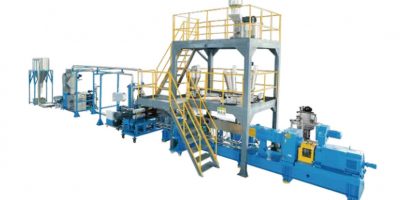
Main Components of a Plastic Compounding Machine
The performance of a plastic compounding machine depends on the coordinated operation of its mechanical, thermal, feeding, and control systems. Each component contributes to a particular processing function, and its configuration must be matched to the formulation and production objectives.
| Main component | Primary function | Key considerations |
| Main feeder | Supplies base polymer | Feeding accuracy, material flowability |
| Side feeder | Introduces fillers, fibers, and additives | Feed position, material density |
| Двошнековий екструдер | Conveys, melts, mixes, and homogenizes materials | Screw design, L/D ratio, torque |
| Barrel and temperature control | Maintains processing temperature | Heating and cooling capacity |
| Screw elements and kneading blocks | Controls conveying and mixing | Shear intensity, residence time |
| Vacuum degassing system | Removes moisture and volatiles | Vacuum level, vent design |
| Головка формування | Forms the compounded melt | Flow uniformity, pressure stability |
| Pelletizing system | Cuts melt into pellets | Pellet shape, output, cooling |
| PLC control system | Monitors and adjusts operation | Process repeatability, automation |
Among these components, the screw configuration is particularly important. A modular twin-screw design allows conveying elements, kneading blocks, and mixing sections to be rearranged for different applications. As discussed in the peer-reviewed review Optimization of Polymer Processing: A Review (Part I—Extrusion), screw design is a complex optimization problem because the processing requirements and material behavior can vary significantly between formulations.
Why Is a Twin-Screw Extruder Widely Used for Plastic Compounding?
Co-rotating intermeshing twin-screw extruders are widely used in plastic compounding because they provide flexible material handling, efficient mixing, and adaptable processing configurations. Unlike conventional single-screw extrusion systems, twin-screw compounders can accommodate multiple feeding locations and different screw element arrangements within the same machine.
Their principal advantages include:
- Flexible screw configuration. Modular screw elements can be selected and positioned to suit specific material requirements, allowing manufacturers to optimize conveying, melting, mixing, and degassing.
- Efficient mixing performance. Intermeshing screws provide repeated material exchange and controlled shear, supporting the distribution and dispersion of additives throughout the polymer matrix.
- Multiple feeding options. Main feeding, side feeding, and liquid injection can be integrated into a single processing line, making it possible to manufacture complex formulations.
- Continuous processing and automation. Modern systems combine automatic feeding, temperature control, process monitoring, and pelletizing to support consistent production and reduce manual intervention.
- Adaptability to different materials. The same basic equipment platform can be configured for engineering plastics, masterbatch, flame-retardant compounds, filled polymers, and selected recycled materials.
However, a twin-screw extruder is not automatically the best solution for every material. Equipment selection should account for formulation complexity, required mixing intensity, throughput, processing temperature, and investment cost.
Plastic Compounding Process Parameters and Their Influence
The quality of a compounded plastic material is influenced by several interacting process parameters. Optimizing these variables individually without considering their relationships can create unstable production conditions.
| Process parameter | Role in compounding | Potential impact if poorly controlled |
| Швидкість обертання гвинта | Determines conveying and mechanical energy input | Excessive shear, overheating, or unstable feeding |
| Barrel temperature | Supports melting and flow | Incomplete melting or thermal degradation |
| Feed rate | Controls material throughput | Fluctuating formulation and residence time |
| Screw configuration | Determines mixing and conveying behavior | Poor dispersion or excessive fiber breakage |
| Torque | Reflects mechanical load on screws | Overloading, unstable operation |
| Residence time | Determines exposure to heat and shear | Degradation or insufficient mixing |
| Vacuum level | Supports volatile removal | Residual moisture, bubbles, and odor |
| Melt pressure | Affects die discharge stability | Irregular flow and pellet inconsistency |
The optimal processing window varies according to polymer type, additive concentration, and product requirements. For example, a glass fiber-reinforced compound requires sufficient dispersion while preserving fiber length, whereas a high-pigment masterbatch may require intensive dispersive mixing to achieve color strength and consistency.
Process optimization should therefore be based on the relationship between machine operating conditions and measurable product quality rather than simply increasing screw speed or processing temperature.
Different Plastic Compounding Applications Require Different Process Configurations
A plastic compounding machine is not a one-size-fits-all system. Different formulations require different combinations of feeding, screw design, temperature control, venting, and pelletizing technologies.
- Engineering Plastic Compounding
Engineering plastics such as PA, PBT, and PC often require precise temperature management and moisture control. For glass fiber-reinforced materials, downstream fiber feeding and carefully selected mixing elements help achieve uniform distribution while minimizing fiber breakage.
- Masterbatch Compounding
Color and functional masterbatch production typically involves high additive concentrations. The process emphasizes accurate dosing, effective dispersion, and consistent pigment distribution. Depending on the carrier resin and formulation, intensive mixing and specialized pelletizing configurations may be necessary.
- Flame-Retardant Plastic Compounding
Flame-retardant formulations often contain substantial mineral filler content, including aluminum trihydrate (ATH) or magnesium hydroxide (MDH). These materials can increase feeding difficulty and processing torque, making side feeders, suitable screw elements, and effective temperature management particularly important.
- Recycled Plastic Compounding
Recycled polymer materials may contain impurities, moisture, degraded polymer chains, and inconsistent melt properties. A suitable line may incorporate pre-treatment, controlled feeding, filtration, vacuum degassing, and compatibilizer addition to improve processing stability and compound performance.
How to Improve Plastic Compounding Efficiency and Product Quality?
Manufacturers can improve compounding performance by evaluating the entire production system rather than focusing exclusively on the extruder.
- Optimize the formulation before machine selection. Identify the base resin, additive concentration, filler content, processing temperature, and target mechanical properties. These factors determine the required equipment configuration.
- Improve feeding accuracy. Select appropriate feeders for pellets, powders, fibers, and liquids. Stable and accurate dosing is essential for maintaining product consistency.
- Configure screw elements according to the application. Balance conveying capacity, mixing intensity, and residence time. Avoid excessive shear when processing heat-sensitive polymers or fiber-reinforced compounds.
- Establish a suitable thermal processing window. Monitor barrel temperatures, melt temperature, and mechanical energy input to prevent incomplete melting or polymer degradation.
- Optimize venting and degassing. Ensure that vent locations, vacuum capacity, and screw filling conditions support effective volatile removal.
- Implement continuous process monitoring. Track screw speed, torque, melt pressure, feeding rates, and temperature to identify deviations before they lead to substantial production losses.
- Evaluate finished pellets systematically. Test pellet size, moisture content, dispersion, color consistency, melt flow rate, and mechanical properties according to the application-specific quality requirements.
These practices help manufacturers improve production stability, reduce material waste, and maintain more consistent compound performance across production batches.
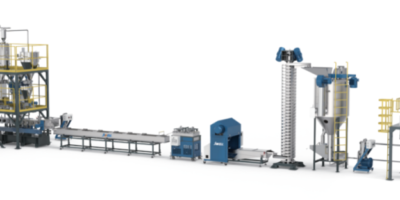
How to Select the Right Plastic Compounding Machine?
Selecting a suitable plastic compounding machine requires a comprehensive evaluation of material characteristics, production targets, and long-term operating requirements. A machine designed for low-viscosity polyolefin compounds may not be appropriate for high-filled engineering plastics or heat-sensitive formulations.
Before purchasing equipment, manufacturers should evaluate the following factors:
- Material compatibility: Can the machine process the selected polymer, filler, and additive system within the required thermal window?
- Production capacity: Does the required output match the machine’s stable operating range rather than only its maximum rated throughput?
- Mixing requirements: Does the formulation require distributive mixing, intensive dispersive mixing, or a combination of both?
- Feeding configuration: Are main feeders, side feeders, liquid feeding, and material handling systems appropriately designed?
- Screw and barrel design: Are the screw diameter, L/D ratio, torque capacity, and element configuration suitable for the formulation?
- Pelletizing requirements: Which method provides the required pellet shape, size, and production efficiency?
- Automation and control: Can the machine accurately monitor and control critical parameters during continuous production?
- Technical support: Does the manufacturer provide commissioning, process testing, operator training, spare parts, and ongoing technical assistance?
A practical approach is to conduct formulation-based trials before finalizing the equipment configuration. Pilot testing helps determine whether the proposed machine can achieve the required compound properties, production rate, and operating stability under realistic processing conditions.
Frequently Asked Questions About Plastic Compounding Machines
- What is a plastic compounding machine used for?
A plastic compounding machine is used to combine polymers with additives, fillers, pigments, and reinforcing materials to produce customized plastic compounds. These compounds are typically pelletized for use in injection molding, extrusion, and other plastic manufacturing processes.
- What is the working principle of a plastic compounding machine?
The machine uses rotating screws to convey, melt, mix, and homogenize raw materials under controlled temperature and mechanical conditions. The compounded melt is then degassed, extruded through a die, cooled, and converted into pellets.
- Why is a twin-screw extruder preferred for plastic compounding?
Twin-screw extruders provide efficient mixing, flexible screw configurations, and multiple feeding options for complex formulations. These features make them particularly suitable for engineering plastics, masterbatch, filled polymers, and specialty compounds.
- What materials can a plastic compounding machine process?
Depending on its configuration, a plastic compounding machine can process PP, PE, PA, PET, PBT, PC, ABS, thermoplastic elastomers, recycled plastics, and various polymer blends. It can also incorporate fillers, pigments, glass fibers, flame retardants, and functional additives.
- What is the difference between plastic compounding and plastic extrusion?
Plastic compounding focuses on modifying and homogenizing polymer formulations by incorporating additives, fillers, or reinforcing materials. Conventional plastic extrusion primarily focuses on shaping molten polymer into products such as pipes, profiles, films, and sheets, although some extrusion processes also involve mixing.
- What factors affect the quality of plastic compounding?
The most important factors include feeding accuracy, screw configuration, barrel temperature, screw speed, mixing intensity, residence time, and degassing efficiency. These parameters must be optimized together to achieve consistent dispersion, thermal stability, and finished pellet quality.
Висновок
The process of a plastic compounding machine involves much more than simply melting and mixing polymer materials. It is an integrated manufacturing process involving raw material preparation, precise feeding, plasticisation, dispersive and distributive mixing, side feeding, degassing, pressure generation, extrusion and pelletising, all working together to produce consistent, application-specific plastic compounds.
Understanding these stages is essential for manufacturers to select the right equipment and establish reliable production conditions. A twin-screw compounding system that is properly configured, combined with accurate feeding technology, optimised screw design, effective degassing and systematic quality control, can improve production efficiency while delivering compounds that meet demanding industrial requirements.
As polymer formulations become more specialised and the use of recycled materials becomes more widespread, the ability to control the entire compounding process will remain critical to material development, manufacturing competitiveness and product quality.




 English
 Russian
 Spanish
 Arabic
 German
 French
 Persian
 Turkish
 Bulgarian
 Czech
 Dutch
 Greek
 Indonesian
 Japanese
 Korean
 Polish
 Portuguese
 Romanian
 Slovenian
 Ukrainian