
Abstract
A compounding machine is a mechanical system that combines two or more simple machines, such as levers, pulleys, inclined planes, wedges, screws, and wheels, to perform complex tasks more efficiently.
According to research published in the International Journal of Mechanical Engineering in 2022, compound machines can significantly enhance mechanical advantage by integrating force transformation mechanisms across multiple components.
This article provides an in-depth exploration of compound machines, covering their definition, working principles, classifications, components, real-world applications, advantages, limitations, and future technological developments.
Introduction: The Importance of Compounding Machines
The concept of the compounding machine line at the foundation of modern engineering and industrial development. While simple machines, such as levers and pulleys, form the basic building blocks of mechanical systems, most real-world applications require more sophisticated solutions that integrate these elements.
From everyday tools such as scissors to complex industrial machinery, compound machines are essential for performing tasks that would otherwise require excessive force or effort. These systems can amplify force, change the direction of motion, and increase efficiency by combining multiple simple machines.
Understanding how they work is therefore critical for both academic and practical purposes, including engineering design, manufacturing, construction, and automation.
Definition of a Compounding Machine
A compound machine is defined as a device that combines two or more simple machines to perform a task more efficiently than any of the components could achieve alone. Each simple machine contributes to the overall function, creating a coordinated mechanism that enhances performance.
For instance, a wheelbarrow combines a lever and a wheel-and-axle system, and a crane incorporates pulleys, levers, and gears. These combinations enable compound machines to perform complex tasks such as lifting heavy loads, cutting materials, and transmitting motion over long distances.
The defining characteristic of a compound machine is its ability to combine mechanical advantages, resulting in increased force output, decreased input effort, and greater control.
Simple Machines: The Building Blocks
To understand compounding machines, it is essential to first examine the six classical simple machines:
| Simple Machine | Функция | Example |
| Lever | Amplifies force | Seesaw |
| Pulley | Changes the direction of force | Flagpole |
| Inclined Plane | Reduces the effort to lift objects | Ramp |
| Wheel and Axle | Reduces friction | Bicycle wheel |
| Винт | Converts rotation to linear motion | Bolt |
| Wedge | Splits materials | Knife |
Each of these machines performs a basic mechanical function, and when combined, they create more complex systems capable of performing advanced tasks.
How Compounding Machines Work?
A compounding machine operates by combining multiple simple machines to achieve a desired outcome.
- Force transformation
Each component of a compound machine modifies force in a specific way, either amplifying, redirecting, or converting it. When combined, these transformations create a cumulative effect that enhances the machine’s overall efficiency.
- Energy transfer
Energy flows through the system from input to output. While some energy is inevitably lost due to friction, well-designed compound machines minimise these losses through optimised component integration.
- Mechanical advantage
The total mechanical advantage of a compound machine is the product of the advantages of its individual components. This enables the system to perform tasks with significantly less effort than would otherwise be required.
Specifications of Plastic Compounding Machine
| Модел | Диаметър | L/D | Скорост на винта | Motor Power | Torque per shaft | Specific torque | Capacity Range |
| мм | rpm/min | KW | N.m | T/A3 | кг/час | ||
| CJWH35 | 35.6 | 24~68 | 600 | 30 | 235 | 8.7 | 75~150 |
| 1000 | 45 | 8.7 | 110~220 | ||||
| CJWH40 | 41.1 | 24~68 | 600 | 45 | 357 | 8.7 | 110~220 |
| 1000 | 75 | 8.7 | 190~380 | ||||
| CJWH52 | 51.4 | 24~68 | 600 | 90 | 692 | 8.7 | 220~440 |
| 900 | 132 | 8.7 | 330~660 | ||||
| CJWH65 | 62.4 | 24~68 | 600 | 160 | 1224 | 8.7 | 400~800 |
| 900 | 220 | 8.7 | 550~1100 | ||||
| CJWH75 | 71 | 24~68 | 600 | 220 | 1880 | 8.7 | 550~1100 |
| 800 | 315 | 8.7 | 800~1600 | ||||
| CJWH85 | 81 | 24~68 | 600 | 315 | 2713 | 8.7 | 800~1600 |
| 800 | 450 | 8.7 | 1100~2200 | ||||
| CJWH95 | 93 | 24~68 | 600 | 500 | 4131 | 8.7 | 1250~2500 |
| 700 | 600 | 8.7 | 1500~3000 | ||||
| CJWH110 | 108 | 24~68 | 500 | 630 | 6346 | 8.7 | 1500~3000 |
| 600 | 800 | 8.7 | 2000~4000 | ||||
| CJWH120 | 120 | 24~68 | 500 | 900 | 8705 | 8.7 | 2250~4500 |
| 600 | 1000 | 8.7 | 2500~5000 | ||||
| CJWH135 | 132 | 24~68 | 400 | 900 | 11586 | 8.7 | 2250~4500 |
| 500 | 1000 | 8.7 | 3000~6000 |
Types of Compounding Machines
Compounding machines can be classified based on their function and application:
| Тип | Description | Example |
| Cutting Machines | Combine wedges and levers | Scissors |
| Lifting Machines | Use pulleys and levers | Cranes |
| Transportation Machines | Combine wheels and axles | Bicycles |
| Industrial Machines | Integrate multiple systems | Conveyor systems |
Each type demonstrates how different combinations of simple machines can be tailored to specific tasks.
Components and Design Considerations
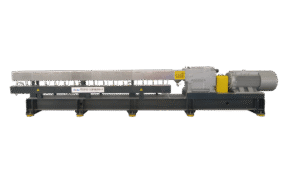
A compounding machine is a vital piece of equipment in the polymer processing industry. It is designed to blend, modify, and homogenise raw materials, such as plastics, additives, fillers, and reinforcements, to create high-performance compounds.
Core components:
Feeding system: includes gravimetric or volumetric feeders for precise material dosing and supports multi-component feeding (resins, additives, fillers).
Екструдер (single-screw or twin-screw): the heart of the system, responsible for melting, mixing, and conveying materials. Twin-screw extruders are widely used for superior mixing and flexibility.
Screw elements: modular design allows customisation for shear, mixing, and dispersion performance, and is configurable for different materials and formulations.
Barrel system: segmented and temperature-controlled zones ensure stable processing conditions and are made of wear-resistant alloys for durability.
Heating and cooling system: electric heaters and water/air cooling systems maintain optimal processing temperatures.
The head and pelletising system shapes the molten material and converts it into pellets (strand, underwater, or air-cooled pelletising).
Control system: LC or advanced automation for real-time monitoring, process optimisation, and consistency
Design considerations
Material compatibility: Different polymers (PP, PE, PVC, engineering plastics) require specific screw configurations.
Mixing efficiency: Proper screw design ensures uniform dispersion of additives and fillers.
Изходен капацитет: Scalable design for high-throughput production.
Wear resistance: Essential for processing abrasive materials (e.g., glass fibre and mineral fillers).
Energy efficiency: Optimised heating and drive systems reduce operational costs.
Flexibility: Modular design allows for quick adaptation to different formulations.
Real-World Applications
Compounding machines are widely used across multiple industries for producing customised material formulations.
- Plastics and polymer industry
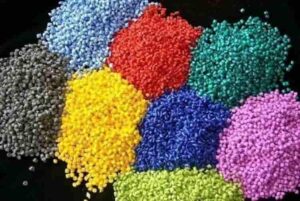
– Production of masterbatches (colour, additive, and functional)
– Reinforced plastics (glass fibre and carbon fibre composites)
– Engineering plastics with enhanced mechanical properties
- Индустрия за опаковане
– Barrier materials and modified polymers for food and industrial packaging
– Lightweight, recyclable material solutions
- Автомобилната индустрия
– High-performance compounds for interior, exterior, and structural components
– Lightweight materials to improve fuel efficiency and reduce emissions
- Електрическа и електронна техника
– Flame-retardant compounds
– Conductive or anti-static materials
- Construction and infrastructure
– PVC, WPC (wood-plastic composites), and other building materials
– Profiles, pipes, and insulation products
Advantages of Compounding Machines
| Предимство | Description | Impact |
| Повишена ефективност | Combines multiple functions | Reduced effort |
| Versatility | Adaptable to various tasks | Wide application |
| Power Amplification | Greater output force | Improved performance |
| Precision | Controlled motion | Enhanced accuracy |
Limitations and Challenges
Despite its versatility, compounding technology faces several challenges:
- High Initial Investment
Advanced compounding lines require significant capital investment, especially for twin-screw systems.
- Process Complexity
Requires precise control of temperature, pressure, and screw configuration
Skilled operators and process engineers are necessary
- Material Sensitivity
Some polymers are sensitive to heat and shear, leading to degradation if not properly managed
- Wear and Maintenance
Abrasive fillers (e.g., glass fiber) accelerate wear on screws and barrels
Regular maintenance increases operational costs
- Energy Consumption
High energy usage in heating and mechanical processing
Future Trends (2026–2030)
The compounding machine industry is evolving rapidly, driven by sustainability, digitalisation, and the demand for advanced materials.
- Smart and digitalised compounding
– Integration of AI and IoT for real-time monitoring and predictive maintenance
– Data-driven optimisation for improved efficiency and product consistency
- Sustainable material processing
– Increased focus on recycled plastics and biodegradable materials
– Development of compounding solutions for circular economy applications
- Advanced materials
– High-performance and specialty materials
– Growth in compounding for engineering plastics, composites, and functional materials
– Advanced dispersion technologies for nanofillers and additives
- Energy efficiency improvements
– Development of low-energy drive systems and optimised heating technologies
– Reduced carbon footprint in manufacturing processes
- Modular and flexible systems
– Faster changeover between formulations
– Scalable systems for both small-batch and large-scale production
FAQ Section
Q1: What is a compound machine?
A compound machine combines two or more simple machines to perform complex tasks.
Q2: How does a compound machine work?
It works by integrating simple machines to transform force and energy efficiently.
Q3: What are examples of compound machines?
Scissors, bicycles, cranes, and wheelbarrows.
Q4: What is mechanical advantage?
It is the ratio of output force to input force, increased in compound systems.
Q5: Why are compound machines important?
They enable efficient performance of complex tasks in engineering and daily life.
Заключение
Jwell compounding machines represent the evolution of simple mechanical principles into complex, highly efficient systems that power modern technology and industry. By combining multiple simple machines, these systems can generate greater force, achieve greater precision, and offer greater versatility than any individual component could provide.
Engineers, designers, and anyone interested in the mechanics of everyday tools and advanced machinery need to understand their principles, design considerations, and applications. As technology continues to advance, compounding machines will remain at the heart of innovation, driving progress across industries.




 English
  Russian
  Spanish
  Arabic
  German
  French
  Persian
  Turkish
  Bulgarian
  Czech
Czech  Dutch
Dutch  Greek
Greek  Indonesian
  Japanese
  Korean
  Polish
  Portuguese
  Romanian
  Slovenian
  Ukrainian