
In the worldwide plastic pipe manufacturing industry, two varieties of polymer dominate hot/cold water systems: municipal water networks, industrial fluid transportation, and residential construction: PVC and CPVC. While the discussion around CPVC and PVC typically focuses on the differences in thermal resistance and practical application, modern factories and equipment dealers are increasingly asking a larger question.
“What does the difference between CPVC and PVC mean for the manufacturing process, and what is the full solution for a Pipe Production Line that supports both?”
This article provides a comprehensive, industry-oriented description of CPVC and PVC materials, their differences in performance, their impact on the production of pipes, and a complete blueprint for a Vytlačovací linka na trubky that produces high-quality pipes at a large scale.
The objective is to allow decision makers — including factory owners, technical directors, pipe machinery dealers, and EPC project contractors — to have a clear understanding of:
- How CPVC and PVC are different
- What alterations in raw material behavior affect extrusion?
- What equipment features are crucial to a productive pipeline?
- How to plan for the future.
- What is the importance of quality and capacity in the long term?
Introduction — Why Compare CPVC and PVC in Pipe Production
When considering plastic pipelines used for plumbing, drainage, industrial fluids, or hot water, two of the most common substances are PVC (Polyvinyl chloride) and CPVC (Chlorinated Polyvinyl chloride). For a company that is manufacturing or improving a pipe production line, understanding the difference between PVC and CPVC is crucial — the properties of the material affect the processing conditions, the extrusion parameters, the equipment configuration, the quality control, the end product performance, and the market position.
This article explores the differences between CPVC and PVC, the implications of manufacturing, and how to produce modern pipe systems that produce both CPVC and PVC efficiently and with a high degree of reliability. Whether you’re already involved in the production of PVC pipelines or intend to devote resources to the development of CPVC’s capabilities, this “complete solution” guide contains technical, operational, and business-related considerations.
CPVC vs PVC — Material Differences, Properties, and Typical Applications
To understand why CPVC requires different manufacturing methods compared to PVC, it’s important to understand their material properties, benefits, limitations, and purpose generally.
-
What is PVC’s composition and common uses?
PVC is one of the most popular thermoplastics in the world. In pipe projects, PVC is cost-effective, has a chemical resistance that is low, is strong, and is easy to extrude, which is ideal for cold water plumbing, drainage systems, sewer lines, conduits, and other standard projects that require piping.
The thermal and chemical properties of PVC are appropriate for use with fluids that are either ambient or low to medium temperature; for cold or room temperature water, drainage, sewer, irrigation, and many other plumbing tasks, PVC is still commonly used.
Because PVC is common knowledge, it’s relatively inexpensive, and behaves in extrusion in a consistent manner, therefore, many manufacturing lines for plastic pipe are based on it, making it the base polymer for creating pipe.
-
What is CPVC? How is it different from PVC?
CPVC is a type of PVC that has been chlorinated – this increases the amount of chlorine present and alters the structure of the polymer. This leads to an increase in the temperature resistance of the chemical, its capacity to withstand hot water, and its performance under higher temperatures or pressure. As a result, CPVC increases the range of temperatures that can be used by PVC-type pipes. This makes CPVC appropriate for use in hot water supply lines, industrial heat transport, chemical processing, and other applications that have a higher thermal or chemical demand.
In practice, CPVC pipes are often employed for hot water installation, industrial hot water or chemical pipelines, heat-resistant piping, and applications that require flame resistance and high temperatures. As a result, CPVC has a more prominent role than standard PVC pipe in the residential field.
-
Implications for manufacturers and consumers.
From a commercial perspective, providing both types of pipes allows a manufacturer to cover a larger range of applications- from standard cold water plumbing and drainage (PVC) to hot water and industrial chemical piping (CPVC).
From a product differentiation perspective, CPVC pipes are often more expensive because of their superior performance, which results in a higher profit if the production is conducted correctly.
However, below is a description of what is required for improved performance, along with the associated extra requirements on processing conditions, extrusion parameters, material management, and quality control. A manufacturing line for pipes must be able to deal with these discrepancies in order to produce quality, efficient output.
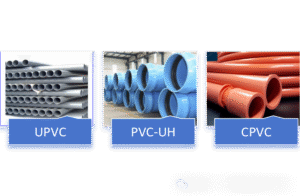
Challenges of Producing CPVC vs PVC Pipes — Why Pipe Production Line Configuration Matters
Creating CPVC pipes is not identical to creating PVC pipes with a higher percentage of plastic — there are technical and practical issues that a production line for pipes must address. Understanding these issues is crucial to manufacturers who want to know about CPVC’s capabilities.
-
Higher requirements for thermal and processing.
Because CPVC must sustain its effectiveness at higher temperatures, the extrusion of CPVC is dependent on the temperature being controlled, the cooling process, and the thickness of the pipe’s wall. The extrusion trail must have oversight:
Precise temperature control of the barrel and die will ensure that CPVC is melted and flows properly without being degraded. Incorrect temperatures can cause insufficient fusion, thin pipe walls, or malformations.
Cooling and sizing systems that take into account the thermal properties of CPVC and ensure the dimensional accuracy and consistency of the pipe as it leaves the die and solidifies.
Wall thickness uniformity — For applications that require hot water or high pressure, the walls of the pipe must have a precise tolerance in order to achieve safety and legal standards.
PVC is less demanding of a process, which allows it to have a broader window of acceptance, but CPVC is more stringent in its control of the process and requires a tighter configuration of the line.
-
The way materials are handled, and the quality of raw materials are
CPVC resin is also more expensive, but it may have more stringent requirements for quality (moisture content, purity, stabilizers, ultraviolet or thermal stabilizers) in order to avoid degradation during the extrusion process or during the failure of the device in service. A production line dedicated to CPVC should include:
Adequate resin drying or pretreatment, if present, to avoid hydrolysis or imperfections.
Adequate dosing and blending systems, especially when additives or stabilizers are involved (such as heat stabilizers, impact modifiers, and UV stabilizers) in order to ensure long-term effectiveness.
Contaminated control — recycled plastic or incorrect blending can adversely affect the performance of CPVC or lead to failure of the pipe under pressure or heat.
-
Adherence to standards and certifications
Because CPVC pipes are typically used for hot water, industrial fluids, or high-pressure applications, they must follow relevant regulations — for example, regarding pressure, temperature, chemical resistance, safety, and building codes. A manufacturing line must guarantee consistent quality, have a consistent record of quality, have a traceable history, and have the capacity to perform hydrostatic testing, dimensional checks, and wall thickness testing in order to achieve certification.
On the other hand, standard PVC pipe may have a lower number of stringent requirements for cold water, drainage, low pressure applications, and depending on the region and customer’s expectations, this may be less common.
-
Benefit and Cost – Economic Analysis
Implementing CPVC production capacity — including the procurement of resin, quality control, process changes, and possible certifications — increases the overall cost of production when compared to lines that only contain PVC. For companies that manufacture the product, it necessitates finding a middle ground between a high production cost and a high revenue, while also maintaining a high demand in the market.
In markets that lack demand for hot water or chemical-resistant piping, the production of CPVC may not be worthwhile. However, where there is demand, providing CPVC is beneficial.
As a result, from a business and engineering perspective, a versatile production line for pipes — capable of manufacturing both PVC and CPVC pipes with quality — is a significant investment.
Designing a Full-Solution Pipe Production Line to Handle Both PVC and CPVC
For companies that want to produce both PVC and CPVC pipes, or alter an existing production line for PVC to include CPVC, a “complete” design for the production of pipes must take into account the different material properties, process variations, quality concerns, and flexibility. Below are the essential components and considerations regarding design.
-
Temperature-supporting equipment with adjustable temperatures and control systems.
Selecting an extruder: A dual-screw extruder or a single-screw extruder that has a good temperature control area, a stable profile of screws, and a corrosion-resistant barrel and die (compatible with CPVC resin) that guarantees the quality of the molten resin and the uniform flow of the substance.
The die and the sizing calibrator: The die is adjustable and has a high-precision sizing ring that can accommodate both PVC and CPVC pipe diameters and thicknesses; the calibrator must have a different melting behavior and thermal expansion.
Cooling and hauling units: Adequate cooling (water bath, spraying, or air conditioning) and powerful hauling that ensures that CPVC pipes are cool uniformly, maintain their shape and size under thermal stress. For PVC, typical cooling is sufficient; for CPVC, cooling is required.
Temperature, pressure, and flow detection: Senses, PLCs, and control systems that detect temperature, pressure, and flow rates in barrels or Dies, ensuring consistent extrusion of both materials and preventing degradation or flaws.
-
Handling of materials, drying, and preparing resin.
Resin drying system or dehumidifying dryer: If CPVC resin is more moisture-intensive, a system that dries resin before consumption is employed.
Raw material storage and division: Dedicated storage for PVC and CPVC resins in order to avoid cross-contamination; clear protocols for labeling and handling are employed.
Accurate dosing system for supplements: CPVC typically necessitates stabilizers (heat, ultraviolet, chemical) – the dosing process must be exact in order to consistently produce quality pipe.
-
Quality Control and Testing Center
Dimensional inspection (diameter, wall thickness, ovality): It ensures that pipes are sized correctly for both CPVC and PVC.
Hydrostatic or pressure testing (particularly for CPVC): It verifies that the pipes can sustain the required pressure and temperature.
Ageing tests that involve heat (for CPVC): To make sure pipes continue to have integrity when temperatures are increased over time and used frequently.
The documentation and certification process: For the purpose of complying with building regulations, contracts for supply, or regulations regarding export/ import.
-
Flexible scheduling and capability for product changeovers.
Modular design of the line: Allow for the transition from PVC to CPVC production methods-without requiring a long timeframe, via adjustable settings, quick-change dies/calibrators, and flexible control parameters.
Operator training: Descriptive procedures for both materials, including the handling of resin, the processing of parameters, cleaning, and maintenance, are described; these ensure safe and stable operation.
Maintenance and cleaning protocols: Between productions, to prevent contamination or degradation, especially when switching from PVC to CPVC or vice versa.
-
Environmental, Safety, and Regulatory Accountability Considerations
Adequate ventilation or escape systems: High temperature processing and the potential release of any chemical products that may decompose – these are necessary for safety and compliance.
Waste management, scrap recycling: The recycling of waste material, especially CPVC, complies with environmental regulations.
Trackability and quality oversight: For the purpose of complying with regulations, audits, or customer demands, especially pertinent to the production of CPVC pipes for hot water or industrial use.
By implementing a manufacturing line with these attributes, manufacturers can create a full solution pipe manufacturing line that is capable of producing both PVC and CPVC pipes — this increases the flexibility, reach, and return on investment of the product.

Market Considerations — When Does It Make Sense to Offer Both PVC and CPVC Pipes
Beyond the technical potential, the decision to produce CPVC alongside PVC is based on the market’s demands, the regulatory context, the base of customers, and the competitive strategy. Here are the business-important factors that should be considered.
-
The demand for hot water, chemicals, or pressure vessels in the region is considered.
In areas that have hot water running through their pipes, industrial fluids that are resistant to chemicals, or high temperatures that are commonplace, CPVC’s demand is typically higher. For instance, commercial buildings, factories, chemical plants, or hot water markets will value the enhanced properties of CPVC.
If the typical demand is for cold water supply, drainage, sewage, standard plumbing, and PVC is still sufficient, CPVC may over-specify, which will reduce the price competitiveness in price-sensitive markets.
-
Regulatory Rules and Building Codes
Some areas or applications may require materials that have specific temperature or pressure requirements, which makes CPVC more pertinent and sometimes necessary.
As the standards for building increase (due to safety concerns, chemical resistance, and longevity), CPVC pipe can fulfill more stringent requirements – this will allow manufacturers to reach higher segments of the market or export to countries.
-
Advantage for Competitors and Product Difference
Providing both CPVC and PVC to manufacturers allows them to serve both low-level and high-end segments: basic plumbing versus superior piping, which increases the base of customers.
Manufacturers capable of CPVC can be considered to have a superior reputation; they can provide customers with long-lasting, high-temperature, or chemical-resistant piping systems.
-
Cost vs Price Margin and Return on Investment
The price of CPVC resin is typically higher than that of standard PVC; the demand for processing it (power, control, quality assessment) increases the cost. However, the higher price of CPVC pipes is due to their superior performance; the profitability of the project may be sufficient to justify the investment, especially in markets that have a demand for it.
For companies that produce large amounts of goods or that produce long runs of production, the incremental cost may be amortized over time, but this is not the case for small amounts of production or for markets that have a low demand.
-
Flexibility and Future-Proving
As the infrastructure ages, the codes for building have become more stringent, and demand for superior performance (resilience, durability, and temperature resistance) has increased. Having CPVC capabilities will prepare a manufacturer for future shifts in demand.
A versatile line of production that can transition from PVC to CPVC offers resistance to market shifts, shortages of raw materials, or changes in regulations.
As a result, from a strategic perspective, investing in a full solution pipe production line that handles both PVC and CPVC pipes can provide long-term stability, increased market share, and a competitive advantage—if the demand for the product and the cost-benefit ratio are both supportive of the investment.
Potential Challenges & Risks of Running Dual-Material Pipe Production
While the benefits are obvious, manufacturers must also recognize and plan for risks or problems when manufacturing both CPVC and PVC pipes on a single line.
The risk of cross-contamination: If resinous lines, extruders, dryers, or hoppers are shared without being thoroughly cleaned or separated, this can lead to a degradation of the quality of the pipe or the development of defects.
Higher production costs: CPVC’s processing is more stringent, which may lead to slower production, more energy expenditure (for heating or cooling), and higher cost resin that can adversely affect margins if the sales price or demand is not sufficient.
Regulatory and certification burden: CPVC pipes are often subject to testing, certification, and standards of practice (pressure rating, temperature, and durability), which increases the cost, paperwork, and quality control requirements.
The operator’s ability and required training: More complex processing involves the need for trained operators, stringent SOPs, quality control staff, and more frequent monitoring. This may increase the operational overhead.
Market risk: If the demand for CPVC is diminished, the risk of inventory overhang increases, and expensive raw materials, stock, and machinery may be underutilized, which diminishes the return on investment.
As a result, a dual-material manufacturing line must have both flexibility and a rigorous approach to process management, cost control, market analysis, and risk mitigation to avoid pitfalls and ensure long-term operation.
Recommendations for Implementing a Full-Solution PVC/CPVC Pipe Production Line
Based on the aforementioned analysis, the following recommendations are made for manufacturers who are considering manufacturing or enhancing a mixed line of PVC/CPVC:
Conduct market research first – study the demand for CPVC versus PVC in your intended markets ( residential plumbing, industrial, hot water, drainage, chemical transport) to ensure that the capacity of CPVC is justified by business logic.
Design a modular line architecture that is flexible regarding temperature control, easy to make adjustments to the die, resin separation, resin drying, and quick transition between PVC and CPVC.
Invest in quality control & certification capacity, including testing stations (hydrostatic/pressure tests, dimensional inspection, thermal-resistance testing), record-keeping, and compliance workflow.
Separate the material handling and storage, separate bins for resin, dedicated dryers for resin or pretreatment, avoid cross-contamination, label the materials clearly, and maintain clean pipelines.
Train operators should thoroughly explore the differences between the processing of PVC and CPVC, maintain protocols, manage maintenance and cleaning, and monitor the extrusion parameters with care.
Maintain, clean, and observe protocols during production sequences, especially when switching materials. Constantly maintaining the extruder, die, refrigeration, and hauling off systems to maintain quality.
Balance the cost of the resin, energy, labor, and the expected revenue and demand: make sure that CPVC’s revenue is sufficient. Consider small-scale production before committing to full-scale.
Plan for environmental and safety concerns — manage the scrap resin, off-cuts, energy consumption, waste; ensure the ventilation and safety of the heated resin; follow local regulations regarding production and packaging.
By taking these steps, manufacturers can create a powerful, flexible, and profitable production line for pipes that combines both PVC and CPVC piping. This will position them for the current demand and future market shifts.
Conclusion — The Strategic Value of a Full Pipe Production Line Solution
Overall, CPVC and PVC pipes have a shared but different market: PVC continues to be the foundation of traditional plumbing, drainage, and general piping, while CPVC adds functionality to hot water systems, industrial fluids, chemical resistance, and higher performance applications.
For companies that manufacture pipes, investing in a full solution pipe production line that can produce both PVC and CPVC pipes is more than just a technical decision that enables diversification of the market, a premium product, future proofing, and adapting to changing regulations or customer demands.
However, to achieve this potential, careful design of the line, rigorous control of the process, resin management, quality control, and market analysis are necessary (due to the production of CPVC pipes).
For companies that want to make that investment and commit to superior practices, a dual-material pipe production line offers a competitive advantage, a larger product portfolio, and a ready supply of plastic piping solutions for the growing demand of versatile, high-performance plastic.




 English
  Russian
  Spanish
  Arabic
  German
  French
  Persian
  Turkish
  Bulgarian
  Czech
Czech  Dutch
Dutch  Greek
Greek  Indonesian
  Japanese
  Korean
  Polish
  Portuguese
  Romanian
  Slovenian
  Ukrainian