
Selecting the appropriate type of piping material is pivotal in plumbing, building, industrial systems, and water distribution. Among the most popular thermoplastic piping systems in the world are PVC trubka desek CPVC pipe; each has its own advantages, limitations, and areas of greatest application. For scientists, engineers, installers, and decision makers, recognizing the distinction between PVC and CPVC pipes isn’t simply academic; it directly affects the reliability, safety, cost, compliance, and performance of systems over the long term.
This extensive article discusses:
- What varieties of PVC and CPVC are involved in chemistry and manufacturing?
- How the material’s properties differ
- Capacity to adapt to various functions (cold and hot water, chemical industry, fire systems)
- Pressure and temperature effectiveness
- Chemical resistance and resilience
- The installation of techniques and their compatibility
- Life cycle and cost considerations
Throughout, we incorporate authoritative information that is derived from highly ranked industry and technical references. This ensures that both technical professionals and educated consumers have a comprehensive and relevant understanding of the subject.
Defining PVC Pipe and CPVC Pipe: Origins and Material Composition
At the core, both PVC (Polyvinylchloride) and CPVC (Chlorinated Polyvinylchloride) are thermoplastic polymers derived from vinyl chloride monomer. However, they have a significant difference in chemical composition, physical properties, and application areas because of the process of chlorination that differentiates CPVC from standard PVC.
What is PVC?
PVC pipe is composed of vinyl chloride polymer that is polymerized and additionally stabilized with chemicals like plasticizers and anti-UV agents. It’s one of the most versatile and budget-friendly materials for piping. It’s commonly used for:
- Cool water reservoirs and distribution systems
- Drainage, waste, and vent features
- Irrigation and landscaping
- Industrial wastewater treatment
The PVC resin is typically dense and lightweight. When formulated correctly, it produces a long-lasting pipe that is resistant to corrosion, abrasion, and chemical degradation that is common in many environments. PVC is associated with its white color (or sometimes gray) and the compatibility of this material with standard mortar and installations.
What Is CPVC?
The chlorine content of CPVC pipe is initially derived from the PVC resin, but additional free-radical chlorination is then performed on the pipe, which increases the overall chlorine content of the polymer chain. This alteration changes the thermal behavior, mechanical properties, and chemical resistance of the base material, which produces a pipe that can handle higher temperatures and more difficult fluids.
The enhanced capabilities of CPVC cause it to be popular in multiple areas:
- Hot and cold water systems for drinking
- Industrial transfer of liquids at higher temperatures.
- Fire sprinkler systems (UL/ULC-recorded CPVC systems)
- Chemical processing lines that require increased chemical resistance
Because of this disparity in chemistry, PVC and CPVC are separate entities, though they are related in the family. Their installations, cements, solvents, and methods of joining are singular and typically cannot be switched.
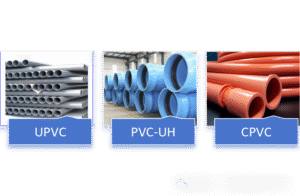
Core Differences in Material Properties
Understanding the difference between PVC and CPVC with regard to their primary material properties helps to determine the appropriateness of a particular application for either material. These discrepancies are attributed to their different chemical makeup and thus different capabilities.
- Temperature Tolerance
One of the most significant differences between PVC pipe and CPVC pipe is their capacity to operate at a higher temperature. Because the mechanical properties of PVC begin to decline as temperatures increase, its practical application range is limited:
PVC tubing: it’s typically used for temperatures of up to 140 degrees Fahrenheit (60 degrees Celsius) for sustained application. Above this temperature, the plasticity of PVC decreases, its pressure capacity is lost, and the risk of deformation and joint failure increases significantly.
CPVC pipe: engineered to withstand higher temperatures and is typically rated up to 200°F (93°C) for continuous operation, making it ideal for use in hot water and other industrial applications that require elevated temperatures.
This alone is often the sole reason for the selection of material in plumbing systems: PVC is used for cold services, and CPVC is used for hot water and other systems.
- Temperature-pressure capacity of the system
Other factors besides absolute temperature are important regarding the way materials handle pressure at temperatures that are elevated temperatures. The pressure ratings for PVC decrease dramatically as the temperature increases, whereas CPVC retains a higher capacity for pressure at temperatures over 60°C, which provides stability in the distribution of hot water.
- Chemical and Corrosion Resistance
Both PVC and CPVC are resistant to corrosion and have immunity to multiple types of corrosion; one reason for their replacement in numerous systems is the immune nature of the material. However:
PVC is effective in cold water, drainage water, and wastewater; it will also resist salts, acids, and common base solutions.
CPVC: Because of its extra chlorination, it is superior to other materials in terms of its resistance to a broader range of chemicals, including acids, bases, and salts. It’s also chosen in specific industrial applications that have a more aggressive composition of fluid.
- Mechanical Stiffness and Impact Resistance
Both materials have a good mechanical capacity and a resistance to impact that is superior; however, CPVC typically has a higher strength and less propensity to be thermally altered by load. Some manufacturers claim that CPVC’s tensile and impact capabilities are superior to PVC when subjected to higher temperatures of fluid or mechanical stress.
Comparison Table — PVC vs CPVC Pipe
To summarize key material and performance differences, the table below highlights critical parameters that influence selection.
| Property / Behavior | PVC Pipe | CPVC Pipe |
| Maximum Continuous Operating Temperature | ~140°F (60°C) | ~200°F (93°C) |
| Chemical Composition | Polyvinyl chloride | Chlorinated polyvinyl chloride |
| Chemická odolnost | Dobrá | Superior; broader spectrum |
| Pressure Retention at Elevated Temp | Decreases significantly with temperature | Maintains higher pressure resistance |
| Typické aplikace | Cold water, drainage, irrigation, sewer | Hot & cold potable water, industrial liquids, fire systems |
| Fittings/Cements | PVC solvent cement (ASTM D2564) | CPVC solvent cement (ASTM F493); not interchangeable |
| Náklady | Lower | Higher due to processing and performance |
| UV Resistance | UV mitigation recommended | Also degrades without protection |
| Flexibility | Relatively rigid | Moderate; some flexibility advantage |
| Color/Identification | Usually white/grey | Cream, light tan, or off-white |
Sources: industry performance guides from Bausano, Prince Pipes, and other technical references showing rated temperature, chemical behavior, and structural differences.
Typical Applications Where Each Material Excels
Selecting between PVC and CPVC isn’t solely based on the material properties, but also involves matching the properties to the requirements of a system.
-
PVC Pipe: The Best Uses
Because the strength, cost, and corrosion resistance of PVC are commendable for many common installations, it’s typically used in:
Cool water supply ( systems that produce hot water as a supplement)
Drain, waste, and vent (DWV) systems in residential and commercial structures.
Irrigation and landscaping plomería
Industrial wastewater transport
HVAC drainage lines
Electrical conduits are employed where humidity resistance is necessary.
The cost-effectiveness and ease of production of PVC make it the most popular choice for these low-temperature services.
-
CPVC Pipe — Most Effective
Because of its higher temperature tolerance, increased chemical resistance, and mechanical strength under increased temperatures, CPVC is ideal for:
Hot and cold water distribution in residential and commercial structures.
Systems that use plastic to disperse flames (typically listed as either UL or ULC)
Industrial fluids that are handled have a higher temperature and chemical complexity.
The process of piping food, drugs, and chemicals involves temperatures that are typically higher than 100 degrees Celsius.
Commercial plumbing that employs both hot and cold lines.
The performance of CPVC in hot water systems and its compliance with plumbing standards for drinking water are both common in modern architecture.
Joining Techniques and Installation Differences
Despite the fact that PVC and CPVC pipes have a similar visual appearance, the way they are installed is different.
- Solvent Welding Conditions
The joints between PVC pipes are typically composed of solvent-based cement that is primered (ASTM D2564), which chemically melts the pipe and adheres to the surface.
The CPVC pipe is composed of a special primer and cement that is intended for use with CPVC (ASTM F493). Because their chemical makeup is different, PVC cement is not appropriate for use with CPVC pipes, and vice versa.
Using the incorrect cement can lead to improper bonding, weakened joints, and early failures under pressure or heat.
- Support and thermal expansion requirements
CPVC may have a higher thermal expansion because of its service at temperatures that are elevated, this necessitates the careful consideration of movement, expansion joints, and spacing during installation. Many codes suggest that supports should be spaced approximately 3 feet apart forCPVC strings to remainaligned with temperature changes.
- Fitments and Rules
BecauseCPVC pipes can follow both the Nominal Pipe Size (NPS) and the Copper Tube Size (CTS) standards, which are dependent on the manufacturer, PVC is primarily composed of NPS, it’s crucial to verify the compatibility of sizing and placement during the design process.
Performance Limitations and Considerations
While bothCPVC and PVC are common, neither is a universal solution. Understanding the limitations helps to avoid system failures.
-
Limitations of PVC
Temperature limitations: It will soften and will lose its structural integrity at temperatures exceeding 60 degrees Celsius (140 degrees Fahrenheit). This is not ideal for use in hot water applications.
UV deterioration: The long-term exposure to sunlight without protection can lead to UV degradation, this is not prevented by painting or a shield.
Chemical sensitivity: Despite the fact that it is resistant to many chemicals, PVC is not well suited for harsh chemical transport or high temperature liquid systems.
-
CPVC’s Resources
Higher material cost: CPVC is typically more expensive than PVC, this is because of the additional processing required for chlorination.
Installation care: It’s more solid, but also more easily brittle than PVC — it’s recommended that you pay attention to the way you handle it during the solvent process in order to avoid cracking.
UV exposure: Similar to PVC, prolonged exposure to UV can adversely affect CPVC; a protective coating that is protective is recommended if installed outside without protection.
Cost Considerations and Lifecycle Value
The PVC pipe is typically more cost-effective than the other options, especially in cases where the temperature and chemical stress are low. The costs of material and installation are typically lower because the market is more accessible, the process is simpler, and the volume of use is higher in standard cold systems.
CPVC pipe is typically more expensive initially, but it typically provides a higher lifetime value in applications that involve hot water or harsh conditions. Its resistance to heat, corrosion, and pressure can reduce the frequency of maintenance, repair, and replacement expenses over time – this is an important factor for designers and facility planners.
Standards, Codes, and Compliance
Both the PVC and the CPVC piping systems must follow the relevant codes of plumbing and material safety in order to be safe and effective. Common specifications associated with these substances include:
ASTM D1785 for the standards of PVC pipe.
ASTM D2846 for the definition of CPVC pipe.
The NSF/ANSI 61 protocol is used to ensure the safety of drinking water.
Assuring compliance with these standards will preserve the efficiency of the system, preserve the safety of the system, and promote the acceptance of the system in regulatory projects. Professionals should take into account the local codes of plumbing (IRC, UPC, or relevant local rules) when choosing materials.
Conclusion — Choosing Between PVC Pipe and CPVC Pipe
The choice between PVC and CPVC piping is primarily based on the performance requirements and context of use.
The flexible nature of the pipes allows them to excel in cold water systems, drainage systems, wastewater systems, irrigation systems, and cost-sensitive general plumbing scenarios. It’s lightweight, corrosion-resistant, simple to install, and commonly available.
The CPVC pipe is built with a specific purpose in mind: it needs to have a higher temperature, a greater pressure reserve, and a chemical resistance that is superior to that of the water itself. These are all things that come with a specific purpose.
Understanding the material science of PVC and CPVC, specifically how additional chlorine affects the thermal properties of the material, enables engineers and builders to make responsible, long-lasting, and conforming piping decisions.
In practice, these materials are supplementary, each designed to operate in specific environments with specific parameters. By combining the needs of projects with the capabilities of materials, projects can achieve both effectiveness and efficiency without sacrificing cost.


 English
  Russian
  Spanish
  Arabic
  German
  French
  Persian
  Turkish
  Bulgarian
  Czech
Czech  Dutch
Dutch  Greek
Greek  Indonesian
  Japanese
  Korean
  Polish
  Portuguese
  Romanian
  Slovenian
  Ukrainian