
An extrusion operator is a skilled manufacturing professional responsible for setting up, operating, monitoring, and maintaining the machinery used to extrude raw materials, such as plastics, metals, and polymers, into continuous profiles like pipes, sheets, films, and cables. According to industrial job standards, extrusion operators control parameters such as temperature, pressure, and speed; ensure product quality; and maintain equipment efficiency throughout the production cycle.
Further research and industry documentation emphasise that extrusion operators play a critical role in ensuring process stability, product consistency, and safety compliance, as well as troubleshooting defects and optimising production performance.
In summary, the extrusion operator is central to extrusion manufacturing, converting raw materials into finished products through precise extrudermachine control, quality assurance, and process optimisation.
Introduction: The Strategic Importance of the Extrusion Operator
The extrusion process is one of the most widely used production methods in modern manufacturing, especially in the plastics, packaging, construction materials, and automotive industries. At the heart of this process is the extrusion operator, whose role has a direct impact on:
- Product quality consistency;
- Production efficiency;
- Equipment lifespan;
- Operational safety.
For B2B manufacturers and global buyers, understanding the role of an extrusion operator is essential for evaluating production capabilities, supplier reliability, and quality control systems.
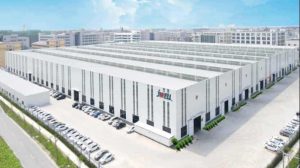
Companies such as Jwell-extruder, a well-known manufacturer of extrusion machinery, design advanced extrusion lines that rely heavily on skilled operators to achieve optimal performance. This highlights the importance of human-machine synergy in modern Industry 4.0 environments.
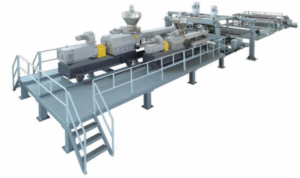
What Is an Extrusion Operator? (Core Definition)
Een extrusie operator is a manufacturing technician who operates extrusion machines to:
- Heat raw materials;
- Melt or soften them;
- Force them through a die;
- Shape them into continuous products.
These products include:
- Plastic pipes
- Films and sheets
- Profiles and tubing
- Wires and cables
Extrusion operators are responsible for ensuring that each stage of this process runs smoothly and meets predefined specifications.
Core Responsibilities of an Extrusion Operator
The role of an extrusion operator is multifaceted, requiring technical expertise, quality control, and operational management skills.
Machine setup and calibration
Before production begins, the operator must:
- Select the appropriate dies and tooling;
- Configure the temperature zones;
- Set the pressure and speed parameters;
- Align the machine components.
This setup phase is critical for ensuring that the extrusion process produces the correct shape and dimensions.
Process operation and monitoring
During production, the operator:
- Monitor machine performance
- Adjust parameters in real time
- Ensure continuous material flow
They must maintain strict control over the following:
- Melt temperature
- Schroefsnelheid
- Cooling rates
Even minor deviations can result in defects such as warping, bubbles, or inconsistent thickness.
Quality control and inspection
Extrusion operators are responsible for:
- Measuring product dimensions;
- Inspecting surface quality;
- Ensuring compliance with specifications.
They often work closely with quality assurance teams to maintain high production standards.
Equipment maintenance
Operators perform routine maintenance tasks such as:
- Cleaning machine components;
- Replacing worn parts;
- Lubricating moving elements.
Proper maintenance ensures machine longevity and reduces downtime.
Troubleshooting and problem-solving
When issues arise, operators must quickly diagnose and resolve them.
Common problems include:
- Material inconsistencies
- Temperature fluctuations
- Die blockages
Effective troubleshooting minimises production losses and maintains efficiency.
Documentation and reporting
Operators are also responsible for:
- Recording production data
- Tracking machine performance
- Reporting defects or anomalies
Accurate documentation supports continuous improvement and compliance.
Extrusion Operator Workflow (Step-by-Step)
Table 1: Typical Extrusion Operator Workflow
| Stage | Task | Objective |
| Setup | Configure machine & dies | Ensure correct production parameters |
| Start-Up | Initiate the extrusion process | Achieve stable operation |
| Monitoring | Adjust temperature & speed | Maintain consistency |
| Quality Check | Inspect output | Ensure product meets specs |
| Maintenance | Clean & repair | Prevent downtime |
| Shutdown | Safely stop the machine | Protect equipment |
Key Skills Required for an Extrusion Operator
The role of an extrusion operator is critical in ensuring consistent product quality, process efficiency and equipment safety. The role involves more than just operating a machine; it requires a combination of technical knowledge, process control, and problem-solving skills, particularly in fields related to polymer processing.
Technical understanding of extrusion processes
Operators must understand how extrusion works.
- Material melting and flow behaviour
- Temperature zones and heating control
- Screw speed and pressure dynamics
Why it matters:
A strong understanding of the process allows operators to optimise output and reduce defects.
Machine operation and setup skills
Core competencies:
- Setting up extrusion machines (single-screw and twin-screw)
- Adjusting parameters (temperature, speed, and pressure)
- Monitoring control panels and automation systems
Insight:
Proper setup directly impacts product consistency and production efficiency.
Material knowledge
Different materials behave differently during extrusion.
Common materials:
- PVC
- PE (polyethylene)
- PP (polypropylene)
- PET
Operators must understand:
- Melting temperatures
- Flow characteristics
- Moisture sensitivity
Quality Control & Inspection
Key skills:
- Identifying surface defects (e.g. bubbles, roughness, discolouration)
- Measuring dimensions and tolerances
- Maintaining consistent output quality
Insight:
Early detection prevents large-scale production losses.
Troubleshooting and problem-solving
Extrusion issues are common and must be solved quickly.
Typical problems:
- Die blockage
- Inconsistent thickness
- Burn marks or degradation
Strong troubleshooting skills reduce:
- Downtime
- Material waste
Understanding thermoplastics behaviour
Operators must understand how materials respond to:
- Warmte
- Pressure
- Shear forces
This helps with:
- Preventing degradation
- Maintaining product integrity
Safety awareness
Extrusion involves high temperatures and moving machinery.
Essential knowledge:
- Equipment safety procedures
- Emergency shutdown protocols
- Personal protective equipment (PPE)
Safety reduces the risk of:
- Workplace accidents
- Equipment damage
Maintenance and basic mechanical skills
Operators should be able to carry out routine maintenance tasks such as:
- Cleaning dies and screws;
- Checking heaters and sensors;
- Identifying wear and tear.
Insight:
Preventive maintenance improves machine lifespan and reliability.
Attention to detail
Small parameter changes can have significant effects.
Required focus:
- Monitoring temperature fluctuations
- Observing product quality continuously
- Recording production data
Impact:
Consistent, high-quality output is ensured.
Communication and teamwork
Extrusion operators work with:
- Engineers, quality control teams, and maintenance staff.
- Effective communication ensures:
- Faster problem resolution
- Smooth production flow
Basic data and process analysis
Modern extrusion lines use data-driven systems.
Skills include:
- Reading production data
- Identifying trends
- Adjusting parameters based on results
Insight:
Data awareness improves process optimisation and efficiency.
Adaptability and continuous learning
Technology and materials evolve.
Operators must:
- Learn new materials and processes;
- Adapt to automation and smart manufacturing.
Trend:
Extrusion is becoming increasingly automated and digitally controlled.
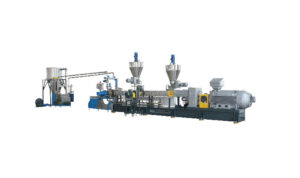
Types of Extrusion Processes Operators Work With
Extrusion operators don’t just work with one type of process; their role often spans multiple extrusion methods, depending on the product, material, and industry. Each process requires different machine setups, parameter control, and troubleshooting skills, all of which are rooted in polymer processing.¹
Profile extrusion
What it is:
Producing continuous shapes with a fixed cross-section.
Common products:
- Pipes and tubing
- Window frames (PVC profiles)
- Plastic trims
Operator focus:
- Die design and alignment
- Dimensional accuracy
- Cooling and calibration
Key challenge:
Maintaining consistent shape and wall thickness
Sheet en folie-extrusie
What it is:
Producing flat plastic sheets or thin films.
Types:
- Sheet extrusion (for thicker products)
- Film extrusion (for thin, flexible materials)
Toepassingen:
- Packaging films
- Plastic sheets for thermoforming
Operator focus:
- Thickness control
- Surface quality
- Roll cooling systems
Insight:
Even minor fluctuations can cause visible defects or weak spots.
Blown film extrusion
What it is:
A specialised film process in which molten plastic is blown into a bubble.
Products:
- Plastic bags
- Food packaging films
Operator focus:
- Bubble stability
- Air pressure control
- Cooling and haul-off speed
Key skill:
Balancing air and material flow
Pipe and tubing extrusion
What it is:
Producing hollow cylindrical products.
Toepassingen:
- Water pipes
- Medical tubing
- Industrial hoses
Operator focus:
- Diameter control
- Wall thickness uniformity
- Cooling bath calibration
Critical factor:
Maintaining pressure and dimensional consistency
Co-extrusion
What it is:
Combining multiple materials into a single product.
Examples:
- Multi-layer packaging films
- Barrier films (food packaging)
Operator focus:
- Synchronising multiple extruders
- Layer thickness control
- Materialencompatibiliteit
Insight:
Used for enhanced functionality (strength, barrier properties).
Twin-screw extrusion (compounding)
Description:
The mixing and modification of materials during extrusion.
Toepassingen:
- Plastic compounding
- Additive blending
- Colour masterbatch production
Operator focus:
- Mixing efficiency
- Temperature control
- Screw configuration
The key concept is compounding.
Wire and cable extrusion
What it is:
Coating wires with insulating materials.
Toepassingen:
- Electrical cables
- Communication wires
Operator focus:
- Coating uniformity
- Adhesion to wire
- Insulation thickness
Foam Extrusion
What it is:
Producing lightweight foamed plastic structures.
Products:
- Insulation boards
- Verpakkingsmaterialen
Operator focus:
- Gas injection control
- Cell structure uniformity
- Density management
Challenge:
Achieving a consistent foam structure
Blow moulding
What it is:
Combining extrusion with moulding to create hollow products.
Products:
- Bottles
- Containers
Operator focus:
- Parison control
- Mold timing and pressure
Insight:
Requires coordination between the extrusion and moulding stages.
Reactive extrusion
What it is:
Chemical reactions occur during extrusion.
Toepassingen:
- Polymer modification
- Specialty materials
Operator focus:
- Reaction temperature control
- Residence time management
- Advanced process involving polymerisation
Equipment Used by Extrusion Operators
Extrusion operators work with a variety of interconnected machines and control systems. Mastering this equipment is essential for ensuring product quality, efficiency, and safety.
Extrusion machine (core equipment):
Single-screw extruders: standard production
Twin-screw extruders: mixing and compounding
Core components:
- Hopper (material feeding)
- Barrel and screw (melting and conveying)
- Heating zones (temperature control)
Dies and tooling
Shape the molten material into its final form.
Types: pipe dies, sheet dies, and profile dies.
Operator focus:
- Alignment and cleaning
- Preventing defects such as uneven flow
Temperature control systems
Heaters and cooling systems regulate processing conditions, which are critical for thermoplastic materials.
Cooling and calibration equipment
Water baths
Air cooling systems
Calibration units
Purpose: Maintain shape stability and dimensional accuracy
Haul-off (puller) systems
Pull the extruded product at a controlled speed.
Key role:
Ensuring consistent thickness and dimensions
Cutting and winding equipment
Cut products to length (e.g. pipes and profiles) and wind films or fibres into rolls.
Control panels and automation systems
PLC-based control systems
Digital monitoring dashboards
Insight:
Modern extrusion lines rely on data-driven control.
Hulpapparatuur
Material dryers
Mixers and feeders
Vacuum loaders
Importance:
Prepares materials for optimal processing conditions
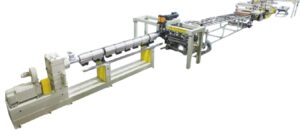
Performance Metrics in Extrusion Operations
Table 2: Key Performance Indicators (KPIs)
| Metric | Beschrijving | Importance |
| Output Rate | Production volume | Efficiëntie |
| Defect Rate | Percentage of defects | Quality |
| Downtime | Machine idle time | Productivity |
| Energy Consumption | Power usage | Cost control |
| Opbrengst | Material efficiency | Profitability |
Working Environment and Conditions
Extrusion operators usually work in industrial manufacturing environments that have specific environmental factors.
Physical environment
High temperatures due to heated equipment
Noise from machinery
Continuous production lines
Requirements:
- Heat resistance
- Focus under pressure
Shift work
Often 24/7 production cycles
Day/night shifts
Impact:
Operators must adapt to rotating schedules.
Safety considerations
Hot surfaces and molten materials
Moving mechanical parts
Requires:
- PPE (gloves, goggles, and protective clothing)
- Strict safety protocols
Work intensity
Monitoring multiple parameters simultaneously
Quick response to issues
Insight: High responsibility for product quality and uptime
Career Path and Development
The extrusion operation provides skilled workers with a clear progression path.
Entry-level operator
Basic machine operation
Material handling
Quality checks
Skilled/Senior Operator
Advanced machine setup
Troubleshooting
Process optimisation
Supervisor/Team Leader
Managing production teams
Scheduling and workflow coordination
Quality assurance oversight
Process Technician/Engineer
Process design and optimisation
New product development
Equipment improvement
Often involves deeper expertise in polymer engineering.
Production Manager
Full production line management
Cost control and efficiency
Strategic decision-making
Key skills for advancement:
- Technical knowledge
- Problem-solving ability
- Leadership and communication
Industry Trends Impacting Extrusion Operators
The rapid evolution of the extrusion industry is changing the role of operators.
Automation and smart manufacturing
Trends:
- PLC and IoT integration
- Real-time monitoring systems
- Automated quality control
Impact:
Operators shift from manual control to process monitoring and optimisation.
Data-driven production
Use of production data for optimisation
Predictive maintenance
Insight:
Operators need basic data analysis skills
Advanced materials
Bioplastics
High-performance polymers
Recycled materials
Challenge:
Different materials require new processing knowledge
Sustainability and environmental pressure
Energy-efficient processes
Waste reduction
Recycling integration
Impact:
Operators must adapt to eco-friendly production requirements.
Customisation and flexible manufacturing
Shorter production runs
More product variations
Result:
Higher demand for operator versatility
Skill upgrading and training demand
Need for continuous learning
Cross-functional skills
Insight:
The role is becoming more technical and knowledge-driven.
Why Extrusion Operators Are Critical in B2B Manufacturing?
For B2B buyers, the skill level of extrusion operators directly affects:
- Product consistency
- Delivery timelines
- Cost efficiency
Companies using advanced systems from manufacturers like Jwellmachine depend on highly trained operators to maximize equipment performance.
FAQ: Extrusion Operator
- Wat doet een extrusieoperator?
They set up, operate, and maintain extrusion machines to produce materials like plastic pipes and films.
- What skills are required?
Technical knowledge, problem-solving ability, and attention to detail.
- Is it a skilled job?
Yes, it requires specialized training and experience.
- What industries hire extrusion operators?
Plastics, automotive, construction, packaging, and food processing.
- What is the main responsibility?
Ensuring consistent, high-quality production through machine control.
- Is automation replacing extrusion operators?
Automation is increasing, but skilled operators remain essential for oversight and optimization.
Conclusie
Extrusion operators play a vital role in modern manufacturing, bridging the gap between raw materials and finished products. Their expertise ensures that extrusion processes run efficiently, safely, and consistently, making them indispensable in industries ranging from plastics to advanced materials.
For manufacturers and B2B buyers alike, investing in skilled operators and advanced equipment, such as that provided by Jwell Machine, is essential for gaining a competitive advantage in today’s global market.



 English
  Russian
  Spanish
  Arabic
  German
  French
  Persian
  Turkish
  Bulgarian
  Czech
Czech  Dutch
Dutch  Greek
Greek  Indonesian
  Japanese
  Korean
  Polish
  Portuguese
  Romanian
  Slovenian
  Ukrainian