Introduction: Why the Plastic Extruder Matters in Modern Manufacturing
Today, plastics are commonplace in the manufacturing landscape: from packaging to automotive components, to medical tubing, and to profile construction. Many of these products are supported by one essential piece of equipment: the plastic extrusora.
A parafuso da extrusora de plástico is not simply a device that fondles plastic. It’s a highly engineered system that converts raw polymer materials into consumable products with precise characteristics, mechanical properties, and surface quality. As global industries have required greater efficiency, less tolerance, and more sustainable processing, the position of the plastic extruder has become more significant than ever before.
This article explicates the entire process of a plastic extruder, what it does, how it works, and the reasons why it is important in multiple industries.
What Is a Plastic Extruder?
A plastic extruder is a machine that processes thermoplastic materials by melting them, combining them, and forming them into a smooth profile through a die. The procedure is called plastic extrusion.
In general, the plastic extruder takes a solid plastic form that is typically in the form of pellets, granules, or powder, and converts it into a liquid, uniform material that is pushed through a specially designed die that results in the creation of products with a fixed cross-section.
Core Definition:
A plastic extruder is an industrial device used to melt thermoplastic materials and then shape them into finished or partial products via controlled temperature, pressure, and shear.
Unlike injection molding, which produces discrete components, extrusion produces continuous products, such as pipes, sheets, films, profiles, and coatings.
What Does a Plastic Extruder Do?
At its heart, a plastic extruder has five essential capabilities:
Material Handling – Moves the raw plastic particles from the hopper to the barrel.
Melting – Heats up and presses onto the plastic to melt it.
Homogenization and Mixing – It ensures a uniform temperature and consistent material composition.
Pressurization – Create pressure that is constant pressure to advance the plastic.
Shaping – The process of passing a die across a material substance to produce a particular profile.
Each of these functions must be precisely executed to ensure the quality of the product, dimensional consistency, and efficiency of the process.
How Does a Plastic Extruder Work?
Understanding the mechanism of a plastic extruder clarifies the importance of its design and configuration in industrial production.
Step 1: Feed the raw material
Plastic pellets or powder are introduced into the extruder through a hopper. Gravity or feeding systems are responsible for providing a consistent and controlled supply of material.
Step 2: Melting and Conveying Inside the Barrel
Within the heated chamber, one or more rotating blades move the material forward. As the plastic is moved around:
Barrel heaters increase the temperature.
Screw rotation promotes friction and shearing.
Plastic becomes fluid over time.
Step 3: Combining and Increasing Pressure
The design of the screws (flight depth, pitch, and compression ratio) is responsible for ensuring this:
Even Below the Melt
Destruction of the air or vapor phase
Constant pressure before the die
This stage is of paramount importance to achieve identical product properties.
Step 4: Through the Die
Plastic that is melted is forced through a die, which results in the final shape of the product being extruded. The die doesn’t have a defined length; instead, it’s defined by the cross-section.
Step 5: Cooling and Sizing
After exiting the die, the product is refilled using air, water, or a vacuum system to maintain its shape and dimensions.
Main Components of a Plastic Extruder
A modern plastic extruder has several critical components that are responsible for different functions:
-
Hopper
Stores and supplies raw plastic into the extruder.
-
Parafuso
The plastic’s heart. Different types of screws are employed for:
All-purpose plastics
High-yielding uses
Combining and combining
Heat-sensitive substances
-
Barril
A hot cylinder that houses the screw and regulates the temperature of the zones.
-
Drive System
Includes the engine and gearbox; these components provide both speed and torque control.
-
Matriz
Transform the molten plastic into the intended final shape.
-
Control System
Modern extruders have computers or PLCs that control the temperature, speed, pressure, and output.
What is the purpose of a plastic extruder?
The purpose of a plastic extruder is to melt, combine, and maintain a consistent quality and precise dimensions in a uniform form.
In general, a plastic extruder converts plastic pellets, granules, or powder into a finished product or a semi-finished product by molding the material through a shaped die.
The primary purposes of a plastic extruder are listed below.
-
Melting the plastic materials
A plastic extruder employs heat and mechanical pressure to melt thermoplastic substances like PE, PP, PVC, ABS, and PET, which are then prepared for molding.
-
Combining and Homogenizing
During the extrusion process, the revolving screw:
Combine ingredients, supplements, and colorants.
Maintains a consistent temperature and consistent composition of the material.
This guarantees the consistent delivery of high-quality products.
-
Constant Transformations
The molten plastic is conveyed through a die, which results in the final shape.
Common products that are extruded regularly include:
Tube and pipe
Tapes and sheets
Descriptions and narratives
Wires and cable insulation
Plastic spheres (via pelletizing)
-
Increasing the efficiency of production
Extruders are continuous operation, which makes them ideal for large volume production with a:
High production
Low waste of material
Constant dimensions
-
Allowing Customization of the material
Plastic extruders facilitate the manufacturer in reaching a variety of goals:
Changing formulations
Control the thickness, diameter, and quality of the finish.
Create custom reports and technical solutions
-
Facing the problem of Recycling and Reprocessing
Extruders are commonly utilized to:
Recycling plastic debris
Create recycled pellets or sheets.
This is of great importance in the sustainable production of plastic.
Applications of Plastic Extruders
-
Pipe and tubing production
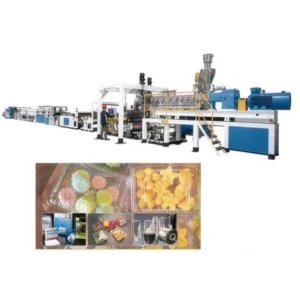
Plastic extruders are crucial to creating water pipes, drainage systems, gas pipes, and medical tubing.
-
Sheet and Plate Extrusion
Utilized in the packaging of goods, building interior components, and automotive design.
-
The Production of Film and Blown Film
Plastic extruders serve as the foundation for flexible packaging, agricultural films, and industrial covers.
-
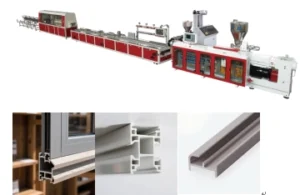
Profile Extrusion
Window frames, cable runs, decks, and structural components all require extrusion technology.
-
Combining and Re-using
Twin-screw extruders are commonly utilized for the pelletization of recycled plastics and the addition of masterbatches.
Types of Plastic Extruders
-
Single-Screw Plastic Extruder
The single-screw plastic extruder is the most popular in the industry.
Main characteristics:
Complexity
Cost-effective
Easy to operate and maintain
Advantages include its proven efficiency and effectiveness as a commercial hydroponic planting stock.
Common uses include:
Pipes and tubing
Tapes and sheets
Profiles
Insulation of cable
-
Twin Screw Plastic Extruder
A plastic extruder with two screws that rotate in the same or different directions is called a twin-screw extruder.
Vantagens:
Better integration and dispersal
More efficient management of the material’s residence time.
Perfect for combination and filled materials
Common habits:
Plasticizing additive
Large-scale production of masterbatches
Recycling and reprocessing
Reactive extrusion
What Materials Can a Plastic Extruder Process?
Plastic extruders are compatible with a wide range of thermoplastics, including:
PE (Polyethylene) – LDPE, HDPE
PP (Polypropylene)
PVC (Polyvinyl Chloride)
PET (Polyethylene Terephthalate)
ABS
PS
Nylon (PA)
Material selection directly affects screw design, temperature settings, and output stability.
Advantages of Using a Plastic Extruder
-
High Efficiency of Production High
Plastic extruders allow for a continuous, high speed production process, which is ideal for mass production. Once the extrusion process is established, it will consistently produce without stoppage, this will greatly increase the efficiency of the process.
-
Constant Quality of Product
The extrusion process guarantees consistent cross sections, consistent dimensions, and consistent properties of material. Temperature and pressure control systems that are advanced help to maintain precise specifications over extended production periods.
-
Wide material compatibility
Plastic extruders can deal with a variety of thermoplastics, including PVC, PE, PP, ABS, PET, PS, and engineering plastics, which allows manufacturers to serve a variety of industries and applications.
-
Effective Costs of Production
The extrusion method reduces waste generation and decreases labor requirements through automation. Constant operation reduces the cost per unit of production, making plastic extrusion extremely economic.
-
Flexibility in design
With different dies and instruments, plastic extruders can create pipes, profiles, sheets, films, and tubes, as well as custom configurations. This flexibility facilitates both standard and custom product designs.
-
Robust and Automated Execution
Modern plastic extrusion lines have automation, aPLC, and real time monitoring, these features enable easy expansion of production capacity while maintaining quality.
-
Energy Eficiency
Screw design that is optimized, efficient heaters, and advanced drives reduce the amount of energy consumed while still providing a high level of performance.
-
Superb surface quality
Plastic extruders produce flat, uniform surfaces that are often not بحاجة to additional processing following the production process, which reduces the cost of production.
-
Excellent Mechanical Ability
Products that are extruded have good strength, durability, and resistance to corrosion, chemicals, and environmental stress. These properties make them suitable for long-term use in industry.
-
environmentally friendly options
Plastic extruders facilitate the incorporation of recycled components and biodegradable plastics into manufactured products, which helps to reduce the environmental impact and promote sustainability.
Plastic Extruder vs Injection Molding: Key Differences
| Aspecto | Plastic Extruder | Injection Molding |
| Saída | Continuous | Discrete parts |
| Shape | Constant cross-section | Complex 3D shapes |
| Cycle | Continuous | Cyclic |
| Tooling cost | Lower | Higher |
| Typical products | Pipes, sheets | Housings, fittings |
Both technologies are essential, but the plastic extruder excels in long, uniform products.
Factors That Affect Plastic Extruder Performance
Several factors influence the quality of extrusion and output.
The design of the screws and the ratio of compression are
Temperature profile of the barrel’s components
The creation
The amount of moisture in the material
Screw’s speed and torque
optimizing these values is of paramount importance for ensuring a stable, energy-efficient operation.
Energy Efficiency and Sustainability Increases
Today, modern plastic extruders have increased capabilities of:
Energy-saving motors
Enhanced insulation in the barrel
Adequate temperature control
compatibility with reusable materials
As the concept of sustainability becomes more important, plastic extruders have a significant role in the circular manufacturing of plastic and in recycling it.
How to Choose the Right Plastic Extruder?
-
Describe the kind of plastic you have
Different plastics have different requirements for screws, barrels, and temperature control.
Common colors: white, gray, black, brown, tan, and other colors.
Plastic engineering: PA, PC, POM, TPU
Each material has a unique method of melting, consistency, and response to shear and temperature. Ensure that the extruder is built to accommodate your specific resin type.
-
Select the Effective Extruder Method
Plastic extruders are primarily categorized into two varieties:
Single-screw extruders:
Best for producing high volume, standard materials like pipes, sheets, films, and profiles.
Twin-screw extruders (both co-rotating or counter-rotating):
Ideal for combination, processing of PVC, and applications that require precise matching and dispersal of material.
-
Describe the product’s function in more detail
The ultimate product determines the final configuration of the extrusion line.
Pipe and tube extrusion – requires consistent pressure and precise control over the diameter.
Profile extrusion – requires precise control of the profile and its cooling.
Sheet & film extrusion – requires a consistent thickness and flatness of the extruded material.
Pelletizing and compounding – necessitate the ability to blend strongly.
Corresponding the extruder to the product’s design promotes consistent quality and the least amount of waste.
-
Figure out what needs to be accomplished
Extruders are measured in terms of their output (kg/h). Selecting the appropriate capacity will avoid inefficiency or overloading.
Small-scale farming
Large volume production → powerful, efficient extruder
Oversizing has a negative impact, while undersizing has a positive impact.
-
Think about Screw’s design and the L/D ratio
The extruder comprises the screw and the core of the extruder.
L/D ratio (Ratio of length to diameter):
Typical ratios are 25:1 to 40:1, which are based on the material and the application.
The optimized design of screws increases the melting, mixing, and consistency of output.
Customized screws are beneficial for designating specialized materials or products.
-
Review the Temperature Control and Automation System
Temperature control that is exact directly affects the quality of the product.
Multiple temperature zones
Modernized control systems for advanced PLC.
Real-time detection of faults and monitoring
Higher automation is associated with lower costs of labor and greater consistency.
-
Evaluate the efficiency of energy
Modern extruders include:
Energy-saving motors
Heat generators that are optimized for use in barrels.
Intelligent power management
Lower energy consumption leads to lower costs and increased sustainability.
-
Check compatibility with supplementary equipment
Ensure the extruder is smoothly associated with:
Dieses und Möllern
Vacuum pressure calibration devices
Cooling beds
Haul-off devices and cutters
A properly configured extrusion line has a positive effect on the overall performance.
-
Robustness, Help, and Replacement Parts
Select a manufacturer that provides:
Past industry experience
Constant quality improvement
Global service provision
Easy access to replaceable parts
After-sales service is dependable and reduces downtime; it also safeguards your investment.
-
Costs and Budgets for the Long Term
Don’t solely focus on the initial cost.
Consider:
Energy expenditure
Maintenance expenses
Productivity of the production process
The lifespan of the equipment
A more effective extruder is often associated with increased return on investment over time.
Frequently Asked Questions (FAQ)
Q: What is the primary function of a plastic extruder?
The primary function of a plastic extruder is to melt and form products that are thermoplastic and have a fixed shape across the spectrum.
Q: What kinds of products are created with a plastic extruder in mind?
Common products include pipes, sheets, films, tubing, profiles, and cable coating.
Q: Is a plastic extruder appropriate for reusable materials?
Yes. Many modern extruders of plastic are specifically built to process recycled plastics in an efficient manner.
Q: How long can a plastic extruder continue to operate without stopping?
Industrial plastic extruders have the ability to operate over extended periods of time, often 24/7, with proper care.
Conclusão
A plastic extruder is more than a melting machine: it’s a central manufacturing system that determines the efficiency, quality, and potential for expansion of plastic production. From the creation of plastic products to their packaging and use in cars and hospitals, plastic extruders have the ability to produce essential plastic products on a continuous basis.
Understanding what a plastic extruder is and what it does helps manufacturers, engineers, and professionals in procurement to make informed decisions, improve production processes, and maintain a competitive advantage in an evolving industrial landscape.
As plastic manufacturing methods evolve, the extruder will still have a significant role in the future of plastic manufacturing.




 English
  Russian
  Spanish
  Arabic
  German
  French
  Persian
  Turkish
  Bulgarian
  Czech
Czech  Dutch
Dutch  Greek
Greek  Indonesian
  Japanese
  Korean
  Polish
  Portuguese
  Romanian
  Slovenian
  Ukrainian