Article Abstract:
A máquina de extrusão de filme stretch is a specialized machine designed to produce stretch film. This plastic film is commonly used to stabilize pallets and packaging industrial goods.
Stretch movie production is facilitated by precise control of the melt’s rheology, molecular orientation, and the multilayer co-extrusion process. This process is used to maximize the strength, elasticity, and consistency of the film.
Based on the literature and industry best practices, the article describes the specifics of what a stretch film extrusion machine is and how it functions in the real world.
It scrutinizes the machine’s architecture, the principles of extrusion, the raw materials used, the flow of the process, the structure of films, the quality control parameters, and design considerations that are driven by application.
Introduction: Why Stretch Film Extrusion Machines Matter in Global Packaging?
Stretch film has become essential to modern logistics and packaging. From the storage of pallets to the international transport of goods, stretch film has the ability to unify goods securely while minimizing the amount of material used or the damage caused by transportation. Behind the simple plastic film is a complex process that is centered on the stretch film extrusion machine.
Unlike general-purpose extrusion machines that produce films with a wide range of thicknesses, stretch film extrusion machines are dedicated to producing thin, highly stretchable films that have a precisely balanced mechanical composition.
The machine not only melts and shapes plastic, but also controls the orientation of molecular substances, the interaction of layers, and the behavior of surfaces at a microscopic level.
As global supply chains have continued to demand efficiency in cost, stability in load, and sustainability, the importance of stretch film extrusion technology has increased over time.
Understanding the functioning of a stretch film extrusion machine is therefore crucial to both equipment manufacturers and film suppliers, as well as to packaging professionals and brand owners who want to maximize performance and reduce the amount of material needed.
What Is a Stretch Film Extrusion Machine?
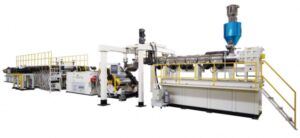
A stretch film extrusion machine is an industrial manufacturing machine that converts thermoplastic resins, primarily linear low-density polyethylene (LLDPE), into stretchable plastic film by means of a continuous extrusion and cast or blowing process. The machine integrates polymer melting, filtration, shaping, cooling, stretching, and winding into a single, coordinated system.
In most recent installations, stretch film extrusion machines are multilayer systems that produce films with 3, 5, 7, or more functional layers. Each layer has a specific purpose, which is to provide strength, resistance to puncture, cling, or the capacity to hold loads.
The distinguishing attribute of these machines is their capacity to create films that can be lengthened significantly- often 200% to 300% of their original size- while maintaining the same tensile strength and elasticity.
Stretch Film vs. Other Plastic Films: Why Specialized Equipment Is Required
Despite the fact that stretch film is similar to other polyethylene films, its requirements for performance are fundamentally different. Standard packaging films focus on the thickness uniformity or barrier properties of films, while stretch films must have a balanced combination of elasticity, toughness, and controlled deformation.
This equilibrium is not achievable with standard extrusion equipment for films. A stretch film extrusion machine is designed to control the molecular orientation during extrusion and cooling. This machine ensures that the polymer chains are oriented in a way that supports elongation without causing tearing.
Additionally, stretchable films often have tacky layers that need to be precisely controlled in temperature and thickness. These specialized requirements contribute to the explanation of why stretch film extrusion machines are the most popular in this industry.
Basic Working Principle of a Stretch Film Extrusion Machine
The primary principle of operation of a stretch film extrusion machine is based on the fundamental principles of polymer extrusion: solid polymer pellets are melted, then uniformly shaped into a thin film, the film is then cooled, and it is wound. However, each step is more exact than the preceding one.
The procedure starts with the raw material being fed into one or more extruders. Outside of the extruder, rotating screws move, compress, melt, and mix the polymer in controlled temperatures and shear. The molten polymer is then separated and directed to a die, which will form a flat or tubular film from it.
Immediately following the shaping process, the movie will undergo a rapid decrease in temperature to “freeze” the molecular composition. Following the stretching and winding processes, the final mechanical properties necessary for stretch applications are imparted.
Main Types of Stretch Film Extrusion Machines
Stretch film extrusion machines are typically categorized into two main types based on the method of film formation: cast stretch film extrusion machines and blown stretch film extrusion machines.
- Describe the operations of Cast Stretch Film Extrusion Machines
Cast stretch film extrusion machines create films by extruding molten polymer through a flat die and then casting it onto a chilled roller. This approach facilitates precise control of the thickness, transparency, and quality of the surface. As such, stretch film that is cast dominates high-speed, high-volume packaging applications that are industrially significant.
- Stretched Film Extrusion Machines
Stretched film that is blown out of a machine that extrudes it through a circular die and then inflates it is referred to as a bubble. While films that are blown have a higher resistance to puncture, their clarity and thickness are typically lower than those of films that are cast. As a result, blown stretch film is employed in more specialized or demanding situations.
Key Components of a Stretch Film Extrusion Machine
A modern stretch film extrusion machine is composed of multiple separate subsystems that each have an effect on the final quality of the film and the efficiency of the machine.
Extruders are the core of the system. Multilayer machines utilize multiple extruders that feed different polymeric formulations into the co-extrusion die. The design of the screws, their length-to-diameter ratio, and the temperature distribution are all critical to obtaining a consistent flow rate and consistent layer distribution.
- Melt Filtration System
Before the die is reached, the molten polymer is passed through a screen changer or a filter that melts away impurities. Clean flow is crucial to avoiding defects in films like gels or spots.
- Co-Extrusion Die
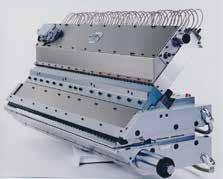
The die combines multiple fluid streams into a single layered structure with multiple layers. Precision flow channels ensure a consistent thickness of the layer across the film’s width. The design is one of the most complicated aspects of stretch film extrusion.
- Unit of Casting or Blowing
In systems that use cast iron, a rapid temperature decrease is achieved via a chill roll. In systems that are blown, air is circulated, and the stabilizing effects of bubbles are inhibited by a film formation controller. The rate of cooling affects the clarity of the film and mechanical properties of the film.
- Haul-Off, Stretching, and Winding Device
After the movie is cooled, it is gathered and strained under controlled pressure before being wound into finished sheets. This phase adjusts the film’s orientation and stretchiness.
How a Stretch Film Extrusion Machine Works: Step-by-Step Process?
To fully comprehend the functioning of a stretch film extrusion machine, it is beneficial to discuss the procedure in succession.
- The procedure begins with the preparation of raw materials, including polyethylene resin and additives, which are mixed according to the specifications of the formulation. These components are incorporated into individual extruders that correspond to each film component.
- In the extruders’ interior, the polymer is melted and uniformly mixed under controlled temperatures and shear. The molten polymer then traverses systems that are intended forfiltration before reaching the co-extrusion device.
- Within the die, multiple melt streams are aggregated into a single, layered melt composition. The entire melt is expelled from the die as a thin sheet (cast) or tube (blown).
- In cast extrusion, the hot movie is immediately surrounded by a cold sheet, which prevents the movie from cooling down and locking in its molecular orientation. The movie is then stretched through a series of rollers that longitudinally stretch it.
- Ultimately, the completed movie is edited, the edge of the movie is preserved if necessary, and the movie is wound into precise tension levels that will prevent deformation or obstruction.
Table: Cast vs. Blown Stretch Film Extrusion Machines
| Feature | Cast Stretch Film Extrusion Machine | Blown Stretch Film Extrusion Machine |
| Film Clarity | Very high | Média |
| Thickness Uniformity | Excelente | Moderate |
| Production Speed | High | Lower |
| Eficiência Energética | Higher | Lower |
| Aplicações Típicas | Pallet wrap, logistics | Heavy-duty wrapping |
Raw Materials Used in Stretch Film Extrusion Machines
The most common raw material used in the production of stretch films is LLDPE. This material is selected because of its superior stretchiness and toughness. Other varieties of polyethylene, including LDPE or mPE, are often incorporated into the blend to alter the properties of performance.
Additives like tackifiers, slip agents, antiblocking agents, and stabilizers are incorporated into specific layers in order to enhance performance. The capacity of a stretch film extrusion machine to consistently process these substances is critical to the quality of the product.
Multilayer Co-Extrusion and Film Structure
Modern stretch films are uncommonly single-layered. Instead, they utilize multiple-layered structures to spread mechanical functionality across layers efficiently.
Typical layers have a core layer that is strong, outer layers that are clingy or slippery, and intermediate layers that are tough. By personalizing the formulation of each layer, manufacturers can reduce the overall thickness of the film while still maintaining or enhancing performance.
Quality Control Parameters in Stretch Film Extrusion
Maintaining the same quality of film requires monitoring the thickness of the film’s profile, its tensile strength, its elongation at break, its cling force, and its haze.
Stretch film extrusion machines are typically equipped with online measurement systems and automatic mechanisms for adjusting dies to ensure uniformity.
Advantages of Using a Dedicated Stretch Film Extrusion Machine
In the packaging industry, the stretchiness of film is directly related to the precision and consistency of the extrusion process. A stretch film extrusion machine specifically designed for producing high-performance stretch films is available. This machine has a distinct advantage over other machines that are intended for use in conjunction with or as an alternative to polyethylene film.
- Improved Film Quality and Accuracy
Dedicated stretch film machines that are extruded in a dedicated manner are intended to maintain:
- Constant film thickness
- Constant control of the width
- Constant mechanical properties
Modern die and cooling systems minimize the variation of thickness, which results in a greater force of holding the package and a more predictable behavior of stretch; these are important for the application of pallet wrapping.
- Superior stretch and retention capabilities
By precisely regulating:
- The temperature of the polymer’s melt
- Cooling rate
- Genetic orientation
These machines create films that have a higher stretchiness, a more elastic recovery, and a more reliable attachment, all of which are intended to reduce the amount of film used while still maintaining a secure load on the pallet.
- Increased Efficiency in Production
Compared to standard extrusion machines, dedicated stretch film machines have:
- Increased line speeds
- quicker startup and transition times
- Lower rates of scrap gold
This results in a lower expense per kilogram of film and a higher overall efficiency of the equipment (OEE).
- ExtendedLayerStructure Control
Many dedicated systems have:
- Multiple-layer extrusion (3-layer, 5-layer, or more)
- Exactly layered distribution of thicknesses
This facilitates the optimization of material utilization, increases the resistance of punches, and incorporates recycled materials without compromising on performance.
- Energy Efficiency and Process Stability
Purpose-built extrusion machines have features:
- Effective extruders and motors
- Adequate heating and cooling areas
- Intelligent processes that are controlled by computers.
As such, they derive less energy per production unit while still maintaining a consistent, reproducible production.
- Better compatibility with advanced materials
Dedicated stretch film extrusion machines are appropriate for:
- LLDPE and other metallocene-based polymers
- High-performance combinations
- Post-consumer materials that are recycled (PCR)
This flexibility facilitates cost-cutting and goal sustainability.
- Reduced Downtime and Maintenance
Because components are crafted specifically for the production of stretch films:
- Use parts that have a longer lifespan.
- Deviations from processes are more easily recognizable.
- Maintenance is more consistent
This leads to increased uptime and decreased maintenance costs.
- More effective competition in the market
Constant quality, reduced volume of material used, and increased productivity lead to manufacturers of:
- Fulfill the stringent requirements of customers.
- Participate in markets that have a high volume and a high demand.
- Be flexible and respond to changing market demands quickly.
Future Trends in Stretch Film Extrusion Technology
Future endeavors will concentrate on energy efficiency, higher-layer extrusion, recycling potential, and integration with smart manufacturing systems. Increasingly, stretch film extrusion machines are being developed to process recycled polyethylene while maintaining its stretchability.
FAQ: Stretch Film Extrusion Machine
Q1: What is the purpose of the stretch film extrusion machine?
It’s employed to create stretchy film that is used to stabilize cargo in industrial packaging.
Q2: What is the mechanism by which a stretch film extrusion machine functions?
It melts the polyethylene resin, which is then converted into a thin multiwall film. The film is cooled and extended, and it is wound into rolls.
Q3: What components are incorporated into stretch film extrusion?
primarily LLDPE, which is often combined with LDPE, mPE, and other additives.
Q4: What is the distinction between the cast and the blown stretch film machines?
Cast machines produce more detailed, more uniform movies at higher speeds, while blown machines have a higher resistance to puncture.
Q5: Why are multiple-layer stretch films favored?
They facilitate different properties that can be optimized in separate layers, which increases efficiency and reduces the amount of material needed.
Conclusão
The stretch film extrusion machine is a specialized machine that is technologically advanced, and it supports one of the most important substances in modern logistics and packaging. By precisely regulating the melting of polymers, layering, cooling, and stretching, these machines can produce films that have exceptional elasticity, strength, and efficiency. Understanding the functioning of stretch film extrusion machines provides important information to manufacturers, equipment owners, and packaging professionals regarding the optimization of performance and the sustainable use of materials in an increasingly competitive global market.



 English
  Russian
  Spanish
  Arabic
  German
  French
  Persian
  Turkish
  Bulgarian
  Czech
Czech  Dutch
Dutch  Greek
Greek  Indonesian
  Japanese
  Korean
  Polish
  Portuguese
  Romanian
  Slovenian
  Ukrainian