Abstract
The cosmetic tube extrusion line is a vital manufacturing system for producing plastic tubes used to package products such as creams, lotions, and gels, as well as pharmaceuticals.
According to the Plastics Processing Handbook (Rosato & Rosato, 2022), extrusion-based tube manufacturing offers superior material uniformity, high production efficiency, and excellent dimensional control compared to traditional moulding techniques.
Furthermore, research published in the Journal of Applied Polymer Science (2023) reveals that multilayer extrusion technology can greatly enhance the barrier properties of tubes, rendering them ideal for sensitive cosmetic formulations.
This article provides a comprehensive, technically detailed exploration of how a cosmetic tube extrusion line works, including its components, workflow, materials, advantages, limitations, and future innovations.
Introduction to Cosmetic Tube Extrusion Line
The cosmetic tube extrusion line is one of the most advanced and efficient manufacturing solutions in the packaging industry, particularly for personal care and cosmetic products.
As consumer demand shifts towards premium packaging, sustainability, and product protection, manufacturers are increasingly relying on extrusion technology to achieve consistent quality and scalable production.
Unlike injection or blow moulding, extrusion enables the continuous production of tube sleeves with precise thickness control and an excellent surface finish, which is vital for branding and product integrity.
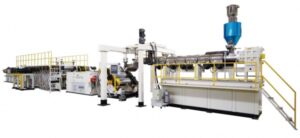
A modern cosmetic tube extrusion line is an integrated system consisting of multiple modules, including raw material feeding, extrusion, cooling, cutting, printing, heading, and sealing, rather than a single machine.
Each stage is engineered to ensure uniformity, minimise defects, and optimise throughput. This process is particularly valuable for producing PE (polyethylene), laminated and multilayer tubes, which are widely used for skincare, oral care, and pharmaceutical packaging.
Core Components of a Cosmetic Tube Extrusion Line
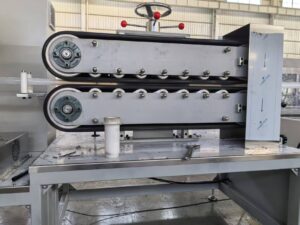
To understand how a cosmetic tube extrusion line works, it is necessary to take a detailed look at its core components. Each module plays a vital part in the process of turning raw polymer materials into finished cosmetic tubes.
Main Equipment Overview
| Компонент | Функция | Основные характеристики |
| Экструдер | Melts and conveys polymer material | Screw design, temperature zones |
| Die Head | Shapes molten plastic into tube form | Precision diameter control |
| Система охлаждения | Solidifies the extruded tube | Water bath or air cooling |
| Haul-off Unit | Pulls the tube at controlled speed | Synchronization with extrusion |
| Режущее устройство | Cuts tubes to length | High precision servo control |
| Printing System | Applies branding and graphics | Flexographic or digital printing |
| Heading Machine | Forms the tube shoulder and neck | Injection or compression molding |
| Sealing Unit | Seals tube bottom | Heat or ultrasonic sealing |
The integration of these components ensures that the extrusion line operates continuously with minimal interruptions, achieving high productivity and consistent product quality.
Step-by-Step Working Process of Cosmetic Tube Extrusion Line
- Preparing the raw materials
The process begins with selecting and preparing the raw materials, which are usually thermoplastic polymers such as LDPE, HDPE, or multilayer composites. These materials are often blended with additives, such as colourants, UV stabilisers, and barrier enhancers, to meet specific performance requirements.
Material consistency is crucial at this stage. Even minor variations in moisture content or pellet size can affect extrusion stability and the quality of the final tube. Therefore, advanced extrusion lines often incorporate automatic feeding systems and drying units to ensure uniform input conditions.
- Процесс экструзии
At the heart of the cosmetic tube extrusion line is the extruder, where raw plastic is melted and homogenised. The material is fed into a rotating screw housed within a heated barrel. As the screw rotates, it conveys the material forward while simultaneously applying heat and pressure to transform the solid pellets into a viscous molten state.
The design of the screw — whether single-screw or twin-screw — plays a significant role in determining the efficiency of mixing and melting. Temperature zones along the barrel are precisely controlled to ensure consistent melting without degrading the polymer.
- Die shaping and tube formation
Once the material reaches the die head, it is forced through a circular opening that defines the tube’s diameter and thickness. In multilayer extrusion lines, multiple extruders feed into a single die to create layered structures that enhance the barrier properties against oxygen, moisture, and light.
| Tube Type | Структура | Приложение |
| Одиночный слой | PE only | Basic cosmetic creams |
| Double-layer | PE + adhesive | Improved durability |
| Multilayer (5-layer) | PE + EVOH + PE | High-end skincare, pharmaceuticals |
This stage is critical because even slight deviations in pressure or temperature can lead to uneven wall thickness or surface defects.
- Cooling and calibration
After exiting the die, the tube enters a cooling system, usually a water bath or air cooling chamber. This stabilises the tube’s shape and ensures dimensional accuracy. Calibration sleeves may be used to maintain a consistent diameter and roundness during solidification.
Proper cooling is essential to prevent warping, shrinkage, or internal stress, all of which could compromise the tube’s performance during filling and use.
- Haul-off and cutting
The haul-off unit pulls the tube continuously at a controlled speed to ensure synchronisation with the extrusion rate. This coordination is crucial to maintaining uniform thickness and preventing stretching or compression defects.
The cutting unit then slices the tube into predetermined lengths using high-speed, servo-controlled blades. Precision at this stage ensures compatibility with subsequent processes, such as heading and sealing.
- Printing and decoration
Modern cosmetic tubes require high-quality branding and visual appeal. Printing systems integrated into the extrusion line enable real-time decoration using flexographic or digital printing technologies.
This stage involves adding logos, product information, and design elements to enhance the tube’s marketability while maintaining production efficiency.
- Heading and sealing
The heading process involves forming the tube’s shoulder and neck, typically through injection moulding. This step transforms the cylindrical tube into a functional packaging component that can accommodate caps and dispensing mechanisms.
Finally, after filling, the tube bottom is sealed using heat or ultrasonic technology. This ensures leak-proof performance and product safety.
Advantages of Cosmetic Tube Extrusion Line
| Преимущество | Описание | Industry Impact |
| Высокая эффективность | Continuous production process | Reduced manufacturing cost |
| Гибкость материала | Supports multiple polymers | Wide application range |
| Точный контроль | Accurate thickness and diameter | Improved product quality |
| Scalability | Suitable for mass production | Meets global demand |
| Настройка | Enables multilayer and design flexibility | Enhances brand differentiation |
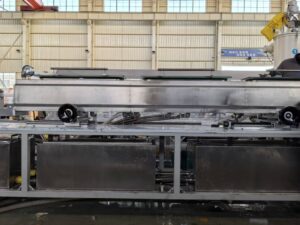
The extrusion line’s ability to combine efficiency with customization makes it the preferred choice for modern cosmetic packaging manufacturers.
Challenges and Limitations
Although cosmetic tube extrusion lines are vital for producing high-quality packaging for personal care and beauty products, manufacturers still encounter several technical and operational challenges.
- Material compatibility issues
Cosmetic tubes often require multi-layer structures (e.g., PE, EVOH, or barrier materials). Ensuring compatibility between different polymers during the extrusion process can be complex, particularly when it comes to maintaining adhesion and barrier performance.
- High precision requirements
Cosmetic packaging demands an excellent surface finish, uniform wall thickness, and precise dimensional control. Even minor deviations in extruder machine parameters can result in defects such as uneven thickness, ovality, or poor sealing performance.
- Energy consumption and cost pressure
Modern extrusion lines operate at high speeds, which increases energy consumption. Manufacturers must balance production efficiency with rising energy costs and sustainability requirements.
- Increasing demand for sustainability
Brands are pushing for recyclable, biodegradable, or PCR (post-consumer recycled) materials. However, these materials can cause processing instability, which affects output quality and machine performance.
- Customisation complexity
Cosmetic brands often require customised tube shapes, diameters, and decorative finishes. This increases tooling complexity and setup time, reducing overall production flexibility.
Maintenance and Optimization
To ensure long-term performance and consistent product quality, proper maintenance and optimisation strategies are essential.
- Regular screw and barrel inspection
The screw and barrel are core components of any extruder machine. Wear and tear can reduce plasticising efficiency and affect product consistency. Regular inspection and timely replacement are critical.
- Temperature control optimisation
Precise temperature control across heating zones ensures stable material flow and prevents degradation. Advanced control systems can significantly improve consistency and reduce scrap rates.
- Die head cleaning and calibration
The die head directly impacts tube shape and surface quality. Routine cleaning prevents material buildup, while calibration ensures dimensional accuracy.
- Automation and process monitoring
Modern extrusion lines integrate PLC systems and real-time monitoring. These technologies enable operators to detect abnormalities early on and optimise production parameters.
- Preventive maintenance programmes
Implementing scheduled maintenance reduces unexpected downtime and extends the lifespan of machines. Predictive maintenance, which uses sensors and data analytics, is becoming increasingly popular.
Future Trends (2026–2030)
The cosmetic packaging industry is evolving rapidly, with significant technological advancements expected in cosmetic tube extrusion lines.
- Sustainable and Recyclable Materials
The shift towards eco-friendly packaging will drive the adoption of mono-material tubes and bio-based plastics. Extrusion lines will need to adapt to process these materials efficiently.
- Smart Extrusion Technology
Integration of the Internet of Things (IoT), artificial intelligence (AI), and data analytics will enable smarter production systems. These technologies will automatically optimise process parameters, thereby improving efficiency and reducing human error.
- High-speed, energy-efficient systems
Next-generation extruder machines will prioritise higher output with lower energy consumption, thus aligning with global carbon reduction goals.
- Enhanced multi-layer co-extrusion
Advanced co-extrusion technologies will enable the production of more complex tube structures with improved barrier properties for premium cosmetic products.
- Digitalisation and Industry 4.0 integration
Manufacturers will increasingly adopt digital twins, remote monitoring, and cloud-based management systems to enhance productivity and operational transparency.
FAQ Section
Q1: What materials are used in cosmetic tube extrusion lines?
Common materials include LDPE, HDPE, EVOH, and multilayer composites designed for barrier protection.
Q2: How does multilayer extrusion improve tube quality?
It enhances barrier properties, protecting contents from oxygen, moisture, and UV exposure.
Q3: What industries use cosmetic tube extrusion lines?
Primarily cosmetics, pharmaceuticals, personal care, and food packaging.
Q4: How is tube thickness controlled?
Through precise regulation of extrusion pressure, temperature, and haul-off speed.
Q5: Is extrusion better than injection molding for tubes?
Yes, for continuous production and uniform wall thickness, extrusion is more efficient.
Заключение
The cosmetic tube extrusion line is a sophisticated, highly efficient manufacturing system that plays a pivotal role in modern packaging. Through the integration of advanced extrusion technology, precision engineering, and automation, it facilitates the production of high-quality cosmetic tubes that satisfy the ever-changing requirements of consumers and industries.
With sustainability and innovation shaping the future, Джвелл extrusion technology will remain at the forefront, providing scalable, efficient, and environmentally responsible cosmetic packaging solutions.


 English
  Russian
  Spanish
  Arabic
  German
  French
  Persian
  Turkish
  Bulgarian
  Czech
Czech  Dutch
Dutch  Greek
Greek  Indonesian
  Japanese
  Korean
  Polish
  Portuguese
  Romanian
  Slovenian
  Ukrainian