
Quick Answer:
Dual-gear extruders offer greater precision, torque, and filament control than single-gear extruders, making them ideal for high-performance and industrial applications. However, for casual or hobbyist 3D printing, a single-gear setup often provides sufficient performance at a lower cost.
According to the 2025 edition of Additive Manufacturing Review and the 2024 edition of Plastics Technology Journal, dual-gear extruders demonstrate improved extrusion consistency and reduced filament slippage, which is essential for challenging materials and intricate designs (References: Additive Manufacturing Review, 2025; Plastics Technology Journal, 2024).
Introduction: Understanding Extruder Technology in 3D Printing
Die Extruder is the heart of a 3D printer, controlling the delivery of filament and ultimately influencing print quality, consistency, and efficiency. In 2026, a significant debate emerged among professionals and hobbyists regarding the justification of the additional cost and complexity of advances in dual-gear extruders.
This article explores the following:
- Technical differences between single-gear and dual-gear extruders;
- Use cases for different extruder types;
- Industry trends and supplier insights (including Jwell);
- Cost-benefit analysis for small-scale and industrial applications.
By understanding these factors, manufacturers, engineers, and enthusiasts can make data-driven decisions.
Single Gear Extruders: Pros and Cons
A single-gear extruder uses a single drive gear to grip and push the filament through the hot end. Key features include:
- Simplicity of design
- Lower maintenance
- Kosten-Wirksamkeit
Advantages of single-gear extruders:
- Affordability: Lower initial purchase cost, making them ideal for entry-level printers.
- Ease of maintenance: Fewer moving parts mean less risk of mechanical failure.
- Sufficient for standard filaments: PLA, ABS, and PETG generally extrude well.
Limitations:
- Filament slippage: Single drive gears can struggle with flexible or abrasive filaments.
- Limited torque: Not suitable for high-viscosity or speciality filaments.
- Lower precision: Slight inconsistencies in filament flow can affect print quality.
Dual-Gear Extruders: Technical Advantages
Dual-gear extruders use two counter-rotating gears to grip the filament more firmly, significantly increasing the force applied and reducing slippage.
Key benefits:
- Enhanced grip on filaments: Minimises extrusion errors, particularly with flexible or composite filaments.
- Higher torque output: Capable of pushing more viscous materials.
- Improved retraction accuracy: Reduces oozing and stringing.
Limitations:
- Increased complexity: The increased number of moving parts can lead to maintenance challenges.
- Higher cost: More expensive upfront and may require higher-quality components.
- Weight and size: This can increase the mass of the extruder, affecting the motion dynamics of certain printers.
Comparative Table: Single-Gear vs. Dual-Gear Extruders
| Merkmal | Single Gear Extruder | Dual-Gear Extruder |
| Torque | Moderate | High |
| Filament Types | Standard filaments (PLA, ABS) | Flexible, abrasive, composite |
| Print Precision | Gut | Ausgezeichnet |
| Kosten | Low | Medium-High |
| Wartung | Easy | Moderate |
| Industrial Suitability | Limited | High |
Use Cases: Who Benefits Most from Dual-Gear Extruders?
Dual-gear extruders are a specialised 3D printing solution, offering enhanced filament control and precision. They are particularly beneficial in professional and industrial contexts where material consistency and reliability are critical.
-
Industrial 3D printing
Ideal for: High-viscosity or abrasive filaments, such as:
- TPU and flexible polymers
- Carbon-fibre or glass-fibre reinforced composites
- Metal- or ceramic-filled filaments
Benefit: Dual-gear extrusion reduces filament slippage, ensures consistent flow, and maintains dimensional accuracy, even with challenging materials.
-
High-Precision Prototyping
Anwendung:
Engineering prototypes and functional models where exact tolerances matter.
Vorteile:
- Strong grip on filament to prevent under- or over-extrusion
- Consistent layer deposition to maintain tight tolerances
- Reliable retraction to reduce stringing and defects
-
Continuous production
Use case:
Manufacturing small series or on-demand production parts.
Vorteile:
- Minimises downtime due to filament feeding issues
- Improves workflow efficiency
- Reduces maintenance interruptions compared to single-gear extruders
-
Complex geometries
Anwendung:
Intricate parts with overhangs, fine details, or variable layer paths.
Vorteile:
- Consistent extrusion supports smooth curves and intricate structures
- Enhances surface finish quality
- Prevents defects caused by uneven filament flow
-
Hobbyist use
Considerations:
For standard PLA or ABS printing on consumer printers:
- Single-gear or Bowden extruders often suffice.
- Dual-gear systems provide marginal benefit relative to cost and complexity.
Zusammenfassung:
Dual-gear extruders are most advantageous for professional, industrial, or high-precision applications. For casual users printing with standard filaments, however, the benefits are limited and may not justify the higher investment.
Filament Type and Extruder Selection
Filament material dramatically impacts extruder performance.
Filament Compatibility Table
| Filament Type | Single Gear Suitability | Dual-Gear Suitability | Notes |
| PLA | Ausgezeichnet | Ausgezeichnet | Low viscosity, forgiving |
| ABS | Gut | Ausgezeichnet | Higher temp, moderate torque required |
| PETG | Gut | Ausgezeichnet | Slightly sticky, benefits from dual-gear grip |
| TPU | Poor | Ausgezeichnet | Flexible filament, prone to slippage |
| Carbon Fiber | Poor | Ausgezeichnet | Abrasive and viscous, a dual-gear is necessary |
Industry Insights and Supplier Spotlight: jwell
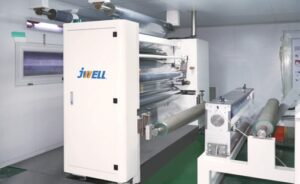
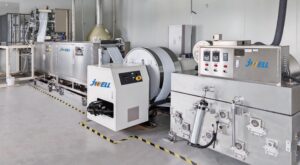
As the field of additive manufacturing moves towards industrial-scale production, extrusion systems are evolving to meet the increased demands for precision, material compatibility, and reliability. According to information published by JWELL, the company has broadened its scope to encompass advanced extrusion technologies, including twin-screw and speciality extrusion solutions for high-performance polymer processing.
Growing adoption of dual-gear extruders
Industrial users are increasingly favouring dual-gear extrusion systems because they provide:
- Stronger filament grip;
- More consistent material feeding;
- Reduced risk of filament grinding or slipping;
- Improved extrusion stability during long production runs.
These advantages are particularly important when processing:
- Carbon-fibre reinforced filaments
- Glass-fibre composites
- Flexible materials such as TPU and TPE
- Engineering-grade thermoplastics
In high-precision manufacturing environments, consistent filament delivery directly contributes to improved dimensional accuracy and surface quality.
Cost-Benefit Analysis: Is a Dual-Gear Extruder Worth It?
The decision between single-gear and dual-gear extruders hinges on material requirements, print precision, and production scale. Here’s a breakdown of the key considerations:
-
Budget-conscious users
Scenario: Hobbyists or desktop printing with standard filaments (PLA, ABS).
Pros of single-gear:
- Lower initial cost
- Simpler maintenance
- Adequate for standard prints
Cons of dual-gear:
- Higher purchase price
- Heavier print head (which may reduce speed)
- Marginal performance improvement for basic filaments
Verdict: The single-gear model is sufficient, while the dual-gear model offers limited added value.
-
Performance-oriented users
Scenario: High-precision prototyping, flexible materials (TPU, TPE), or experimental filaments.
Pros of dual-gear:
- Stronger filament grip, reducing slippage
- More consistent extrusion, improving surface quality
- Faster, more reliable retraction, reducing stringing
- Better suited to flexible, composite, or abrasive filaments
Cons:
- Higher cost than single-gear
- Slightly heavier print head, which may require tuning
Verdict: The dual-gear is worth the investment for users demanding precision, material flexibility, and consistency.
-
Industrial production
Scenario: Continuous operation, large-format or complex prints, multi-material parts.
Pros of dual-gear:
- High throughput with minimal filament feeding errors
- Consistent print quality over long runs
- Supports advanced filaments (carbon fibre, composites)
- Reduced waste due to fewer misprints
Cons:
- Higher initial cost
- Increased maintenance complexity
Verdict: The dual-gear system is almost always justified in industrial settings due to its enhanced reliability and reduced error rates.
Cost vs Benefit Table
| Criterion | Single Gear | Dual-Gear |
| Initial Cost | Low | High |
| Print Quality | Moderate | High |
| Versatility | Low | Very High |
| Maintenance Frequency | Low | Moderate |
| Lifespan | Moderate | High with proper maintenance |
Common Misconceptions About Dual-Gear Extruders
“Dual-gear is only for professionals” – Even hobbyists with flexible filament can benefit.
“They are more prone to failure.” – Proper maintenance mitigates this risk.
“The cost isn’t worth it” – For demanding prints, dual-gear reduces failed prints and material waste.
Future Trends in Extruder Technology (2026)
The landscape of extrusion technology is evolving rapidly as additive manufacturing moves from prototyping to full-scale production. Manufacturers are focusing on enhancing precision, reliability, automation, and material compatibility to meet the increasing demands of industrial users.
-
Hybrid extruders
One of the most significant developments is the emergence of hybrid extruder systems.
Key features:
- Dual-gear filament drive mechanisms
- Active cooling technologies
- Enhanced thermal management
- Improved feeding stability
Vorteile:
- Better handling of speciality filaments
- Reduced heat creep during long prints
- Increased consistency with flexible materials such as TPU and TPE
- Improved performance with engineering-grade polymers
These systems are particularly attractive to professional users working with high-performance materials.
-
Smart Sensor Integration
Extruders are becoming increasingly intelligent through the incorporation of sensors and real-time monitoring systems.
Monitoring capabilities:
- Filament feed rate
- Extrusion pressure
- Temperaturstabilität
- Konsistenz des Materialflusses
- Filament runout detection
Vorteile:
- Early identification of printing issues
- Geringerer Materialabfall
- Improved process reliability
- Support for predictive maintenance
Smart sensing is becoming a core component of Industry 4.0-enabled additive manufacturing environments.
-
Lightweight, high-strength materials
A traditional challenge of dual-gear systems is the additional weight added to the print head.
Industry response
Manufacturers are adopting:
- Aerospace-grade aluminium alloys
- Magnesium-based components
- Carbon-fibre reinforced structures
- Optimised lightweight gear housings
Vorteile:
- Lower moving mass
- Higher printing speeds
- Reduced vibration
- Maintained torque output and extrusion force
This trend helps to close the performance gap between direct-drive and high-speed motion systems.
-
Modular Extruder Architectures
Modularity is becoming a major design priority.
Merkmale:
- Tool-free maintenance
- Quick-swap gear assemblies
- Replaceable drive units
- Standardised component interfaces
Vorteile:
- Reduced downtime
- Easier upgrades
- Lower maintenance costs
- Greater customisation flexibility
Modular designs are increasingly favoured by both professional users and industrial production facilities.
-
Multi-material and advanced filament compatibility
Future extrusion systems are being designed to support a wider range of materials.
Emerging material categories include carbon-fibre composites, glass-filled polymers, conductive filaments, high-temperature engineering plastics, and recycled and sustainable materials. Advanced extrusion control systems will play a critical role in ensuring stable processing across these diverse materials.
-
Supplier innovation and market development
Leading manufacturers such as JWELL continue to invest in:
- Modular dual-gear extrusion platforms
- High-torque drive systems
- Industrial additive manufacturing solutions
- Enhanced material compatibility
- Automated monitoring technologies
These innovations reflect the broader market shift towards more reliable, scalable, and production-oriented extrusion systems.
Industry Outlook:
The future of extrusion technology is centred on four key pillars:
- Higher precision
- Greater automation
- Broader material compatibility
- Improved operational efficiency
As additive manufacturing continues to expand into the aerospace, automotive, medical, and industrial production sectors, next-generation extruders will increasingly combine dual-gear feeding, smart sensing, lightweight engineering, and modular architecture to deliver higher productivity and more consistent print quality.
FAQ: Dual-Gear vs Single-Gear Extruders
Are dual-gear extruders necessary for standard PLA printing?
No, a single gear extruder is typically sufficient for PLA and other low-viscosity filaments.
Do dual-gear extruders reduce stringing and oozing?
Yes, their precise filament grip and higher torque minimize extrusion inconsistencies.
Which extruder type is better for flexible filaments?
Dual-gear extruders are strongly recommended for TPU, TPE, and similar materials.
Do dual-gear extruders require more maintenance?
Slightly more maintenance due to extra moving parts, but modular designs simplify this.
Can single-gear extruders handle carbon-fiber filaments?
They can, but wear on the gear is higher; dual-gear extruders are more efficient and durable.
Which suppliers offer high-quality dual-gear extruders?
Jwell is a leading provider, offering dual-gear systems optimized for industrial and high-precision 3D printing.
Conclusion: Are dual-gear extruders actually worth buying, or is a single-gear setup fine for most people?
The choice between single-gear and dual-gear extruders ultimately depends on the intended use:
For hobbyists or those on a budget, single-gear extruders are fine. For industrial, high-precision, or flexible filament applications, however, dual-gear extruders are worth the investment.
Dual-gear extruders, especially those from trusted suppliers like Jwell, provide consistent extrusion, superior filament control, and future-ready adaptability. As 3D printing technology continues to advance, dual-gear extruders are set to become the norm for professional-grade and speciality filament applications.


 English
  Russian
  Spanish
  Arabic
  German
  French
  Persian
  Turkish
  Bulgarian
  Czech
Czech  Dutch
Dutch  Greek
Greek  Indonesian
  Japanese
  Korean
  Polish
  Portuguese
  Romanian
  Slovenian
  Ukrainian