
Résumé:
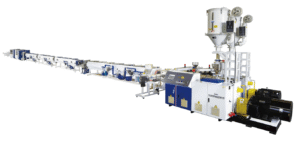
Un extrudeuse is a continuous processing machine used to melt, mix, convey, and shape materials—most commonly polymers—into a defined profile or intermediate form.
Extrusion remains one of the most efficient and scalable polymer processing methods due to its continuous operation, precise thermal control, and high throughput capability.
Jwell Extrusion is a thermomechanical process in which rotating screws generate shear, pressure, and heat to transform solid resin into a homogeneous melt suitable for shaping.
This in-depth industry guide explains what an extruder does, how it works mechanically and thermodynamically, the differences between single-screw and twin-screw systems, key performance variables, energy efficiency considerations, and 2026 innovation trends.
What Does an Extruder Do? Core Industrial Functions
At its most fundamental level, an extruder converts raw material—often in pellet, powder, or flake form—into a continuous shaped product. However, this simplified description understates the sophistication of modern extrusion systems.
An industrial extruder performs five core functions simultaneously:
- Feeding – Controlled introduction of raw material into the processing barrel
- Conveying – Mechanical transport of material along the screw channel
- Melting / Plasticizing – Thermal and shear-based transformation into the molten state
- Mixing / Homogenization – Dispersive and distributive blending of additives
- Pressurizing and Shaping – Forcing melt through a die to form the final geometry
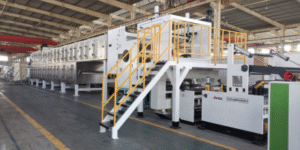
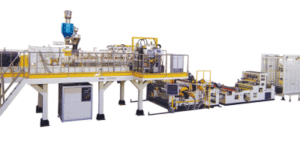
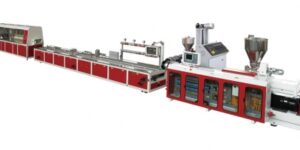
Unlike batch processes such as injection molding, extrusion is continuous. This makes it ideal for producing long, uniform products such as:
- Plastic tuyaux
- Cable insulation
- Compounded pellets
- Food products
- Pharmaceutical dosage forms
Extruders are therefore central to polymer processing, compounding, recycling, food production, and emerging bio-material industries.
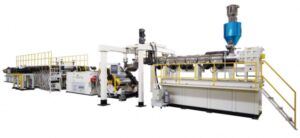
How Does an Extruder Work? Step-by-Step Mechanical Process
To understand how an extruder works, we must analyze its mechanical architecture and process flow.
Basic Components of an Extruder
A standard single-screw extruder includes:
- Hopper
- Feed throat
- Tonneau
- Rotating screw
- Heating and cooling zones
- Motor and gearbox
- Tête de filière
- Control system
The motor rotates the screw inside a heated barrel. Material enters through the hopper and is progressively conveyed forward by the screw flights.
The Three Functional Zones of a Single-Screw Extruder
Most extruders operate through three primary screw zones:
- Feed Zone
- Compression (Transition) Zone
- Metering Zone
Each zone serves a distinct thermomechanical purpose.
Functional Zones of a Single-Screw Extruder
| Zone | Fonction | Profil de température | Pressure Profile | Key Mechanism |
| Feed Zone | Solid conveying | Low–Moderate | Low | Friction-driven movement |
| Compression Zone | Melting & densification | Rising | Increasing | Shear + conduction |
| Metering Zone | Homogenization & pressurization | Stable | High | Melt pumping |
- Material Transformation Inside the Barrel
In the feed zone, polymer pellets remain solid. As they move forward, barrel heaters and mechanical shear from screw rotation generate heat. Contrary to common belief, most melting energy comes from shear heating, not external heaters.
As material enters the compression zone, channel depth decreases. This increases pressure and shear intensity, promoting melting. By the time the material reaches the metering zone, it becomes a homogeneous molten mass.
The metering zone stabilizes flow and builds pressure before the melt exits through the die.
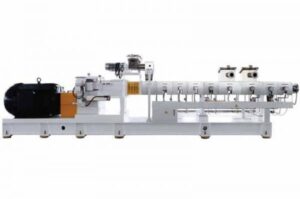
Single-Screw vs Twin-Screw Extruders
Extruders fall into two main mechanical categories: single-screw and twin-screw systems.
- Extrudeuse à vis simple
Simpler design
Lower cost
Ideal for the extrusion of uniform polymers
Common in pipe, film, and sheet production
- Extrudeuse à vis double
Twin-screw systems use two intermeshing screws rotating either co-rotating or counter-rotating.
Advantages include:
- Superior mixing
- Better handling of fillers and additives
- More precise temperature control
- Suitable for compounding and reactive extrusion
Single vs Twin-Screw Comparison
| Fonctionnalité | Simple vis | Twin-Screw |
| Mixing Efficiency | Moderate | Very High |
| Coût | Lower | Higher |
| Meilleur pour | Standard extrusion | Compounding |
| Process Stability | High | Very High |
| Additive Dispersion | Limited | Excellent |
Key Operating Parameters
Extruder performance depends on multiple variables:
- Screw Speed (RPM)
Higher screw speed increases throughput but also raises shear and temperature.
- Barrel Temperature
Controlled via zoned heating systems. The temperature profile must match polymer melting characteristics.
- Pressure
Developed through screw compression and die restriction. Critical for dimensional stability.
- Temps de séjour
Determines material exposure to heat and shear. Excessive residence time may degrade sensitive polymers.
Optimizing these parameters ensures consistent product quality.
Die System: Where Shape Is Formed
The die is the final shaping component. It determines geometry.
Common die types include:
- Flat dies (sheet/film)
- Annular dies (pipe/blown film)
- Profile dies
- Pelletizing dies
The die must balance pressure drop, flow distribution, and thermal uniformity.
Downstream Equipment
After extrusion, products require cooling and calibration.
Examples:
- Water bath for pipes
- Air ring for blown film
- Chill rolls for sheet
- Pelletizers for compounding
Extrusion is not just the screw; it is a coordinated production line.
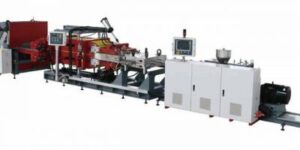
Energy Efficiency and Sustainability Trends (2026)
Modern extruders focus heavily on:
- Servo-driven motors
- Optimized screw design
- Intelligent temperature control
- Real-time data monitoring
Energy consumption can account for 20–40% of production cost in polymer processing plants. Efficient screw geometry reduces energy per kilogram processed.
Applications dans tous les secteurs d'activité
Extrusion technology is widely adaptable due to its continuous processing capability and material flexibility.
- Industrie des plastiques
The plastics sector is the largest user of extruders.
Common Applications:
- Film extrusion (stretch film, cast film, blown film)
- Pipe and profile extrusion
- Sheet and board production
- Cable insulation coating
- Pelletizing and compounding
Materials Processed:
- PE, PP, PVC, PET
- Engineering plastics (PA, ABS, PC)
- Bioplastics and recycled resins
Extruders enable consistent shaping and high-output manufacturing with precise dimensional control.
- Food Processing Industry
In food manufacturing, extruders are used to cook, mix, and shape products.
Applications :
- Breakfast cereals
- Snack foods
- Textured vegetable protein (TVP)
- Pet food
- Pasta
Twin-screw extruders are commonly used due to their superior mixing capability and moisture control.
- Pharmaceutical and Medical Industry
Extrusion is used for:
- Controlled-release drug formulations
- Medical tubing
- Biodegradable implants
- Polymer-based drug carriers
Hot-melt extrusion (HME) improves drug solubility and bioavailability.
- Rubber and Elastomer Industry
Applications include:
- Tire components
- Seals and gaskets
- Rubber hoses
- Automotive weather strips
Extrusion ensures uniform cross-sections and continuous output.
- Chemical and Compounding Industry
Extruders perform:
- Polymer blending
- Additive dispersion
- Color masterbatch production
- Flame-retardant compounding
Precise temperature and shear control are critical for material stability.
Common Extrusion Problems and Solutions
Despite technological advancement, operational challenges still occur.
- Melt Fracture (Sharkskin Effect)
Symptoms:
- Surface roughness
- Distorted finish
Causes:
- Excessive shear stress
- High output speed
- Improper die design
Solutions:
- Reduce extrusion speed
- Optimize die geometry
- Adjust the melt temperature
- Thickness Variation
Causes:
- Uneven die bolt adjustment
- Fluctuating melt pressure
- Poor temperature control
Solutions:
- Use automatic gauge control systems
- Stabilize pressure and temperature
- Calibrate the die regularly
- Gel Formation or Contamination
Causes:
- Degraded material
- Poor mixing
- Screw wear
Solutions:
- Improve filtration
- Replace worn screw components
- Optimize material drying
- Excessive Energy Consumption
Causes:
- Poor barrel insulation
- Inefficient motor systems
- Outdated heating elements
Solutions:
- Upgrade to servo-driven motors
- Install energy-efficient heating bands
- Monitor energy usage in real time
- Screw Slippage
Causes:
- Low friction between material and barrel
- Improper screw design
Solutions:
- Adjust feed zone temperature
- Redesign screw compression ratio
- Use grooved feed barrels
Advanced Extruder Innovations(2026 Trends)
Extrusion systems in 2026 emphasize automation, efficiency, and data intelligence.
- Smart PLC and IoT Integration
Modern extruders include:
- Centralized PLC control
- Cloud-based monitoring
- Remote diagnostics
- Production data analytics
Avantages :
- Reduced downtime
- Predictive maintenance
- Improved production transparency
- AI-Based Process Optimization
AI algorithms analyze:
- Temperature fluctuations
- Pressure stability
- Material viscosity patterns
This enables automatic parameter adjustment for optimal consistency.
- High-Torque Gearboxes
Advanced gear systems:
- Support higher output rates
- Improve mixing efficiency
- Reduce mechanical stress
High-torque twin-screw extruders are especially valuable in compounding.
- Energy-Efficient Heating Systems
Innovations include:
- Induction heating
- Ceramic heating bands
- Intelligent temperature zoning
These systems reduce energy loss and improve thermal response speed.
- Modular Screw Design
Interchangeable screw elements allow:
- Custom mixing profiles
- Flexible material processing
- Quick production changeovers
This increases production adaptability.
- Digital Twin Simulation
Some advanced manufacturers now offer:
- Virtual process simulation
- Pre-installation performance modeling
- Rapid troubleshooting analysis
Digital twin systems reduce commissioning time and risk.
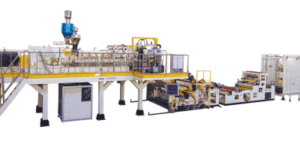
Maintenance and Longevity
Proper maintenance extends equipment lifespan and protects investment.
- Routine Inspection Schedule
Tous les jours :
- Check temperature readings
- Monitor pressure stability
- Inspect for abnormal noise
Hebdomadaire :
- Inspect screw and barrel wear
- Check the lubrication system
- Verify sensor calibration
Mensuel :
- Analyze energy consumption trends
- Inspect gearbox oil quality
- Review PLC logs
- Screw and Barrel Wear Management
Wear indicators:
- Reduced output rate
- Increased melt temperature
- Inconsistent mixing
Preventive measures:
- Use hardened alloy steel
- Apply bimetallic barrel lining
- Replace components before critical wear
- Lubrication and Gearbox Care
- Maintain proper oil levels
- Use manufacturer-recommended lubricants
- Monitor vibration levels
Gearbox failure can lead to extended downtime and high repair costs.
- Cleaning Procedures
Regular purging prevents:
- Material degradation
- Color contamination
- Blockage buildup
Use appropriate cleaning compounds during material changes.
- Operator Training
Human error remains a major failure cause.
Investing in:
- Technical training
- Standard operating procedures
- Data monitoring interpretation
Improves consistency and machine longevity.
Cost Structure of an Extruder
Extruder costs vary by size and configuration:
| Extruder Type | Output Range | Price Range (USD) |
| Small Lab Extruder | 5–50 kg/h | $20,000–$80,000 |
| Industrial Single-Screw | 100–500 kg/h | $80,000–$300,000 |
| Industrial Twin-Screw | 200–1,000 kg/h | $200,000–$800,000+ |
Investment decisions depend on throughput requirements and material complexity.
FAQ: Extruder Operation and Function
- What does an extruder do in simple terms?
It melts and shapes material into a continuous product through mechanical and thermal processing.
- How does an extruder generate heat?
Primarily through shear friction caused by screw rotation, supplemented by external heaters.
- What is the difference between single and twin-screw extruders?
Twin-screw extruders provide superior mixing and are better suited for compounding.
- Can extruders process recycled plastic?
Yes, especially when equipped with degassing and filtration systems.
- What industries use extruders?
Plastics, food, pharmaceutical, rubber, and additive manufacturing sectors.
- How long does an industrial extruder last?
With proper maintenance, 15–25 years.
Conclusion
An extruder is far more than a melting machine—it is a precision-controlled thermomechanical system that transforms raw materials into continuous, value-added products. By integrating mechanical conveying, shear heating, pressure generation, and die shaping, extruders enable scalable manufacturing across multiple industries.
Understanding screw design, thermal control, material behavior, and process optimization allows manufacturers to maximize efficiency and product quality.
As digitalization and sustainability reshape industrial production, next-generation extruders will become smarter, more energy-efficient, and more adaptable—cementing their role as foundational equipment in modern manufacturing.


 English
  Russian
  Spanish
  Arabic
  German
  French
  Persian
  Turkish
  Bulgarian
  Czech
Czech  Dutch
Dutch  Greek
Greek  Indonesian
  Japanese
  Korean
  Polish
  Portuguese
  Romanian
  Slovenian
  Ukrainian