蘇州樹井機械有限公司. is a large-scale plastic extrusion machinery manufacturer in China. The company produces more than 2,000 advanced extrusion production lines each year. Its products are exported to all over the world, including Germany, the United States, Japan, Spain and other developed countries. Today, we will introduce Suzhou Jwell Machinery’s extruder products in detail. If you are interested, let’s learn about it together!
押出機とは何ですか?
An extruder is a mechanical device that continuously transports, melts and extrudes raw materials (such as plastics, metals, foods, etc.) from a mold by heating, pressurizing, shearing and pushing. It is widely used in plastic processing, rubber molding, food manufacturing, metal molding, cable coating and other fields.
In the plastics industry, extruders are key equipment for the production of sheets, films, pipes, profiles, hollow products, granular materials and other products. Due to its advantages of high degree of automation, large output, strong continuity and strong customizability, it has become an indispensable core equipment in modern manufacturing.
Jwell Extruder Introduction
ブロー成形フィルム押出ラインは、プラスチックフィルムを製造するために特別に設計された製造設備です。ブロー成形フィルム機を使用してプラスチックフィルムを製造するプロセスでは、プラスチック樹脂ペレットを溶かし、円形のダイを通じて溶けたプラスチックのチューブ状に押し出します。このチューブは膨らませられ、風船のように特定のサイズと厚さまで膨張します。その後、冷却されると平らに伸ばされ、ロール状に巻かれます。このプロセスをブロー成形フィルム押出といい、一貫した厚さと品質のプラスチックフィルムを生産するために用いられます。.
ブロー成形フィルム押出ラインは、プラスチックフィルムの生産において重要な役割を果たし、プラスチック樹脂を溶かす工程から完成品をロール状に巻くまでの全工程を担当します。この機械には、押出機、ダイ、ガスリング、圧力ローラー、コイラーなど、いくつかの主要な部品があります。各部品は、プラスチック樹脂を加熱・溶解したり、溶けたプラスチックをチューブ状に形成・冷却したり、完成したプラスチックフィルムをロール状に巻いたりといった、それぞれ特化した機能を果たすよう設計されています。.
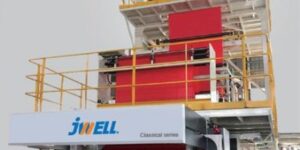
2、ボード押出ライン
Jwellボード押出ラインは、コンパクトな構造で高性能を誇ります。スクリューとバレルは最適化された設計を採用し、高性能合金鋼を用いて専門的に加工されていますので、生産ライン全体として均一な可塑化、安定した押出、長寿命という利点を備えています。.
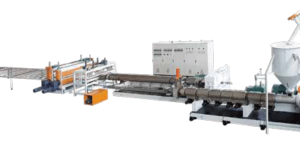
フィルム押出ラインとは、押出機を用いてプラスチックフィルムを製造する製造プロセスです。このプロセスは、プラスチック原料をペレット化することから始まり、その後押出機に投入されます。材料は溶かされ、ろ過された後、ダイを通って連続したフィルム状に押し出されます。その後、フィルムは冷却・平滑化され、ロールに巻き取られてさらなる加工や包装に供されます。フィルム押出ラインは、LDPE、HDPE、PVC、PPフィルムなど、さまざまなプラスチックフィルムの生産に使用され、包装、農業、建設およびその他の産業で広く利用されています。.
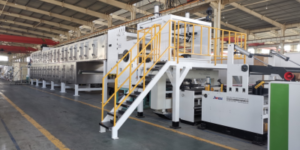
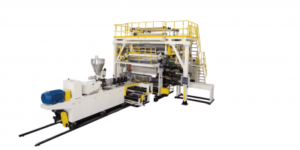
4、床押出ライン
フロア押出ラインはjwell機械の大人気製品です。このラインでは、押出機を用いてプラスチック、PVC、またはその他の材料の連続的かつ均一なシートを生産し、その後、タイル、板、ロールなどさまざまなタイプの床材に成形します。このプロセスでは、原料を押出機で溶かし、最終的な形状とサイズを決定するダイスを通じて押し出します。生成されたスラブはその後冷却され、トリミングおよび長さに切断された後、包装されてお客様へ出荷されます。.
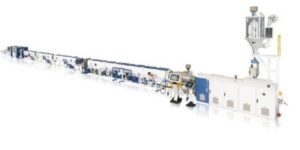
5、パイプ押出ライン
PP PPRのPEポリ塩化ビニールの管の押出機機械は単一ねじ押出機か対ねじ押出機である場合もある。
単軸押出機は摩擦によって原料を搬送するため、溶融・可塑化効果は二軸押出機に劣るが、コストは非常に低い。
現在、ポリエチレンやポリプロピレンのペレットは、一般に単軸押出機で成形されている。ほとんどのスクリューは従来の3段全ネジスクリューではなく、混合と可塑化効果を高めるためにスクリューに混合エレメントが加えられている。
ポリ塩化ビニルの原料は粉末状である。単軸押出機で製造する場合、事前に混合・造粒する必要があり、製造工程が増える。
そのため、現在のPVC粉末の生産では、混合と成形に円錐二軸押出機を直接使用している。PVCパイプ押出機の押出スクリューを設計または選択する場合、その構造とパラメータは、PVC(特に硬質PVC)の熱に敏感な性能を考慮する必要があります。
Jwell Pipe Extrusion Line is able be easily controlled. With stable performance, pipelines can keep high efficient output capacity. Further, that PP PPR PE PVC pipe extruder machine’s long service life is also the reason that you can trust Jwell.
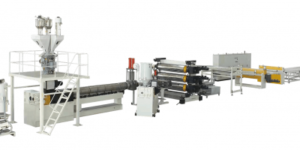
6、板材押出ライン
Plate extrusion Line includes feeder, extruder, mold, three-roll calender, cooling bracket, trimming device, tractor, laminating device, hanging film device, shearing machine, conveyor, manipulator and roll temperature Controller.
Products from extrusion molding to processing finished products to collection are completed automatically in one line, with high production efficiency, very few manual use, and rapid and stable sheet forming.
Jwellプロファイル押出ラインは、原材料を使用して高品質な押出製品を製造し、建築、床材、または遊戯産業で使用されます。.
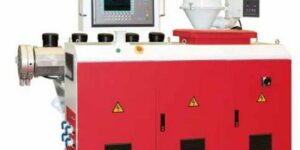
8、ロッド押出ライン
JWELLロッド押出ラインは、押出成形プロセスを用いてパイプ、板、プロファイルなど多様なプラスチック製品を製造する、効率的で柔軟性があり、省エネルギーな先進設備です。その特長として、高速生産能力、多様な製品への適応性、精密な制御システム、および省エネルギーかつ環境に優しい機能が挙げられます。このラインはプラスチック製品の生産分野で広く使用されており、お客様に大きな経済的利益をもたらし、理想的な生産設備として選ばれています。.
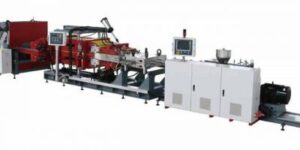
9、シート押出ライン
A sheet extrusion line includes an extruder (double or single screw), outfitted with a screen changer plus a gear pump, followed closely with a static mixer (occasionally feeding a coextrusion feed block that’s preceded by one or more added extruders sets as explained previously ), feeding a level sheet expire.
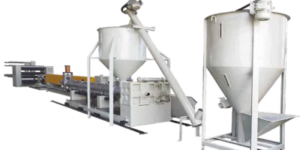
How does an extruder work?
The working process of an extruder mainly includes feeding, plasticizing, melting, compression, metering, molding and other links, which are usually completed by the following core components:
Hopper: The raw materials enter the equipment from here;
スクリュー: Rotates under the drive of the motor, pushes the material forward and melts it under heat;
バレル: Provides wrapping space for the screw and is equipped with a heating system;
Heating zone and cooling system: Control the temperature in sections to ensure stable processing of materials;
Die: Determines the shape of the product;
Traction device, cooling device: Assists in product shaping and output.
The principle of extrusion is to heat and melt the thermoplastic material under pressure, and continuously extrude and mold it, which can achieve efficient and large-scale production.
Extruder process flow
The following table shows the standard process flow of general plastic extrusion processing:
Raw material preparation: material drying, premixing, and impurity removal
Feeding: Put the raw materials into the hopper
Screw feeding and heating: Push and gradually heat to the set temperature through the screw
Melting and mixing: The material is fully melted and mixed evenly at high temperature
Metering and compression: Control the output to ensure product consistency
Mold forming: Press out the product shape through the mold, such as film, pipe, granules, etc.
Cooling and traction: Use air cooling, water cooling or vacuum cooling system for rapid shaping
Cutting and winding: The product is cut or wound according to specifications
The entire process is highly automated and suitable for manufacturing scenarios with strong continuity.
What does the extruder do?
The core functions of the extruder are as follows:
Material melting and plasticization: With the help of screw shearing and electric heating functions, solid materials are transformed into processable melts;
Material transportation and homogenization: High-efficiency continuous advancement, while mixing different components of raw materials;
Pressure construction: Increasing pressure through the metering section allows the melt to pass through the mold smoothly;
Continuous molding: Different mold structures determine the final shape of the product, such as diaphragms, pipes, sheets, etc.;
Control stability: The consistency of product quality can be controlled by parameter settings (temperature, pressure, speed).
In short, the extruder is the “core processing engine” that converts raw materials into functional end products.
How to remove consumables from the extruder?
When replacing consumables or maintenance, residual materials need to be removed from the extruder. The following are the general steps:
Stop feeding: turn off the hopper feed;
Empty the raw materials: continue to run the screw to push out the remaining raw materials in the barrel;
Add purging compound: special purging compound helps dissolve the residue;
Run idly for a few minutes: let the purging compound fully contact the entire screw and barrel;
Remove the die head (if necessary) :for physical cleaning;
Wait for cooling: After the temperature drops to a safe range, clean the residue manually.
Precautions:
Wear protective gloves and goggles during operation;
Avoid disassembling the mold when the screw is not stopped;
Some high-temperature materials such as PVC and PBT need to be cleaned by professionals to prevent poisoning or corrosion.
Main application areas of extruders
Extruders are widely used in the molding and processing of various raw materials. The following are the main areas:
Plastic processing: continuous products such as pipes, profiles, plates, films, cable sheaths, etc.
Packaging material manufacturing: multi-layer co-extruded films, shrink films, foam materials, heat-sealed films, etc.
食品産業: noodles, puffed food, pet feed, energy bars, etc.
Rubber and seal manufacturing: automotive rubber strips, O-rings, shock-absorbing pads
Medical materials and consumables: medical hoses, catheters, infusion tubes, experimental consumables
Metal extrusion: aluminum profiles, copper tubes, alloy plates
3D printing consumables: preparation of wires such as PLA/ABS/TPU
Environmentally friendly materials: biodegradable films, EVA solar films, recycled plastic granulation
Comparative analysis of different types of extruders
| Production Line Type | Main Material | Final Product | 主な特長 | 代表的な用途 | Die Structure |
| ブローフィルム押出ライン | LDPE, LLDPE, HDPE, EVA | Plastic films | Film is blown vertically by air ring; high transparency possible | Packaging, agricultural film, bags | Circular blown die |
| シート押出ライン | PP, PS, PET, ABS | Sheets (1–10mm thickness) | Uniform thickness, wide format possible | Packaging trays, folders, signage | Flat T-die |
| Cast Film Extrusion Line | PP, PE, CPP, BOPP | Thin plastic films | Fast cooling, high gloss and clarity | Food packaging, stretch film, protective film | Flat die + chill roll |
| Flooring Extrusion Line | PVC, SPC, WPC, PP | Flooring panels (multi-layer) | Rigid, multilayer co-extrusion | Vinyl flooring, laminate floors, click floors | Complex die + calender rollers |
| パイプ押出ライン | PVC, PE, PPR, PEX | Pipes/tubes (Ø5–1000mm) | Stable pressure, sizing sleeve cooling | Water pipes, gas pipes, conduit systems | Pipe die + vacuum tank |
| プロファイル押出ライン | PVC, ABS, ASA, WPC | Complex cross-section profiles | Customizable mold shapes, continuous profile | Window frames, cable ducts, wall panels | Profile die |
| ロッド押出ライン | Nylon, PTFE, PP, POM | Solid plastic rods | Compact structure, used in CNC machining | Industrial parts, gears, sealing rods | Circular or annular die |
| プレート押出ライン | HDPE, UHMWPE, PP | Thick plates (10–60mm) | High rigidity, used in heavy industries | Chemical tanks, cutting boards, liners | Wide flat die + 3-roll stack |
| Sheet (Thin) Extrusion Line | PETG, PVC, PS | Thin sheets (0.2–2mm) | Fast production, ideal for thermoforming | Display covers, blister packaging | Flat die + cooling rolls |
結論
As a key equipment for continuous, efficient and automated material forming in modern industry, extruder has been widely used in many industries. It is not only the main equipment in the plastics industry, but also plays an important role in food, medical, rubber, metal and even environmental protection.
When choosing an extruder, enterprises should consider the selection based on factors such as raw material type, target product form, output demand, budget range, etc. At the same time, in order to ensure efficient operation of the equipment and extend its service life, it is necessary to combine scientific operating procedures and regular maintenance strategies.
With the development of new materials and the upgrading of intelligent manufacturing, extrusion technology in the future will tend to be highly intelligent, highly integrated, energy-saving and environmentally friendly, and multi-functional, which will further promote the evolution of the industry.



 English
  Russian
  Spanish
  Arabic
  German
  French
  Persian
  Turkish
  Bulgarian
  Czech
Czech  Dutch
Dutch  Greek
Greek  Indonesian
  Japanese
  Korean
  Polish
  Portuguese
  Romanian
  Slovenian
  Ukrainian