
Suzhou Jwell Machinery Co, Ltd. is a large-scale plastic extrusion machinery manufacturer in China. The company produces more than 2,000 advanced extrusion production lines each year. Its products are exported to all over the world, including Germany, the United States, Japan, Spain and other developed countries. Today, we will introduce Suzhou Jwell Machinery’s extruder products in detail. If you are interested, let’s learn about it together!
Wat is een extruder?
An extruder is a mechanical device that continuously transports, melts and extrudes raw materials (such as plastics, metals, foods, etc.) from a mold by heating, pressurizing, shearing and pushing. It is widely used in plastic processing, rubber molding, food manufacturing, metal molding, cable coating and other fields.
In the plastics industry, extruders are key equipment for the production of sheets, films, pipes, profiles, hollow products, granular materials and other products. Due to its advantages of high degree of automation, large output, strong continuity and strong customizability, it has become an indispensable core equipment in modern manufacturing.
Jwell Extruder Introduction
1、Extrusielijn voor geblazen folie
De Blasfilm-Extrusionslinie is een productiemachine die speciaal is ontworpen voor de productie van kunststoffolies. Het proces om met behulp van een blasfilmmachine kunststoffolies te maken, bestaat uit het smelten van plastic harskorrels en het extruderen ervan door een ronde matrijs tot een gesmolten plastic buis. Deze buis wordt opgeblazen, waarbij hij zich als een ballon opblaast tot een bepaalde grootte en dikte. Wanneer hij afkoelt, wordt hij platgedrukt en tot een rol gerold. Dit proces heet blasfilm-extrusie en wordt gebruikt om kunststoffolies van consistente dikte en kwaliteit te produceren.
De Blasfilm-Extrusionslinie speelt een sleutelrol in de productie van kunststoffolies en verzorgt het gehele proces, van het smelten van de kunststofhars tot het rollen van het eindproduct in rollen. Deze machine heeft verschillende belangrijke componenten, waaronder de extruder, de matrijs, de gasring, de drukroller en de wals. Elke component is ontworpen om een specifieke functie uit te voeren, zoals het verwarmen en smelten van kunststofhars, het vormen en koelen van gesmolten kunststof tot een buis, en het rollen van afgewerkte kunststoffolie in rollen.
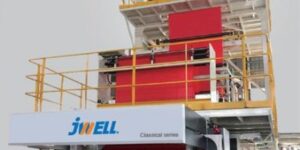
2、Extrusielijn voor printplaten
De Jwell-bordextrusielijn is compact van structuur en superieur in prestaties. De schroef en de vaten zijn optimaal ontworpen en worden professioneel verwerkt met hoogwaardig legeringsstaal, zodat de gehele productielijn de voordelen heeft van uniforme plastificatie, stabiele extrusie en een lange levensduur.
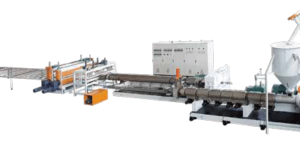
Een filmextrusielijn is een productieproces dat plastic films produceert met behulp van een extruder. Het proces begint met het pelletiseren van de plastic grondstof, die vervolgens in een extruder wordt gevoerd. Het materiaal wordt vervolgens gesmolten, gefilterd en door een matrijs gedwongen om een continue film te vormen. De film wordt daarna afgekoeld, platgedrukt en op rollen gewikkeld voor verdere verwerking of verpakking. De filmextrusielijn wordt gebruikt voor de productie van verschillende plastic films zoals LDPE, HDPE, PVC, PP-film, enz., die veel worden gebruikt in verpakking, landbouw, bouw en andere industrieën.
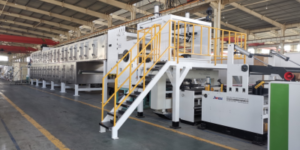
De vloerextrusielijn is een populair product van jwell machines; het maakt gebruik van extruders om continue en uniforme platen van kunststof, PVC of andere materialen te produceren, die vervolgens worden gevormd tot verschillende soorten vloerproducten zoals tegels, planken of rollen. Het proces omvat het smelten van grondstoffen in een extruder en het doorstoten ervan door een matrijs die de uiteindelijke vorm en afmeting van het product bepaalt. De resulterende platen worden vervolgens gekoeld, bijgesneden en op lengte gesneden voordat ze verpakt en naar klanten verzonden worden.
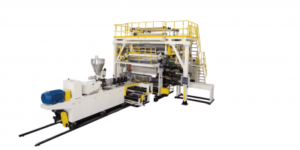
De extrudermachine voor PP PPR PE PVC-pijpen kan een enkelschroefsextruder of een dubbelschroefsextruder zijn.
De enkelschroefextruder transporteert materialen door wrijving en zijn smelt- en plastificerende werking is niet zo goed als de tweeschroefextruder, maar de kosten zijn erg laag.
Momenteel worden polyethyleen- en polypropyleenpellets meestal gevormd door extruders met één schroef. De meeste schroeven zijn geen conventionele driedelige schroeven met volledige schroefdraad, maar er worden mengelementen aan de schroef toegevoegd om het meng- en plastificeereffect te verbeteren.
De grondstof van polyvinylchloride is in poedervorm. Als het wordt geproduceerd door een enkelschroefsextruder, moet het vooraf worden gemengd en gegranuleerd, wat het productieproces versnelt.
Daarom wordt bij de huidige productie van PVC-poeder direct een conische dubbelschroefsextruder gebruikt voor het mengen en vormen. Bij het ontwerpen of selecteren van de extruderschroef voor de extrudermachine voor PVC-buizen, moeten de structuur en parameters rekening houden met de warmtegevoelige eigenschappen van PVC (vooral hard PVC).
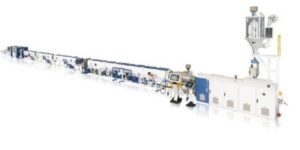
Jwell Pipe Extrusion Line is able be easily controlled. With stable performance, pipelines can keep high efficient output capacity. Further, that PP PPR PE PVC pipe extruder machine’s long service life is also the reason that you can trust Jwell.
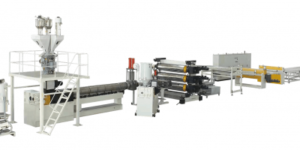
De plaatuitdrijvingslijn omvat voeder, extruder, vorm, kalander met drie rollen, koelsteun, in orde makend apparaat, trekker, het lamineren apparaat, hangend filmapparaat, scheermachine, transportband, manipulator en roltemperatuurcontrolemechanisme.
Producten van extrusie vormen tot eindproducten verwerken tot inzameling worden automatisch in één lijn voltooid, met een hoge productie-efficiëntie, zeer weinig handmatig gebruik en snelle en stabiele plaatvorming.
De extrusielijn voor profielen van Jwell gebruikt grondstoffen om hoogwaardige geëxtrudeerde producten te maken, die worden gebruikt in de bouw-, vloer- of speelindustrie.
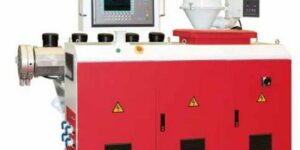
De JWELL-staafextrusielijn is een efficiënt, flexibel en energiebesparend geavanceerd apparatuur dat het extrusieproces gebruikt om verschillende soorten kunststofproducten te maken, waaronder buizen, platen en profielen. De kenmerken omvatten hoge productiesnelheden, diversifieerbare productaanpassingsmogelijkheden, nauwkeurige besturingssystemen en energiebesparende en milieuvriendelijke functies. Het wordt veel gebruikt op het gebied van de productie van kunststofproducten, levert klanten aanzienlijke economische voordelen en is een ideale keuze voor productieapparatuur.
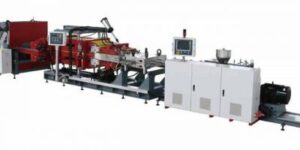
A sheet extrusion line includes an extruder (double or single screw), outfitted with a screen changer plus a gear pump, followed closely with a static mixer (occasionally feeding a coextrusion feed block that’s preceded by one or more added extruders sets as explained previously ), feeding a level sheet expire.
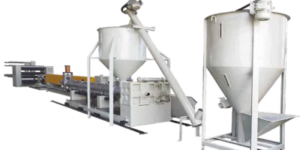
How does an extruder work?
The working process of an extruder mainly includes feeding, plasticizing, melting, compression, metering, molding and other links, which are usually completed by the following core components:
Hopper: The raw materials enter the equipment from here;
Schroef: Rotates under the drive of the motor, pushes the material forward and melts it under heat;
Vat: Provides wrapping space for the screw and is equipped with a heating system;
Heating zone and cooling system: Control the temperature in sections to ensure stable processing of materials;
Die: Determines the shape of the product;
Traction device, cooling device: Assists in product shaping and output.
The principle of extrusion is to heat and melt the thermoplastic material under pressure, and continuously extrude and mold it, which can achieve efficient and large-scale production.
Extruder process flow
The following table shows the standard process flow of general plastic extrusion processing:
Raw material preparation: material drying, premixing, and impurity removal
Feeding: Put the raw materials into the hopper
Screw feeding and heating: Push and gradually heat to the set temperature through the screw
Melting and mixing: The material is fully melted and mixed evenly at high temperature
Metering and compression: Control the output to ensure product consistency
Mold forming: Press out the product shape through the mold, such as film, pipe, granules, etc.
Cooling and traction: Use air cooling, water cooling or vacuum cooling system for rapid shaping
Cutting and winding: The product is cut or wound according to specifications
The entire process is highly automated and suitable for manufacturing scenarios with strong continuity.
What does the extruder do?
The core functions of the extruder are as follows:
Material melting and plasticization: With the help of screw shearing and electric heating functions, solid materials are transformed into processable melts;
Material transportation and homogenization: High-efficiency continuous advancement, while mixing different components of raw materials;
Pressure construction: Increasing pressure through the metering section allows the melt to pass through the mold smoothly;
Continuous molding: Different mold structures determine the final shape of the product, such as diaphragms, pipes, sheets, etc.;
Control stability: The consistency of product quality can be controlled by parameter settings (temperature, pressure, speed).
In short, the extruder is the “core processing engine” that converts raw materials into functional end products.
How to remove consumables from the extruder?
When replacing consumables or maintenance, residual materials need to be removed from the extruder. The following are the general steps:
Stop feeding: turn off the hopper feed;
Empty the raw materials: continue to run the screw to push out the remaining raw materials in the barrel;
Add purging compound: special purging compound helps dissolve the residue;
Run idly for a few minutes: let the purging compound fully contact the entire screw and barrel;
Remove the die head (if necessary) :for physical cleaning;
Wait for cooling: After the temperature drops to a safe range, clean the residue manually.
Precautions:
Wear protective gloves and goggles during operation;
Avoid disassembling the mold when the screw is not stopped;
Some high-temperature materials such as PVC and PBT need to be cleaned by professionals to prevent poisoning or corrosion.
Main application areas of extruders
Extruders are widely used in the molding and processing of various raw materials. The following are the main areas:
Plastic processing: continuous products such as pipes, profiles, plates, films, cable sheaths, etc.
Packaging material manufacturing: multi-layer co-extruded films, shrink films, foam materials, heat-sealed films, etc.
Voedingsindustrie: noodles, puffed food, pet feed, energy bars, etc.
Rubber and seal manufacturing: automotive rubber strips, O-rings, shock-absorbing pads
Medical materials and consumables: medical hoses, catheters, infusion tubes, experimental consumables
Metal extrusion: aluminum profiles, copper tubes, alloy plates
3D printing consumables: preparation of wires such as PLA/ABS/TPU
Environmentally friendly materials: biodegradable films, EVA solar films, recycled plastic granulation
Comparative analysis of different types of extruders
| Production Line Type | Main Material | Final Product | Belangrijkste kenmerken | Typische toepassingen | Die Structure |
| Extrusielijn voor geblazen folie | LDPE, LLDPE, HDPE, EVA | Plastic films | Film is blown vertically by air ring; high transparency possible | Packaging, agricultural film, bags | Circular blown die |
| Plaat extrusielijn | PP, PS, PET, ABS | Sheets (1–10mm thickness) | Uniform thickness, wide format possible | Packaging trays, folders, signage | Flat T-die |
| Cast Film Extrusion Line | PP, PE, CPP, BOPP | Thin plastic films | Fast cooling, high gloss and clarity | Food packaging, stretch film, protective film | Flat die + chill roll |
| Flooring Extrusion Line | PVC, SPC, WPC, PP | Flooring panels (multi-layer) | Rigid, multilayer co-extrusion | Vinyl flooring, laminate floors, click floors | Complex die + calender rollers |
| Pijp extrusielijn | PVC, PE, PPR, PEX | Pipes/tubes (Ø5–1000mm) | Stable pressure, sizing sleeve cooling | Water pipes, gas pipes, conduit systems | Pipe die + vacuum tank |
| Profiel extrusielijn | PVC, ABS, ASA, WPC | Complex cross-section profiles | Customizable mold shapes, continuous profile | Window frames, cable ducts, wall panels | Profile die |
| Staafextrusielijn | Nylon, PTFE, PP, POM | Solid plastic rods | Compact structure, used in CNC machining | Industrial parts, gears, sealing rods | Circular or annular die |
| Plaatextrusielijn | HDPE, UHMWPE, PP | Thick plates (10–60mm) | High rigidity, used in heavy industries | Chemical tanks, cutting boards, liners | Wide flat die + 3-roll stack |
| Sheet (Thin) Extrusion Line | PETG, PVC, PS | Thin sheets (0.2–2mm) | Fast production, ideal for thermoforming | Display covers, blister packaging | Flat die + cooling rolls |
Conclusie
As a key equipment for continuous, efficient and automated material forming in modern industry, extruder has been widely used in many industries. It is not only the main equipment in the plastics industry, but also plays an important role in food, medical, rubber, metal and even environmental protection.
When choosing an extruder, enterprises should consider the selection based on factors such as raw material type, target product form, output demand, budget range, etc. At the same time, in order to ensure efficient operation of the equipment and extend its service life, it is necessary to combine scientific operating procedures and regular maintenance strategies.
With the development of new materials and the upgrading of intelligent manufacturing, extrusion technology in the future will tend to be highly intelligent, highly integrated, energy-saving and environmentally friendly, and multi-functional, which will further promote the evolution of the industry.



 English
  Russian
  Spanish
  Arabic
  German
  French
  Persian
  Turkish
  Bulgarian
  Czech
Czech  Dutch
Dutch  Greek
Greek  Indonesian
  Japanese
  Korean
  Polish
  Portuguese
  Romanian
  Slovenian
  Ukrainian