Suzhou Jwell Machinery Co, Ltd. is a large-scale plastic extrusion machinery manufacturer in China. The company produces more than 2,000 advanced extrusion production lines each year. Its products are exported to all over the world, including Germany, the United States, Japan, Spain and other developed countries. Today, we will introduce Suzhou Jwell Machinery’s extruder products in detail. If you are interested, let’s learn about it together!
What is an extruder?
An extruder is a mechanical device that continuously transports, melts and extrudes raw materials (such as plastics, metals, foods, etc.) from a mold by heating, pressurizing, shearing and pushing. It is widely used in plastic processing, rubber molding, food manufacturing, metal molding, cable coating and other fields.
In the plastics industry, extruders are key equipment for the production of sheets, films, pipes, profiles, hollow products, granular materials and other products. Due to its advantages of high degree of automation, large output, strong continuity and strong customizability, it has become an indispensable core equipment in modern manufacturing.
Jwell Extruder Introduction
1、Лінія екструзії видувної плівки
Лінія екструзії дутого плівки — це виробниче обладнання, спеціально розроблене для виготовлення пластикових плівок. Процес використання машини для дутої плівки для виготовлення пластикових плівок включає розплавлення гранул пластикової смоли та їх екструдування через круглу матрицю у вигляді розплавленої пластикової трубки. Цю трубку надувають, збільшуючи її розмір і товщину до певного значення, ніби повітряна куля. Коли вона охолоджується, її сплющують і змотують у рулон. Цей процес називається екструзією дутої плівки і застосовується для виготовлення пластикових плівок однакової товщини та якості.
Лінія екструзії дутого плівки відіграє ключову роль у виробництві пластикових плівок, забезпечуючи весь процес — від розплавлення пластикової смоли до змотування готового продукту у рулони. Ця машина має кілька ключових компонентів, зокрема екструдер, матрицю, газове кільце, пресувальний ролик і намотувач. Кожен компонент призначений для виконання конкретної функції, наприклад, нагрівання та розплавлення пластикової смоли, формування та охолодження розплавленого пластику у трубку, а також змотування готової пластикової плівки у рулони.
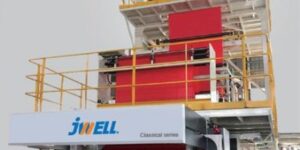
2、Екструзійна лінія для виготовлення плит
Лінія екструзії плит Jwell має компактну конструкцію та високі експлуатаційні характеристики. Гвинт і циліндр оптимізовано за конструкцією та професійно оброблено з високопродуктивної легованої сталі, що забезпечує всій лінії виробництва переваги однорідного пластикування, стабільної екструзії та довгого терміну служби.
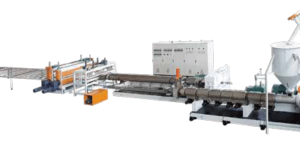
3、Екструзійна лінія для плівки
Лінія екструзії плівок — це виробничий процес, що дозволяє отримувати пластикові плівки за допомогою екструдера. Процес починається з гранулювання пластикової сировини, яка потім подається до екструдера. Потім матеріал розплавляється, фільтрується і пропускається через форму для формування суцільної плівки. Далі плівку охолоджують, сплющують і намотують на рулони для подальшої обробки або упаковки. Лінія екструзії плівок використовується для виготовлення різних пластикових плівок, таких як плівки з LDPE, HDPE, ПВХ, ПП тощо, які широко застосовуються в упаковці, сільському господарстві, будівництві та інших галузях.
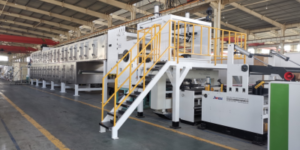
4、Екструзійна лінія для підлоги
Лінія екструзії підлогових покриттів — це популярний продукт обладнання від компанії jwell. Вона використовує екструдери для виготовлення безперервних та однорідних листів з пластмаси, ПВХ або інших матеріалів, які потім формуються у різні види підлогових виробів, таких як плитки, дошки чи рулони. Процес передбачає розплавлення сировини в екструдері та пропускання її через матрицю, яка визначає кінцеву форму й розмір виробу. Отримані плити потім охолоджують, обрізають і нарізають на необхідну довжину перед тим, як упакувати та відправити клієнтам.
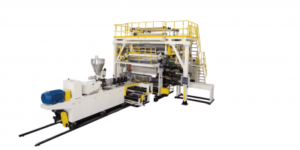
Екструдер для екструзії труб з ПВХ PP PPR може бути одношнековим або двошнековим екструдером.
Одношнековий екструдер транспортує матеріали за рахунок тертя, і його ефект плавлення і пластифікації не такий хороший, як у двошнекового екструдера, але вартість його дуже низька.
В даний час поліетиленові та поліпропіленові гранули, як правило, формуються одношнековими екструдерами. Більшість шнеків - це не звичайні трисекційні гвинти з повною різьбою, а змішувальні елементи, які додаються до гвинта для посилення ефекту змішування та пластифікації.
Сировина полівінілхлориду має вигляд порошку. Якщо вона виробляється одношнековим екструдером, її необхідно заздалегідь змішати і гранулювати, що збільшує виробничий процес.
Тому сучасне виробництво порошку ПВХ безпосередньо використовує конічний двошнековий екструдер для змішування та формування. При проектуванні або виборі гвинта екструдера для екструдера для екструдера труб з ПВХ, його структура та параметри повинні враховувати термочутливі характеристики ПВХ (особливо жорсткого ПВХ).
Jwell Pipe Extrusion Line is able be easily controlled. With stable performance, pipelines can keep high efficient output capacity. Further, that PP PPR PE PVC pipe extruder machine’s long service life is also the reason that you can trust Jwell.
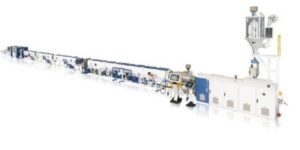
Лінія екструзії пластин включає подавач, екструдер, форму, триваловий каландер, охолоджувальний стенд, пристрій для обрізання, трактор, ламінувальний пристрій, пристрій для підвішування плівки, ножиці, конвеєр, маніпулятор і регулятор температури валів.
Продукти від екструзійного формування до обробки готових виробів і збору завершуються автоматично на одній лінії, з високою ефективністю виробництва, дуже малою кількістю ручного використання та швидким і стабільним формуванням листів.
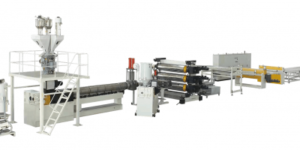
7、Екструзійна лінія для виготовлення профілів
Лінія екструзії профілів Jwell використовує сировину для виготовлення високоякісних екструдованих виробів, які застосовуються у будівельній, підлоговій або ігровій галузях.
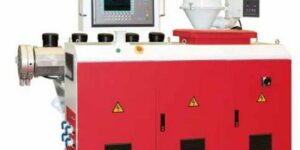
8、Лінія для екструзії стрижнів
Лінія екструзії прутків JWELL — це високоефективне, гнучке та енергозберігаюче передове обладнання, що використовує процес екструзії для виготовлення різних видів пластикових виробів, у тому числі труб, плит і профілів. Її особливості включають високу швидкість виробництва, різноманітну адаптованість до продукції, точні системи керування, а також енергозберігаючі та екологічно чисті характеристики. Воно широко застосовується у сфері виробництва пластикових виробів, створюючи значні економічні переваги для клієнтів і є ідеальним вибором обладнання для виробництва.
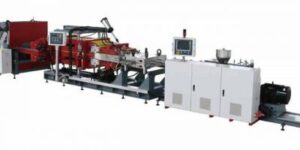
A sheet extrusion line includes an extruder (double or single screw), outfitted with a screen changer plus a gear pump, followed closely with a static mixer (occasionally feeding a coextrusion feed block that’s preceded by one or more added extruders sets as explained previously ), feeding a level sheet expire.
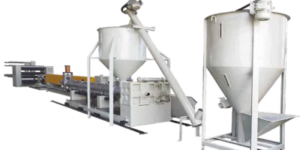
How does an extruder work?
The working process of an extruder mainly includes feeding, plasticizing, melting, compression, metering, molding and other links, which are usually completed by the following core components:
Hopper: The raw materials enter the equipment from here;
Гвинт: Rotates under the drive of the motor, pushes the material forward and melts it under heat;
Бочковий блок: Provides wrapping space for the screw and is equipped with a heating system;
Heating zone and cooling system: Control the temperature in sections to ensure stable processing of materials;
Die: Determines the shape of the product;
Traction device, cooling device: Assists in product shaping and output.
The principle of extrusion is to heat and melt the thermoplastic material under pressure, and continuously extrude and mold it, which can achieve efficient and large-scale production.
Extruder process flow
The following table shows the standard process flow of general plastic extrusion processing:
Raw material preparation: material drying, premixing, and impurity removal
Feeding: Put the raw materials into the hopper
Screw feeding and heating: Push and gradually heat to the set temperature through the screw
Melting and mixing: The material is fully melted and mixed evenly at high temperature
Metering and compression: Control the output to ensure product consistency
Mold forming: Press out the product shape through the mold, such as film, pipe, granules, etc.
Cooling and traction: Use air cooling, water cooling or vacuum cooling system for rapid shaping
Cutting and winding: The product is cut or wound according to specifications
The entire process is highly automated and suitable for manufacturing scenarios with strong continuity.
What does the extruder do?
The core functions of the extruder are as follows:
Material melting and plasticization: With the help of screw shearing and electric heating functions, solid materials are transformed into processable melts;
Material transportation and homogenization: High-efficiency continuous advancement, while mixing different components of raw materials;
Pressure construction: Increasing pressure through the metering section allows the melt to pass through the mold smoothly;
Continuous molding: Different mold structures determine the final shape of the product, such as diaphragms, pipes, sheets, etc.;
Control stability: The consistency of product quality can be controlled by parameter settings (temperature, pressure, speed).
In short, the extruder is the “core processing engine” that converts raw materials into functional end products.
How to remove consumables from the extruder?
When replacing consumables or maintenance, residual materials need to be removed from the extruder. The following are the general steps:
Stop feeding: turn off the hopper feed;
Empty the raw materials: continue to run the screw to push out the remaining raw materials in the barrel;
Add purging compound: special purging compound helps dissolve the residue;
Run idly for a few minutes: let the purging compound fully contact the entire screw and barrel;
Remove the die head (if necessary) :for physical cleaning;
Wait for cooling: After the temperature drops to a safe range, clean the residue manually.
Precautions:
Wear protective gloves and goggles during operation;
Avoid disassembling the mold when the screw is not stopped;
Some high-temperature materials such as PVC and PBT need to be cleaned by professionals to prevent poisoning or corrosion.
Main application areas of extruders
Extruders are widely used in the molding and processing of various raw materials. The following are the main areas:
Plastic processing: continuous products such as pipes, profiles, plates, films, cable sheaths, etc.
Packaging material manufacturing: multi-layer co-extruded films, shrink films, foam materials, heat-sealed films, etc.
Харчова промисловість: noodles, puffed food, pet feed, energy bars, etc.
Rubber and seal manufacturing: automotive rubber strips, O-rings, shock-absorbing pads
Medical materials and consumables: medical hoses, catheters, infusion tubes, experimental consumables
Metal extrusion: aluminum profiles, copper tubes, alloy plates
3D printing consumables: preparation of wires such as PLA/ABS/TPU
Environmentally friendly materials: biodegradable films, EVA solar films, recycled plastic granulation
Comparative analysis of different types of extruders
| Production Line Type | Main Material | Final Product | Ключові особливості | Типові застосування | Die Structure |
| Лінія екструзії видувної плівки | LDPE, LLDPE, HDPE, EVA | Plastic films | Film is blown vertically by air ring; high transparency possible | Packaging, agricultural film, bags | Circular blown die |
| Листова екструзійна лінія | PP, PS, PET, ABS | Sheets (1–10mm thickness) | Uniform thickness, wide format possible | Packaging trays, folders, signage | Flat T-die |
| Cast Film Extrusion Line | PP, PE, CPP, BOPP | Thin plastic films | Fast cooling, high gloss and clarity | Food packaging, stretch film, protective film | Flat die + chill roll |
| Flooring Extrusion Line | PVC, SPC, WPC, PP | Flooring panels (multi-layer) | Rigid, multilayer co-extrusion | Vinyl flooring, laminate floors, click floors | Complex die + calender rollers |
| Трубоекструзійна лінія | PVC, PE, PPR, PEX | Pipes/tubes (Ø5–1000mm) | Stable pressure, sizing sleeve cooling | Water pipes, gas pipes, conduit systems | Pipe die + vacuum tank |
| Екструзійна лінія для виготовлення профілів | PVC, ABS, ASA, WPC | Complex cross-section profiles | Customizable mold shapes, continuous profile | Window frames, cable ducts, wall panels | Profile die |
| Лінія екструзії стрижнів | Nylon, PTFE, PP, POM | Solid plastic rods | Compact structure, used in CNC machining | Industrial parts, gears, sealing rods | Circular or annular die |
| Лінія екструзії плит | HDPE, UHMWPE, PP | Thick plates (10–60mm) | High rigidity, used in heavy industries | Chemical tanks, cutting boards, liners | Wide flat die + 3-roll stack |
| Sheet (Thin) Extrusion Line | PETG, PVC, PS | Thin sheets (0.2–2mm) | Fast production, ideal for thermoforming | Display covers, blister packaging | Flat die + cooling rolls |
Висновок
As a key equipment for continuous, efficient and automated material forming in modern industry, extruder has been widely used in many industries. It is not only the main equipment in the plastics industry, but also plays an important role in food, medical, rubber, metal and even environmental protection.
When choosing an extruder, enterprises should consider the selection based on factors such as raw material type, target product form, output demand, budget range, etc. At the same time, in order to ensure efficient operation of the equipment and extend its service life, it is necessary to combine scientific operating procedures and regular maintenance strategies.
With the development of new materials and the upgrading of intelligent manufacturing, extrusion technology in the future will tend to be highly intelligent, highly integrated, energy-saving and environmentally friendly, and multi-functional, which will further promote the evolution of the industry.




 English
  Russian
  Spanish
  Arabic
  German
  French
  Persian
  Turkish
  Bulgarian
  Czech
Czech  Dutch
Dutch  Greek
Greek  Indonesian
  Japanese
  Korean
  Polish
  Portuguese
  Romanian
  Slovenian
  Ukrainian