
Quick Answer:
A сложная машина combines two or more simple machines to make work easier by utilising their combined mechanical advantages, force directions, and motion-control functions. While it does not create energy or eliminate work, it can reduce the input force required for a task, change the direction of force, or distribute the effort over a greater distance. This principle aligns with the explanations in College Physics 2e from OpenStax and Purdue University’s teaching materials on mechanical advantage, which describe compound systems as combinations of simple machines that can amplify mechanical advantage while conserving energy.
Reference materials: College Physics 2e by Paul Peter Urone and Roger Hinrichs, OpenStax; Purdue University, Hardware Store Science: Mechanical Advantage; and ‘Simple Machines’ from the University of Colorado/TeachEngineering.
What Is a Compound Machine?
A compound machine is a mechanical device made by combining two or more simple machines to work together and perform a task. The six classical simple machines are the lever, the wheel and axle, the pulley, the inclined plane, the wedge, and the screw. In a compound machine, the output produced by one component can become the input for another, enabling the entire mechanism to perform a task more effectively than a single simple machine could on its own. OpenStax describes compound machines essentially in this way, noting that the mechanical advantages of individual machines can be combined when their outputs and inputs are connected.
It is important to note that ‘making work easier’ does not mean that a compound machine produces free energy or reduces the total physical work required in an ideal system. A machine alters the relationship between force and distance, and may also alter the direction or speed of motion. If a machine enables a person to exert less force, that force usually has to be applied over a greater distance. This is why a long ramp can make it easier to move a heavy object upwards, even though the object ultimately reaches the same height. The machine changes how the effort is delivered, rather than violating the law of conservation of energy.
This distinction is particularly important when explaining compound machines to students, engineers, or equipment users. A machine can provide a substantial mechanical advantage while still requiring the same amount of work in theory. However, in a real mechanism, losses due to friction, deformation, air resistance, and so on mean that the actual input work is greater than the useful output work. Therefore, a good compound machine is not simply one containing many parts, but one in which the selected mechanical elements work together efficiently for a defined purpose.
How Does a Compound Machine Actually Make Work Easier?
A compound machine generally makes a task easier through four interconnected mechanisms: force multiplication, force-direction changes, speed or distance changes, and task specialization. These mechanisms can appear individually or simultaneously depending on the machine’s design.
-
It Can Increase Output Force
The most familiar type of advantage is mechanical advantage. This compares the output force generated by a machine with the input force supplied by the user or another power source.
For an ideal simple machine, a mechanical advantage greater than 1 means that the output force is greater than the input force. OpenStax uses this relationship to demonstrate how simple machines can increase an applied force, typically by moving the input through a greater distance.
A compound machine can combine several force-multiplying stages. For example, suppose the first mechanism provides an MA of 3 and the second an MA of 4; if they are connected sequentially and losses are ignored, the overall MA can approach:
3 × 4 = 12
In practical equipment, however, friction and other losses mean that the actual result will be lower. Nevertheless, this illustrates why combining mechanical elements can substantially change the force applied by the operator compared to the force available at the working end.
-
It Can Change the Direction of Force
Reducing force is not the only way in which a machine can make work easier. Sometimes, the most useful improvement is enabling the operator to apply force more conveniently.
A pulley attached to a flagpole is a simple example of this. Rather than pulling upwards to raise a flag, a person can pull downwards on the rope. While the ideal pulley arrangement may not significantly multiply force, it makes the task easier to control by changing the direction of the applied force.
Compound machines can combine this directional advantage with force multiplication. For example, a lifting mechanism might use a pulley system to redirect the operator’s movement, as well as additional pulleys or gears to increase the mechanical advantage. The result is a system that is easier to operate, despite no additional energy being created.
-
It Can Trade Speed for Force
Machines can also alter the relationship between force and speed of movement. Mechanisms designed to produce a greater output force typically move their load over a shorter distance or at a lower speed.
This trade-off is easily observable in mechanical systems using gears. For example, a small driving gear can rotate a larger driven gear, producing greater torque at the output while reducing rotational speed. If the arrangement is reversed, the output can rotate faster, albeit with less torque.
Therefore, compound machines allow designers to select a useful balance between force, speed, distance, and direction. The optimal configuration depends on the intended function of the machine.
The Role of Mechanical Advantage in Compound Machines
Mechanical advantage is one of the clearest ways to understand why a compound machine can reduce physical effort. In a simple machine, the mechanical advantage is determined by its geometry or configuration. In a compound system, multiple stages can contribute to the final result.
For ideal machines connected in series, the overall mechanical advantage can be expressed conceptually as:
MA₍total₎ = MA₁ × MA₂ × MA₃ × …
This multiplication occurs because the output force from one stage becomes the input force for the next. Purdue’s educational material gives compound systems such as cranes as examples of mechanisms in which multiple machine elements cooperate to perform lifting operations.
However, ideal mechanical advantage should not be confused with actual mechanical performance. Real mechanisms have bearings, gears, ropes, chains, shafts, contact surfaces, and structural components that introduce friction and other energy losses. OpenStax explicitly distinguishes ideal mechanical advantage from actual machine performance and explains that real machines lose useful work through friction.
| Concept | Meaning | Effect on a Compound Machine |
| Input force | Force supplied to the first mechanism | Starts the mechanical process |
| Output force | Force available at the final mechanism | Performs work on the load |
| Mechanical advantage | Ratio of output force to input force | Indicates force multiplication |
| Ideal mechanical advantage | Theoretical advantage without losses | Represents an idealized limit |
| Actual mechanical advantage | Advantage under real operating conditions | Lower because of friction and losses |
| Эффективность | Useful output work compared with input work | Indicates how effectively energy is transferred |
A well-designed compound machine therefore seeks an appropriate mechanical advantage without introducing unnecessary friction, weight, complexity, or maintenance requirements.

How Simple Machines Work Together Inside a Compound Machine?
A compound machine is defined not simply by the presence of several components. Rather, it is the functional relationship between those components.
Consider a wheelbarrow, for example. The wheel and axle allow the load to roll, while the handles and frame act as a lever system. When the user lifts the handles, the wheel serves as a pivot point, and the load is supported between the wheel and the operator. This combination makes transporting a heavy load substantially easier than carrying it directly.
A bicycle provides an even richer example of this. It has wheels and axles, as well as levers in the brake and pedal mechanisms and gears that modify torque and rotational speed. The rider supplies energy through the pedals, and several mechanical elements then transmit and modify this input before it reaches the rear wheel. Bicycles are a common example of a compound machine used in educational resources.
A can opener also combines simple-machine principles. Its cutting edge functions as a wedge, while the turning mechanism uses wheel-and-axle principles. The operator does not need to apply cutting force directly to the metal, as the mechanism converts rotational movement into controlled cutting action.
These examples demonstrate that compound machines are valuable because each component performs a specialised function. One element may multiply force, another may control direction, and another may convert rotational movement into linear movement.
Common Examples of Compound Machines
Compound machines are much more common than they may initially appear. Many everyday products contain several simple-machine principles even though users rarely think about them in those terms.
-
Bicycle
A bicycle uses several mechanical systems working together. Pedals provide input, crank mechanisms convert the rider’s motion, gears alter the relationship between torque and speed, and the wheel-and-axle system converts rotational motion into forward movement. The overall system allows human muscular energy to be transferred efficiently to the road.
-
Automobile
An automobile contains numerous mechanisms that can be analyzed through simple-machine principles. Gears, wheels and axles, levers, screws, pulleys, and other mechanical elements work together with engines, motors, hydraulic systems, and electronic controls. This is a good example of why the term “compound machine” does not necessarily mean a small classroom device; the same principles can exist within highly sophisticated engineering systems.
-
Crane
A crane combines multiple mechanisms to lift and move heavy loads. Depending on the design, wheels and axles, pulleys, levers, gears, hydraulic mechanisms, and structural members can cooperate. Purdue’s educational material specifically uses construction cranes to demonstrate how several mechanical elements contribute to lifting and movement.
-
Bolt Cutters
Bolt cutters provide a particularly clear example of compound mechanical advantage. The handles act as levers, and the cutting jaws form another lever arrangement. The user applies force at the relatively long handles, while the shorter jaw geometry concentrates that force at the cutting edges. The result is enough force to cut materials that would be difficult to shear by hand.
-
Wheelbarrow
A wheelbarrow combines a wheel-and-axle arrangement with a lever. The wheel supports part of the load while the handles allow the operator to lift and control the remaining load. This reduces the effort needed to transport heavy materials over short distances.
Compound Machines Do Not Eliminate Work
One of the most common misconceptions about machines is that they reduce the amount of work required. In physics, work is related to force and displacement. A machine can reduce the required force while increasing the distance over which it must act.
For example, consider lifting a heavy object vertically. You would need to apply a large force to raise it directly. However, a pulley system or inclined plane can reduce the required force, although the rope may need to be pulled a longer distance, or the object may travel a shorter distance than the point at which the force is applied.
OpenStax emphasises this force–distance trade-off and the conservation of energy in simple machines. The same principle applies to compound machines: combining multiple mechanisms does not enable the system to produce more useful energy than it receives.
What the machine does is reshape the task. It can make the required force more manageable, enable the operator to work in a more comfortable position, provide better control, or convert an awkward movement into a more useful one.
Why Compound Machines Are Better for Many Real-World Tasks?
Real tasks rarely involve only one mechanical requirement, so a single simple machine is sometimes insufficient. For example, a person may need to lift a load, change its direction, control its speed, and position it accurately. A compound machine can address these requirements sequentially.
For instance, a lifting device might first use a lever to increase force, then a gear system to control speed, and finally a pulley arrangement to redirect the lifting force. Each stage performs a different role. The overall system is therefore more useful than treating each mechanism independently.
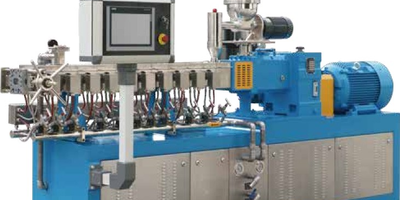
This modular approach is also important in industrial machinery. Engineers can select gear ratios, lever dimensions, pulley arrangements, screw pitches, and other mechanical parameters according to the required load and operating conditions. Modern machinery suppliers, including Джвелл in industrial equipment applications, also demonstrate how mechanical systems can integrate multiple functions into a single production solution.
The engineering challenge lies in achieving the desired mechanical advantage without creating excessive friction, wear, weight, or complexity. An increase in force alone does not constitute an improvement if the mechanism becomes difficult to operate or maintain.
Advantages and Limitations of Compound Machines
Compound machines offer several important benefits, but their advantages come with engineering trade-offs.
| Преимущество | How It Makes Work Easier | Typical Example |
| Force multiplication | Reduces the input force needed | Bolt cutters |
| Direction change | Allows force to be applied conveniently | Pulley systems |
| Speed control | Converts speed into torque or vice versa | Gear trains |
| Motion conversion | Changes one type of movement into another | Screw mechanisms |
| Load distribution | Shares force between components | Cranes |
| Better control | Allows precise mechanical movement | Machine tools |
| Functional integration | Several operations occur in one system | Bicycles and vehicles |
The principal limitation is energy loss. Friction between moving components converts part of the input energy into heat. Wear can increase this loss over time. Additional components can also increase weight, manufacturing cost, maintenance requirements, and potential failure points.
Consequently, good mechanical design is not about maximizing the number of simple machines. It is about selecting the smallest and most effective combination that provides the required performance.
Compound Machine vs. Simple Machine
The difference between the two is straightforward.
A simple machine uses one fundamental mechanical principle, such as a lever, pulley, wedge, screw, inclined plane, wheel and axle, or similar mechanism. A compound machine combines two or more such mechanisms so that they interact to accomplish a more complex task. TeachEngineering likewise defines compound machines as combinations of simple machines and connects their operation with mechanical advantage.
The distinction can be summarized as follows:
| Характеристика | Simple Machine | Сложная машина |
| Number of basic mechanisms | Один | Two or more |
| Mechanical function | Relatively direct | Multiple functions combined |
| Force multiplication | Usually one stage | Can occur across several stages |
| Movement | Often simple | May involve several forms of motion |
| Example | Lever | Bolt cutters |
| Example | Pulley | Crane |
| Example | Wheel and axle | Bicycle |
| Design complexity | Lower | Generally higher |
A compound machine should therefore be understood as a coordinated mechanical system rather than merely a “more complicated machine.”
How Engineers Improve the Performance of a Compound Machine?
Designers typically consider several factors before deciding how to combine simple machines. The first of these is the required load. For example, a lifting mechanism designed for several kilograms has very different requirements from one designed for several tonnes.
The second consideration is the required movement. Does the output require high force, high speed, precise positioning, continuous rotation, intermittent motion, or a change in direction? The answers to these questions determine which mechanical elements are appropriate.
The third factor is efficiency. Friction should be minimised through suitable bearings, lubrication, surface finishes, alignment and material selection. Gear teeth must be correctly designed and aligned, and chains and belts must be tensioned appropriately. In a pulley system, the performance can be influenced by rope routing and pulley diameter.
The fourth consideration is durability. As a compound machine operates repeatedly, its components must be able to tolerate cyclic loads and wear. A design that performs well during a short demonstration may not be suitable for industrial use.
Finally, engineers must consider maintenance. While adding another mechanical stage may improve functionality, it also introduces another component that requires inspection, lubrication, adjustment, or eventual replacement.
A Simple Example: How a Compound Machine Reduces Effort
Imagine a worker needs to cut a thick metal rod. It may be impossible to apply sufficient force with one hand alone. A bolt cutter solves this problem by using a series of levers.
First, the worker applies force to the long handles. Because the handles are long relative to the pivot arrangement, they provide a mechanical advantage. This motion is then transferred to the shorter cutting jaws, concentrating the force over a smaller distance.
Consequently, the worker moves the handles through a relatively large distance while the cutting edges move through a much smaller distance. This is the fundamental force–distance trade-off of mechanical advantage.
The compound arrangement does not generate cutting energy. Instead, it converts manageable human movement into a much larger force at the cutting edge. This type of force transformation is what makes compound machines useful in everyday tools.
Why Friction Matters in a Compound Machine?
If a compound machine had no friction, its theoretical mechanical performance could approach the ideal calculations used in physics. Real machines are different. Every bearing, gear interface, rope, chain, sliding surface, and pivot introduces some energy loss.
This becomes especially important when several mechanisms are connected in sequence. If each stage has an efficiency below 100%, the overall efficiency is also reduced. Conceptually, if three stages have efficiencies of 95%, 90%, and 92%, their combined efficiency would be approximately:
0.95 × 0.90 × 0.92 ≈ 78.7%
This example illustrates why adding mechanical stages does not automatically make a machine more efficient. Each additional stage can contribute useful mechanical functionality while also introducing another source of loss.
For this reason, engineering design aims for an appropriate balance between mechanical advantage, efficiency, reliability, and complexity.
How Compound Machines Affect Everyday Life?
Compound machines are so integrated into modern life that the mechanical principles behind them are often overlooked. For example, when a person rides a bicycle, opens a can, moves a wheelbarrow, uses scissors, operates a hand tool, or drives a vehicle, multiple mechanical principles may be working simultaneously.
The importance of these principles stems from the fact that human beings are limited in the amount of force they can apply directly. Machines enable this limited input to be redirected, multiplied, controlled, or transformed.
The same concept applies to industrial systems on a larger scale. For example, a manufacturing machine may combine rotational drives, gears, screws, belts, levers and bearings to move material and apply controlled forces. The physical principles remain the same, even when modern automation, sensors, motors and computer controls make the final equipment far more sophisticated.
This is why studying compound machines is useful beyond the scope of basic physics. It provides a foundation for understanding mechanical engineering, manufacturing equipment, robotics, transportation systems, construction machinery, and many everyday tools.
Frequently Asked Questions About Compound Machines
Q1. What is a compound machine?
A compound machine is a device that combines two or more simple machines to perform a task. The individual mechanisms work together to change force, direction, speed, or movement.
Q2. How does a compound machine make work easier?
It can reduce the force required, redirect the applied force, change movement speed, or distribute a load across several mechanical stages. It does not eliminate the total work required.
Q3. What is an example of a compound machine?
Common examples include bicycles, bolt cutters, wheelbarrows, cranes, can openers, and many vehicles. Each combines multiple simple-machine principles.
Q4. Does a compound machine create energy?
No. A machine cannot create energy from nothing. It changes how the input force and energy are transferred, while friction causes some energy to be lost in real systems.
Q5. Can a compound machine have a higher mechanical advantage?
Yes. When simple machines are connected in series, their ideal mechanical advantages can multiply, potentially producing a substantially higher overall mechanical advantage. Actual performance is lower because of friction and other losses.
Q6. What are the six simple machines used in compound machines?
The classical six are the lever, wheel and axle, pulley, inclined plane, wedge, and screw. Compound machines combine two or more of these basic mechanical principles.
Заключение
A compound machine combines the useful characteristics of multiple simple machines into one coordinated mechanism, making work easier. Rather than requiring a person or motor to exert a large force directly, the machine can break down the mechanical task into stages, each of which modifies force, direction, speed, distance, or motion in a useful way.
The most important concept here is mechanical advantage. Levers, pulleys, gears and screws can transform a relatively small input force into a much larger output force. When several such mechanisms are connected, their mechanical advantages can be combined. However, the machine does not produce additional energy or make physical work disappear. The benefit lies in changing how the required force is applied, often enabling a smaller force to act over a longer distance.
This principle explains why compound machines are found in everything from simple hand tools to bicycles, cranes, cars, and industrial production equipment. Their effectiveness depends not on how many components they contain, but on whether those components are correctly matched to the required load, motion, speed, force, and operating environment. In practical engineering, therefore, the best compound machine is one that delivers the required mechanical advantage while keeping friction, energy loss, maintenance costs and unnecessary complexity to a minimum.




 English
  Russian
  Spanish
  Arabic
  German
  French
  Persian
  Turkish
  Bulgarian
  Czech
Czech  Dutch
Dutch  Greek
Greek  Indonesian
  Japanese
  Korean
  Polish
  Portuguese
  Romanian
  Slovenian
  Ukrainian