Unveiling the secrets of TPU film: from raw materials to production, why it has become the new favorite material of the future

Table of Contents
    Add a header to begin generating the table of contents

    Introduction to TPU Raw Materials

    TPU (Thermoplastic Polyurethane) is a kind of polymer material that combines the elasticity of rubber and the processing performance of plastics. It is divided into two major types: polyester and polyether. It also has the following characteristics:

    • Environmentally friendly and non-toxic: It can be recycled and meets environmental protection standards such as RoHS and REACH in the European Union.

    • Excellent elasticity: The elongation at break is as high as 500%-800%, and it is resistant to repeated stretching.

    • Abrasion resistance and corrosion resistance: The abrasion resistance is 3-5 times that of natural rubber.

    • Wide temperature range adaptability: The operating temperature range is from -40°C to 120°C.
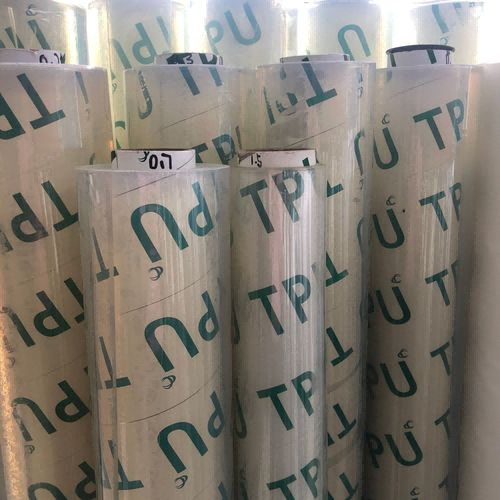
    Thermoplastic Polyurethane

    Core Advantages of TPU Film: More Than Just a “Film”

    Elasticity and flexibility: Suitable for dynamic environments (such as sports equipment, medical devices).

    Waterproof and breathable: The microporous structure enables water vapor exchange, and it is used in outdoor clothing and footwear materials.

    Strong weather resistance: It is resistant to ultraviolet rays and yellowing, extending the product’s lifespan.

    Good adhesion: It has excellent adhesion to substrates such as metals, fabrics, and plastics.
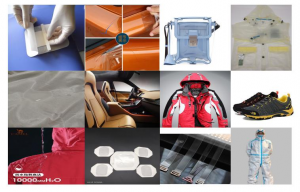
    Application scenarios of TPU film: penetrating all aspects of life

    Field Typical Applications Demand Drivers
    Medical Infusion tubes, wound dressings, medical catheters Biocompatibility and safety requirements
    Automotive Oil seals, airbag coatings, dashboard skins Oil resistance, high-temperature resistance, and lightweight trends
    Electronics Phone cases, screen protectors, data cable sheaths Drop resistance, scratch resistance, and aesthetic demands
    Apparel Waterproof and moisture-permeable fabrics, seamless underwear Functional and comfort upgrades
    Industrial Conveyor belt coatings, cable sheaths High strength and resistance to complex environments

    Application scenarios of TPU film

    Market Analysis of TPU Film: Demand Surge and Technological Upgrades

    • Global market: The market size exceeded 15 billion US dollars in 2023, and it is expected to exceed 25 billion US dollars in 2030, with a compound annual growth rate of 6.8% (Data source: Grand View Research).

    • Regional growth: The Asia-Pacific region accounts for more than 50%, and China is the world’s largest producer and consumer.

    • Driving factors: New energy vehicles, wearable devices, and environmental protection policies (such as the plastic restriction order) drive the demand growth.

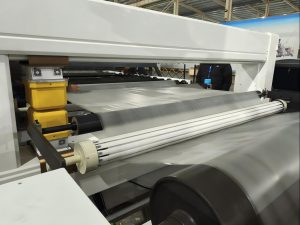
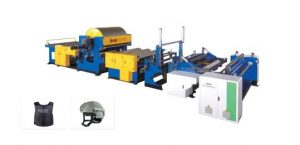
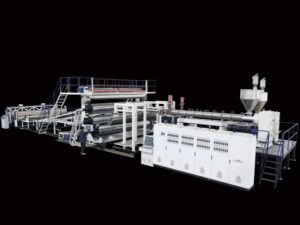
    TPU Film Production Line

    TPU Film Production Line: Process Determines Quality, Technology Leads the Future

    The TPU film production line of Jwell Machinery adopts intelligent and high-precision processes, with the following core advantages:

    Extrusion system:

    • The single-screw extruder realizes uniform plasticization of materials, with a temperature control accuracy of ±1°C.

    • High-quality mold steel, with a thickness deviation ≤ ±2%.

    Casting/calendering process:

    • The air knife + vacuum adsorption technology ensures the flatness of the film.

    • The multi-roll calendering system rapidly cools to maintain the surface tension of the product.

    Post-processing technology:

    • Online thickness measurement + tension closed-loop control, adjusting parameters in real time.

    • Corona treatment enhances surface adhesion to meet lamination requirements.

    Energy-saving design:

    • The servo drive system saves more than 10% energy compared with traditional equipment.

    • The waste heat recovery technology reduces energy consumption costs.

    Scroll to Top

    request a quote