
In the realm of industrial manufacturing, particularly in the production of electrical infrastructure components, the PVC cable channel extrusion line is a critical piece of machinery. It plays a vital role in the fabrication of PVC cable channels, which are essential for organizing and protecting electrical wiring in various settings, from residential buildings to large industrial complexes. The efficiency, precision, and overall performance of a PVC cable channel extrusion line directly influence the quality of the final products, making it crucial to understand the key features that define a high-performing extrusion line. This article will delve into these key features, offering a comprehensive overview of what makes a PVC cable channel extrusion line effective and reliable.
1. Extruder Machine
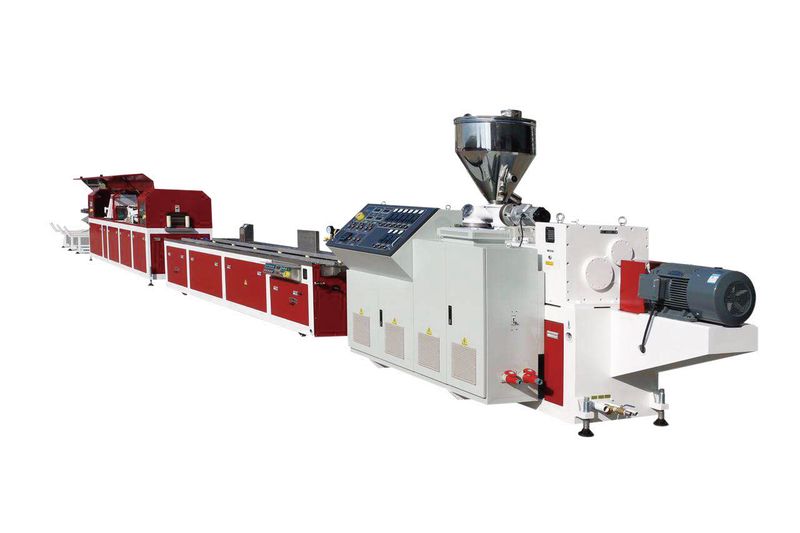
At the heart of any PVC cable channel extrusion line is the extruder machine. This component is responsible for melting the PVC material and forcing it through a die to shape the cable channel. The extruder’s design and specifications are paramount. It typically includes a screw, barrel, heating elements, and a motor. The screw’s design (single or twin) affects the plasticizing efficiency, and the barrel needs to be precisely heated to ensure the PVC melts uniformly. The extruder must maintain consistent pressure and temperature to produce a high-quality extrusion with minimal defects. Modern extrusion lines often use twin-screw extruders because they offer better mixing and homogenization of the PVC material.
2. Die and Mould
The die and mould are crucial in determining the shape and dimensions of the PVC cable channel. The die in a PVC cable channel extrusion line is designed to create the specific profile of the cable channel. It must be precision-engineered to ensure that the extruded PVC conforms exactly to the desired shape. The mould, which follows the die, further refines the profile and ensures dimensional stability. High-quality die and mould components reduce the need for post-extrusion processing, such as trimming or resizing, which saves time and reduces material waste. These components are usually made from durable materials such as hardened steel to withstand the high pressures and temperatures of the extrusion process.
3. Calibration Table
Following the extrusion process, the molten PVC needs to be cooled and solidified into its final shape. This is where the calibration table comes into play. The calibration table in a PVC cable channel extrusion line is equipped with vacuum calibration tools that shape and cool the extrudate. The vacuum system ensures that the PVC channel retains its precise dimensions as it cools, preventing deformation. The calibration table’s design and efficiency directly affect the dimensional accuracy and surface finish of the final product. Proper calibration is essential for ensuring that the cable channels fit together correctly and maintain their structural integrity over time.
4. Cooling System
The cooling system is another critical feature of a PVC cable channel extrusion line. After passing through the calibration table, the extruded PVC still needs further cooling to solidify completely. This is typically done using water cooling baths or air-cooling systems. The length and efficiency of the cooling system affect the extrusion line’s overall speed and throughput. Effective cooling prevents warping and ensures that the cable channels maintain their intended shape and mechanical properties. In some advanced extrusion lines, the cooling system is integrated with the calibration table, creating a more compact and efficient process.
5. Haul-Off Unit
The haul-off unit is responsible for pulling the extruded PVC cable channel through the extrusion line at a controlled speed. This unit must synchronize perfectly with the extrusion speed to avoid stretching or compressing the material, which could lead to defects. The haul-off unit typically uses belts, caterpillars, or rollers to grip the extruded product. In a PVC cable channel extrusion line, the precision of the haul-off unit directly impacts the dimensional accuracy and surface quality of the final product. Advanced haul-off units are often equipped with feedback systems that adjust the pulling speed automatically based on the extrusion speed, ensuring consistent quality.
6. Cutting Machine
Once the PVC cable channel has been fully extruded, calibrated, and cooled, it needs to be cut to the desired lengths. The cutting machine in a PVC cable channel extrusion line is designed to perform this task with high precision. The cutting process must be synchronized with the speed of the extrusion line to ensure that each piece is cut to the exact length specified. There are different types of cutting machines, including saw cutters and fly cutters, each suited to different types of extrusion lines and production requirements. The choice of cutting machine affects the production speed and the quality of the cut, with advanced systems offering clean, burr-free cuts that require no further finishing.
7. Stacking and Packaging
After cutting, the PVC cable channels are typically stacked and prepared for packaging. In a high-efficiency PVC cable channel extrusion line, this process is often automated to reduce labor costs and improve production speed. Automated stacking systems align and stack the cable channels neatly, ready for packaging or further processing. Some extrusion lines may also include in-line printing or labeling systems to apply product information or branding directly to the cable channels before they are packed. Efficient stacking and packaging systems ensure that the final products are handled carefully to avoid damage, maintaining their quality until they reach the end-user.
8. Control System
The control system is the brain of the PVC cable channel extrusion line. It monitors and regulates all aspects of the extrusion process, from temperature control in the extruder to the speed of the haul-off unit and the operation of the cutting machine. Modern extrusion lines are equipped with advanced control systems that offer real-time monitoring and adjustment capabilities. These systems are often PLC-based (Programmable Logic Controller) and may include HMI (Human-Machine Interface) panels for easy operation. The control system ensures that the extrusion line operates smoothly, efficiently, and consistently, with minimal downtime and waste.
9. Material Handling System
Efficient material handling is crucial for maintaining the throughput and quality of a PVC cable channel extrusion line. This includes the storage, transport, and feeding of raw PVC material into the extruder. Modern extrusion lines often use automated material handling systems that convey PVC pellets or powder from storage silos directly to the extruder’s hopper. These systems may include vacuum loaders, dryers, and gravimetric feeders, which ensure that the material is delivered to the extruder in the correct quantities and condition. Proper material handling reduces the risk of contamination and ensures that the extruder operates continuously without interruptions.
10. Energy Efficiency
Energy efficiency is a growing concern in industrial manufacturing, and a PVC cable channel extrusion line is no exception. The energy consumption of the extruder, calibration table, cooling system, and other components can significantly impact the overall operating costs of the extrusion line. Modern extrusion lines are designed with energy-saving features, such as optimized heating systems, variable frequency drives (VFDs) for motors, and energy-efficient cooling systems. These features help reduce energy consumption without compromising the quality or speed of production, making the extrusion line more sustainable and cost-effective.
11. Customization and Flexibility
A key feature of advanced PVC cable channel extrusion lines is their ability to be customized and adapted to different production needs. This includes the flexibility to produce a wide range of cable channel profiles, sizes, and wall thicknesses. Manufacturers often require extrusion lines that can quickly switch between different dies and moulds or adjust settings to accommodate different PVC formulations. Flexibility in an extrusion line allows manufacturers to respond to changing market demands and produce customized products without significant downtime or retooling costs.
12. Maintenance and Durability
The longevity and reliability of a PVC cable channel extrusion line depend heavily on its maintenance requirements and the durability of its components. High-quality extrusion lines are built with durable materials and components that can withstand the rigors of continuous operation. They are also designed for easy maintenance, with accessible components and clear diagnostic tools that allow for quick identification and resolution of issues. Regular maintenance is essential to keep the extrusion line running smoothly and to prevent costly downtime due to equipment failures.
Conclusion
A PVC cable channel extrusion line is a complex and highly specialized piece of machinery, with each component playing a critical role in the overall performance and quality of the final product. Key features such as the extruder machine, die and mould, calibration table, cooling system, haul-off unit, cutting machine, and control system all contribute to the efficiency, precision, and reliability of the extrusion process. Additionally, factors like energy efficiency, material handling, customization, and maintenance are crucial for ensuring that the extrusion line meets the demands of modern manufacturing. Understanding these key features is essential for anyone involved in the production of PVC cable channels, as it allows for better decision-making when selecting, operating, or optimizing an extrusion line.




 English
  Russian
  Spanish
  Arabic
  German
  French
  Persian
  Turkish
  Bulgarian
  Czech
Czech  Dutch
Dutch  Greek
Greek  Indonesian
  Japanese
  Korean
  Polish
  Portuguese
  Romanian
  Slovenian
  Ukrainian