
Coating equipment is a powerful piece of machinery with a wide range of applications. It plays a vital role in the entire process, handling multiple steps, including paint delivery, atomization, recovery, exhaust gas treatment, drying and curing. With the continuous development of the manufacturing industry, coating equipment is also gradually moving towards automation, intelligence, and environmental protection.
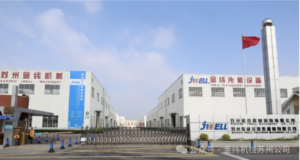
What is coating equipment?
Coating equipment generally refers to a mechanical system used to apply paint, powder, or other coating materials to workpiece surfaces. Its primary purpose is to achieve uniform and secure adhesion of the coating to substrates such as metal, plastic, wood, glass, or ceramics through physical or chemical means. Coating equipment is extremely diverse, encompassing the entire process from pre-treatment cleaning, spraying, drying, and curing. It is an indispensable surface treatment tool in modern manufacturing.
What types of coating equipment are there?
Coating equipment can be categorized into several types based on their function and process flow. Common categories include:
- Spraying Equipment
- Air spray: This primarily utilizes compressed air to atomize paint and is suitable for fine-particle spraying.
- Airless spray: This utilizes high pressure to atomize paint and is suitable for spraying large areas and requiring high efficiency.
- Electrostatic spray: This utilizes the principle of electrostatic adsorption to reduce paint loss and enhance adhesion, and is commonly used on automobiles and metal products.
- Pretreatment Equipment: This utilizes cleaning machines, rust removers, phosphating lines, and other equipment to remove oil and rust from the surface of workpieces and improve adhesion.
- Drying and Curing Equipment: This utilizes hot air ovens, infrared curing ovens, and UV curing ovens to provide rapid drying and curing.
- Powder Coating Equipment: This includes powder spray guns, powder recovery systems, and electrostatic generators and is commonly used for surface treatment of furniture, appliances, pipes, and other products.
- Automated Production Lines: These integrate automated conveying, spraying, and drying functions and are suitable for large-scale production enterprises.
- Environmental protection equipment: Environmental protection equipment is equipped with exhaust gas treatment system, water curtain spray room, dust recovery device, etc. to reduce pollution.
Why is coating equipment essential?
In industrial production, coatings provide corrosion protection, rust prevention, wear resistance, insulation, heat resistance, and other benefits. They also have decorative properties. Compared to manual painting, coatings offer advantages such as high efficiency, uniform coating, minimal paint waste, and reduced pollution.
The necessity of coating equipment is primarily reflected in the following aspects
- Increased Efficiency: It is more suitable for companies with large-scale production needs, with fast spraying speeds and high efficiency.
- Stable Quality: Paint is sprayed evenly and with a consistent thickness, reducing rework.
- Cost Reduction: Electrostatic discharge recovery and automated systems effectively reduce paint waste and lower costs.
- Environmental Compliance: Modern equipment meets environmental requirements, and built-in exhaust gas purification systems ensure minimal pollution.
- Adaptability: It can handle workpieces of varying shapes, offering flexibility and controllability.
What factors should be considered when selecting coating equipment?
When purchasing coating equipment, companies should consider the following factors:
- Workpiece type and coating requirements: The different workpiece types, as well as the material and size of the workpiece, will affect the spraying method.
- Production scale: Small-scale production needs are suitable for manual equipment, while large-scale production needs are suitable for automated production lines.
- Coating type: Different coating materials are suitable for different coating equipment. Powder, oil, and water-based coatings require different equipment.
- Environmental standards: To meet current environmental trends, choose environmentally friendly equipment that meets regulations.
- Energy consumption and cost: Energy-saving equipment should be selected to reduce energy consumption.
- Degree of automation and intelligence: Equipment is currently moving towards greater intelligence. Consider whether it supports robotic spraying, intelligent monitoring, and data management.
Main Applications of Coating Equipment
Coating equipment is widely used in the following industries:
- Automobile Manufacturing: Anti-rust coating of automobile bodies and various parts.
- Home Appliances: Coating and protecting the exteriors of washing machines, refrigerators, and air conditioners.
- Construction Machinery: Excavators, cranes, and other equipment require regular weathering coating.
- Furniture and Building Materials: Coating the surfaces of various wooden and metal furniture.
- Electronics: Protective spray coating of various electronic product and appliance exteriors.
- Aerospace and Military Applications: High-temperature, corrosion-resistant, and lightning-proof coatings for various military applications.
Main functions of coating equipment
- Protective function: Protects substrates from corrosion and wear.
- Decorative function: Enhances the product’s appearance and quality.
- Functional coatings: Such as insulation, anti-static, and fire retardant.
- Environmental protection and energy saving: Reduces waste and emissions and supports recyclability.
How to choose equipment?
Different companies should choose based on their actual needs:
- Small batches: Manual sprayer, simple drying oven.
- Medium batches: Semi-automatic spraying line.
- Large-scale: Fully automatic spraying line + intelligent robot.
Coating types supported?
Coating equipment can support:
- Solvent-based coatings
- Water-based environmentally friendly coatings
- Powder coatings
- Specialty coatings (anti-corrosion, high-temperature resistant, insulating)
Environmental protection and energy conservation needs
With the carbon neutrality policy, environmental protection has become a key issue:
- Use water-based coatings instead of solvent-based ones.
- Use high-efficiency electrostatic spraying to reduce waste.
- Include exhaust gas purification and powder recovery equipment.
What is the degree of automation?
Modern coating equipment is highly automated:
- Robotic spraying: Stable and precise.
- Data monitoring: Real-time monitoring of coating thickness.
- Smart factory integration: Connect to the MES system to improve production management.
Coating Equipment Operation and Maintenance Guide
Operation Guide
- Before starting the machine, check that the spray gun and conveying system are functioning properly.
- Select appropriate spray parameters based on the paint type. Ensure the drying oven temperature is stable to avoid affecting the spraying effect.
Maintenance Guide
- Regularly inspect and clean the nozzle to prevent clogging and operational issues.
- Inspect the conveying pipes for leaks and material leakage to avoid resource waste.
- Regularly replace the filter to ensure stable filtration and adequate ventilation.
- Calibrate the robotic spray arm to ensure accuracy and stable spraying results.
Conclusion
Coating equipment, as a crucial tool for surface treatment in modern manufacturing, not only fulfills the dual mission of ensuring product aesthetics and protection, but also continues to evolve in terms of environmental protection, energy conservation, and automation. When selecting equipment, companies should comprehensively consider workpiece characteristics, production capacity, coating requirements, and environmental regulations.




 English
  Russian
  Spanish
  Arabic
  German
  French
  Persian
  Turkish
  Bulgarian
  Czech
Czech  Dutch
Dutch  Greek
Greek  Indonesian
  Japanese
  Korean
  Polish
  Portuguese
  Romanian
  Slovenian
  Ukrainian