
Abstract
El extrusora is the core mechanical and thermal component of a 3D printer, responsible for feeding, melting, and precisely depositing material layer by layer to build a physical object. In material extrusion technologies such as FDM/FFF, the extruder controls the flow rate of the filament, its temperature, and the accuracy of its deposition, making it the component that has the greatest impact on print quality and consistency.
According to industry definitions from ASTM International and engineering resources, extrusion in 3D printing is ‘the process of selectively dispensing material through a nozzle to create objects layer by layer’. Academic research on fused filament fabrication confirms this, showing that thermoplastic material is melted and forced through a heated nozzle to form layers that solidify into a 3D structure.
In short, the extruder is the functional heart of a 3D printer, converting raw material into a continuous, controlled deposition process that defines the final product’s geometry and quality.
What is the connection between extruders and 3D printing?
Extruders are a key piece of equipment in the processing of polymers, 3D printing, food production, and the chemical industry. They shape materials by forcing them through a die at a controlled temperature and pressure. Extruders can be categorised based on their mechanical design, process function, and application.
-
Classification by Screw Design
Single-screw extruder: The most commonly used type in plastics processing.
Twin-screw extruders: Co-rotating twin-screw extruders: Screws rotate in the same direction; strong mixing and compounding capabilities.
Counter-rotating twin-screw extruders: Screws rotate in opposite directions; better pressure control.
Multi-screw extruders: Three or more screws; designed for high-volume or special applications.
-
Classification by feeding mechanism
Piston extruders: Use a piston (plunger) instead of a rotating screw.
Screw extruders: Use a standard rotating screw design.
-
Classification by process function
Hot extrusion: Heating the material before extrusion.
Cold extrusion: Performed at room temperature.
Co-extrusion systems: Combining multiple materials into a single product.
-
Classification by product output
Film extruders: Producing thin plastic films. Sheet extruders: Producing flat sheets or plates.
Pipe and profile extruders: Producing pipes, tubes, and window frame profiles.
Foam extruders: Producing lightweight foam materials.
-
Classified by Application Industry:
Plastic Extruders:
The most common type
Food Extruders:
Used for food processing
Metal Extruders:
Used for metal forming
So, what type of extruder is used in 3D printing? Essentially, they belong to small-scale precision melt extrusion systems or are classified as special-application extruders. In terms of their working principle, they belong to the single-screw extruder system. Most FDM 3D printers use micro-screw extruders or equivalent structures. Although many desktop 3D printers do not appear to have a traditional screw structure, industrial-grade equipment (such as pellet printing) is actually:
- Single-screw extrusion
- Melting → Conveying → Extrusion
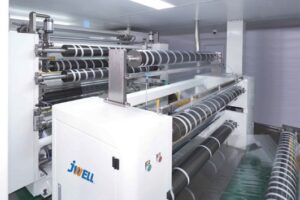
What Is a 3D Printer Extruder? (Industry-Level Definition)
At its most fundamental level, a 3D printer extruder is a system for delivering materials in a controlled manner. It combines mechanical feeding, thermal processing, and precision flow control in one compact unit.
From an engineering perspective, the extruder performs three synchronised functions.
Material feeding: Pulling filament from a spool using a motor-driven gear system
- Thermal conversion: Heats the material to a semi-liquid (viscoelastic) state.
- Deposition control: Forces molten material through a nozzle to form layers.
As defined in additive manufacturing glossaries, the extruder is ‘the device that heats, softens, and forces out material for deposition’.
Unlike traditional industrial extrusion systems (e.g., for producing polymer sheets or pipes), 3D printer extruders operate with micro-scale precision, achieving flow control tolerances of ±0.02 mm.
How a 3D Printer Extruder Works (Step-by-Step Process)
The extrusion process in 3D printing is a continuous thermomechanical transformation cycle.
Step 1: Filament feeding
A stepper motor rotates a drive gear that grips the filament and pushes it forward.
Step 2: Controlled heating
The filament enters a heated chamber (the hot end), where it reaches its melting point (e.g., PLA at ~180–220°C).
Step 3: Pressure build-up
As the material softens, pressure builds up within the melt zone to ensure a continuous flow.
Step 4: Nozzle extrusion
The molten material is forced through a precision nozzle with a typical diameter of 0.2–0.6 mm.
Step 5: Layer deposition
The extruded strand is deposited layer by layer and solidifies as it cools.
This process aligns with industrial descriptions of semi-liquid material being squeezed through an orifice and solidifying to form layered structures.
Key Components of a 3D Printer Extruder
A complete extruder system typically includes:
| Componente | Función | Industrial Equivalent |
| Stepper Motor | Drives filament feed | Drive motor |
| Drive Gear & Idler | Grips and pushes the filament | Feeding screw |
| Hot End | Melts filament | Heated barrel |
| Nozzle | Shapes output flow | Cabeza de matriz |
| Sistema de refrigeración | Prevents heat creep | Cooling zone |
Insight:
This architecture mirrors traditional extrusion lines—such as those manufactured by Maquinaria Jwell—but is miniaturized for precision additive manufacturing.
Types of 3D Printer Extruders (Technical Comparison)
In 3D printing, the extruder is a critical component that controls the flow of filament. The type of extruder used can affect print quality, material compatibility, speed, and precision. Both technical users and B2B buyers need to understand these differences.
-
Direct drive extruders
Working principle: the extruder motor is mounted directly on the print head, pushing filament straight into the hot end.
Key features:
- Short filament path
- Precise extrusion control
- Faster retraction response
ventajas:
- Excellent for flexible filaments (TPU, TPE)
- High accuracy and consistency
- Reduced stringing
Limitations:
- Heavier print head → slower movement
- Potential for reduced print speed
Best for:
- High-detail prints
- Flexible materials
- Professional prototyping
-
Bowden extruders
Working principle: The extruder motor is mounted remotely, and the filament is fed through a PTFE tube to the hot end.
Key features:
- Lightweight print head
- Longer filament path
ventajas:
- Higher printing speeds
- Reduced inertia → smoother motion
- Ideal for large-format printers
Limitations:
- Less precise retraction
- Difficult with flexible filaments
Best for:
- PLA and ABS
- Fast and large-scale printing
-
Dual Gear Extruders
Working principle: Uses two drive gears to grip the filament from both sides.
Key features:
- Stronger filament grip
- Reduced slippage
ventajas:
- Better extrusion consistency
- Suitable for abrasive or filled materials
- Improved reliability
Limitations:
- Slightly more complex structure
- Higher cost than single-gear systems
Best for:
Engineering filaments (e.g., carbon fibre, composites)
-
Single Gear Extruders
Working principle: uses one drive gear and an idler bearing to push the filament.
Key features:
- Simple and cost-effective design
- ventajas:
- Easy maintenance
- Lower cost
Limitations:
- Less grip strength
- Higher risk of filament slipping
Best for:
- Entry-level printers
- Standard materials
-
Dual Extrusion Systems
Working principle: Uses two extruders to print with multiple materials or colours.
Key features:
- Independent or shared nozzles
- Multi-material capability
ventajas:
- Supports dissolvable supports (PVA, HIPS)
- Enables colour printing
- Supports complex geometry
Limitations:
- Calibration complexity
- Increased maintenance
Best for:
- Industrial prototyping
- Complex part production
-
Pellet extruders (industrial level)
Working principle:
Instead of filament, raw plastic pellets are fed directly into the extruder.
Key features:
- High material throughput
- Lower material cost
ventajas:
- Cost-effective for large-scale production
- Supports recycled materials
Limitations:
- Requires specialised machinery
- Lower resolution compared to filament systems
Best suited to:
- Large-scale manufacturing
- Industrial 3D printing
Resumen:
Different extrusion systems in additive manufacturing are designed for different priorities:
- Direct Drive → precision & flexible materials
- Bowden → speed & large prints
- Dual Gear → reliability & engineering filaments
- Single Gear → simplicity & low cost
- Dual Extrusion → multi-material complexity
- Pellet Systems → industrial-scale production
Choosing the right extruder directly impacts print quality, material compatibility, and production efficiency in modern 3D printing systems.
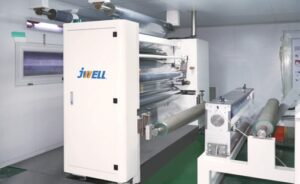
Technical Comparison Table
| Extruder Type | Precision | Velocidad | Compatibilidad de materiales | Costo | Complexity |
| Direct Drive | ⭐⭐⭐⭐⭐ | ⭐⭐⭐ | Excellent (flexible + rigid) | Medio | Medio |
| Bowden | ⭐⭐⭐ | ⭐⭐⭐⭐⭐ | Standard materials | Low | Low |
| Dual Gear | ⭐⭐⭐⭐ | ⭐⭐⭐⭐ | Engineering materials | Medio | Medio |
| Single Gear | ⭐⭐ | ⭐⭐⭐ | Basic materials | Low | Low |
| Dual Extrusion | ⭐⭐⭐⭐ | ⭐⭐⭐ | Multi-material | High | High |
| Pellet Extruder | ⭐⭐⭐ | ⭐⭐⭐⭐ | Industrial materials | High | High |
Extruder vs Hot End: Common Industry Confusion
A critical clarification for beginners and B2B buyers:
The extruder (drive system) feeds filament, while the hot end (thermal system) melts and extrudes material.
However, in many industry contexts, especially with desktop printers, the term ‘extruder’ is often used to describe the entire assembly, incorporating both systems.
Industrial perspective: From desktop extruders to Extrusora Jwell systems
Although desktop 3D printers use compact extruders, industrial extrusion, such as Jwell extruder systems, operates on the same principles, but on vastly different scales.
Key Differences
| Parámetro | 3D Printer Extruder | Jwell Extruder (Industrial) |
| Scale | Micro (grams/hour) | Macro (kg–tons/hour) |
| Material Form | Filament | Pellets, powder |
| Sistema de control | G-code | PLC + SCADA |
| Producción | Layered objects | Continuous profiles |
Important Insight:
The core physics—thermal softening + pressure-driven flow through a die—is identical across both systems.
This is why companies like Jwell Machinery are increasingly relevant in advanced additive manufacturing, especially for:
- Pellet-based 3D printing
- Large-scale additive manufacturing (LSAM)
- Hybrid extrusion systems
Why is the Extruder the Most Critical Component in 3D Printing?
The extruder directly determines:
-
Print quality
Layer adhesion
Surface finish
Dimensional accuracy
-
Compatibilidad con materiales
- PLA
- abdominales
- PETG
- Flexible TPU
- Composite filaments
-
Eficacia de la producción
Flow rate stability
Continuous operation reliability
As industry guides note, inconsistent extrusion can lead to defects such as gaps, weak bonding, or clogging.
Advanced Extruder Technologies (2026 Trends)
-
Screw-based extruders (pellet printing)
Inspired by industrial systems
Higher throughput
Lower material cost
-
Multi-material extrusion
Dual or triple extruders
Enables complex geometries and functional parts
-
AI-controlled extrusion
Real-time flow adjustment
Predictive clog detection
-
High-temperature extruders
For engineering plastics (PEEK, PEI)
Advanced thermal management required
Common Extrusion Problems and Engineering Solutions
| Problema | Cause | Solución |
| Under-extrusion | Low temperature / clogged nozzle | Increase temp, clean nozzle |
| Over-extrusion | Excess flow rate | Adjust extrusion multiplier |
| Stringing | Poor retraction control | Optimize retraction settings |
| Clogging | Material degradation | Use proper temperature + cleaning |
Selection Guide for B2B Buyers (Including Jwell Extruder Insight)
When selecting an extruder system, whether for desktop or industrial use, consider the following:
- Material requirements: Standard thermoplastics vs engineering materials
- Throughput needs: prototyping vs. mass production
- Precision requirements and tolerance sensitivity
- Integration capability: compatibility with automation systems
For industrial buyers, Jwell extruder solutions offer advantages such as:
- High-output screw extrusion
- Stable pressure control
- Customisable configurations
FAQ (Based on High-Search Queries)
Q1: What does an extruder do in a 3D printer?
It feeds, melts, and deposits material with precise control over flow rate, temperature, and positioning.
Q2: Is the extruder the same as the nozzle?
No. The extruder includes the feeding mechanism, while the nozzle is only the final outlet.
Q3: Which extruder is better: Bowden or direct drive?
Direct drive → better for flexible materials
Bowden → better for speed and lightweight systems
Q4: Can industrial extruders be used in 3D printing?
Yes. Technologies derived from industrial systems—such as those from Jwell Machinery—are increasingly used in large-scale additive manufacturing.
Q5: Why is extrusion accuracy important?
Because even minor flow inconsistencies can lead to structural defects, poor adhesion, and failed prints.
Conclusion: The Strategic Role of Extrusion in Additive Manufacturing
The extruder is much more than just a component; it is the core process engine that determines how materials behave, flow, and solidify in 3D printing.
From desktop machines to industrial systems such as Jwell extruder platforms, extrusion technology bridges the gap between:
- Traditional polymer processing;
- Advanced additive manufacturing;
- Future smart manufacturing ecosystems.
As 3D printing evolves towards higher speeds, larger scales, and greater material diversity, the extruder will remain at the forefront of innovation, driving performance, quality, and scalability.



 English
  Russian
  Spanish
  Arabic
  German
  French
  Persian
  Turkish
  Bulgarian
  Czech
Czech  Dutch
Dutch  Greek
Greek  Indonesian
  Japanese
  Korean
  Polish
  Portuguese
  Romanian
  Slovenian
  Ukrainian