
Introduction
In the processing of plastic and profiles, the extruder machine is essential to the production of pipes, films, or pellets. Whether you’re creating PVC profiles, pipes, cable jackets, sheets, or combining thermoplastics, understanding the extruder machine’s startup, continuous operation, and shut-down is crucial to quality, productivity, and safety. This instruction will discuss:
- The creation and purpose of the extruder in the plastic industry.
- Preparatory actions preceding the operation (machine checks, raw material preparation).
- The procedure of operation in steps (starting, feeding, processing, and stopping).
- Key factors and indicators of success.
- Safety, maintenance, and resolution of issues.
- Performance tips that will help you to excel and minimize downtime.
By the end, you will have a protocol for structured operations that is in line with the industry’s best practices, and you will have knowledge of how to convert it into your plant environment while maximizing efficiency and reliability.
What is an Extruder Machine? Definition and Purpose
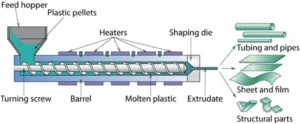
An extruder machine is a machine that melts, combines, and presses a thermoplastic (or other material) through a shaped channel to produce continuous profiles, pipes, tubes, sheets, or pellets. The extruder machine essentially converts raw material into a finished product or a partially finished product by applying a combination of heat, pressure, and shear.
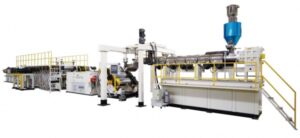
In the plastics industry, single-screw and twin-screw extruders are most popular. The machine has a feed hopper, a barrel, a set of screws, heaters, a gearbox, a drive motor, a die, a cooling system, and additional downstream components (hauling, cutting, or winding).
From a manufacturing perspective, operating an extruder correctly promotes consistent quality of melt, accurate control of dimensions, consistent output, minimal waste, and safe working conditions.
Preparatory Steps Before Operation
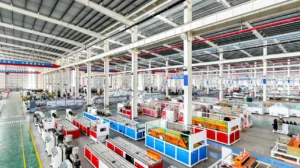
Before initiating the process of pressing the “Start” button on an extruder, a series of pre-steps must be completed that will lead to a safe and effective operation. These procedures are frequently disregarded but are essential in minimizing startup problems and avoiding damage.
-
Preparation of the Raw Material
Ensure that the raw material is appropriate: the polymer is of the correct grade, the moisture content is correct, the color is appropriate, and it is free of contamination. For instance, many plastics must be dried or dehumidified in order to avoid bubbles or a gel, prior to extrusion.
Remove physical impurities (metal pieces, stones) that can be detrimental to the screws or barrels.
Separate materials as much as possible when switching occupations in order to avoid the contamination of color or cross-mixing.
Ensure any recycled or reconfigured content is appropriate for the processing.
-
Mechanical Systems Check
Ensure that all utilities are functioning: the electrical power, the cooling water or oil, the air, and the hydraulic systems.
Inspect mechanical components: screws, barrels, dies, feed tubes, hoppers, and gear boxes that are worn, damaged, or left behind.
Ensure the safety features and emergency stops are working.
Ensure that the heating elements, thermocouples, pressure transducers, and drives are all connected and properly sized.
Clean the hopper, the narrowed throat, and the head of the remaining debris or dust. Foreign matters can lead to instability or failure.
-
Mechanical Warm-Up
Lower the temperature of the zone heaters to a low starting value (for example, 50 °C) and then increase the temperature slowly to the intended target points. This avoids thermal stress and material deterioration.
Allow the machine to reach the desired temperature before adding material; many sources recommend a period of 10-20 minutes at the set temperature.
Before the actual resident is admitted, the check cooling channels or water jackets should be functioning.
Confirm the minimum speed of the screws and the reading of the drive motor when the load is removed.
By completing these pre-survey checks, you establish the foundation for consistent extrusion performance.
Operating the Extruder Machine: Step by Step
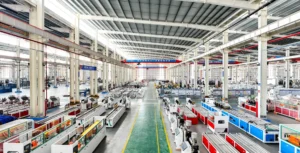
Operating an extruder machine involves following steps, from adding material to the machine’s feed cup to monitoring the output. Below is a common sequence employed in many plastic extrusion operations with profiles.
Step1:Start-up and Essential Feed
Once the barrel and die have attained a consistent temperature and have become stable, close the feed gate, then start the screw at a low speed.
With the screw moving at a slow rate, begin to add material to the hopper, making sure the feed passage is full of nothing but the hopper itself.
Watch the drive amperage of the screw: when the screw is beginning to move properly, the current consumption should increase but remain within safe limits.
After a few cycles of feed-in and out, the extrudate should be released from the die. At this point, reduce the hauling speed or downstream devices as necessary.
Step2:Creating Conditions for Production
Once the extrudate is steady, increase the speed and volume of the flow, and adjust the downstream position of the cutter, winder, or puller to correspond with the output.
Operators assess the plasticizing effect by its appearance: the surface is smooth, lacks imperfection, lacks foaming, coke, or discoloration. The flaws and burrs have a degree of malleability.
Adjust parameters (screw speed, barrel/die temperatures, cooling) based on quality of extrudate (surface finish, dimensional consistency).
Monitor key process variables: melt temperature, barrel pressure, die pressure, drive motor current, output length, or weight per hour.
Step3:Constant Monitoring and Changes
Track resistance: make sure the screws’ torque, pullers’ torque, the temperature of the cooling water, and the pressure are all within the set ranges.
Regularly check the output dimensions or weight (e.g., every 15 minutes) to make sure it’s consistent.
Watch the machine’s behavior: any unusual noises, vibrations, or sudden changes in motor power, or the quality of the extrudate should lead to action.
Maintain logs of process information and production data. Many plants use this information for traceability and process improvement.
Step4:Shut-Down procedures
Gradually diminish the amount of material fed and the speed of the screws, while still allowing the screws to pass through the material and depart with little to no residual polymer.
For materials that are sensitive to temperature changes (e.g., PVC, PMMA), special procedures may be necessary to clear them: one article suggests that for POM or PVC, operators should remove the remaining material or turn off the heater with the material in place.
Turn off the heaters and allow the screw/barrel to cool down to the required degree if necessary.
Clean the spouts, barrels, and dies if they’re shutting down for a long amount of time or changing substances. Use proper cleaning supplies – avoid surface scratching with steel.
Document suspension in the log, report any irregularities, and arrange necessary maintenance.
Key Control Parameters & Process Considerations
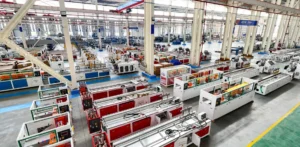
Operating the extruder machine is effectively complicated by several critical process variables. Changing these things correctly will guarantee the quality of the product, reduce waste, and avoid downtime.
-
The Temperature of the Barrel and the Melt Temperature
The areas responsible for heating the barrels (feed, compaction, and metering) must be set to the correct temperatures.
However, the temperature of the melt (the actual polymer that is melted at the die) is more significant than the setpoints in the barrel. Changes must account for the behavior of the melt, not just the surface temperature.
A flat temperature profile may not be effective for all polymers; some changes may be necessary regarding the swell, pressure fluctuations, or quality issues.
-
Screw speed/ Throughput and Motorload
The speed of the screws (RPM) affects the volume of production. Higher speed reduces the production per unit time, but it increases the heat per unit time; this may adversely affect the material or quality.
The voltage required to drive the engine must be watched: a rise that is significant is indicative of material obstruction, issues with mixture, or anomalous friction. The safe period must be maintained.
Constant the speed of the balance between the downstream haul-off and the puller so that extrusion is still constant and stable.
-
The Pressure and Head Design
The pressure affects the output’s stability and control of dimensions. High variability can cause quality issues. Measure, document, and regulate the pressure.
The design of the product’s cross-section, surface quality, and behavior during cooling is affected by the design. Corresponding the die and screw design to the material and purpose is integral to the operational framework.
-
cooling, hauling, and downstream equipment
After the extrudate is released from the die, the process of cooling must be properly integrated into the overall throughput.
The speed of the haul-off or puller must correspond with the output of extrusion; if the speeds are not matched, tension, stretching, ovality, or thickness issues will occur.
The systems upstream and downstream must be synergistic in order to have a stable operational profile.
-
Constantly assess the quality and stability of products.
Constant monitoring and sampling are necessary: check the weight per unit length, the tolerances of dimensions, the surface qualities, the color of uniformity, and the presence of gaps or gelatin.
Contrast with previous studies. Constant production scenarios and written documentation assist in the detection of movement or wear in machine components.
Some systems have sensors that feedback information to a closed-loop system that automatically changes the speed of screws, the degree of cooling, or the ratio of hauling to feeding.
Safety, Maintenance & Troubleshooting
-
Safety Best Practices
Operating an extruder machine is fraught with danger: high temperatures, rotating blades, high pressure, hot polymer, and water for cooling. Key safety principles:
Ensure that there are guards present and an emergency stop is available.
Operators should wear the appropriate protective equipment: gloves, safety glasses, and heat-resistant clothing when dealing with hot parts.
Don’t stand in front of the die or hopper’s throat when the machine is starting.
Ensure ventilation or exhaust if using materials that are sensitive to temperature and may release gases (e.g., PVC that produces HCl).
-
Common Maintenance Operations
Daily: clean the hopper’s throat, check the barrel and die, inspect the feed area, and make sure the water temperature is confirmed.
Every week: inspect and maintain the drive mechanism, check the screws and gearbox, verify the thermocouples, and tighten the bolts on the die head.
Every month/quarter: inspect the screws, the barrels, and the sensors, and make sure they are all lined up, or if necessary, remount the barrels, sensors, and evaluate the electrical connections.
Keep any records of maintenance in logbooks. Constant records help with troubleshooting and traceability.
-
Common Troubleshooting Scenarios
| Problem | Likely Cause | Corrective Action |
| Uneven surface, gels, or burn marks | Incomplete plasticisation, excessive heat, and wrong screw settings | Adjust barrel temperature, slow screw, check material dryness |
| Motor current is high or tripping | Screw jam, material blockage, mis-feed | Stop the machine, inspect the feed throat, purge the machine, and check filters/screens |
| Variation in output weight or dimension | Die pressure fluctuations, haul-off mismatch, and cooling variation | Stabilise pressure, synchronise downstream equipment, and inspect the cooling system |
| Flashing or thin walls in extrusion | Too high throughput or low cooling, die gap too large | Reduce speed, confirm die settings, increase cooling, or haul-off speed |
By proactively monitoring these issues and implementing corrective actions, downtime and quality loss can be minimised.
Best Practice Tips to Optimize Extruder Machine Operation
- Maintain a consistent and pure input of raw material — avoid the change of resin during a run unless it’s documented in full.
- Keep machine records of process settings (screw RPM, barrel temperatures, die pressure, haul-off speed) for reproducibility.
- Use the appropriate compounds for purging when altering the color or material to minimize contamination.
- Calibrate the sensors, thermocouples, and pressure gauges regularly to maintain proper controls.
- Invest in operator education — experienced operators will notice small discrepancies early on.
- Employ a preventative maintenance schedule instead of a reactive repair; this will reduce the number of unplanned stops.
- When possible, combine data-logging and monitoring systems to observe trends (such as the melting temperature’s drift, the motor’s current creep, or the wearing of components)
Efficiently utilize downstream equipment (hovers, winders, cutters) to match the extrusion rate — Many of the quality and waste issues are not caused by the extruder itself, but rather by downstream equipment mismatches.
Summary & Key Takeaways
Operating an extruder machine is primarily concerned with taking care to ensure the machine is prepared and ready for operation, having a systematic approach to starting the machine, maintaining the machine’s parameters, and monitoring the machine’s functions. The most important takeaways are:
- Prep the raw materials and machines thoroughly before use to reduce the initial issues.
- Warm up and maintain the machine at a low speed before beginning to load material.
- Start carefully, ramp speed gradually, feed material steadily, and monitor drive load, melt temperature, and output quality.
- Maintain consistent conditions regarding processing by controlling critical parameters (barrel temperature, screw speed, die pressure, and cooling).
- Ensure safety protocols are fully implemented— areas of high temperature, rotating parts, and pressurized systems are hazardous.
- Maintain, clean, and keep records in a structured manner to support reliability and consistency.
- Align downstream devices as precisely as possible and train operators in the most effective way to take advantage of the extruder’s maximum capacity.
By following these principles, manufacturers and production teams can maximize the efficiency of their extruder machines, which results in a higher quality, less waste, more time, and a safer approach.



 English
  Russian
  Spanish
  Arabic
  German
  French
  Persian
  Turkish
  Bulgarian
  Czech
Czech  Dutch
Dutch  Greek
Greek  Indonesian
  Japanese
  Korean
  Polish
  Portuguese
  Romanian
  Slovenian
  Ukrainian