
In the world of industrial production, color plays a vital role in creating visually appealing and functional products. Whether it’s plastic, textile, paint, or even food packaging, achieving consistent, vibrant, and high-quality coloration is essential for product differentiation, branding, and consumer satisfaction. One of the primary systems used to achieve this is the master batch pigment compounding line, a sophisticated piece of equipment that helps manufacturers add pigments and other additives to raw materials efficiently and effectively.
But what exactly is a master batch pigment compounding line, and how does it contribute to various industries? In this article, we will delve into the technical details, processes, and applications of this essential machinery.
The Basics of Master Batch Pigment Compounding
Before understanding the machinery itself, it’s crucial to know what a master batch is. A master batch refers to a concentrated mixture of pigments, additives, and polymers that are pre-mixed and supplied in pellet form. This concentrate is added to raw materials during the manufacturing process to impart color and other functional properties to the final product.
The master batch pigment compounding line is the production system used to create these master batches. The line is designed to blend and compound various ingredients—such as pigments, resins, stabilizers, and other functional additives—into a uniform mixture. This mixture is then processed into small pellets, which are later added to base materials like plastic, rubber, or textiles to color and enhance them.
Components of a Master Batch Pigment Compounding Line
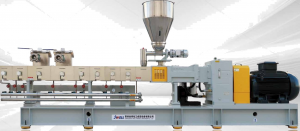
A typical master batch pigment compounding line is composed of several key components, each performing a specific function in the process. These include:
- Feeders – The feeders are used to introduce the raw materials, such as resins, pigments, and additives, into the system. The accurate and consistent feeding of materials is crucial to ensure a uniform mixture.
- Compounding Extruder – This is the heart of the master batch pigment compounding line. The extruder melts and mixes the pigments and additives with the base resin. The extrusion process allows for thorough dispersion of the pigment particles, ensuring that the color is evenly distributed throughout the mixture. The extruder typically uses high heat and shear forces to break down the materials and blend them together.
- Cooling System – After extrusion, the mixture is cooled rapidly to solidify it into a form that can be further processed. Cooling systems typically consist of water baths or air cooling methods to prevent the product from degrading due to excessive heat.
- Pelletizer – Once the material has cooled and solidified, the next step in the master batch pigment compounding line is pelletizing. This process involves cutting the solidified material into small, uniform pellets that can be easily stored, transported, and mixed with raw materials. Pelletizing ensures that the master batch can be added to the base material in precise quantities, providing consistency in color and performance.
- Packaging and Storage – After pelletizing, the master batch pellets are packaged and stored for later use. The packaging is designed to protect the product from contamination, moisture, or any environmental factors that could affect its quality.
How Does a Master Batch Pigment Compounding Line Work?
The process of creating a master batch using a master batch pigment compounding line follows several critical steps:
- Raw Material Selection – The first step in the process involves selecting the appropriate raw materials, including pigments, resins, and additives. The choice of materials will depend on the desired color, performance characteristics, and the application of the final product.
- Material Pre-Heating – In some cases, the raw materials are pre-heated before being fed into the extruder. This step helps to reduce viscosity, allowing for smoother mixing and better dispersion of the pigments.
- Compounding Process – The heart of the master batch pigment compounding line is the compounding process. The extruder melts and combines the ingredients at high temperatures, ensuring a homogenous blend. The shear forces within the extruder help to disperse the pigments evenly throughout the resin, which is crucial for achieving consistent color throughout the final product.
- Cooling and Solidifying – Once the extrusion process is complete, the compound is rapidly cooled to prevent degradation. Cooling is often achieved using water baths or air cooling methods, ensuring the material retains its desired properties.
- Pelletizing – The cooled compound is then passed through a pelletizer, which cuts the solidified material into small, uniform pellets. These pellets are easy to handle, store, and transport, making them ideal for mixing with raw materials in various manufacturing processes.
- Quality Control – Throughout the entire process, quality control is essential to ensure the final product meets the required specifications. This can include checks for color consistency, particle size, and other relevant properties.
- Packaging and Distribution – Finally, the master batch pellets are packaged in suitable containers and distributed to manufacturers. These pellets will be added to raw materials during the production of the final product.
Applications of Master Batch Pigment Compounding Lines
The master batch pigment compounding line is used across a wide range of industries where color and performance additives are required. Some of the primary applications include:
1. Plastic Industry
The plastic industry is one of the largest users of it. Master batches are added to plastic products to provide consistent color and enhance their physical properties. Whether it’s for injection molding, blow molding, or extrusion processes, they ensures that plastic products maintain their color stability and durability over time.
2. Textiles
In the textile industry, color consistency is crucial for producing high-quality fabrics. They enables the precise mixing of pigments and other additives to produce the desired color shades. This is particularly important in industries like fashion, automotive interiors, and home furnishings, where color aesthetics play a significant role.
3. Paints and Coatings
Pigment concentrates are commonly used in the production of paints and coatings. They helps manufacturers create uniform, high-quality pigments that are easy to incorporate into various paint formulations. This is particularly important for achieving uniform color, gloss, and stability in the final paint products.
4. Food Packaging
In the food packaging industry, pigments are often used to enhance the visual appeal of products. The master batch pigment compounding line ensures that the pigments are evenly dispersed within the plastic materials, such as films or containers, without compromising the safety or integrity of the packaging.
5. Rubber Industry
The rubber industry also benefits from the use of it. Pigments and additives are added to rubber compounds to improve color, durability, and other properties, such as UV resistance, in tires, seals, gaskets, and other rubber products.
Advantages of Master Batch Pigment Compounding Lines
Using a master batch pigment compounding line offers several advantages for manufacturers, including:
- Consistency: The precise formulation and compounding process ensure that the color and performance characteristics of the master batch remain consistent throughout production.
- Cost-Effectiveness: By creating concentrated pigment batches, manufacturers can achieve the desired color with minimal waste and more efficient use of raw materials.
- Enhanced Product Quality: The uniform dispersion of pigments in the master batch ensures that the final product exhibits consistent color, appearance, and performance.
- Customization: Manufacturers can tailor the master batch formulation to meet specific customer needs, whether it’s for a particular color shade, UV stability, or other functional properties.
Conclusion
A master batch pigment compounding line is an essential tool for manufacturers in various industries seeking to produce high-quality, consistent products. From plastics to textiles, paints, and packaging, these lines offer a controlled, efficient way to add color and other functional additives to base materials. By understanding how these lines work and their applications, manufacturers can optimize their production processes, reduce waste, and deliver products that meet the highest standards of color and performance.
Whether you are producing plastic products with vibrant hues or creating rubber materials that require specific color and functional properties, they plays a crucial role in ensuring that your products stand out in the market.


 English
  Russian
  Spanish
  Arabic
  German
  French
  Persian
  Turkish
  Bulgarian
  Czech
Czech  Dutch
Dutch  Greek
Greek  Indonesian
  Japanese
  Korean
  Polish
  Portuguese
  Romanian
  Slovenian
  Ukrainian