
How does the equipment cope with the rainy season?
—Jinwei Machinery gives you tips—

News Flash
Recently, most parts of China have entered the rainy season. There will be heavy to torrential rain in parts of southern Jiangsu and Anhui, Shanghai, northern Zhejiang, northern Jiangxi, eastern Hubei, eastern and southern Hunan, central Guizhou, northern Guangxi, and northwestern Guangdong. Among them, there will be torrential rain (100-140 mm) in parts of southern Anhui, northern Jiangxi, and northeastern Guangxi. Some of the above-mentioned areas will be accompanied by short-term heavy rainfall (maximum hourly rainfall of 20-60 mm, and more than 70 mm in some places), and strong convective weather such as thunderstorms and gales in some places.
Emergency measures
- Disconnect all power supplies to ensure that the entire machine is disconnected from the power grid
- When there is a hidden danger of water ingress in the workshop, please stop the machine immediately and turn off the main power supply to ensure the safety of equipment and personnel. If conditions permit, raise the entire line; if conditions do not permit, please protect core components such as the main motor, power cabinet, mobile operation screen, etc., and use partial elevation to handle it
- If water has entered, please disassemble the computer, drive, motor and peripheral electrical components involved in the water, rinse with clean water, and remove surface dirt and impurities
- Then handle each part separately
01
How to deal with the hidden danger of water inflow in the power cabinet
- Take measures to prevent rainwater from flowing back, take measures to drain the cable trench and seal it with fire prevention. Also consider whether the power cabinet needs to be temporarily raised and waterproofed.
- Raise the threshold at the door of the distribution room. A small amount of water seepage in the cable trench is not a big problem because the surface material of the cable is waterproof. The cable trench should be covered with a cover to prevent large-scale water inflow and the cable from being soaked in water.
- To prevent short-circuit explosion, power outage measures should be taken immediately, and the main power supply should be cut off and someone should be sent to guard. Note: If there is water around the distribution cabinet, do not use your hands when the power is turned off. Use an insulating rod or dry wood, wear insulating gloves, wear protective glasses, and stand on an insulating pad to prevent a huge arc from causing an electric shock accident.
02
What to do if the power distribution cabinet is flooded after rain
- The appearance of the power distribution cabinet needs to be checked first. If there is obvious moisture or water immersion, power cannot be supplied immediately. A professional electrician must perform the following inspections:
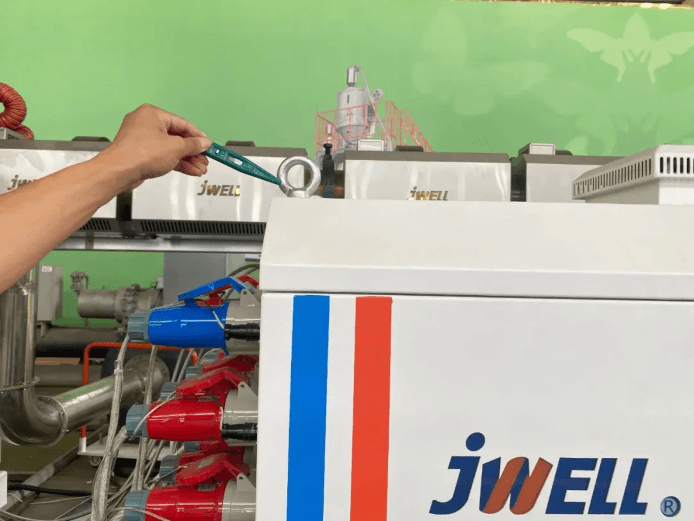
a. Use an electric tester to check whether the outer shell of the power distribution cabinet is charged;
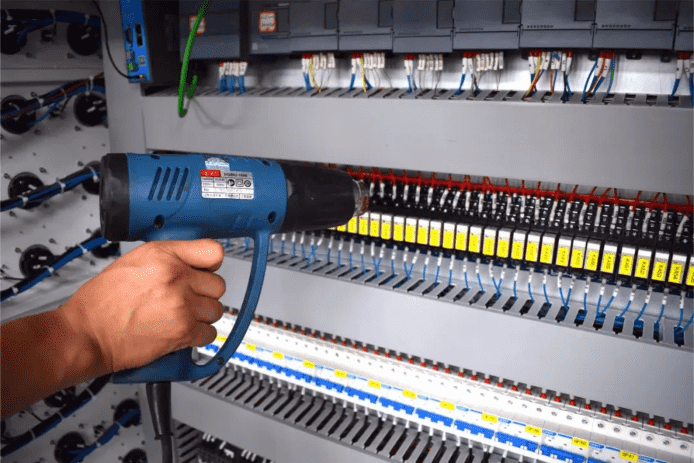
b. Check whether the control circuit, control circuit breaker, intermediate relay, terminal block and other low-voltage components inside the electric control cabinet are damp. If damp, they need to be dried promptly with drying tools. Components with obvious rust need to be replaced.
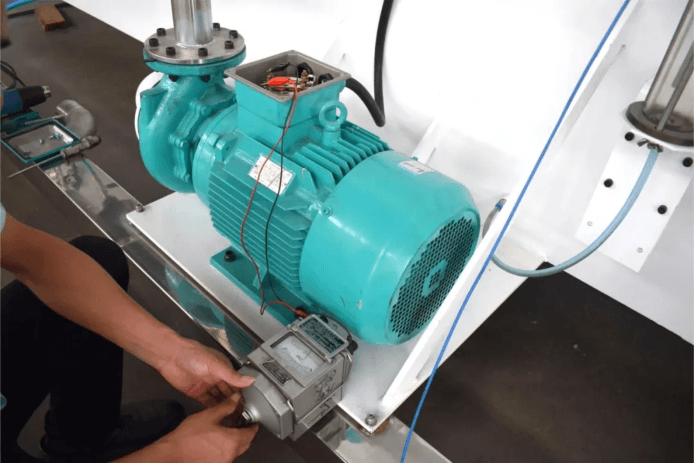
2. Before powering on the electrical cabinet, the insulation of each load cable must be tested. The phase-to-phase and ground connections must be qualified. If the stator rated voltage is below 500V, use a 500V megger to measure the insulation value, and it must be no less than 0.5MΩ. Each component in the cabinet must be dried and air-dried.
03
Inverter water ingress treatment method
First of all, let me make it clear to everyone that water ingress into the inverter is not terrible. What is terrible is that if water ingress into the inverter and power is turned on, it is almost hopeless. It is a blessing in disguise that it did not explode.
Secondly, if the inverter is not powered on, water ingress can be completely handled. If water ingress occurs during operation, although the inverter is damaged, it must be powered off immediately to prevent its internal circuits from burning and causing a fire. At this time, attention should be paid to fire prevention measures in place! Now let’s talk about how to deal with water in the inverter when it is not powered on. There are mainly the following steps:
1) Never power on. First open the inverter operation panel and then wipe all parts of the inverter dry;
2) Use a hair dryer to dry the inverter display, PC board, power components, fan, etc. at this time. Do not use hot air. If the temperature is too high, it will easily burn the internal components of the inverter;
3) Use alcohol with an ethanol content of 95% to wipe the components in step 2, and then continue to blow them dry with a hair dryer;
4) After drying in a ventilated and cool place for one hour, wipe them again with alcohol and continue to blow them dry with a hair dryer;
5) Alcohol evaporation will take away most of the water. At this time, you can turn on the hot air (low temperature) and blow the above components again;
6) Then focus on drying the following inverter components: potentiometer, switching power transformer, display (button), relay, contactor, reactor, fan (especially 220V), electrolytic capacitor, power module, which must be dried multiple times at low temperature, and the switching power transformer, contactor, and power module are the focus;
7) After completing the above six steps, pay attention to check whether there is any water residue after drying the inverter module, and then check again after 24 hours for any moisture, and dry the key components again;
8) After drying, you can try to power on the inverter, but you must ensure that it is turned on and off, and then observe the inverter response. If there is no abnormality, you can power it on and use it!
If a customer says that I don’t know how to disassemble it, then wait a few more days for it to dry naturally. After it is completely dried, use filtered compressed gas to blow the inverter circuit board through the gap to prevent dirt in the rain from being left on the circuit board, resulting in poor heat dissipation during operation and alarm shutdown.
To sum up, as long as the inverter is not powered on when it is flooded, the inverter is generally not damaged. Other electrical components with circuit boards such as PLC, switching power supplies, air-conditioning systems, etc. can refer to the above method.
04
Motor water inlet treatment method
- Remove the motor and wrap the power cord of the motor, remove the motor coupling, wind cover, fan blades, front and rear end covers, take out the rotor, pry open the bearing cover, clean the bearing with gasoline or kerosene (if the bearing is severely worn, it should be replaced), and add oil to the bearing. The amount of lubricating oil in general: 2-pole motor is half of the bearing, 4-pole and 6-pole motor is two-thirds of the bearing, not too much, the lubricating oil used for the bearing is calcium-sodium-based high-speed butter.
b. Check whether the low-voltage components such as the control circuit, control circuit breaker, intermediate relay, terminal block, etc. inside the electric control cabinet are damp. If damp, they need to be dried in time with drying tools. Components with obvious rust need to be replaced. - Check the stator winding. You can use a 500V megohmmeter to check the insulation resistance between each phase of the winding and between each phase and the ground. If the insulation resistance is less than 0.5 megohm, the stator winding must be dried. If there is oil on the winding, it can be cleaned with gasoline. If the insulation of the winding has aged (the color turns brown), the stator winding should be preheated and then painted with insulating paint before drying. Motor drying method:
Bulb drying method: Use an infrared bulb to face the winding and heat one or both ends at the same time;
Electric furnace or coal furnace heating method: Put an electric furnace or coal furnace under the stator. It is best to separate the furnace with a thin iron plate for indirect heating. Put the end cover on the stator and cover it with a sack. After drying for a period of time, turn the stator over and continue drying, but pay attention to fire prevention, because the paint and the volatile gas in the paint are flammable.
05
How to deal with the motor being damp even though it is not flooded
Moisture is a fatal factor that causes motor failure. Splashing rain or moisture generated by condensation can invade the motor, especially when the motor is in intermittent operation. After being parked for several months, the coil insulation should be checked before use, otherwise the motor will be easily burned. If the motor is damp, the following methods can be used:
- Circulating hot air drying method: Use insulation materials to make a drying room (such as refractory bricks), with an air outlet on the top and an air inlet on the side. The hot air temperature in the drying room is controlled at around 100℃.
- Bulb drying method: Put one or several high-power incandescent bulbs (such as 100W) into the motor cavity for drying. Note: The bulb should not be too close to the coil to prevent the coil from burning. The motor housing can be covered with canvas or other materials for insulation.
- Desiccant:
(1) Quicklime desiccant. The main component is calcium oxide. Its water absorption capacity is achieved through chemical reaction, so water absorption is irreversible. Regardless of the humidity of the external environment, it can maintain a moisture absorption capacity greater than 35% of its own weight, is more suitable for low temperature storage, has excellent drying and moisture absorption effect, and is relatively cheap.
(2) Silica gel desiccant. This desiccant is a variety of silica gel packaged in a moisture-permeable small bag. The main raw material silica gel is a highly porous hydrated silicon dioxide, which is non-toxic, tasteless, odorless, chemically stable, and has strong moisture absorption properties. The price is relatively expensive. - Self-heating air drying method: It is suitable for people who have no experience in handling tools and motors, but it takes a long time. This method must test the insulation performance of the motor before powering on.
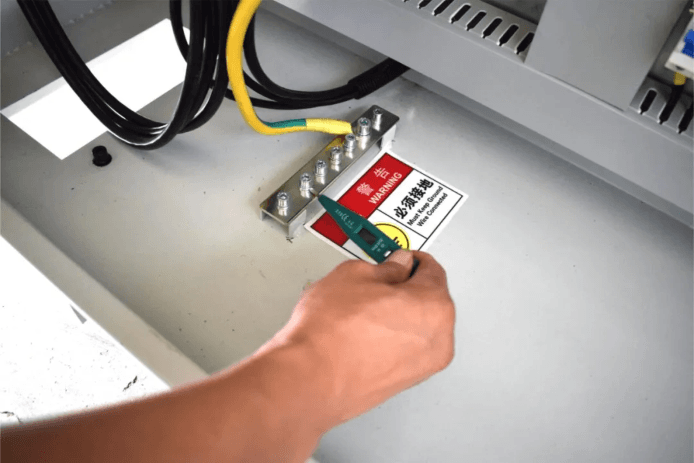
In addition, we also need to remind everyone that in order to avoid the risk of electric shock caused by water accumulation inside the machine, after confirming that the equipment is thoroughly dried, it should be placed in a ventilated and dry place for about a week before use. The grounding wire of the whole machine should also be checked to avoid short-circuit failure caused by water in the grounding wire.
End
If you encounter a situation that you cannot handle yourself, it is recommended that you contact our company for inspection and repair to avoid more serious equipment failure.
Adhere to hard work and innovation, focus on customer experience
- Create an intelligent global extrusion assembly ecosystem
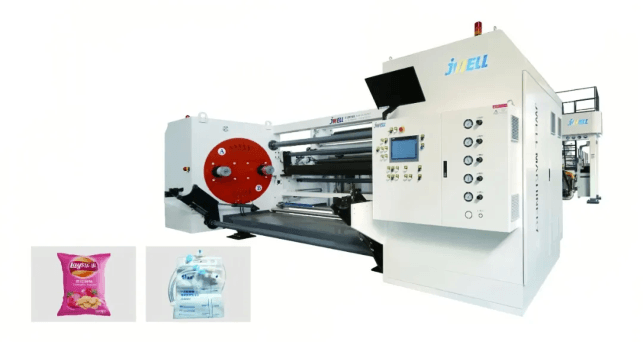
CPP/CPE cast film production line
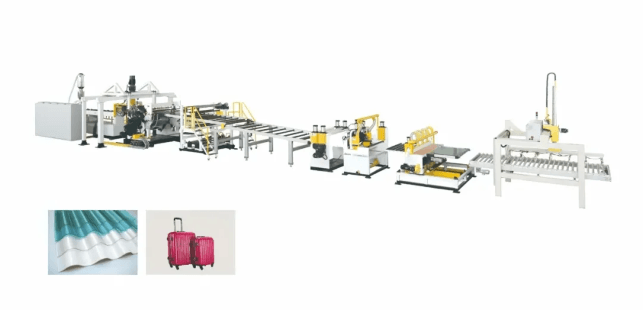
PC/PMMA/GPPS/ABS Plastic Sheet Production Line
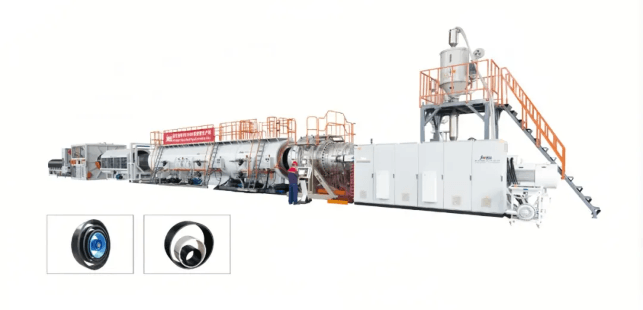
Large diameter HDPE pipe extrusion line
Contact information
General Manager of JW Machinery (Haining) Co., Ltd.
Lou Yijian 13501675166
General Manager of Zhejiang Jiewei Precision Machinery Co., Ltd.
Wang Liang 18851217588
General Manager of Zhejiang JW Sheet Membrane Equipment Manufacturing Co., Ltd.
Chen Junhai 13917612260
General Manager of Zhejiang JW Pipeline Equipment Manufacturing Co., Ltd.
Yin Chao 13918229096
General Manager of Zhejiang JW Extruder Technology Co., Ltd.
She Long 15706714563




 English
  Russian
  Spanish
  Arabic
  German
  French
  Persian
  Turkish
  Bulgarian
  Czech
Czech  Dutch
Dutch  Greek
Greek  Indonesian
  Japanese
  Korean
  Polish
  Portuguese
  Romanian
  Slovenian
  Ukrainian