
Quick Answer
A direct drive extruder is generally considered the best option for printing TPU (thermoplastic polyurethane) for budget-conscious makers and professionals because it provides superior filament control, shorter filament paths, and a reduced risk of buckling compared with traditional Bowden systems.
According to Additive Manufacturing Technologies by Gibson, Rosen, and Stucker, as well as research published in the Journal of Manufacturing Processes, flexible materials such as TPU require stable feeding mechanisms and precise extrusion control to achieve consistent print quality. By 2026, dual-gear direct drive extruders had become the preferred solution for balancing print quality, reliability, and cost when working with flexible filaments.
Introduction
Flexible filaments have transformed desktop 3D printing. Thermoplastic elastomers such as TPU, once considered difficult specialty materials reserved for advanced users, are now widely used for producing items such as phone cases, seals, gaskets, vibration dampers, footwear components, medical devices, robotics parts, and industrial prototypes. As demand for functional printed products continues to grow, so does interest in affordable printing solutions capable of handling these challenging materials.
However, TPU introduces unique extrusion challenges. Unlike PLA, PETG, or ABS, TPU is highly flexible. This flexibility means it can bend, compress, and deform as it moves through the extrusion system. Consequently, printers that perform flawlessly with rigid materials may encounter significant difficulties when processing TPU.
Many users are no longer asking whether TPU can be successfully printed, but rather which extruder offers the best balance of affordability, reliability, ease of installation, and print quality. Budget-conscious hobbyists, small businesses, educational institutions, and prototyping workshops are increasingly seeking extruders that can deliver professional-level TPU performance without requiring expensive upgrades.
This guide explores the characteristics of TPU, the role of extruder design, the pros and cons of different extrusion systems, the most cost-effective extruder options available in 2026, and practical recommendations for achieving consistent results when printing with flexible filament.
Understanding TPU and Why It Is Difficult to Print
Before selecting an extruder, it is important to understand the differences in behaviour between TPU and conventional printing materials.
TPU (thermoplastic polyurethane) is a flexible material that combines the properties of rubber with the processability of thermoplastics. Depending on the formulation, TPU can have Shore hardness ratings ranging from very soft (Shore 60A) to relatively firm (Shore 98A).
The properties that make TPU attractive also create extrusion challenges:
- High flexibility
- Elastic deformation
- Compression under feeding pressure
- Increased friction during transport
- Sensitivity to retraction settings
When filament encounters excessive open space between the drive gears and the hot end, it can buckle rather than advance smoothly. This phenomenon is the primary reason why extruder design is so important when printing flexible materials.
What Does an Extruder Actually Do?
The extruder grips the filament and pushes it towards the hot end at a controlled rate.
Its functions include:
- Feeding filament;
- Controlling extrusion flow;
- Managing retraction;
- Maintaining consistent pressure;
- Supporting print accuracy.
For TPU, even minor inconsistencies in extrusion can result in:
- Under-extrusion
- Stringing
- Layer inconsistencies
- Failed prints
Consequently, the extruder is one of the most important components in the entire printing system.
Direct Drive vs Bowden Extruders for TPU
The first major decision is whether to opt for a direct drive or a Bowden configuration.
Direct drive extruders
In a direct drive setup, the extruder is mounted directly above or beside the hot end.
Advantages include:
- Extremely short filament path
- Improved TPU control
- Reduced buckling risk
- More precise retractions
- Higher reliability
For flexible materials, these benefits are substantial.
Bowden extruders
Bowden systems position the extruder remotely and use a PTFE tube to guide the filament to the hot end.
Advantages include:
- Lower printhead weight
- Higher movement speeds
- Simpler mechanical design
However, TPU frequently compresses inside the Bowden tube, creating feeding inconsistencies.
Direct Drive vs Bowden Comparison
| Feature | Direct Drive | Bowden |
| TPU Compatibility | Excellent | Fair |
| Retraction Accuracy | Excellent | Moderate |
| Setup Complexity | Moderate | Simple |
| Filament Control | Excellent | Moderate |
| Cost Efficiency | High | Moderate |
| Beginner Friendly | Excellent | Moderate |
For most TPU applications, direct drive systems consistently outperform Bowden configurations.
Features That Matter Most in a TPU Extruder
Not all extruders are equally well-suited to flexible materials.
Several design features can have a significant impact on performance.
Dual-gear drive systems
Dual-drive extruders grip the filament from both sides.
The benefits include:
- Increased traction
- Reduced slippage
- More consistent feeding
- Better pressure distribution
This design has become increasingly popular among budget-conscious TPU users.
Constrained Filament Path
The distance between the drive gears and the hot end should be minimised.
A tightly constrained filament path prevents TPU from bending sideways under pressure.
The smaller the gap, the easier it is to print with TPU.
High Gear Ratio
A higher gear ratio improves torque and feeding precision.
Advantages include:
- Smoother extrusion
- Better layer consistency
- Reduced missed steps
Many modern budget extruders incorporate optimised gear reductions.
Best Budget Extruder Types for TPU in 2026
Based on current market trends and user feedback, the following extruder categories offer exceptional value:
Dual-gear direct drive extruders
These remain the best option overall.
Benefits:
- Affordable pricing
- Excellent TPU performance
- Easy upgrades
- Wide compatibility
For most users, this category provides the best balance of cost and reliability.
Compact Planetary Gear Extruders
Planetary gear systems offer:
- High torque
- Compact size
- Smooth feeding
They are particularly effective for softer TPU grades.
Integrated direct drive systems
Many modern printers now come with integrated direct drive systems as standard.
Advantages include:
- Reduced upgrade costs
- Simplified installation
- Optimised firmware compatibility
The value proposition has improved significantly since 2024.
Budget TPU Extruder Evaluation Matrix
| Evaluation Factor | Importance |
| Filament Control | Very High |
| Gear Quality | Very High |
| Installation Ease | High |
| Maintenance | Medium |
| Cost | High |
| Compatibility | High |
| Long-Term Reliability | Very High |
Users focused on TPU should prioritize control and reliability over maximum print speed.
How Much Should You Spend?
A common misconception is that TPU requires expensive hardware.
In reality, many affordable extruders deliver excellent results.
| Budget Range | Expected Performance |
| Under $20 | Basic TPU capability |
| $20–$50 | Good TPU performance |
| $50–$100 | Excellent reliability |
| $100+ | Professional applications |
For most hobbyists and small businesses, the $30–$70 range offers the best value.
Common TPU Printing Problems and Extruder Solutions
TPU (thermoplastic polyurethane) is one of the most popular materials for flexible 3D printing, but its elasticity can present unique extrusion challenges. Selecting the correct extruder and optimising filament handling are often key to achieving reliable, high-quality prints.
Filament buckling
Cause: TPU is highly flexible and can bend or buckle when pushed through gaps in the filament path.
Common causes include:
- Excessive space between the drive gears and the hot end
- Poor filament guidance
- High feeding resistance
Solution: Direct Drive Extruder
A direct drive system places the extruder motor close to the hot end, creating a much shorter filament path.
Benefits:
- Reduced filament flexing
- Better feeding stability
- Improved control of soft materials
- Improved filament guidance
- Use constrained filament paths
- Minimize gaps around the drive mechanism
- Install TPU-specific guides when available
Under-extrusion
Cause: Under-extrusion occurs when the extruder cannot maintain consistent filament feeding.
Common reasons include:
- Insufficient grip on the filament
- Filament slipping inside the drive mechanism
- Inconsistent feeding pressure
Solution: Dual-drive gear extruder
Dual-drive systems grip the filament from both sides.
Advantages:
- Stronger feeding force
- Reduced slippage
- More consistent material flow
This is especially beneficial for flexible filaments that can deform under pressure.
Stringing
Cause: Stringing occurs when melted TPU continues to ooze during movement.
Contributing factors include:
- Excessive retraction distance
- Incorrect retraction speed
- Poor extrusion control
Solution: Fine-tuned direct drive setup
Direct drive extruders typically require:
- Shorter retraction distances
- Lower retraction speeds
- More precise extrusion control
Benefits:
- Reduced oozing
- Cleaner surfaces
- Fewer stringing artefacts
Inconsistent layers
Causes:
Layer inconsistency is often linked to unstable extrusion pressure.
Potential causes include:
- Variable feeding force
- Inconsistent motor performance
- Poor-quality extruder mechanisms
Solution: High-quality geared extruder
Geared extruders provide:
- Increased torque
- Smoother filament feeding
- More consistent extrusion pressure
Advantages:
- Improved layer uniformity
- Better dimensional accuracy
- Enhanced surface finish quality
TPU Print Settings That Complement a Good Extruder
Even the best extruder cannot compensate for poor settings.
Recommended starting points:
| Setting | Suggested Range |
| Print Speed | 20–40 mm/s |
| Retraction Distance | 0.5–2 mm |
| Nozzle Temperature | 220–240°C |
| Bed Temperature | 40–60°C |
| Cooling Fan | 20–60% |
Adjustments should be based on filament hardness and printer configuration.
Industrial Perspective: Why Extrusion Expertise Matters
Although desktop 3D printer extruders and industrial extrusion equipment differ in design, both rely on the same fundamental principles of controlled material flow, pressure management, and precise feeding.
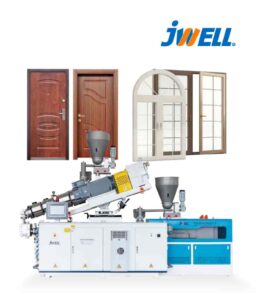
Manufacturers with extensive extrusion engineering expertise, such as Jwell, have made significant contributions to advancements in polymer processing technologies, demonstrating the critical nature of precision extrusion across a range of industries, from additive manufacturing to large-scale plastic production.
Emerging TPU Extruder Trends in 2026
The next generation of TPU printing systems is being influenced by several developments:
- Lightweight direct drive assemblies;
- High-precision dual-drive mechanisms;
- Improved filament guidance channels;
- Smart extrusion monitoring;
- AI-assisted print parameter optimisation;
- Enhanced flexible filament compatibility.
These innovations are making TPU increasingly accessible to mainstream users.
FAQ: Best TPU Extruders on a Budget
- Is a direct drive extruder necessary for TPU?
Not strictly, but it is generally the most reliable and beginner-friendly option for flexible filament printing.
- Can a Bowden extruder print TPU?
Yes, especially with firmer TPU grades, but print speeds usually need to be reduced, and setup becomes more sensitive.
- What is the biggest cause of TPU printing failure?
Filament buckling between the drive gears and the hotend is one of the most common issues.
- Are dual-gear extruders better for TPU?
Yes. Dual-drive systems provide better grip and more consistent filament feeding.
- How fast should TPU be printed?
Most users achieve the best results between 20 and 40 mm/s, depending on filament hardness and printer design.
- How much should I spend on a TPU extruder upgrade?
For most users, spending between $30 and $70 provides an excellent balance of affordability and performance.
Conclusion
For most users, the answer is clear when it comes to choosing the best extruder for printing flexible filament (TPU) on a budget: a dual-gear direct drive extruder with a constrained filament path offers the strongest combination of affordability, reliability, ease of use, and print quality. The flexible nature of TPU places unique demands on the extrusion system, making filament control far more important than raw printing speed.
As 3D printing technology advances, affordable direct drive solutions have become more capable than ever before. By selecting an extruder designed specifically for flexible materials and pairing it with optimised print settings, users can consistently produce professional-quality TPU prints without investing in expensive, industrial-grade equipment. The combination of cost-efficiency and performance makes modern budget direct drive extruders the preferred choice for hobbyists, educators, engineers, and small manufacturers alike.



 English
  Russian
  Spanish
  Arabic
  German
  French
  Persian
  Turkish
  Bulgarian
  Czech
Czech  Dutch
Dutch  Greek
Greek  Indonesian
  Japanese
  Korean
  Polish
  Portuguese
  Romanian
  Slovenian
  Ukrainian