
China’s plastic recycling industry is facing a profound data trust crisis. For a long time, the publicly released data on the amount of waste plastics recycled and regenerated has been in stark contrast to the booming plastics consumer market. This obviously lagging statistical system can no longer reflect the true picture of the industry, and it is urgent to rebuild the data foundation through full-caliber plastic product accounting and scientific methods.
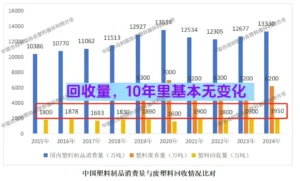
1、Reconstructing the data system: three methods of measurement + scientific verification
To solve the dilemma, the ChinaReplas New Observation Research Team has built a data chain for the entire life cycle of plastics in China for the first time:
Enterprise census method: Based on the real survey data of 436 recycling enterprises, combined with industry characteristics and development trends, scientific estimates are made. Including the output, waste sources, product types, etc. of enterprises of different sizes, so as to more accurately reflect the actual production of recycled plastics and provide an important enterprise-level perspective for overall data statistics.
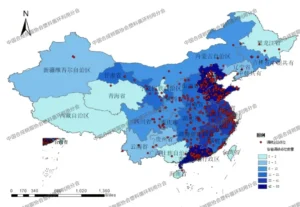
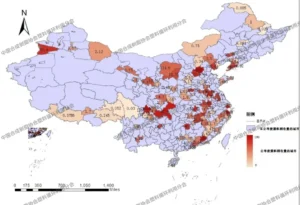
City model method: 102 prefecture-level cities were selected as research objects, and their waste plastic recycling data were collected. Statistical methods were used to analyze the relationship between factors such as urban economic development level, population size, and industrial structure and the amount of waste plastic recycling. Based on this relationship model, the amount of waste plastic recycling nationwide can be estimated. This method comprehensively considers the impact of multiple factors at the city level on waste plastic recycling, can grasp the overall trend of waste plastic recycling from a macro perspective, and improves the accuracy and reliability of data through model verification and continuous optimization.
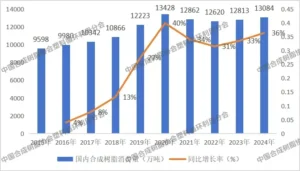
Life cycle method: The product life cycle method is used to calculate the consumption of synthetic resins in China as the starting point, combined with the import and export data of plastic products, and calculate the waste, recycling and regeneration of each stage according to the full life cycle of plastic products. This method systematically analyzes the entire process from the production, circulation, consumption to the disposal of plastics, comprehensively reflects the flow and transformation of plastics throughout the life cycle, and helps to accurately evaluate the generation and treatment of plastic waste.
2、Data Reshaping: Innovative Methods to Solve Statistical Problems
Through the mutual complementation and mutual verification of the above three methods, the ChinaReplas research team was able to more comprehensively and accurately measure the amount of plastic waste, recycling, and regeneration in China, revealing huge differences with the existing publicly released data, and for the first time truly presenting the scale of China’s plastic recycling industry, providing the industry with a more reliable data benchmark. (In 2023, the recycling volume will be ##### million tons, and the recycling volume will be ##### million tons), completely resetting the industry’s cognitive benchmark.
For details of the complete methodology and data system, please see:
🔹 “Re-recognizing the amount of plastic waste, recycling, and regeneration in my country” (Briefing 2025001)
🔹 “In 2023, my country’s plastic waste (##### million tons), recycling (##### million tons), and regeneration (##### million tons)” (Briefing 2025002)




 English
  Russian
  Spanish
  Arabic
  German
  French
  Persian
  Turkish
  Bulgarian
  Czech
Czech  Dutch
Dutch  Greek
Greek  Indonesian
  Japanese
  Korean
  Polish
  Portuguese
  Romanian
  Slovenian
  Ukrainian