
In the world of plastic manufacturing, film production plays a vital role in various industries, including packaging, electronics, and agriculture. CPP (Cast Polypropylene) and CPE (Cast Polyethylene) are two widely used types of polymer films, each with distinct properties that make them suitable for specific applications. To produce these films in large quantities with high precision and efficiency, specialized equipment such as the CPP CPE film casting line is employed.
In this article, we will explore what a CPP CPE film casting line is, as well as its components, working principles, applications, and benefits. Understanding the details of this machine will provide insights into the broader field of film production and its importance in manufacturing industries.
1. Introduction to CPP and CPE Films
What is CPP Film?
CPP (Cast Polypropylene) is a type of polymer film primarily made from polypropylene, a versatile and cost-effective thermoplastic polymer. The film is created through a process called casting, where molten polypropylene is extruded onto a cooled drum to form a thin sheet.
CPP film is known for its excellent optical properties, such as transparency and gloss. It is also valued for its high tensile strength, resistance to moisture, and excellent printability. These features make CPP films widely used in packaging applications, including food packaging, as well as in industrial applications like labels, medical packaging, and agriculture.
What is CPE Film?
CPE (Cast Polyethylene) film is made from polyethylene, another widely used thermoplastic polymer. The casting process for CPE films is similar to CPP films but uses polyethylene resin. CPE films are flexible, moisture-resistant, and have excellent chemical resistance, which makes them ideal for a range of applications, such as packaging films for chemical products, industrial products, and agricultural films.
Polyethylene films are also used in applications like shrink-wrap films, protective covers, and various types of industrial bags due to their resistance to wear and tear.
Comparison Between CPP and CPE Films
While both CPP and CPE films are produced using the casting process, they differ in their properties:
- CPP Films: Known for better optical clarity, stiffness, and gloss. It is more widely used in food and cosmetic packaging due to its transparency and excellent heat-sealing properties.
- CPE Films: Known for greater flexibility, higher chemical resistance, and better moisture barrier properties. CPE films are ideal for more industrial applications, where high durability and resistance to chemicals are needed.
2. The Role of the CPP CPE Film Casting Line
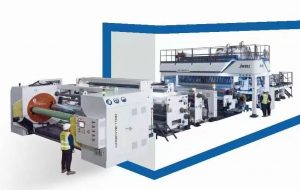
A CPP CPE film casting line is a specialized system used to produce both CPP and CPE films in a continuous and efficient manner. The line combines several critical processes—such as extrusion, casting, cooling, and winding—into one integrated system.
These film casting lines can be customized based on the material (CPP or CPE) and the desired properties of the film, such as thickness, transparency, and flexibility. The main objective of a CPP CPE film casting line is to provide consistent and high-quality films that meet the exact specifications required by various industries.
Components of a CPP CPE Film Casting Line
The CPP CPE film casting line consists of several key components that work together to ensure high-quality film production. Each component is designed to handle specific tasks within the casting process.
1. Extruder
The extruder is the heart of the film casting line. It is responsible for melting the resin (either polypropylene for CPP or polyethylene for CPE) and forcing it through a die to create a thin sheet of film. The extruder is usually equipped with precise temperature and pressure controls to ensure that the material is melted evenly and consistently.
2. Film Casting Die
The casting die is used to shape the molten polymer into a thin, uniform film. The extruded material is spread across the casting die, which is designed to provide precise thickness control. The die helps form the polymer into a film sheet that is ready to be cooled and solidified.
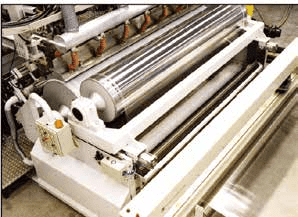
3. Chill Rolls or Cooling Drum
After the molten polymer passes through the die, it is immediately cooled and solidified on the chill rolls or cooling drum. These rolls are typically made of metal and are kept at a low temperature to rapidly cool the film, preventing it from deforming and ensuring a smooth surface. The temperature of the chill rolls must be carefully controlled to achieve the desired properties of the final film.
4. Film Tension Control System
The film tension control system ensures that the film is properly stretched and controlled as it moves through the casting process. Maintaining proper tension is crucial to avoid wrinkles, uneven thickness, or stretching of the film. This system helps maintain the film’s integrity throughout the production process.
5. Winder
Once the film has cooled and solidified, it is wound onto large rolls using a winder. The winder collects the film in a tight, even roll to make it easier for further processing or packaging. The winding process must be carefully managed to ensure that the film remains free of defects like air bubbles, wrinkles, or uneven tension.
6. Control Panel
The control panel is where operators monitor and adjust the parameters of the entire casting line. This includes controlling temperature, speed, and film thickness. Modern control panels often include advanced features like touchscreen interfaces, automated systems, and data logging to improve efficiency and quality control.
The Film Casting Process
The process of producing CPP and CPE films involves several stages, which are outlined below:
1. Polymer Melting and Extrusion
The process begins with the polymer pellets (either polypropylene or polyethylene) being fed into the extruder. In the extruder, the polymer is heated to its melting point, turning it into a molten form that can be easily processed. The molten polymer is then extruded through the film casting die, which shapes it into a thin, continuous sheet.
2. Casting and Cooling
The molten polymer sheet passes through the casting die, which controls the width and thickness of the film. As the film exits the die, it is rapidly cooled by the chill rolls or cooling drum, which solidifies the polymer and freezes the shape of the film. The cooling process is critical to ensure that the film retains its intended properties, such as clarity, flexibility, and strength.
3. Stretching (Optional)
In some cases, the film may be stretched to improve its mechanical properties. This step is commonly used for CPP films to enhance tensile strength and elongation. The stretching process can be achieved by adjusting the speed of the rolls or using additional equipment to apply mechanical force to the film.
4. Winding
Finally, the solidified film is wound into large rolls by the winder. The film is collected carefully to prevent wrinkles and defects. These rolls are then ready for further processing, such as slitting, printing, or packaging.
3. Applications of CPP and CPE Films
Both CPP and CPE films produced on a film casting line have a wide range of applications, particularly in industries that require packaging materials with specific properties. Below are some of the most common uses of CPP and CPE films:
Applications of CPP Films
- Food Packaging: CPP films are widely used in the packaging of food products, such as snacks, frozen foods, and confectioneries. Their excellent barrier properties against moisture and air help preserve the freshness and shelf-life of food.
- Cosmetic and Pharmaceutical Packaging: Due to their clarity and ability to form airtight seals, CPP films are used for packaging cosmetic products and pharmaceutical items like tablets, creams, and ointments.
- Labels and Adhesive Films: CPP films are also used for creating labels and adhesive films for various industries, including retail and logistics.
- Agricultural Films: In agriculture, CPP films are used for greenhouse films and mulch films, providing a protective layer that shields crops from harsh environmental conditions.
Applications of CPE Films
- Chemical and Industrial Packaging: CPE films are ideal for packaging chemicals, fertilizers, and other industrial products due to their high resistance to moisture, chemicals, and wear.
- Agricultural Films: Similar to CPP, CPE films are also used in agriculture for greenhouse covers, crop protection, and soil erosion prevention.
- Protective Covers: CPE films are commonly used as protective covers for equipment, machinery, and even construction materials, providing a durable and flexible barrier.
- Shrink Films: Due to their shrinkability, CPE films are used in shrink-wrapping applications for products like bottles, cans, and consumer goods.
4. Advantages of Using a CPP CPE Film Casting Line
There are several advantages to using a CPP CPE film casting line for manufacturing films:
1. High Efficiency
The casting line provides a continuous process that can produce large volumes of film quickly and efficiently. With automated systems in place, the production process is streamlined, reducing the need for manual labor and increasing overall throughput.
2. Customizable Film Properties
A CPP CPE film casting line can be tailored to produce films with specific properties, such as varying thicknesses, tensile strength, flexibility, and transparency. This versatility makes it suitable for a wide range of industries and applications.
3. Consistent Quality
The integrated control systems and high-precision equipment ensure that the film produced has consistent quality in terms of thickness, surface smoothness, and tensile strength. This is crucial for applications where uniformity is key.
4. Cost-Effectiveness
Using a CPP CPE film casting line can reduce production costs due to the efficiency of the process, lower energy consumption, and the ability to produce films in large volumes. Furthermore, the use of high-quality, cost-effective polymers like CPP and CPE adds to the affordability of the final product.
5. Environmental Benefits
Modern casting lines are designed to minimize waste and energy consumption, making them more environmentally friendly. Additionally, both CPP and CPE films can be recycled, reducing the environmental impact of plastic film production.
Conclusion
The CPP CPE film casting line is a crucial piece of equipment in the production of high-quality polymer films, particularly for applications in packaging, agriculture, and industry. By employing advanced technology and specialized components, this casting line allows manufacturers to produce CPP and CPE films efficiently, with high consistency and customizable properties. Whether for food packaging, industrial products, or agricultural films, a CPP CPE film casting line offers significant advantages in terms of efficiency, quality, and cost-effectiveness.


 English
  Russian
  Spanish
  Arabic
  German
  French
  Persian
  Turkish
  Bulgarian
  Czech
Czech  Dutch
Dutch  Greek
Greek  Indonesian
  Japanese
  Korean
  Polish
  Portuguese
  Romanian
  Slovenian
  Ukrainian