
In contemporary production, extrusion machines assume an essential part in forming crude materials into practical items across a large number of ventures — from plastic bundling and building materials to aluminum profiles and medical tubing. An extrusion machine changes pellets, powder, or billets into nonstop profiles of consistent cross-section by pushing or drawing material through a die under controlled intensity and strain.
Jwell will lead everyone. Understanding the working principle, classification, performance parameters, and application of extrusion machines is very important for engineers, plant managers, or procurement professionals. This article presents extrusion technology from an engineering aspect and merges it with SEO-friendly explanations that provide market insight and technical data helpful to professionals surfing the internet for extrusion machines.
What Is an Extrusion Machine?
An extrusion machine can be defined as a processing equipment that forces raw material through a die, thereby producing continuous products with any cross-sectional shape. The process uses heat, pressure, and mechanical shear to melt or soften the material so that it may be shaped as it comes out of the die.
A progressive forming operation where solid, semi-solid, or viscous material is continuously pushed through a die that takes the shape of an article having a constant cross-section.
Typical Output Forms:
The extrusion machine is often the core component in production lines for plastic manufacturing, metal forming, and rubber compounding.
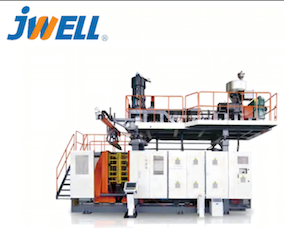
How Does an Extrusion Machine Work?
Although the process varies by material (plastic, metal, or rubber), the working principle of an extrusion machine remains consistent.
Step-by-Step Process:
- Feeding:
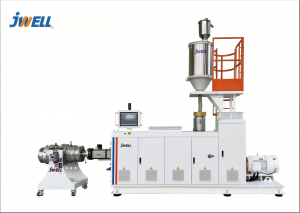
Pellets, powder, or billets are loaded into the hopper and fed into the barrel.
- Heating and Melting:
Heaters located around the barrel raise material to a state of softness or melting as the screw conveys it forward.
- Mixing and Compression:
Shear and compressive forces from the screw help in attaining uniform temperature and pressure consistency.
- Extrusion Through Die:
The material is then pushed through a die that shapes the cross-section of the product.
- Cooling and Shaping:
The cooled product, either through water baths or air ducts, eventually solidifies in its final form.
- Cutting and Winding:
The continuous profiles are cut to the required length or wound on reels for further processing.
Types and Classifications of Extrusion Machines
Extrusion machines can be categorized based on mechanical structure, material type, or product application.
Below are the major classifications:
By Screw Structure
| Type | Description | Applications |
| Single Screw Extruder | One rotating screw in a heated barrel; simple and efficient for homogeneous materials | Film, tubing, profiles |
| Twin Screw Extruder (Co-rotating/Counter-rotating) | Two intermeshing screws improve mixing and compounding | PVC, masterbatch, rubber |
| Multi-screw / Planetary Extruder | Enhanced mixing and degassing capabilities | Specialty polymers, advanced composites |
By Material Type
| Machine Type | Material | Product Examples |
| Plastic Extrusion Machine | PE, PP, PVC, ABS | Pipes, films, sheets |
| Aluminum Extrusion Machine | Aluminum billets | Frames, profiles |
| Rubber Extrusion Machine | Natural or synthetic rubber | Seals, hoses |
| Metal Extrusion Machine | Copper, steel | Rods, tubes, wires |
By Product Form
- Sheet extruder: It produces continuous sheets or films.
- Pipe extruder: used for hollow profiles like tubing or conduits.
- Profile extruder: Custom shapes mainly used in construction and automotive applications.
- Film extruder: Thin flexible films mostly used for packaging, etc.
- Co-extrusion machine: more than one layer of material having different properties.
By Functionality
- High-Speed Extruders – For large-scale production (over 500 kg/h).
- Multi-Layer Extruders – For packaging or barrier films.
- Functional Extruders – Integrated with lamination, foaming, or embossing units.
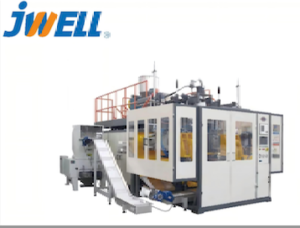
Key Performance Parameters of Extrusion Machines
Understanding performance metrics helps users evaluate machine capacity and suitability.
Here are the core parameters:
| Parameter | Description | Impact on Production |
| Screw Diameter (mm) | 25–300 mm typical range | Determines throughput capacity |
| L/D Ratio (Length-to-Diameter) | 20:1 to 40:1 | Affects plasticizing quality |
| Screw Speed (rpm) | 10–300 rpm | Higher speed = higher output |
| Output Capacity | kg/h or m/min | Production rate |
| Heating/Cooling System | Electrical heaters, air or water cooling | Temperature control |
| Die Design | Shape and flow channels | Determines final product geometry |
| Temperature Accuracy | ±1–2°C | Critical for quality control |
| Motor Power (kW) | 10–400 kW | Defines energy efficiency |
| Torque and Pressure | Measured in Nm or MPa | Material flow consistency |
| Control System | PLC, HMI, servo system | Automation and precision |
Advanced extruders feature intelligent temperature control, digital torque monitoring, and automatic material feeding for consistent output and energy optimization.
The Extrusion Process Flow
The extrusion process involves mechanical, thermal, and control systems.
Below is a simplified flowchart for plastic extrusion lines:
Raw Material → Feeding Hopper → Screw Barrel (Heating & Mixing) → Filter → Die → Cooling → Haul-off → Cutting → Winding/Stacking
Each stage helps create uniformity of the product and its dimensional stability.
Pressure, speed, and melt temperature are monitored in real time by modern systems using closed-loop feedback.
Major Application Fields of Extrusion Machines
Extrusion machines are the backbone of multiple industries:
Plastic Industry-Includes
- pipes: PVC, HDPE, and PPR.
- Films and sheets: packaging films, agricultural films, lamination films.
- Profiles: window profiles, panels, cable ducts.
- Masterbatch & compounding: color and additive mixing.
Metal Industry
- Aluminum Extrusion: Used for building applications, transport, and electronic use.
- Copper/ Steel Extrusion: Used as conductors and precision rods.
- Rubber Industry- Seals, tubes, hoses, automotive and industrial sealing systems
Other Applications
Include medical tubing wire coating, composite structures, food and pharmaceutical extrusion, such as bioplastics or filaments.
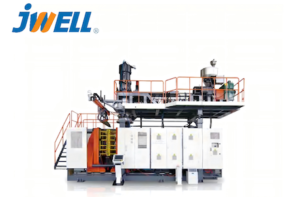
How to Choose the Right Extrusion Machine?
Selecting the right machine depends on product goals, materials, and cost-efficiency.
| Selection Factor | Key Considerations |
| Material Type | Plastic, rubber, aluminum, or metal |
| Product Form | Pipe, sheet, film, or profile |
| Throughput (kg/h) | Match with target production rate |
| L/D Ratio and Screw Design | Optimize for melting and mixing performance |
| Automation Level | Manual, semi-automatic, or PLC-integrated |
| Energy Consumption | Efficient motor and temperature systems |
| Additional Features | Co-extrusion, lamination, or embossing |
| Manufacturer Support | Spare parts, maintenance, and technical service |
For example, if producing multi-layer packaging films, choose a co-extrusion machine with precise layer thickness control and high thermal stability.
Common Problems and Quality Defects in Extrusion
Extrusion is a continuous process, and even minor deviations can cause product defects.
Here are typical issues and their possible causes:
| Problem | Likely Cause | Solution |
| Unstable Output / Flow Fluctuations | Inconsistent feed rate, screw wear | Check feeder calibration and screw condition |
| Temperature Inconsistency | Heater failure or poor control | Inspect thermocouples, recalibrate system |
| Warped or Twisted Profiles | Uneven cooling or die imbalance | Optimize cooling channels, adjust die |
| Surface Defects (Streaks, Bubbles) | Moisture or contamination | Dry raw materials, clean barrel |
| Die Blockage / Wear | Excessive material buildup | Regular die cleaning |
| Material Degradation | Overheating or shear stress | Adjust temperature profile, screw design |
Preventive maintenance and process monitoring significantly reduce defect rates and improve yield.
Maintenance and Care of Extrusion Machines
A well-maintained extruder ensures long-term productivity and stability.
Key Maintenance Tasks:
- Screw and Barrel Cleaning: Screw and barrel cleaning, remove residues regularly so as not to let materials cross-contaminate.
- Heater and Thermocouple Inspection: Replace any faulty thermocouples and heaters so that temperatures can be attained accurately.
- Lubrication of Bearings and Gearbox:Lubricate all bearings and the gearbox driving unit to avoid running dry and getting hot.
- Electrical and Control System Calibration: Calibrate the electrical and control system for automation to function properly.
- Tightening of Mechanical Joints:Calibrate the electrical and control system for automation to function properly.
- Cooling System Cleaning: Coolant should always be clean for stable temperature control.
Maintenance Interval Example:
| Component | Check Frequency |
| Screw & Barrel | Weekly visual inspection |
| Heater Zones | Monthly temperature calibration |
| Gearbox Oil | Every 3 months |
| Electrical Controls | Biannual audit |
| Cooling Pumps | Every 6 months |
Advantages of Using an Extrusion Machine
Extrusion offers several advantages compared to other forming processes:
- Continuous Production: Produces in bulk͏, makes a lot at once.
- Versatility: Uses plastics, metals, rubbers, and composites.
- Cost Efficiency: Has low material waste͏ and fast setup times.
- Uniform Quality: Maintains the same cross-section and surface finish.
- Automation: Quality is controlled by a computer system, so human mistakes are less likely to happen.
- Sustainability: It can work with recycled materials and closed-loop systems.
Energy and Efficiency Trends in Modern Extruders
The latest generation of extruders integrates energy-efficient drives, advanced thermal insulation, and smart process control.
Here’s a comparison of energy consumption trends:
| Year | Average Energy Use (kWh/kg) | Efficiency Improvement (%) |
| 2018 | 0.32 | – |
| 2020 | 0.29 | +9% |
| 2022 | 0.26 | +19% |
| 2024 | 0.22 | +31% |
Modern innovations:
- Servo motors reduce idle power.
- Multi-zone heaters improve thermal uniformity.
- AI process monitoring predicts wear and prevents downtime.
Automation and Control Systems
Systems of Automation and Control Advanced extruders mostly depend on PLC or SCADA-based systems to deliver and maintain such inbuilt precision and repeatability.
Important Features Include:
- PID Temperature loops,
- Real-Time Torque, and Pressure Feedback.
- Automated Start/Stop including Alarms.
- Recipe-Based production that allows for quick changeover.
Environmental Considerations and Recycling Extrusion
As manufacturing gets more ecological, extrusion is viewed as taking a very significant part in the circular economy. The latest extruders can handle recycled materials (rPET, PE, PP) with very good efficiency and effectiveness-easily turning waste into new products.
Some examples of Green Innovations comprise:
- Capacity for devolatilization to remove impurities,
- Filtration systems outputting clean water when recycling,
- Energy recovery systems from the zones being heated.
- <40% energy saved and 30% less CO₂ emission compared to old models!
Conclusion
An extrusion machine belongs to the most versatile and essential equipment used in the present day in many industries, changing raw materials into a variety of useful products with consistent quality and efficiency. Plastic packaging, metal profiles, rubber seals, or medical tubes give just some examples of end products based on extrusion applications around the world. Knowledge about working principles, classifications, and performance parameters is a key factor for appropriate equipment selection that leads to high productivity with reduced operational risks.
As automatic͏on and sus͏tainability play major roles in industrial production, the future generation of extruders can be expected to include smarter controls, better energy efficiency, and the ability to work with recycled material or bio-based material. This leads to a very green and efficient manufacturing future.



 English
  Russian
  Spanish
  Arabic
  German
  French
  Persian
  Turkish
  Bulgarian
  Czech
Czech  Dutch
Dutch  Greek
Greek  Indonesian
  Japanese
  Korean
  Polish
  Portuguese
  Romanian
  Slovenian
  Ukrainian