
Γρήγορη απάντηση
A Γραμμή εξώθησης σωλήνων από ΠΕ Είναι ένα βιομηχανικό σύστημα παραγωγής που χρησιμοποιείται για την κατασκευή σωλήνων και σωλήνων από πολυαιθυλένιο συνεχώς και με ελεγχόμενη διάμετρο, πάχος τοιχώματος, μήκος και ποιότητα επιφάνειας. Σύμφωνα με το ISO 4427, τα συστήματα σωλήνων από πολυαιθυλένιο χρησιμοποιούνται ευρέως για την παροχή νερού και σχετικές εφαρμογές. Εν τω μεταξύ, τα βιομηχανικά συστήματα εξόγκωσης επεκτείνουν την παραγωγή σωλήνων PE για να περιλαμβάνουν τη διανομή αερίου, την άρδευση, την αποστράγγιση, την επεξεργασία βιομηχανικών υγρών, τις θαλάσσιες σωληνώσεις και τις προστατευτικές ή μονωτικές σωλήνωσεις. Η διαδικασία εξόγκωσης περιλαμβάνει γενικά την τροφοδοσία, την εξάπλωση και την πλαστικοποίηση του υλικού, τη διαμόρφωσή του σε μούφα, την προσαρμογή του σε διαστάσεις, την ψύξη, την τράβηγμα, το κόψιμο ή το τυλίγματος, καθώς και τον online έλεγχο ποιότητας.
Στην πρακτική κατασκευή, η αξία της γραμμής εξόγκωσης σωλήνων από PE δεν βρίσκεται μόνο στην ικανότητά της να παράγει πλαστικούς σωλήνες, αλλά και στην ικανότητά της να μετατρέπει τη ρητίνη PE σε σωλήνες με συνεχή διαστάσεις, σχεδιασμένους για συγκεκριμένες εφαρμογές και απαιτήσεις απόδοσης. Ανάλογα με παράγοντες όπως η ποιότητα της ρητίνης, η διάμετρος του σωλήνα, το πάχος τοιχώματος, η κλάση πίεσης, η ταχύτητα παραγωγής και η τελική χρήση, η γραμμή μπορεί να διαμορφωθεί για να παράγει εύκαμπτους σωλήνες μικρής διαμέτρου, τυπικούς σωλήνες νερού HDPE, σωλήνες αερίου, σωλήνες άρδευσης, σωλήνες υποδομής μεγάλης διαμέτρου ή εξειδικευμένους προστατευτικούς σωλήνες PE.
Τι είναι η γραμμή εξόγκωσης σωλήνων από PE;
Η γραμμή εξόγκωσης σωλήνων από PE είναι ένα συνεχές σύστημα παραγωγής που σχεδιάζεται για να μετατρέπει τη ρητίνη πολυαιθυλενίου σε τελειωμένους σωλήνες ή σωλήνες. Σε αντίθεση με τις διαδικασίες κατασκευής σε παρτίδες, η εξόγκωση παράγει ένα συνεχές κοίλο προφίλ λιώνοντας πολυμερή διακοσμήματα, πιέζοντας το λιωμένο υλικό μέσα από μια δακτυλιοειδή μούφα, διαμορφώνοντας το ζεστό σωλήνα με εξοπλισμό επικύρωσης και ψύξης, και στη συνέχεια τραβώντας τον σταθεροποιημένο σωλήνα μέσα από μηχανήματα στο ρεύμα.
Ο όρος ‘γραμμή εξόγκωσης σωλήνων από PE» γραμμή εξόγκωσης σωλήνων από PE‘καλύπτει ένα ευρύ φάσμα εξοπλισμού, καθώς τα προϊόντα πολυαιθυλενίου κατασκευάζονται σε πολλές διαφορετικές διαμέτρους και διαμορφώσεις. Οι σωλήνες PE μικρής διαμέτρου μπορούν να τυλίγονται απευθείας σε μπάρες, ενώ οι σωλήνες HDPE μεγάλης διαμέτρου παράγονται συνήθως σε ευθείες μήκη και απαιτούν πολλαπλές γραμμές τράβηγματος, μεγάλες δεξαμενές κενού, βαρύ εξοπλισμό κοπής και αυτοματοποιημένη στοίβαξη. Επομένως, η διαμόρφωση του εξοπλισμού πρέπει να ταιριάζει με τις προβλεπόμενες προδιαγραφές του σωλήνα και όχι απλώς να επιλέγεται ανάλογα με το όνομα του πολυμερού.
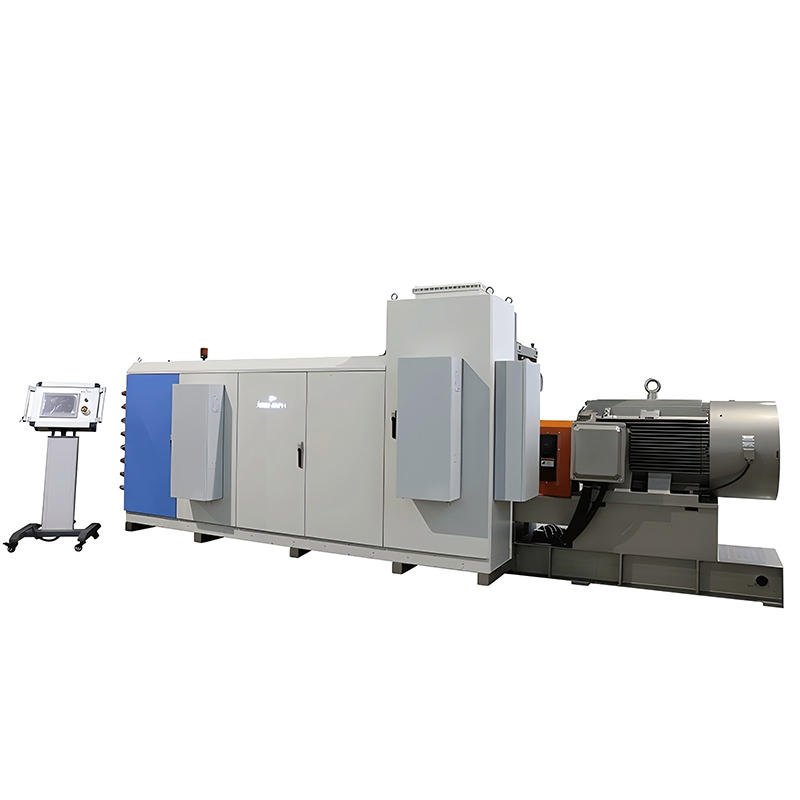
Ένα τυπικό σύστημα παραγωγής περιλαμβάνει μια μονάδα τροφοδοσίας υλικού, ένα κάδο ή ένα σύστημα ζυγιστικής δοσολογίας, έναν ενιαίο σπειροειδή εξαγωγέα, μια μούφα εξόγκωσης, μια δεξαμενή επικύρωσης με κενό, μια τμήμα ψύξης, μια μονάδα τράβηγματος, ένα κόπτη ή ένα τυλικτήριο και εξοπλισμό για την επεξεργασία σωλήνων. Σύγχρονα συστήματα μπορεί επίσης να περιλαμβάνουν λέιζερ μέτρησης διαμέτρου, online έλεγχο πάχους τοιχώματος, έλεγχο βάρους μετρητή, αυτόματη σήμανση και κεντρικό έλεγχο PLC/HMI. Τα συστατικά αυτά λειτουργούν μαζί ως μια ενιαία αλυσίδα διαδικασιών, καθώς η διαστατική ακρίβεια εξαρτάται από τη συγχρονισμένη παραγωγή λιωμένου υλικού, την πίεση της μούφας, την ψύξη, την ταχύτητα τράβηγματος και την επεξεργασία στο ρεύμα.
Ποια υλικά μπορεί να επεξεργαστεί μια γραμμή εξόγκωσης σωλήνων από PE;
Το πολυαιθυλένιο δεν είναι ένα μονοπροσωπικό υλικό. Η κατασκευή σωλήνων PE μπορεί να περιλαμβάνει πολυαιθυλένιο υψηλής πυκνότητας (HDPE), πολυαιθυλένιο μεσαίας πυκνότητας (MDPE) και άλλες συνθέσεις πολυαιθυλενίου, οι οποίες επιλέγονται ανάλογα με παράγοντες όπως οι απαιτήσεις πίεσης, η ευελιξία, οι περιβαλλοντικές συνθήκες, η χημική έκθεση, η θερμοκρασία και ο σχετικός πρότυπος σωλήνων. Το HDPE είναι ιδιαίτερα σημαντικό στις υποδομές, καθώς συνδυάζει υψηλή αντοχή με ευελιξία, αντοχή στη διάβρωση και καλές χαρακτηριστικές συγκόλλησης.
Η ποιότητα της ρητίνης επηρεάζει άμεσα τον σχεδιασμό και τις λειτουργικές συνθήκες της γραμμής εξόγκωσης. Για παράδειγμα, ένα υλικό που προορίζεται για σωλήνα πίεσης μεγάλης διαμέτρου μπορεί να απαιτεί διαφορετική διαμόρφωση σπειρών, χωρητικότητα παραγωγής, στρατηγική ψύξης και διάταξη τράβηγματος από ένα σωλήνα άρδευσης μικρής διαμέτρου. Η προετοιμασία του υλικού είναι εξίσου σημαντική, καθώς η συνεχής τροφοδοσία και η σταθερή θερμοκρασία λιώματος βοηθούν στην αποφυγή διαστατικών διακυμάνσεων, επιφανειακών ελαττωμάτων και διαφορών στο πάχος τοιχώματος.
Μερικές σύγχρονες σωλήνωσεις μπορούν επίσης να διαμορφωθούν για πολυστρωματική παραγωγή. Πρόσθετοι εξαγωγείς μπορούν να ενσωματωθούν για την κατασκευή σωλήνων PE δύο ή τριών στρωμάτων, επιτρέποντας την ενσωμάτωση διαφορετικών συνθέσεων υλικών ή λειτουργικών στρωμάτων στην ίδια δομή σωλήνα. Αυτή η ευελιξία είναι χρήσιμη όταν οι κατασκευαστές πρέπει να συνδυάσουν απόδοση, χρωματική ταυτοποίηση, περιεχόμενο ανακυκλωμένου υλικού και εφαρμοστικές επιφανειακές χαρακτηριστικές σε ένα προϊόν.
Πώς λειτουργεί μια γραμμή εξόγκωσης σωλήνων από PE;
Η διαδικασία κατασκευής ξεκινά με την τροφοδοσία της ρητίνης PE στον εξαγωγέα. Μέσα στον κάδο, το πολυμερές μεταφέρεται προς τα εμπρός από περιστρεφόμενες σπείρες, ενώ η θερμότητα και η μηχανική διατμητική δύναμη σταδιακά λιώνουν και ομογενοποιούν το υλικό. Το σύστημα σπειρών και κάδου πρέπει να σχεδιάζεται έτσι ώστε να παρέχει σταθερό λιώμα με συνεχή θερμοκρασία και πίεση, καθώς οι διακυμάνσεις σε αυτό το στάδιο μπορούν τελικά να οδηγήσουν σε διαφορές στο πάχος τοιχώματος, επιφανειακά ελαττώματα ή ασταθείς διαστάσεις σωλήνα.
Το ομοιογενές λιωμένο πολυμερές εισέρχεται στη μούφα, όπου διανέμεται γύρω από έναν κεντρικό μανδρίλο για να δημιουργήσει ένα συνεχές σωληνωτό προφίλ. Το υλικό είναι ακόμα ζεστό και σχετικά μαλακό σε αυτό το σημείο, οπότε απαιτείται ελεγχόμενη διαστασιομέτρηση και ψύξη για να διατηρήσει τις τελικές διαστάσεις. Ο σωλήνας περνά λοιπόν από ένα σύστημα επικύρωσης με κενό για να επιτύχει την επιθυμητή γεωμετρία σωλήνα, ακολουθούμενο από ψύξη με νερό για να αφαιρέσει τη θερμότητα και να σταθεροποιήσει το πολυμερές.
Μόλις ο σωλήνας έχει επιτύχει αρκετή διαστατική σταθερότητα, μια μονάδα τράβηγματος τον τραβά συνεχώς μέσα από τη γραμμή. Η σχέση μεταξύ της παραγωγής του εξαγωγέα και της ταχύτητας τράβηγματος είναι κρίσιμη: αν η γραμμή τραβά πολύ γρήγορα σε σχέση με τον ρυθμό παραγωγής του υλικού, τα τοιχώματα του σωλήνα μπορεί να γίνουν πολύ λεπτά· αν η τράβηγμα είναι πολύ αργή, ο σωλήνας μπορεί να γίνει υπερμεγέθης ή πολύ παχύς. Σύγχρονα συστήματα εξόγκωσης χρησιμοποιούν λοιπόν όλο και περισσότερο συγχρονισμένο έλεγχο για να διατηρούν σταθερές συνθήκες παραγωγής. Τα συστήματα σωλήνων PE και HDPE της Jwell, για παράδειγμα, περιλαμβάνουν εξαγωγέα, επικύρωση με κενό, ψύξη, μονάδα τράβηγματος με servo, μονάδα κοπής και κεντρικό έλεγχο, με την επιλογή προσθήκης συστημάτων μέτρησης online για την παρακολούθηση της παραγωγής.
Ποιες είναι οι κύριες εφαρμογές των σωλήνων PE;
Οι μεγαλύτερες περιοχές εφαρμογής των σωλήνων πολυαιθυλενίου (PE) περιλαμβάνουν την παροχή νερού, τη διανομή αερίου, την άρδευση, την αποστράγγιση, τη μεταφορά βιομηχανικών υγρών, την εξόρυξη, τις θαλάσσιες υποδομές και τις προστατευτικές σωλήνωσεις. Το PE χρησιμοποιείται ευρέως σε αυτές τις περιοχές χάρη στην αντοχή του στη διάβρωση, την ευελιξία, το σχετικά χαμηλό βάρος του και το γεγονός ότι οι σωλήνες μπορούν να συνδέονται με τεχνικές θερμικής συγκόλλησης σε κατάλληλες εφαρμογές.
Στις υποδομές νερού, οι σωλήνες PE μπορούν να μεταφέρουν πόσιμο νερό και άλλες παροχές νερού όταν το υλικό, η κατασκευή του σωλήνα και η πιστοποίηση πληρούν τις εφαρμοστέες απαιτήσεις. Οι κατάλληλα προσδιορισμένοι σωλήνες πολυαιθυλενίου χρησιμοποιούνται ευρέως για τη διανομή αερίου, καθώς το PE δεν διαβρώνεται με τον ίδιο τρόπο όπως ο συμβατικός μεταλλικός σωλήνας και μπορεί να αντέξει τις κινήσεις του εδάφους πιο εύκολα από σκληρά υλικά σε πολλές συνθήκες εγκατάστασης.
Η αγροτική άρδευση είναι άλλη μια μεγάλη αγορά για μικρότερους σωλήνες και σωλήνες PE. Αυτά τα προϊόντα μπορούν να κατασκευάζονται σε συνεχή μήκη και να τυλίγονται σε μπάρες, γεγονός που απλοποιεί τη μεταφορά και την εγκατάσταση στο χωράφι. Ανάλογα με τον σχεδιασμό, οι γραμμές εξόγκωσης PE μπορούν επίσης να παράγουν σωλήνες για αποστράγγιση, παροχή αγροτικού νερού, προστασία καλωδίων και άλλες εφαρμογές χαμηλής έως μεσαίας πίεσης.
Large-diameter PE extrusion expands the range of applications into municipal infrastructure, industrial water systems, dredging and marine pipelines. Therefore, equipment manufacturers offer substantially different line architectures for small tubes and large pipes. Published Jwell equipment information, for example, includes large-diameter HDPE systems covering pipe ranges extending into the metre scale. This demonstrates how extrusion line configuration changes substantially as diameter and throughput increase.
PE Pipe Applications and Corresponding Production Requirements
The relationship between application and machine configuration is important for anyone purchasing a PE pipe extrusion line. A manufacturer should not specify the line only from a desired output number because pipe diameter, wall thickness, resin grade, pressure class, cooling requirements, and product handling can all influence the equipment configuration.
| PE Pipe Application | Typical Product Characteristics | Important Extrusion-Line Requirements |
| Water supply | Pressure-rated PE pipe, multiple diameters | Stable melt output, precise sizing, controlled cooling |
| Gas distribution | Pressure-rated PE pipe with controlled dimensions | Consistent wall thickness, reliable process control, marking |
| Agricultural irrigation | Small or medium diameter pipe/tube, often coiled | High-speed extrusion, efficient cooling, winder capability |
| Drainage | Solid-wall or specialized drainage pipe | Appropriate die and sizing system, dimensional stability |
| Industrial fluid transport | Application-specific diameter and pressure class | Material compatibility, robust extrusion and cooling |
| Marine pipelines | Large-diameter HDPE pipe | High extrusion capacity, heavy-duty haul-off and handling |
| Cable or pipe protection | Tubes and protective conduits | Surface quality, dimensional control, flexible production |
| Pre-insulated piping | HDPE outer protective jacket | Accurate diameter, roundness, and stable surface quality |
| Mining applications | Heavy-duty PE pipe | High throughput, thick-wall capability, reliable cooling |
| Multilayer pipe | Two- or three-layer construction | Multiple extruders and synchronized layer distribution |
The table illustrates why “PE pipe extrusion machine” and “PE pipe production line” are not necessarily interchangeable specifications. A small-diameter irrigation tube and a 1,000 mm infrastructure pipe may both be PE products, but their extrusion capacity, die dimensions, cooling system, haul-off configuration, and handling requirements are fundamentally different.
What Equipment Does a PE Pipe Tube Extrusion Line Include?
Although the extruder is the core of the system, it is just one component of a complete production line. A modern line can be better understood as a coordinated manufacturing system, where the quality of the final pipe is affected by every downstream unit.
The first stage is material handling. Resin is delivered to the extruder by automatic feeders or vacuum conveying systems, while gravimetric dosing improves control of material throughput and formulation. The extruder then melts, mixes, and conveys the polymer; barrel temperature zones and screw geometry control the processing conditions in this stage.
The die head determines the distribution of the molten polymer into the tubular shape. After leaving the die, calibration and cooling equipment control the external dimensions and roundness. Vacuum calibration is particularly important for maintaining stable geometry, while multi-stage water cooling enables heat to be removed gradually rather than suddenly.
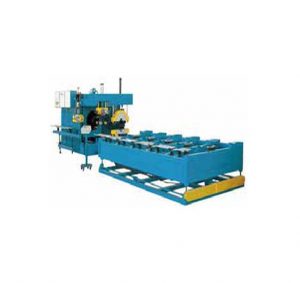
The haul-off provides controlled traction. For large-diameter pipes, several crawler tracks may be required to distribute the pulling force evenly and prevent damage to the pipe surface. Depending on the product, the line may use a chipless or saw cutter, an automatic stacker or a winder. Optional additional equipment can include laser marking systems, laser diameter measurement systems, gravimetric control systems, wall-thickness monitoring systems, belling machines and mixers.
What Determines PE Pipe Extrusion Line Output?
The output of an extruder is determined by much more than just the power of its motor. The effective production rate depends on the following factors: screw diameter and design; screw speed; polymer grade; melt temperature; die design; pipe diameter; wall thickness; cooling capacity; haul-off speed; and the stability of the entire process.
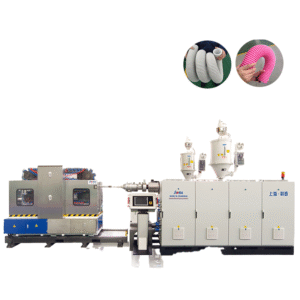
For small-diameter products, a dual-strand configuration can increase productivity by producing two pipes simultaneously, rather than doubling the number of production lines. Jwell’s small-diameter PE/PPR/PE-RT/PA line, for instance, features dual-pipe configurations for products measuring 16–75 mm and includes servo-controlled haul-off and optional winding or cutting equipment.
At the other end of the scale, large-diameter HDPE pipe requires much higher material throughput and more substantial downstream equipment. Published specifications for one Jwell HDPE pipe system show models ranging from 400–800 mm to 2,000–3,000 mm, with increasing listed outputs as the line configuration becomes larger and more powerful. However, these figures are supplier-specific reference values rather than universal industry standards, so production capacity should always be confirmed through a material trial using the buyer’s actual resin and pipe specification.
What Quality Factors Should Manufacturers Control?
The most important quality variables in PE pipe extrusion are outside diameter, wall thickness, roundness, weight per metre, surface condition, material uniformity, and dimensional stability. As these parameters are interconnected, correcting one process variable without understanding the effect on the rest of the line can create another problem.
Melt temperature and pressure must be kept stable to prevent inconsistent polymer flow, which can result in uneven wall thickness or surface fluctuations. The pipe must then be cooled uniformly by the calibration and cooling processes so that it retains its required dimensions after leaving the sizing section. Haul-off speed must be synchronised with extrusion output, as even a stable die cannot compensate indefinitely for an unstable traction ratio.
Online monitoring can significantly reduce the time between a process deviation being detected and corrective action being taken. Laser diameter measurement can continuously monitor the external diameter, while meter-weight control can help identify changes in material output. For high-value or pressure-rated pipes, manufacturers should also maintain documented laboratory testing procedures that cover the relevant mechanical and hydrostatic performance requirements of the applicable standard.
For buyers, this means that evaluation of the production line should focus on process stability rather than maximum theoretical output. A machine capable of producing 1,000 kg/h would not necessarily be more useful than a lower-output system if the application required tight dimensional tolerances and consistent production over long operating periods.
How to Choose the Right PE Pipe Tube Extrusion Line?
Rather than starting with the machine, the first step is to define the finished pipe. The buyer should specify the material grade, pipe diameter range, wall thickness or SDR requirements, applicable pressure class, required output, production length, coiling or cutting method, colour, multilayer requirements, target market and standard.
The second step is to determine the production range. A line optimised for pipes with a diameter of 20–110 mm is fundamentally different from one intended for pipes with a diameter of 630–1,600 mm. Small-diameter lines can prioritise high line speed, compact cooling systems and winding, whereas large-diameter lines require high melt throughput, powerful haul-off systems, extended cooling capacity and heavy-duty handling equipment.
The third step is to evaluate automation and quality control. PLC/HMI systems, automatic temperature control, servo haul-off, online diameter measurement, and meter-weight control can reduce manual intervention and improve repeatability. However, automation should be selected according to actual production requirements rather than being treated as a collection of marketing features.
When evaluating a PE pipeline from a supplier such as our Jwell, it is important to look beyond the headline output and examine the complete process configuration, including the extruder design, die structure, vacuum sizing, cooling capacity, haul-off arrangement, cutting or winding system, control architecture, and optional online inspection. Jwell’s published PE/HDPE systems illustrate configurations ranging from small-diameter, single- or dual-pipe production to large-diameter HDPE lines. Therefore, the exact model and technical configuration should be matched to the intended product, rather than being selected from a generic capacity table.
FAQ About PE Pipe Tube Extrusion Lines
- Για ποιο σκοπό χρησιμοποιείται μια γραμμή εξώθησης σωλήνων από ΠΕ;
A PE pipe tube extrusion line is used to continuously manufacture polyethylene pipes and tubes with controlled dimensions and wall thickness. Common applications include water supply, gas distribution, irrigation, drainage, industrial fluid transport, and protective piping.
- What materials can a PE pipe extrusion line process?
PE extrusion lines can be configured for polyethylene materials such as HDPE and MDPE, depending on the product specification and machine design. Some systems can also be adapted for related polyolefin materials or multilayer structures.
- How does a PE pipe extrusion line work?
The line melts PE resin in an extruder and pushes the homogeneous melt through an annular die to form a tube. Vacuum sizing, cooling, haul-off, and cutting or winding then stabilize and finish the pipe.
- What pipes can be produced by a PE extrusion machine?
A suitable PE extrusion machine can produce small-diameter tubes, irrigation pipes, water pipes, gas pipes, industrial pipes, and large-diameter HDPE pipelines. The actual diameter and wall-thickness range depend on the extruder, die, calibration system, and downstream equipment.
- What determines the output of a PE pipe extrusion line?
Output depends on screw design, extruder size, polymer grade, pipe diameter, wall thickness, screw speed, die design, and cooling capacity. A stable production rate should be confirmed through testing with the actual PE resin and finished-pipe specification.
- How do I choose a PE pipe tube extrusion line?
Start with the finished pipe specification, including material, diameter, wall thickness, application, output, and applicable standard. Then select the extruder, die, sizing, cooling, haul-off, cutting or winding, and automation systems that can reliably meet those requirements.
Συμπέρασμα
A PE pipe tube extrusion line is essentially a continuous polymer processing system designed to turn polyethylene resin into dimensional pipes for use in infrastructure, utilities, agriculture, industry, and specialised applications. The extruder establishes melt quality, the die creates the tubular geometry, and the haul-off controls production speed. Calibration and cooling then establish dimensions, and cutting, winding, and inspection equipment convert the stabilised pipe into a usable commercial product.
Therefore, the most important consideration when selecting such a line is not simply maximum output. The right system must match the PE material grade, pipe diameter, wall thickness, application, production capacity, quality standard, and downstream handling method, while providing sufficient process control to ensure consistent dimensions during continuous production. When comparing extrusion equipment, manufacturers should evaluate the entire process chain and validate the line using the actual resin and pipe specifications, rather than comparing extruder power or advertised capacity alone.



 English
 Russian
 Spanish
 Arabic
 German
 French
 Persian
 Turkish
 Bulgarian
 Czech
 Dutch
 Greek
 Indonesian
 Japanese
 Korean
 Polish
 Portuguese
 Romanian
 Slovenian
 Ukrainian