
빠른 답변
A PE 파이프 튜브 압출 라인 는 폴리에틸렌 파이프와 튜브를 연속적으로 제조하며, 직경, 벽 두께, 길이 및 표면 품질을 정밀하게 제어하는 산업용 생산 시스템입니다. ISO 4427에 따르면, 폴리에틸렌 배관 시스템은 물 공급 및 관련 응용 분야에서 널리 사용됩니다. 한편, 산업용 압출 시스템은 PE 파이프 생산을 가스 배급, 관개, 배수, 산업용 유체 처리, 해양 파이프라인, 보호용 또는 절연 파이프까지 확장합니다. 압출 과정은 일반적으로 재료의 투입, 용융 및 가소화, 다이에서의 성형, 치수 조정, 냉각, 이송, 절단 또는 감기, 그리고 온라인 품질 검사를 포함합니다.
실제 제조 과정에서 PE 파이프 튜브 압출 라인의 가치는 플라스틱 튜브를 생산하는 능력뿐만 아니라, PE 수지를 특정 응용 분야와 성능 요구사항에 맞춘 연속적인 치수의 파이프로 변환하는 역량에도 있습니다. 수지 등급, 파이프 직경, 벽 두께, 압력 등급, 생산 속도 및 최종 용도와 같은 요인에 따라 라인은 소형 직경의 유연한 튜브, 표준 HDPE 수도관, 가스관, 관개용 파이프, 대형 직경의 인프라 파이프 또는 특수한 PE 보호용 파이프를 생산하도록 구성할 수 있습니다.
PE 파이프 튜브 압출 라인이란 무엇인가요?
PE 파이프 튜브 압출 라인은 폴리에틸렌 수지를 완성된 파이프나 튜브로 변환하도록 설계된 연속 생산 시스템입니다. 배치 성형 공정과 달리, 압출 공정은 고분자 펠릿을 녹여서 환형 다이를 통해 뜨거운 재료를 밀어내고, 교정 및 냉각 장비를 통해 뜨거운 튜브를 형상화한 후 안정화된 파이프를 하류 기계를 통해 끌어냅니다.
‘PE 파이프 튜브 압출 라인’‘이라는 용어는 광범위한 장비를 포괄하는데, 폴리에틸렌 제품은 다양한 직경과 구조로 제조되기 때문입니다. 소형 직경의 PE 튜브는 직접 코일 형태로 감길 수 있지만, 대형 직경의 HDPE 파이프는 보통 일직선으로 생산되며 여러 개의 이송 트랙, 대형 진공 탱크, 중량급 절단 장비 및 자동 적재 장치가 필요합니다. 따라서 장비 구성은 단순히 고분자 이름만으로 선택하기보다는 의도된 파이프 사양에 맞춰야 합니다.
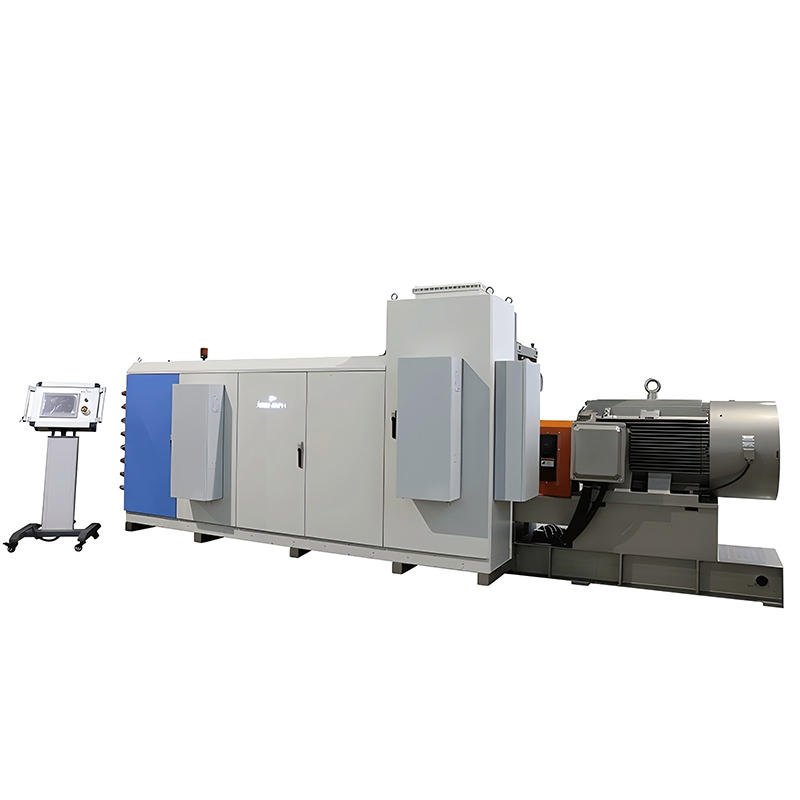
전형적인 생산 시스템에는 재료 투입 장치, 호퍼 또는 중량식 계량 시스템, 단일 나사 압출기, 압출 다이, 진공 교정 탱크, 냉각 구역, 이송 장치, 절단기 또는 감기 장치, 그리고 파이프 취급 장비가 포함됩니다. 현대 시스템에는 레이저 직경 측정, 온라인 벽 두께 모니터링, 계량 무게 제어, 자동 마킹, 중앙 집중형 PLC/HMI 제어 기능이 추가될 수 있습니다. 이러한 구성 요소들은 치수 정확성이 용융 출력, 다이 압력, 냉각, 견인 속도 및 하류 처리의 동기화에 의존하므로 하나의 공정 체인으로 함께 작동합니다.
PE 파이프 압출 라인이 처리할 수 있는 재료는 무엇인가요?
폴리에틸렌은 단일 재료 등급이 아닙니다. PE 파이프 제조에는 고밀도 폴리에틸렌(HDPE), 중밀도 폴리에틸렌(MDPE) 및 기타 폴리에틸렌 조성물이 사용되며, 이는 압력 요구사항, 유연성, 환경 조건, 화학적 노출, 온도 및 해당 파이프 표준과 같은 요인에 따라 선택됩니다. HDPE는 특히 인프라에서 중요하며, 높은 강도와 유연성, 내부식성 및 우수한 융착 특성을 결합하고 있습니다.
수지 등급은 압출 라인의 설계와 운영 조건에 직접적인 영향을 미칩니다. 예를 들어, 대형 직경의 압력 파이프용 재료는 소형 직경의 관개용 튜브와는 다른 나사 구조, 출력 용량, 냉각 전략 및 이송 배열을 필요로 할 수 있습니다. 재료 준비 역시 매우 중요하며, 일정한 투입과 안정적인 용융 온도는 치수 변동, 표면 결함 및 벽 두께의 변동을 방지하는 데 도움을 줍니다.
최신 파이프라인 일부는 다층 생산을 위한 구성도 가능합니다. 추가 압출기를 통합해 2중 또는 3중 PE 파이프를 제조할 수 있으며, 서로 다른 재료 조성이나 기능성 층을 동일한 파이프 구조에 포함시킬 수 있습니다. 이러한 유연성은 제조사가 성능, 색상 식별, 재활용 재료 함량 및 응용 분야별 표면 특성을 하나의 제품에 결합해야 할 때 유용합니다.
PE 파이프 튜브 압출 라인은 어떻게 작동하나요?
제조 과정은 PE 수지를 압출기에 투입하는 것으로 시작됩니다. 실린더 내부에서 고분자는 회전하는 나사 날에 의해 앞으로 이동하며, 열과 기계적 전단 작용으로 점차 녹아 균일하게 혼합됩니다. 나사와 실린더 시스템은 일정한 온도와 압력을 유지하면서 안정적인 용융물을 제공하도록 설계되어야 하는데, 이 단계에서의 변동은 결국 벽 두께의 차이, 표면 결함 또는 불안정한 파이프 치수로 이어질 수 있기 때문입니다.
균일한 고분자 용융물은 다이 헤드로 들어가 중심 맨드렐 주변으로 분배되어 연속적인 관형 프로파일을 형성합니다. 이 시점에서는 재료가 여전히 뜨겁고 상대적으로 부드러우므로, 최종 치수를 유지하기 위해 제어된 치수 조정과 냉각이 필요합니다. 따라서 파이프는 진공 치수 조정을 거쳐 원하는 파이프 형상을 얻은 후, 물 냉각을 통해 열을 제거하고 고분자를 안정화합니다.
파이프가 충분한 치수 안정성을 갖추면, 이송 장치가 라인을 통해 연속적으로 끌어냅니다. 압출 출력과 이송 속도 간의 관계는 매우 중요합니다: 재료가 나오는 속도에 비해 라인이 너무 빨리 끌어내면 파이프 벽이 지나치게 얇아질 수 있고, 반대로 견인이 너무 느리면 파이프가 과대하거나 지나치게 두꺼워질 수 있습니다. 따라서 현대 압출 시스템에서는 안정적인 생산 조건을 유지하기 위해 점점 더 동기화된 제어 기술을 사용하고 있습니다. 예를 들어 Jwell의 PE 및 HDPE 파이프 시스템은 압출, 진공 치수 조정, 냉각, 서보 구동 이송 장치, 절단 장치 및 중앙 집중형 제어를 포함하며, 온라인 측정 시스템을 추가해 생산 모니터링을 할 수 있습니다.
PE 파이프의 주요 응용 분야는 무엇인가요?
폴리에틸렌(PE) 파이프의 가장 큰 응용 분야는 물 공급, 가스 배급, 관개, 배수, 산업용 유체 운송, 광업, 해양 인프라 및 보호용 파이프입니다. PE는 내부식성, 유연성, 비교적 가벼운 무게 덕분에 이들 분야에서 널리 사용되며, 적합한 응용 분야에서는 열융착 기법을 통해 파이프를 연결할 수 있습니다.
물 인프라에서 PE 파이프는 재료, 파이프 구조 및 인증이 해당 요건을 충족하면 potable water 및 기타 수원을 운반할 수 있습니다. 적절히 규격화된 폴리에틸렌 파이프는 가스 배급에 널리 사용되는데, PE는 기존 금속 파이프처럼 부식되지 않으며, 많은 설치 조건에서 경질 재료보다 지반 이동에 더 잘 적응할 수 있습니다.
농업 관개는 소형 PE 파이프와 튜브의 또 다른 주요 시장입니다. 이러한 제품은 연속 길이로 제작되고 코일 형태로 감길 수 있어 운송과 현장 설치가 간편합니다. 설계에 따라 PE 압출 라인은 배수, 농업용 물 공급, 케이블 보호 및 기타 저·중압 응용 분야의 파이프를 생산할 수도 있습니다.
Large-diameter PE extrusion expands the range of applications into municipal infrastructure, industrial water systems, dredging and marine pipelines. Therefore, equipment manufacturers offer substantially different line architectures for small tubes and large pipes. Published Jwell equipment information, for example, includes large-diameter HDPE systems covering pipe ranges extending into the metre scale. This demonstrates how extrusion line configuration changes substantially as diameter and throughput increase.
PE Pipe Applications and Corresponding Production Requirements
The relationship between application and machine configuration is important for anyone purchasing a PE pipe extrusion line. A manufacturer should not specify the line only from a desired output number because pipe diameter, wall thickness, resin grade, pressure class, cooling requirements, and product handling can all influence the equipment configuration.
| PE Pipe Application | Typical Product Characteristics | Important Extrusion-Line Requirements |
| Water supply | Pressure-rated PE pipe, multiple diameters | Stable melt output, precise sizing, controlled cooling |
| Gas distribution | Pressure-rated PE pipe with controlled dimensions | Consistent wall thickness, reliable process control, marking |
| Agricultural irrigation | Small or medium diameter pipe/tube, often coiled | High-speed extrusion, efficient cooling, winder capability |
| Drainage | Solid-wall or specialized drainage pipe | Appropriate die and sizing system, dimensional stability |
| Industrial fluid transport | Application-specific diameter and pressure class | Material compatibility, robust extrusion and cooling |
| Marine pipelines | Large-diameter HDPE pipe | High extrusion capacity, heavy-duty haul-off and handling |
| Cable or pipe protection | Tubes and protective conduits | Surface quality, dimensional control, flexible production |
| Pre-insulated piping | HDPE outer protective jacket | Accurate diameter, roundness, and stable surface quality |
| Mining applications | Heavy-duty PE pipe | High throughput, thick-wall capability, reliable cooling |
| Multilayer pipe | Two- or three-layer construction | Multiple extruders and synchronized layer distribution |
The table illustrates why “PE pipe extrusion machine” and “PE pipe production line” are not necessarily interchangeable specifications. A small-diameter irrigation tube and a 1,000 mm infrastructure pipe may both be PE products, but their extrusion capacity, die dimensions, cooling system, haul-off configuration, and handling requirements are fundamentally different.
What Equipment Does a PE Pipe Tube Extrusion Line Include?
Although the extruder is the core of the system, it is just one component of a complete production line. A modern line can be better understood as a coordinated manufacturing system, where the quality of the final pipe is affected by every downstream unit.
The first stage is material handling. Resin is delivered to the extruder by automatic feeders or vacuum conveying systems, while gravimetric dosing improves control of material throughput and formulation. The extruder then melts, mixes, and conveys the polymer; barrel temperature zones and screw geometry control the processing conditions in this stage.
The die head determines the distribution of the molten polymer into the tubular shape. After leaving the die, calibration and cooling equipment control the external dimensions and roundness. Vacuum calibration is particularly important for maintaining stable geometry, while multi-stage water cooling enables heat to be removed gradually rather than suddenly.
The haul-off provides controlled traction. For large-diameter pipes, several crawler tracks may be required to distribute the pulling force evenly and prevent damage to the pipe surface. Depending on the product, the line may use a chipless or saw cutter, an automatic stacker or a winder. Optional additional equipment can include laser marking systems, laser diameter measurement systems, gravimetric control systems, wall-thickness monitoring systems, belling machines and mixers.
What Determines PE Pipe Extrusion Line Output?
The output of an extruder is determined by much more than just the power of its motor. The effective production rate depends on the following factors: screw diameter and design; screw speed; polymer grade; melt temperature; die design; pipe diameter; wall thickness; cooling capacity; haul-off speed; and the stability of the entire process.
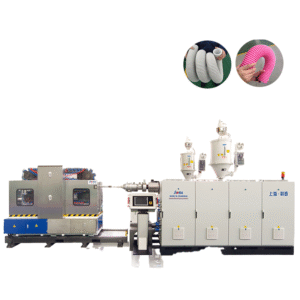
For small-diameter products, a dual-strand configuration can increase productivity by producing two pipes simultaneously, rather than doubling the number of production lines. Jwell’s small-diameter PE/PPR/PE-RT/PA line, for instance, features dual-pipe configurations for products measuring 16–75 mm and includes servo-controlled haul-off and optional winding or cutting equipment.
At the other end of the scale, large-diameter HDPE pipe requires much higher material throughput and more substantial downstream equipment. Published specifications for one Jwell HDPE pipe system show models ranging from 400–800 mm to 2,000–3,000 mm, with increasing listed outputs as the line configuration becomes larger and more powerful. However, these figures are supplier-specific reference values rather than universal industry standards, so production capacity should always be confirmed through a material trial using the buyer’s actual resin and pipe specification.
What Quality Factors Should Manufacturers Control?
The most important quality variables in PE pipe extrusion are outside diameter, wall thickness, roundness, weight per metre, surface condition, material uniformity, and dimensional stability. As these parameters are interconnected, correcting one process variable without understanding the effect on the rest of the line can create another problem.
Melt temperature and pressure must be kept stable to prevent inconsistent polymer flow, which can result in uneven wall thickness or surface fluctuations. The pipe must then be cooled uniformly by the calibration and cooling processes so that it retains its required dimensions after leaving the sizing section. Haul-off speed must be synchronised with extrusion output, as even a stable die cannot compensate indefinitely for an unstable traction ratio.
Online monitoring can significantly reduce the time between a process deviation being detected and corrective action being taken. Laser diameter measurement can continuously monitor the external diameter, while meter-weight control can help identify changes in material output. For high-value or pressure-rated pipes, manufacturers should also maintain documented laboratory testing procedures that cover the relevant mechanical and hydrostatic performance requirements of the applicable standard.
For buyers, this means that evaluation of the production line should focus on process stability rather than maximum theoretical output. A machine capable of producing 1,000 kg/h would not necessarily be more useful than a lower-output system if the application required tight dimensional tolerances and consistent production over long operating periods.
How to Choose the Right PE Pipe Tube Extrusion Line?
Rather than starting with the machine, the first step is to define the finished pipe. The buyer should specify the material grade, pipe diameter range, wall thickness or SDR requirements, applicable pressure class, required output, production length, coiling or cutting method, colour, multilayer requirements, target market and standard.
The second step is to determine the production range. A line optimised for pipes with a diameter of 20–110 mm is fundamentally different from one intended for pipes with a diameter of 630–1,600 mm. Small-diameter lines can prioritise high line speed, compact cooling systems and winding, whereas large-diameter lines require high melt throughput, powerful haul-off systems, extended cooling capacity and heavy-duty handling equipment.
The third step is to evaluate automation and quality control. PLC/HMI systems, automatic temperature control, servo haul-off, online diameter measurement, and meter-weight control can reduce manual intervention and improve repeatability. However, automation should be selected according to actual production requirements rather than being treated as a collection of marketing features.
When evaluating a PE pipeline from a supplier such as our Jwell, it is important to look beyond the headline output and examine the complete process configuration, including the extruder design, die structure, vacuum sizing, cooling capacity, haul-off arrangement, cutting or winding system, control architecture, and optional online inspection. Jwell’s published PE/HDPE systems illustrate configurations ranging from small-diameter, single- or dual-pipe production to large-diameter HDPE lines. Therefore, the exact model and technical configuration should be matched to the intended product, rather than being selected from a generic capacity table.
FAQ About PE Pipe Tube Extrusion Lines
- PE 파이프 튜브 압출 라인은 무엇을 위해 사용되나요?
A PE pipe tube extrusion line is used to continuously manufacture polyethylene pipes and tubes with controlled dimensions and wall thickness. Common applications include water supply, gas distribution, irrigation, drainage, industrial fluid transport, and protective piping.
- What materials can a PE pipe extrusion line process?
PE extrusion lines can be configured for polyethylene materials such as HDPE and MDPE, depending on the product specification and machine design. Some systems can also be adapted for related polyolefin materials or multilayer structures.
- How does a PE pipe extrusion line work?
The line melts PE resin in an extruder and pushes the homogeneous melt through an annular die to form a tube. Vacuum sizing, cooling, haul-off, and cutting or winding then stabilize and finish the pipe.
- What pipes can be produced by a PE extrusion machine?
A suitable PE extrusion machine can produce small-diameter tubes, irrigation pipes, water pipes, gas pipes, industrial pipes, and large-diameter HDPE pipelines. The actual diameter and wall-thickness range depend on the extruder, die, calibration system, and downstream equipment.
- What determines the output of a PE pipe extrusion line?
Output depends on screw design, extruder size, polymer grade, pipe diameter, wall thickness, screw speed, die design, and cooling capacity. A stable production rate should be confirmed through testing with the actual PE resin and finished-pipe specification.
- How do I choose a PE pipe tube extrusion line?
Start with the finished pipe specification, including material, diameter, wall thickness, application, output, and applicable standard. Then select the extruder, die, sizing, cooling, haul-off, cutting or winding, and automation systems that can reliably meet those requirements.
결론
A PE pipe tube extrusion line is essentially a continuous polymer processing system designed to turn polyethylene resin into dimensional pipes for use in infrastructure, utilities, agriculture, industry, and specialised applications. The extruder establishes melt quality, the die creates the tubular geometry, and the haul-off controls production speed. Calibration and cooling then establish dimensions, and cutting, winding, and inspection equipment convert the stabilised pipe into a usable commercial product.
Therefore, the most important consideration when selecting such a line is not simply maximum output. The right system must match the PE material grade, pipe diameter, wall thickness, application, production capacity, quality standard, and downstream handling method, while providing sufficient process control to ensure consistent dimensions during continuous production. When comparing extrusion equipment, manufacturers should evaluate the entire process chain and validate the line using the actual resin and pipe specifications, rather than comparing extruder power or advertised capacity alone.



 English
 Russian
 Spanish
 Arabic
 German
 French
 Persian
 Turkish
 Bulgarian
 Czech
 Dutch
 Greek
 Indonesian
 Japanese
 Korean
 Polish
 Portuguese
 Romanian
 Slovenian
 Ukrainian