
پاسخ سریع
A خط اکستروژن لوله پلیاتیلن یک سیستم تولید صنعتی است که برای ساخت لولهها و لولههای پلیاتیلن به صورت مداوم و با قطر، ضخامت دیواره، طول و کیفیت سطح کنترل شده استفاده میشود. طبق ISO 4427، سیستمهای لولهکشی پلیاتیلن به طور گسترده در تأمین آب و کاربردهای مرتبط استفاده میشوند. در عین حال، سیستمهای استخراج صنعتی تولید لولههای PE را به شامل توزیع گاز، آبیاری، جریاندهی، مدیریت مایعات صنعتی، لولههای دریایی و لولههای محافظ یا عایق نیز گسترش میدهند. فرآیند استخراج عموماً شامل غذایی کردن، ذوب کردن و پلاستیکسازی مواد، شکل دادن آن در قالب، تنظیم اندازه، خنک کردن، کشیدن، برش یا پیچاندن و انجام کنترل کیفیت آنلاین است.
در تولید عملی، ارزش خط استخراج لولههای PE نه تنها در توانایی تولید لولههای پلاستیکی بلکه در ظرفیت تبدیل رزین PE به لولههای با ابعاد مداوم طراحی شده برای کاربردهای خاص و الزامات عملکردی نیز قابل توجه است. با توجه به عواملی مانند نوع رزین، قطر لوله، ضخامت دیواره، کلاس فشار، سرعت تولید و کاربرد نهایی، خط میتواند برای تولید لولههای انعطافپذیر با قطر کوچک، لولههای آب استاندارد HDPE، لولههای گاز، لولههای آبیاری، لولههای زیرساخت با قطر بزرگ یا لولههای محافظ PE متخصص تنظیم شود.
خط استخراج لولههای PE چیست؟
خط استخراج لولههای PE یک سیستم تولید مداوم است که برای تبدیل رزین پلیاتیلن به لولهها یا لولههای تمام شده طراحی شده است. برخلاف فرآیندهای قالبگیری دستهای، استخراج یک پروفیل حفرهای مداوم را با ذوب کردن ذرات پلیمر، فشار دادن ماده ذوب شده از طریق یک قالب حلقوی، شکل دادن لوله داغ با تجهیزات کالیبراسیون و خنک کردن و سپس کشیدن لوله ثابت شده از طریق ماشینآلات بعدی تولید میکند.
مصطلح ‘لوله PE خط استخراج لوله‘ شامل مجموعهای وسیع از تجهیزات است زیرا محصولات پلیاتیلن در قطرها و تنظیمات مختلف تولید میشوند. لولههای PE با قطر کوچک میتوانند مستقیماً در پیچها بیفتند، در حالی که لولههای HDPE با قطر بزرگ معمولاً به صورت طولهای مستقیم تولید میشوند و نیازمند مسیرهای متعدد کشیدن، مخازن خلاء بزرگ، تجهیزات برش سنگین و استacksسازی خودکار هستند. بنابراین، تنظیم تجهیزات باید با مشخصات لوله مورد نظر هماهنگ شود و نه فقط بر اساس نام پلیمر انتخاب شود.
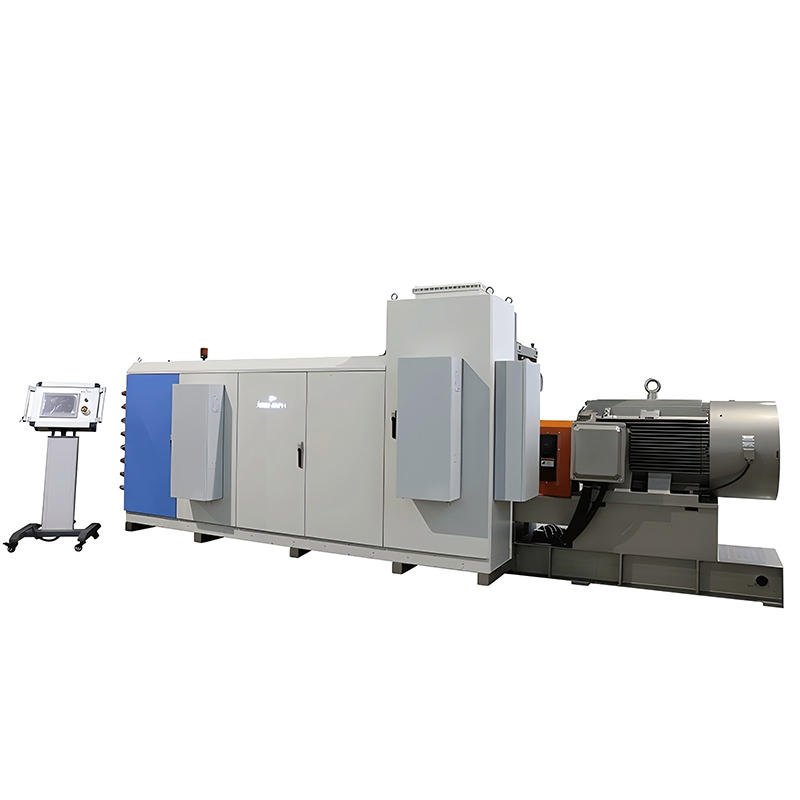
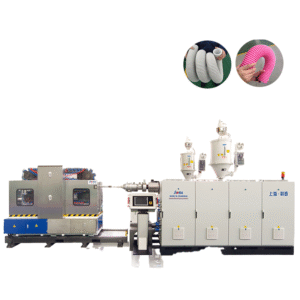
یک سیستم تولید معمولی شامل واحد غذایی مواد، یک هاپر یا سیستم دوزینگ گرانومتریک، یک استخراجکننده پیچ واحد، قالب استخراج، مخزن خلاء کالیبراسیون، بخش خنککننده، واحد کشیدن، برشکننده یا پیچکننده و تجهیزات دستگاههای لولهکشی است. سیستمهای مدرن ممکن است همچنین اندازهگیری لیزری قطر، کنترل آنلاین ضخامت دیواره، کنترل وزن متری، نشانگذاری خودکار و کنترل مرکزی PLC/HMI را شامل شوند. این اجزا به عنوان یک زنجیره واحد فرآیندی کار میکنند زیرا دقت ابعادی به هماهنگی بین خروجی ذوب، فشار قالب، خنککردن، سرعت کشش و دستگاههای بعدی بستگی دارد.
موادی که خط استخراج لولههای PE میتواند پردازش کند چیست؟
پلیاتیلن یک درجه واحد مواد نیست. تولید لولههای PE میتواند شامل پلیاتیلن با کثافت بالا (HDPE)، پلیاتیلن با کثافت متوسط (MDPE) و سایر فرمولاسیونهای پلیاتیلن باشد که بر اساس عواملی مانند الزامات فشار، انعطافپذیری، شرایط محیطی، تماس با مواد شیمیایی، دما و استاندارد مربوط به لوله انتخاب میشوند. HDPE بهویژه در زیرساختها مهم است زیرا مقاومت بالا را با انعطافپذیری، مقاومت در برابر خوردگی و ویژگیهای خوب فیوزیون ترکیب میکند.
درجه رزین به طور مستقیم روی طراحی و شرایط عملکرد خط استخراج تأثیر میگذارد. به عنوان مثال، موادی که برای لوله فشاری با قطر بزرگ منظور شدهاند ممکن است نیازمند تنظیمات متفاوت پیچ، ظرفیت خروجی، استراتژی خنککردن و ترتیب کشیدن با لولههای آبیاری با قطر کوچک باشند. آمادهسازی مواد نیز به همان اندازه مهم است، زیرا غذایی کردن مداوم و دمای ذوب ثابت به جلوگیری از نوسانات ابعادی، عیوب سطح و تغییرات ضخامت دیواره کمک میکند.
برخی لولههای مدرن میتوانند برای تولید چندلایه نیز تنظیم شوند. استخراجکنندههای اضافی میتوانند برای تولید لولههای PE دو یا سه لایه ادغام شوند، که اجازه میدهد فرمولاسیونهای مختلف مواد یا لایههای عملکردی در همان ساختار لوله قرار بگیرند. این انعطافپذیری وقتی مفید است که تولیدکنندگان نیازمند ترکیب عملکرد، شناسایی رنگ، محتوای مواد بازیافتی و ویژگیهای سطح مخصوص کاربرد در یک محصول هستند.
خط استخراج لولههای PE چگونه کار میکند؟
فرآیند تولید با غذایی کردن رزین PE در استخراجکننده شروع میشود. در داخل بارل، پلیمر با چرخش پیچهای محرک جلو میرود و حرارت و برش مکانیکی ماده را تدریجاً ذوب و همگن میکند. سیستم پیچ و بارل باید طوری طراحی شود که ذوب ثابتی با دمای و فشار ثابت تحویل دهد، زیرا نوسانات در این مرحله میتواند در نهایت منجر به تغییرات در ضخامت دیواره، عیوب سطح یا ابعاد ناپایدار لوله شود.
ذوب همگن پلیمر سپس وارد سر قالب میشود، جایی که حول یک ماندرل مرکزی توزیع میشود تا پروفیل لولهای مداوم ایجاد کند. در این مرحله ماده هنوز داغ و نسبتاً نرم است، بنابراین نیازمند تنظیم اندازه و خنککردن کنترل شده است تا ابعاد نهایی حفظ شود. لوله بنابراین از سیستم کالیبراسیون شامل خلاء کالیبراسیون عبور میکند تا هندسه مورد نظر لوله را بدست آورد، سپس با خنککردن آب حرارت را از بین ببرد و پلیمر را ثابت کند.
وقتی لوله به ثبات ابعادی کافی رسید، واحد کشیدن آن را به صورت مداوم از طریق خط کشیده میکند. ارتباط بین خروجی استخراج و سرعت کشیدن بسیار مهم است: اگر خط نسبت به سرعت خروجی ماده بیش از حد سریع کشیده شود، دیوارههای لوله ممکن است بسیار نازک شوند؛ اگر کشش بیش از حد کند باشد، لوله ممکن است بزرگ یا بسیار ضخیم شود. بنابراین سیستمهای استخراج مدرن بیشتر از کنترل هماهنگ برای حفظ شرایط تولید ثابت استفاده میکنند. برای مثال، سیستمهای لولههای PE و HDPE Jwell شامل استخراج، خلاء کالیبراسیون، خنککردن، واحد کشیدن سروموتور، واحد برش و کنترل مرکزی است، با امکان افزودن سیستمهای اندازهگیری آنلاین برای نظارت بر تولید.
کاربردهای اصلی لولههای PE چیست؟
بزرگترین کاربردهای لولههای پلیاتیلن (PE) شامل تأمین آب، توزیع گاز، آبیاری، جریاندهی، حملونقل مایعات صنعتی، معدن، زیرساختهای دریایی و لولههای محافظ است. PE به دلیل مقاومت در برابر خوردگی، انعطافپذیری، وزن نسبتاً کم و اینکه لولهها میتوانند در کاربردهای مناسب با فناوری فیوزیون حرارتی به هم متصل شوند، در این حوزهها بهطور گسترده استفاده میشود.
در زیرساختهای آب، لولههای PE میتوانند آب قابل نوشیدن و سایر منابع آب را حمل کنند وقتی مواد، ساختار لوله و مجوزها به شرایط مربوطه برسد. لولههای پلیاتیلن با مشخصات مناسب برای توزیع گاز بهطور گسترده استفاده میشوند زیرا PE به همان روش لولههای فلزی معمولی خوردگی نمیکند و میتواند در بسیاری از شرایط نصب، حرکت زمینی را بهتر تحمل کند.
آبیاری کشاورزی بازار بزرگ دیگری برای لولههای و لولههای کوچکتر PE است. این محصولات میتوانند به صورت طولهای مداوم تولید و در پیچها بیفتند، که حمل و نصب در میدان را ساده میکند. با توجه به طراحی، خطوط استخراج PE میتوانند لولههایی برای جریاندهی، تأمین آب کشاورزی، محافظت از کابلها و سایر کاربردهای فشار پایین تا متوسط نیز تولید کنند.
Large-diameter PE extrusion expands the range of applications into municipal infrastructure, industrial water systems, dredging and marine pipelines. Therefore, equipment manufacturers offer substantially different line architectures for small tubes and large pipes. Published Jwell equipment information, for example, includes large-diameter HDPE systems covering pipe ranges extending into the metre scale. This demonstrates how extrusion line configuration changes substantially as diameter and throughput increase.
PE Pipe Applications and Corresponding Production Requirements
The relationship between application and machine configuration is important for anyone purchasing a PE pipe extrusion line. A manufacturer should not specify the line only from a desired output number because pipe diameter, wall thickness, resin grade, pressure class, cooling requirements, and product handling can all influence the equipment configuration.
| PE Pipe Application | Typical Product Characteristics | Important Extrusion-Line Requirements |
| Water supply | Pressure-rated PE pipe, multiple diameters | Stable melt output, precise sizing, controlled cooling |
| Gas distribution | Pressure-rated PE pipe with controlled dimensions | Consistent wall thickness, reliable process control, marking |
| Agricultural irrigation | Small or medium diameter pipe/tube, often coiled | High-speed extrusion, efficient cooling, winder capability |
| Drainage | Solid-wall or specialized drainage pipe | Appropriate die and sizing system, dimensional stability |
| Industrial fluid transport | Application-specific diameter and pressure class | Material compatibility, robust extrusion and cooling |
| Marine pipelines | Large-diameter HDPE pipe | High extrusion capacity, heavy-duty haul-off and handling |
| Cable or pipe protection | Tubes and protective conduits | Surface quality, dimensional control, flexible production |
| Pre-insulated piping | HDPE outer protective jacket | Accurate diameter, roundness, and stable surface quality |
| Mining applications | Heavy-duty PE pipe | High throughput, thick-wall capability, reliable cooling |
| Multilayer pipe | Two- or three-layer construction | Multiple extruders and synchronized layer distribution |
The table illustrates why “PE pipe extrusion machine” and “PE pipe production line” are not necessarily interchangeable specifications. A small-diameter irrigation tube and a 1,000 mm infrastructure pipe may both be PE products, but their extrusion capacity, die dimensions, cooling system, haul-off configuration, and handling requirements are fundamentally different.
What Equipment Does a PE Pipe Tube Extrusion Line Include?
Although the extruder is the core of the system, it is just one component of a complete production line. A modern line can be better understood as a coordinated manufacturing system, where the quality of the final pipe is affected by every downstream unit.
The first stage is material handling. Resin is delivered to the extruder by automatic feeders or vacuum conveying systems, while gravimetric dosing improves control of material throughput and formulation. The extruder then melts, mixes, and conveys the polymer; barrel temperature zones and screw geometry control the processing conditions in this stage.
The die head determines the distribution of the molten polymer into the tubular shape. After leaving the die, calibration and cooling equipment control the external dimensions and roundness. Vacuum calibration is particularly important for maintaining stable geometry, while multi-stage water cooling enables heat to be removed gradually rather than suddenly.
The haul-off provides controlled traction. For large-diameter pipes, several crawler tracks may be required to distribute the pulling force evenly and prevent damage to the pipe surface. Depending on the product, the line may use a chipless or saw cutter, an automatic stacker or a winder. Optional additional equipment can include laser marking systems, laser diameter measurement systems, gravimetric control systems, wall-thickness monitoring systems, belling machines and mixers.
What Determines PE Pipe Extrusion Line Output?
The output of an extruder is determined by much more than just the power of its motor. The effective production rate depends on the following factors: screw diameter and design; screw speed; polymer grade; melt temperature; die design; pipe diameter; wall thickness; cooling capacity; haul-off speed; and the stability of the entire process.
For small-diameter products, a dual-strand configuration can increase productivity by producing two pipes simultaneously, rather than doubling the number of production lines. Jwell’s small-diameter PE/PPR/PE-RT/PA line, for instance, features dual-pipe configurations for products measuring 16–75 mm and includes servo-controlled haul-off and optional winding or cutting equipment.
At the other end of the scale, large-diameter HDPE pipe requires much higher material throughput and more substantial downstream equipment. Published specifications for one Jwell HDPE pipe system show models ranging from 400–800 mm to 2,000–3,000 mm, with increasing listed outputs as the line configuration becomes larger and more powerful. However, these figures are supplier-specific reference values rather than universal industry standards, so production capacity should always be confirmed through a material trial using the buyer’s actual resin and pipe specification.
What Quality Factors Should Manufacturers Control?
The most important quality variables in PE pipe extrusion are outside diameter, wall thickness, roundness, weight per metre, surface condition, material uniformity, and dimensional stability. As these parameters are interconnected, correcting one process variable without understanding the effect on the rest of the line can create another problem.
Melt temperature and pressure must be kept stable to prevent inconsistent polymer flow, which can result in uneven wall thickness or surface fluctuations. The pipe must then be cooled uniformly by the calibration and cooling processes so that it retains its required dimensions after leaving the sizing section. Haul-off speed must be synchronised with extrusion output, as even a stable die cannot compensate indefinitely for an unstable traction ratio.
Online monitoring can significantly reduce the time between a process deviation being detected and corrective action being taken. Laser diameter measurement can continuously monitor the external diameter, while meter-weight control can help identify changes in material output. For high-value or pressure-rated pipes, manufacturers should also maintain documented laboratory testing procedures that cover the relevant mechanical and hydrostatic performance requirements of the applicable standard.
For buyers, this means that evaluation of the production line should focus on process stability rather than maximum theoretical output. A machine capable of producing 1,000 kg/h would not necessarily be more useful than a lower-output system if the application required tight dimensional tolerances and consistent production over long operating periods.
How to Choose the Right PE Pipe Tube Extrusion Line?
Rather than starting with the machine, the first step is to define the finished pipe. The buyer should specify the material grade, pipe diameter range, wall thickness or SDR requirements, applicable pressure class, required output, production length, coiling or cutting method, colour, multilayer requirements, target market and standard.
The second step is to determine the production range. A line optimised for pipes with a diameter of 20–110 mm is fundamentally different from one intended for pipes with a diameter of 630–1,600 mm. Small-diameter lines can prioritise high line speed, compact cooling systems and winding, whereas large-diameter lines require high melt throughput, powerful haul-off systems, extended cooling capacity and heavy-duty handling equipment.
The third step is to evaluate automation and quality control. PLC/HMI systems, automatic temperature control, servo haul-off, online diameter measurement, and meter-weight control can reduce manual intervention and improve repeatability. However, automation should be selected according to actual production requirements rather than being treated as a collection of marketing features.
When evaluating a PE pipeline from a supplier such as our جول, it is important to look beyond the headline output and examine the complete process configuration, including the extruder design, die structure, vacuum sizing, cooling capacity, haul-off arrangement, cutting or winding system, control architecture, and optional online inspection. Jwell’s published PE/HDPE systems illustrate configurations ranging from small-diameter, single- or dual-pipe production to large-diameter HDPE lines. Therefore, the exact model and technical configuration should be matched to the intended product, rather than being selected from a generic capacity table.
FAQ About PE Pipe Tube Extrusion Lines
- خط اکستروژن لوله پلیاتیلن برای چه کاری است؟
A PE pipe tube extrusion line is used to continuously manufacture polyethylene pipes and tubes with controlled dimensions and wall thickness. Common applications include water supply, gas distribution, irrigation, drainage, industrial fluid transport, and protective piping.
- What materials can a PE pipe extrusion line process?
PE extrusion lines can be configured for polyethylene materials such as HDPE and MDPE, depending on the product specification and machine design. Some systems can also be adapted for related polyolefin materials or multilayer structures.
- How does a PE pipe extrusion line work?
The line melts PE resin in an extruder and pushes the homogeneous melt through an annular die to form a tube. Vacuum sizing, cooling, haul-off, and cutting or winding then stabilize and finish the pipe.
- What pipes can be produced by a PE extrusion machine?
A suitable PE extrusion machine can produce small-diameter tubes, irrigation pipes, water pipes, gas pipes, industrial pipes, and large-diameter HDPE pipelines. The actual diameter and wall-thickness range depend on the extruder, die, calibration system, and downstream equipment.
- What determines the output of a PE pipe extrusion line?
Output depends on screw design, extruder size, polymer grade, pipe diameter, wall thickness, screw speed, die design, and cooling capacity. A stable production rate should be confirmed through testing with the actual PE resin and finished-pipe specification.
- How do I choose a PE pipe tube extrusion line?
Start with the finished pipe specification, including material, diameter, wall thickness, application, output, and applicable standard. Then select the extruder, die, sizing, cooling, haul-off, cutting or winding, and automation systems that can reliably meet those requirements.
نتیجه
A PE pipe tube extrusion line is essentially a continuous polymer processing system designed to turn polyethylene resin into dimensional pipes for use in infrastructure, utilities, agriculture, industry, and specialised applications. The extruder establishes melt quality, the die creates the tubular geometry, and the haul-off controls production speed. Calibration and cooling then establish dimensions, and cutting, winding, and inspection equipment convert the stabilised pipe into a usable commercial product.
Therefore, the most important consideration when selecting such a line is not simply maximum output. The right system must match the PE material grade, pipe diameter, wall thickness, application, production capacity, quality standard, and downstream handling method, while providing sufficient process control to ensure consistent dimensions during continuous production. When comparing extrusion equipment, manufacturers should evaluate the entire process chain and validate the line using the actual resin and pipe specifications, rather than comparing extruder power or advertised capacity alone.



 English
 Russian
 Spanish
 Arabic
 German
 French
 Persian
 Turkish
 Bulgarian
 Czech
 Dutch
 Greek
 Indonesian
 Japanese
 Korean
 Polish
 Portuguese
 Romanian
 Slovenian
 Ukrainian